


Antique English Cellarette
An antique English cellarette is a heavy timber drinks chest designed to hold bottles at the dining table, built for serious hospitality.
Antique English Cellarette
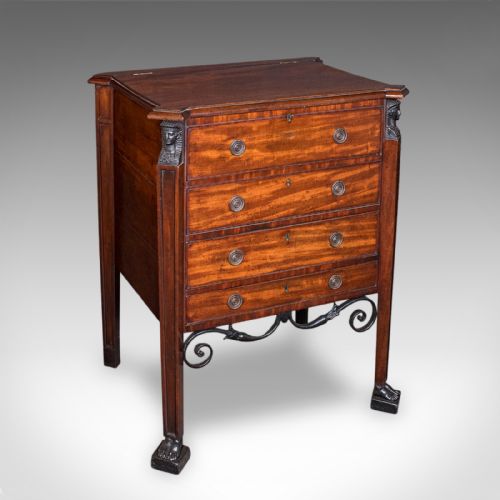
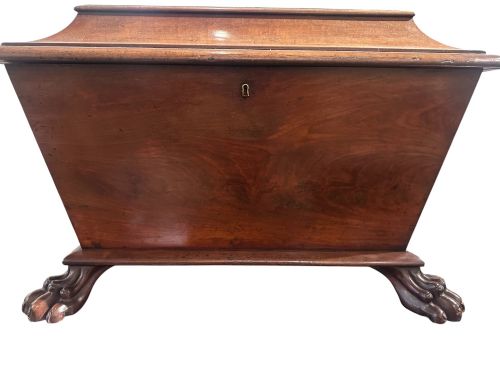
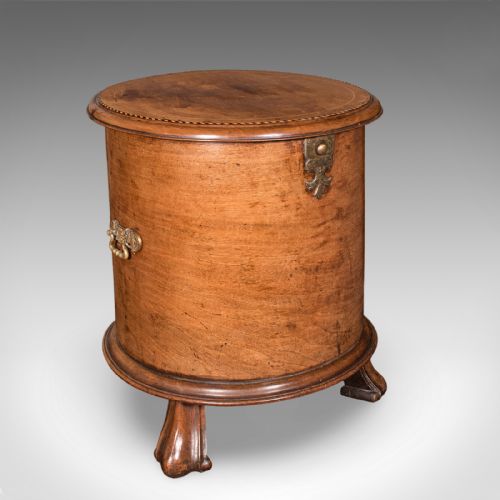
When you search for an antique English cellarette, you are looking at substantial timber storage boxes designed to cool and hold wine bottles near the dining table. The pieces on this page span the Georgian, Regency, and Victorian periods, taking forms such as sarcophagus shapes, oval brass-bound tubs, and cocktail cabinets.
You will most frequently meet mahogany examples from the Georgian and Regency eras, often standing on short legs or feet and featuring interior lead linings or dividers for bottles. Alongside traditional wine coolers, the selection includes related forms like teapoys, spirits tables, and jardiniere stands constructed in walnut, burr maple, and flame mahogany veneer.
These items served a practical function in grand dining rooms before fitted sideboards took over the task of bottle storage. Today, they function well as side tables, fireside storage boxes, or distinctive drinks cabinets within a traditional or modern interior.
Materials and construction
Cabinet makers relied heavily on solid mahogany and flame mahogany veneers, often enhanced with contrasting box tree details or burr maple panels. Timber selection prioritised rich grain figures and deep natural warmth, which workers polished to a high lustre.
Metal fittings played a crucial structural and decorative role, featuring brass binding hoops, carrying handles, and occasionally iron or zinc elements. Internal lead linings were common in wine coolers to hold ice and water safely without rotting the surrounding wood.
The listings combine 18th-century Georgian designs with later Victorian Gothic Revival pieces, using mahogany, walnut, and coromandel.
The markers of quality
Quality in these pieces rests upon the choice of timber and the precision of the cabinet work, particularly in the handling of curved sarcophagus bodies and fluted details. Superior examples display carefully matched veneers and robust internal divisions rather than purely decorative facades.
The integration of original brass mounts, handles, and functional interior linings elevates a piece significantly. Finer items demonstrate seamless joinery in complex forms like oval tubs and campaign boxes, maintaining structural integrity over centuries of use.
The Antique English Cellarette Glossary
- Sarcophagus shaped
- A monumental casket form with a gently domed lid and flared sides, popular during the Regency period for large wine coolers.
- Teapoy
- A small table or box on a pillar and claw base, originally designed to store expensive loose tea leaves and sugar.
- Brass bound
- A method of reinforcing timber vessels with structural metal bands and corner brackets, frequently seen on oval wine coolers.
- Flame mahogany veneer
- A decorative wood slicing technique that creates a striking, flickering flame pattern across the surface of the cabinet.
- Jardiniere stand
- A decorative pedestal or holder intended for displaying indoor plants and floral arrangements within a grand interior.
Antique English Cellarette: Frequently Asked Questions
What is the difference between a cellarette and a wine cooler?
In period terms, the two functions overlap significantly as both terms describe timber vessels built to hold bottles in the dining room.
Cellarettes often lean toward lidded storage boxes and campaign chests, while wine coolers frequently describe open tubs or sarcophagus forms designed to hold ice.
How were cellarettes used in Georgian dining rooms?
Servants filled the lead-lined interiors with ice and water before dinner to chill bottles of wine out of sight of the guests.
At the end of the meal, the heavy chest sat securely beneath the sideboard or beside the dining table ready for the next round.
Can I use an antique cellarette as a modern drinks cabinet?
The deep internal storage compartments make these pieces well suited to holding modern wine bottles, spirits, and bar accessories.
Placing one in a living room or study provides functional hidden storage while retaining a strong period presence.
How do I identify a Regency period cellarette?
Regency pieces often display classical architectural influences such as Egyptian revival motifs, reeded legs, and heavy sarcophagus proportions.
Makers of this era favoured dramatic flame mahogany veneers matched with crisp brass handles and lion paw feet.
Did these pieces always stay in the dining room?
While dining rooms were their primary home, variants like campaign cellarettes travelled with officers on colonial service.
Over time, surviving examples frequently moved into libraries and drawing rooms to serve as fireside blanket stores or occasional tables.