









Antique Enamelled Glassware
These pieces of antique enamelled glassware bring vibrant colour and hand-painted detail to a room, ranging from vibrant Victorian cranberry jugs to geometric Art Deco vessels.
Antique Enamelled Glassware
Vases and wine glasses dominate the forms you are most likely to meet on this page, alongside ewers, decanters, and biscuit barrels. These items originate from various European centres, with notable contributions from English, Bohemian, German, and French makers across the Victorian, Edwardian, and Art Deco periods.
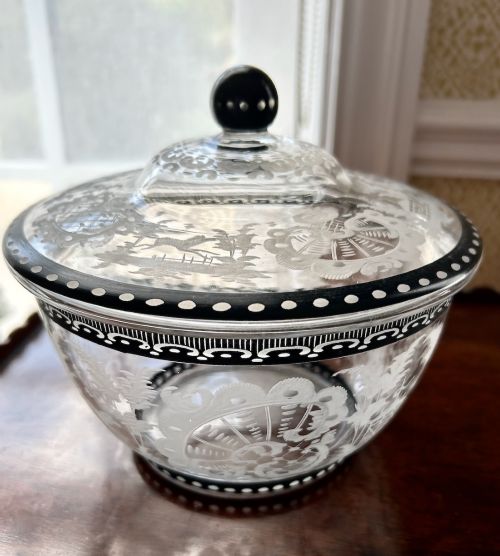
The decorative motifs range from delicate white enamel silhouettes of children to polychromatic floral scenes, heraldic crests, and bold abstract patterns. Whether examining a delicate cordial glass or a large turquoise apothecary jar, each piece demonstrates the application of vitreous enamel to blown or lead glass.
How they were made
Makers utilised free-blown, mould-blown, and lead glass techniques to form the foundational vessels, often employing cranberry, green, blue, or clear glass bodies. Artisans then applied powdered coloured glass, known as enamel, mixed with an oily medium to paint intricate designs directly onto the surface.
Following the hand-painting process, the glassware was fired in a kiln to fuse the vitreous enamel permanently to the glass body. Many pieces received supplementary gilding with gold leaf or additional etching to enhance the final decorative effect.
Antique Enamelled Glassware Retail Price Guide 2026
Typical asking prices for enamelled glassware among the pieces listed under this phrase on Sellingantiques today, from the lower quarter to the upper quarter. They describe what is for sale here now, not the wider market.
Bohemian artisans decorated some green glass vases with hand-painted enamelled fox hunting scenes.
What varies in quality
The distinction between standard and exceptional pieces rests upon the precision and complexity of the enamel work and the clarity of the underlying glass. Superior examples display crisp, finely detailed brushwork with rich polychromatic pigments or deep gilding that has survived intact without flaking.
The sophistication of the vessel's form and the prestige of the workshop also elevate a piece. Master glasshouses and known designers achieved superior proportions, heavier lead glass weights, and more ambitious pictorial scenes compared to mass-produced domestic wares.
Kralik Glass·Karl Palda·Lobmeyer·Fritz Heckert·Theresienthal
The Antique Enamelled Glassware Glossary
- Enamel
- Powdered glass fused to a glass substrate through kiln firing. It provides opaque or translucent coloured decoration.
- Mary Gregory
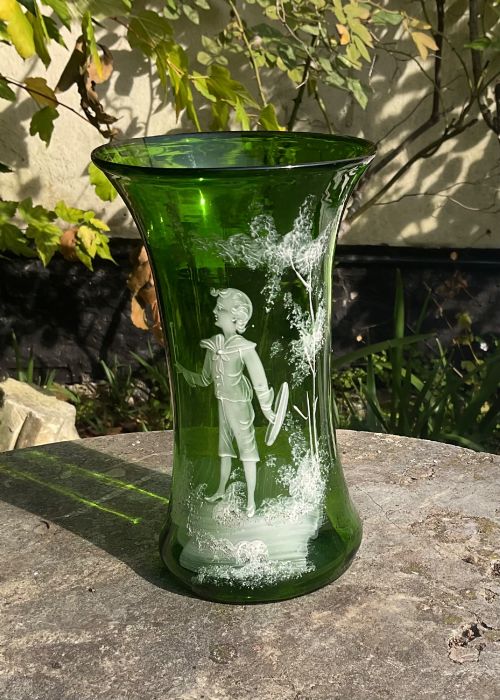
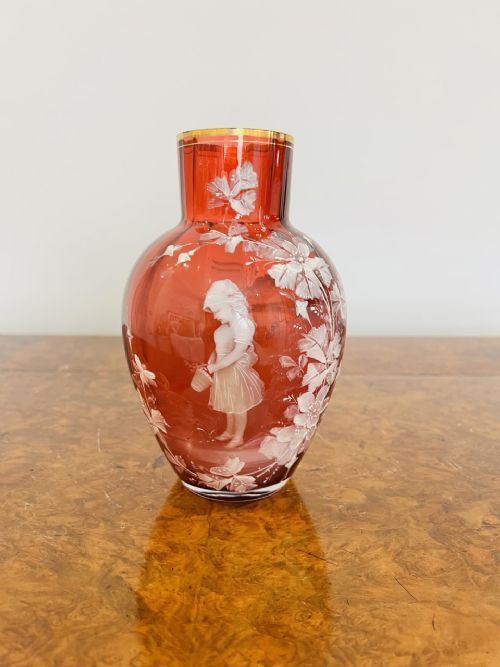
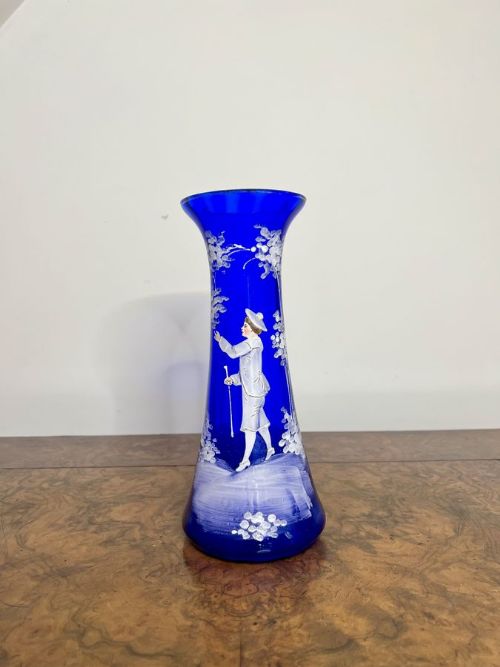
- A style of glassware featuring white enamel silhouettes of Victorian children, typically set against cranberry, green, or blue glass.
- Roemer
- A traditional Germanic large-bowled wine glass, often featuring a raspberry prunt stem and green-tinted glass.
- Opaque Twist
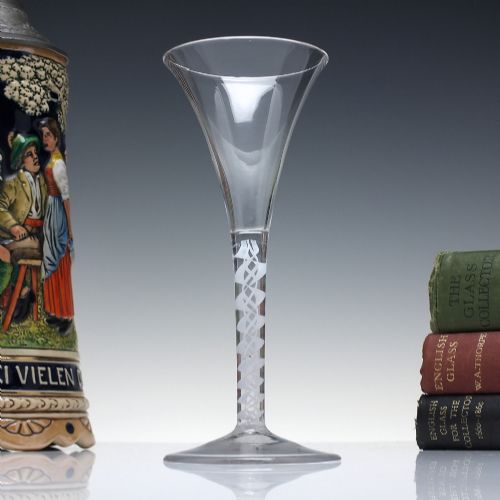
- An 18th-century English glass stem technique enclosing white or coloured enamel threads within clear glass.
- Vitreous Enamel
- A glass-like coating bonded to a surface by heat, noted for its lasting colour and smooth finish.
Antique Enamelled Glassware: Frequently Asked Questions
Are these pieces safe for daily use?
Most antique enamelled glassware serves primarily a decorative function rather than practical daily utility. The historic enamels and gold leaf can wear away with frequent handling, washing, and contact with acidic liquids.
Reserve them for display or occasional gentle use to preserve the integrity of the painted surface.
How do I date a piece of enamelled glass?
Examine the manufacturing technique, glass colour, and stylistic motifs present on the vessel. Georgian pieces often feature opaque twists, while Victorian items frequently show Mary Gregory styles or heavy gilding.
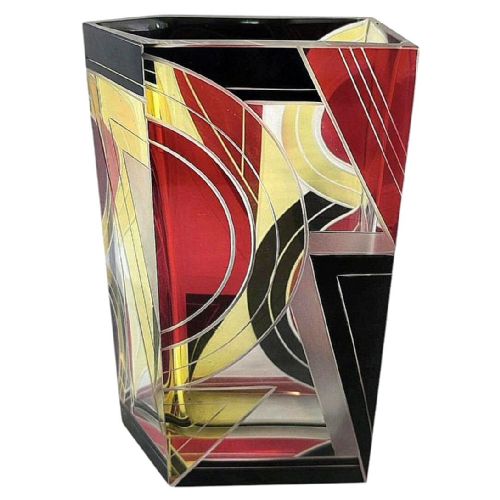
Art Deco examples typically display geometric patterns and acid-etched finishes characteristic of the 1930s. Comparing the object's form to known workshop portfolios helps confirm the era.
What is Mary Gregory glass?
Mary Gregory glass refers to decorative glassware painted with opaque white enamel figures, usually depicting Victorian children playing in natural settings. While long attributed to an American artist of the same name, historical evidence shows most pieces originated in Bohemia and Victorian England.
These designs appear predominantly on cranberry, green, and blue glass vessels such as vases, ewers, and liquor sets.