

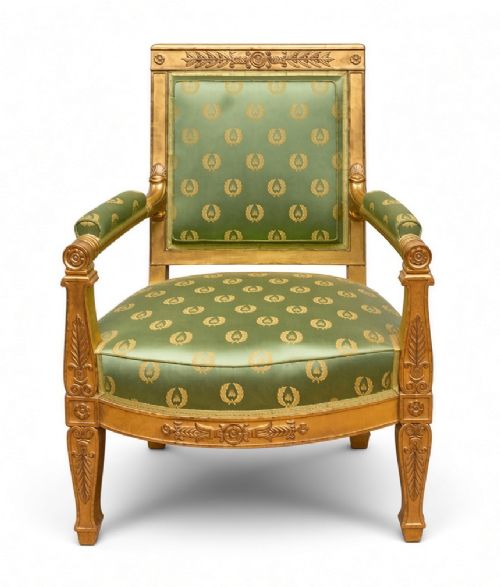
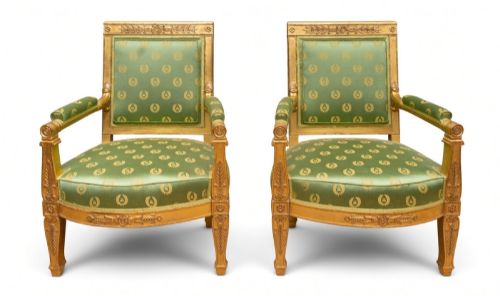

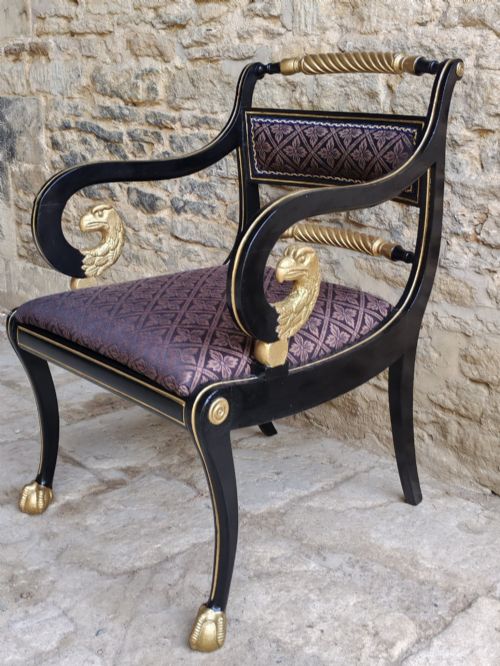
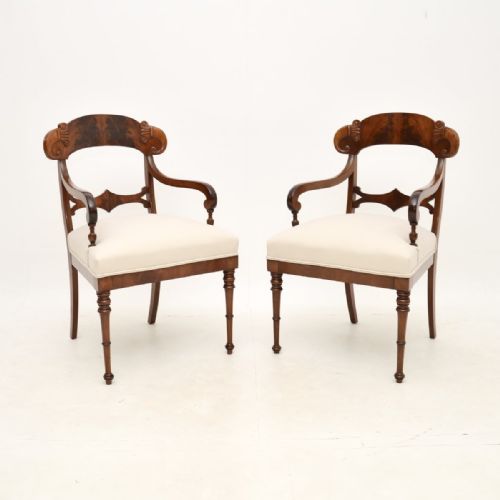
Antique Empire Armchair
An antique empire armchair brings monumental neoclassical presence to a room, drawing on classical forms from the nineteenth century and later revivals.
Antique Empire Armchair
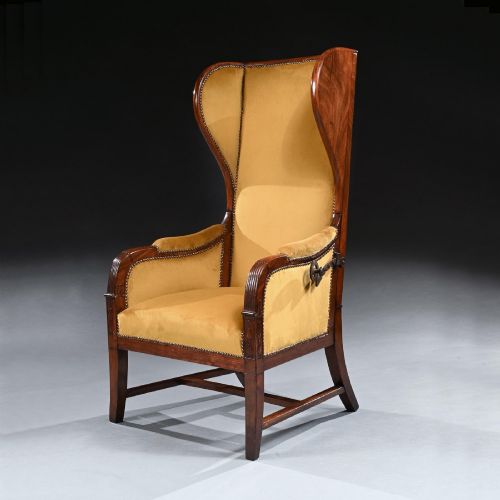
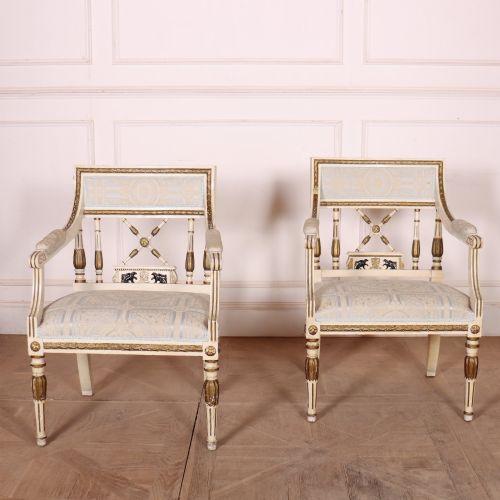
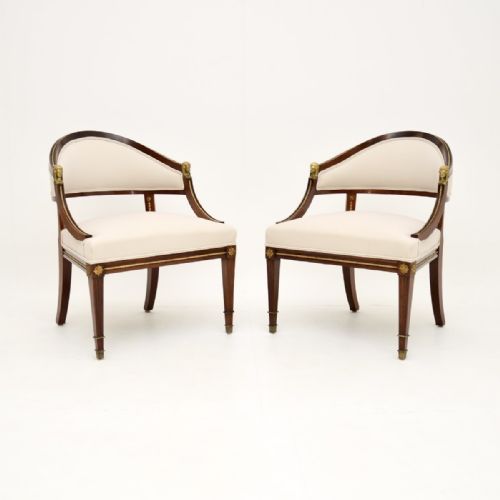
The antique empire armchair encompasses a commanding array of seating, from French fauteuils and desk chairs to Swedish neoclassical designs and Regency library chairs. These forms originate primarily across the nineteenth century, alongside later revival pieces produced into the twentieth century.
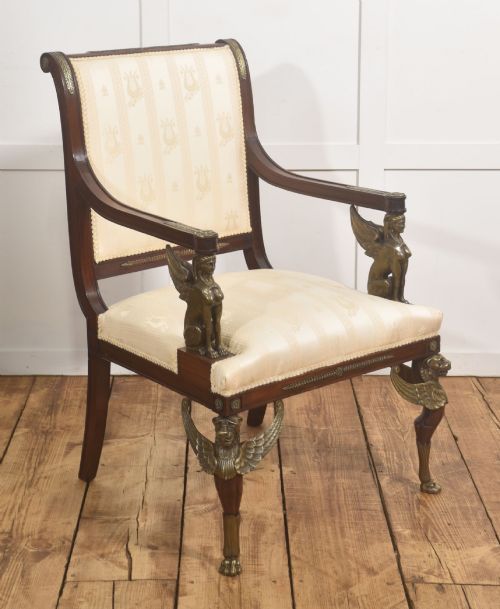
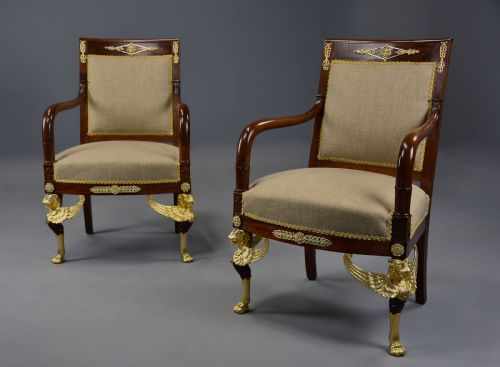
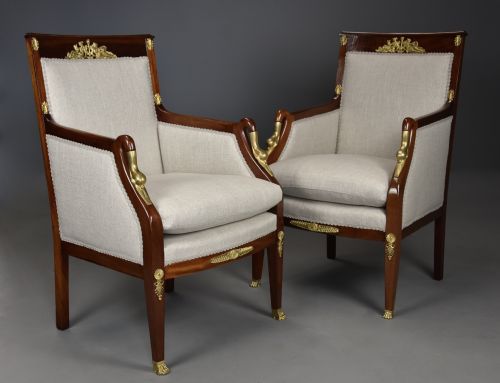
Buyers will most frequently encounter nineteenth century French examples, particularly Napoleon III and Empire style mahogany open armchairs, often appearing in pairs. Swedish neoclassical and birch armchairs also feature strongly across the selection.
Craftsmanship and Proportion
Quality rests in the crispness of the carved detail and the weight of cast bronze or ormolu mounts applied to the timber frame. Superior pieces maintain balanced classical proportions and structural integrity across arms and legs.
The distinction between standard production and exceptional work lies in the depth of timber selection, particularly figured mahogany, and the integration of decorative elements such as parcel-gilding.
Antique Empire Armchair Retail Price Guide 2026
Typical asking prices for empire armchair among the pieces listed under this phrase on Sellingantiques today, from the lower quarter to the upper quarter. They describe what is for sale here now, not the wider market.
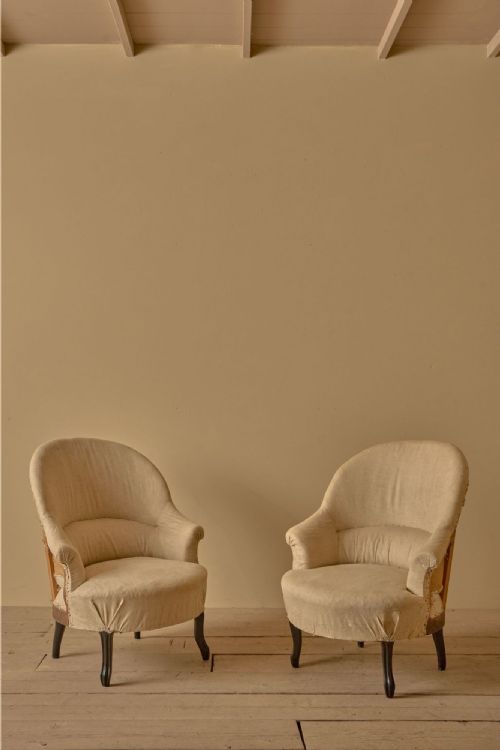
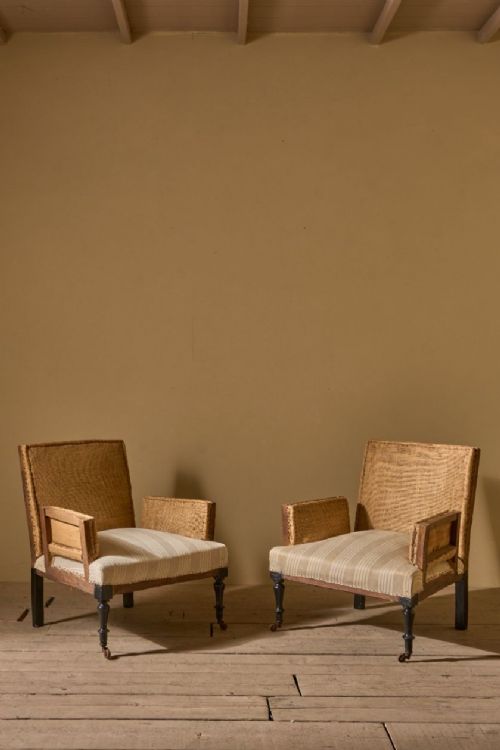
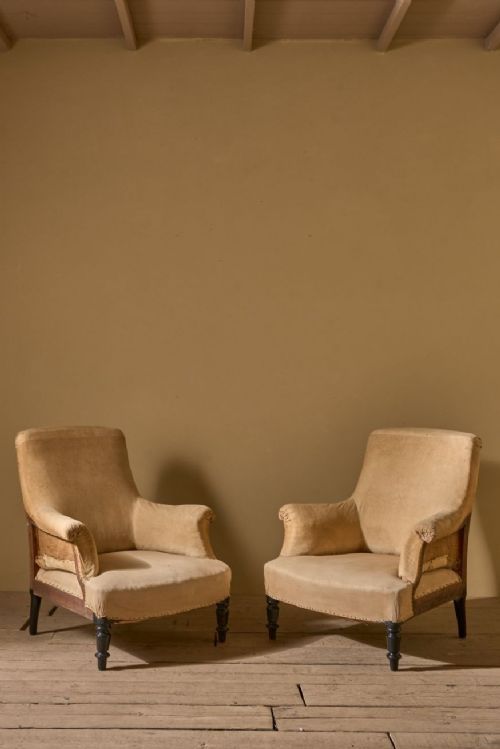
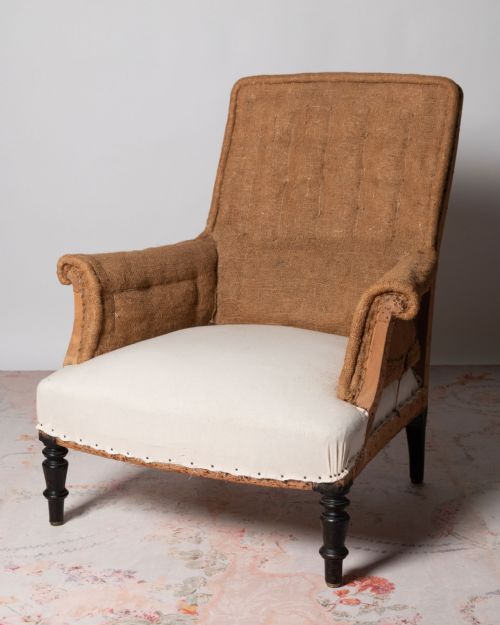
Several armchairs are sold ready for upholstery, offering a blank canvas for unexpected textile choices.
Jacob Desmalter·Henry Thomas Peters
The Antique Empire Armchair Glossary
- Fauteuil
- An open-framed upholstered armchair with wooden armrests, originating in France. These chairs typically feature exposed mahogany or giltwood structures.
- Ormolu
- Gilt bronze mounted to furniture pieces for decorative contrast. This technique adds metallic highlights to timber frames.
- Consulate Period
- A transitional phase preceding the full Empire style, influencing chair design around the turn of the nineteenth century. Pieces from this era display restrained classical geometry.
- Bergere
- A closed armchair with upholstered sides and a loose seat cushion. They offer deep-seated comfort within a formal wood frame.
Antique Empire Armchair: Frequently Asked Questions
What distinguishes an empire armchair from a regency chair?
Empire armchairs derive their aesthetic from Napoleonic France and neoclassical ideals, featuring heavy architectural forms and robust mounts of ormolu or brass. Regency chairs share similar classical roots from British tradition but often display lighter proportions and different turning details.
Both styles utilise dark timbers like mahogany, yet the French empire pieces tend towards more overtly monumental mounts and symmetrical show-wood frames.
Are these armchairs comfortable for daily use?
These seating pieces were designed for formal reception rooms, libraries, and salons rather than modern lounging. Their supportive upright backs and structured arms encourage an attentive posture.
Modern comfort depends entirely on the quality of the internal webbing and padding applied during reupholstery, which can be tailored to personal preference.
How do I identify a revival piece from an original period chair?
Original pieces dating to the early nineteenth century exhibit construction methods, timber ageing, and hand-cut joinery characteristic of the period. Revival pieces made later in the nineteenth or twentieth centuries often utilise machine-sawn components and slightly different secondary woods.
Examining the underside, joints, and the wear patterns on the finish helps clarify the exact manufacturing era.
How should I care for antique wood and gilt mounts?
Polished mahogany frames require minimal intervention, needing only occasional dusting with a soft, dry cloth to preserve the surface sheen. Avoid liquid polishes that can seep into dry timber joints or degrade delicate finishes.
Giltwood and ormolu mounts must be cleaned with extreme care using dry brushes to prevent abrasion of the gold leaf or bronze.