


Antique Elm Kitchen Chairs
These antique elm kitchen chairs offer honest country utility, bringing durable timber seats and traditional vernacular forms straight into domestic dining rooms.
Antique Elm Kitchen Chairs
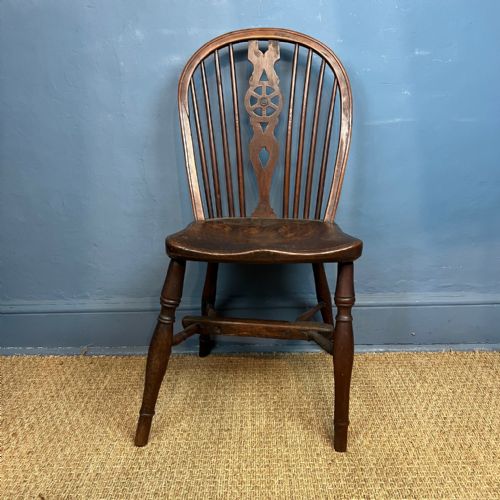
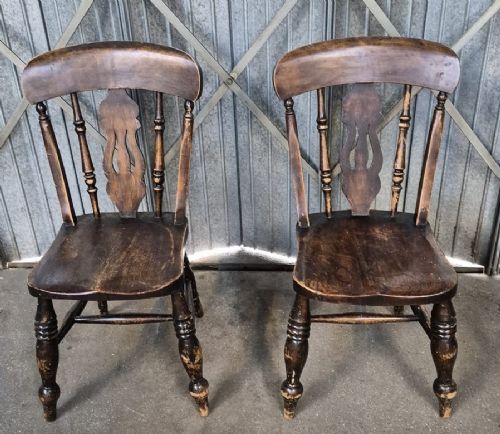
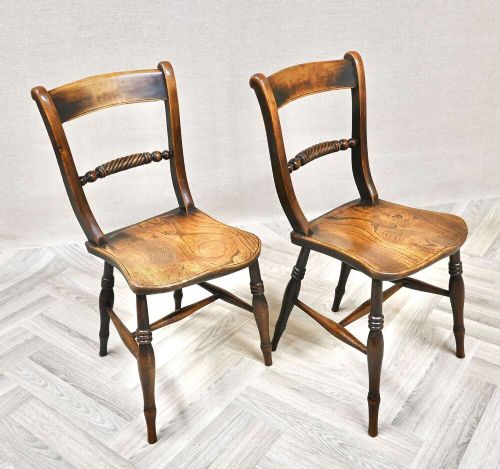
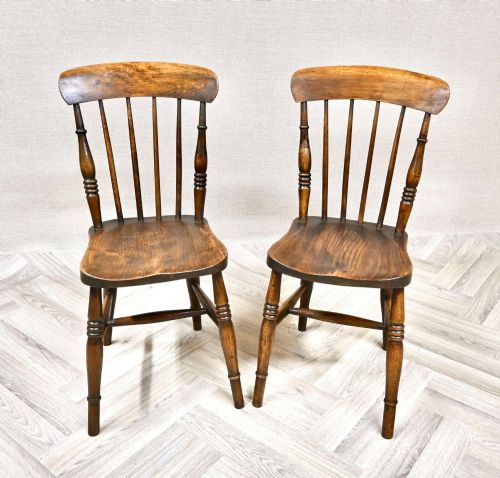
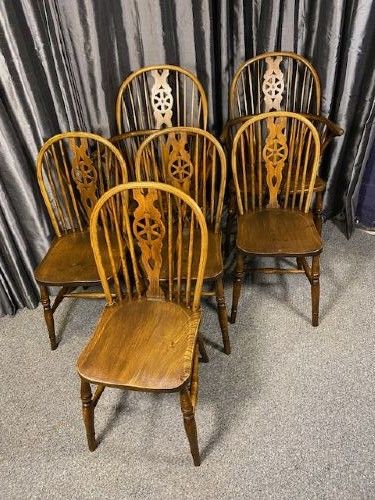
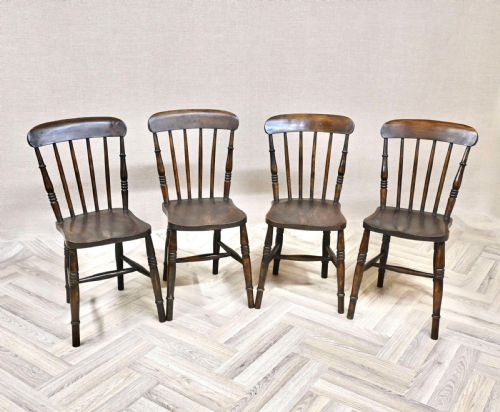
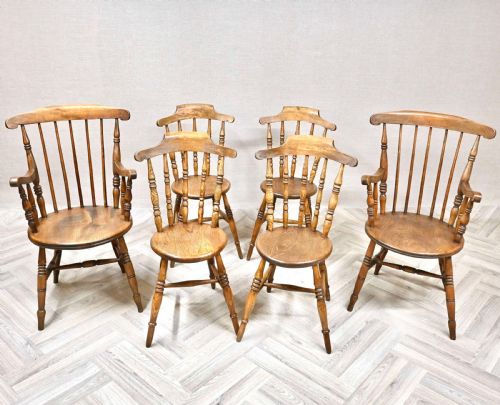
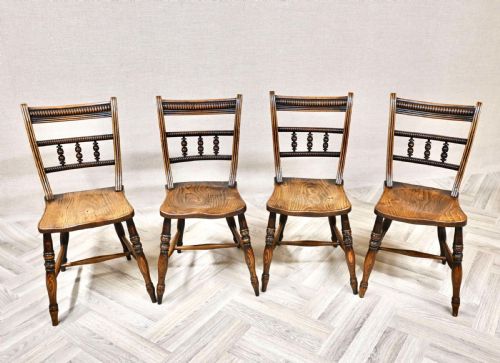
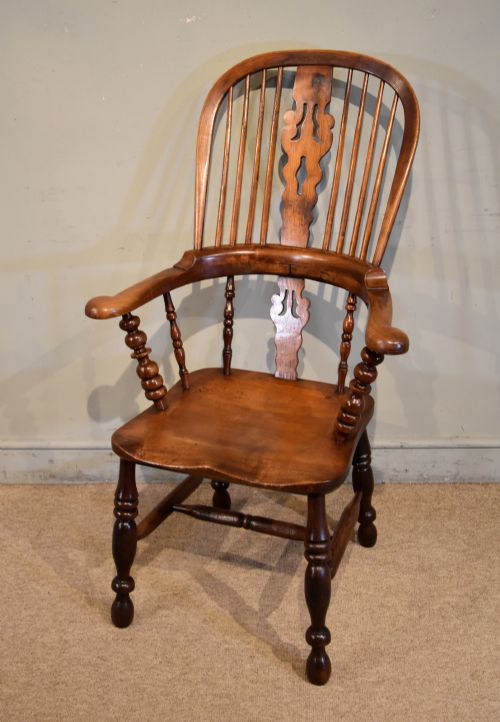
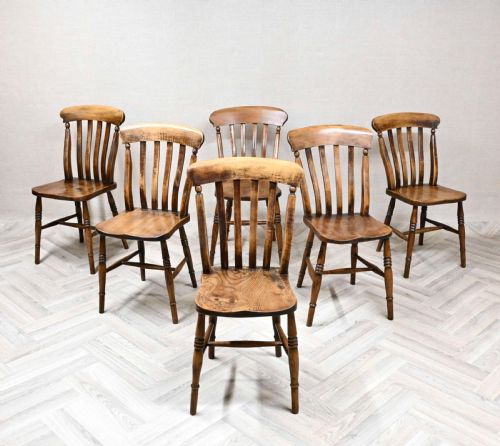
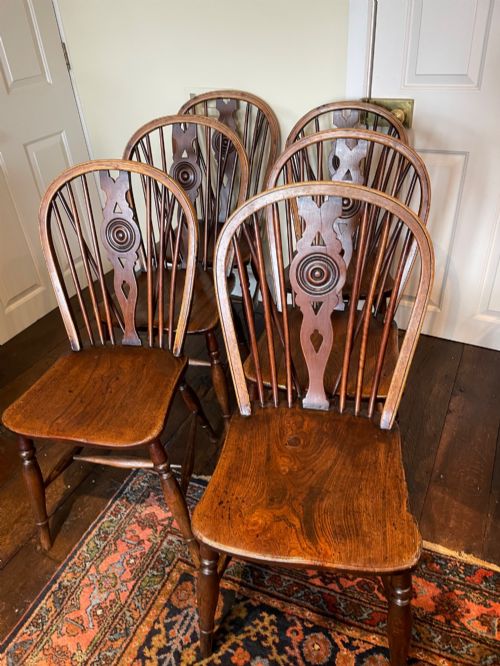
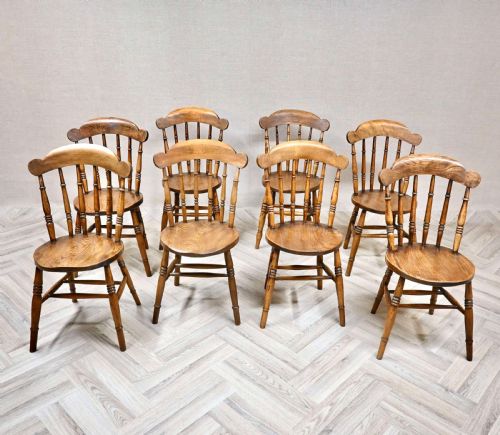
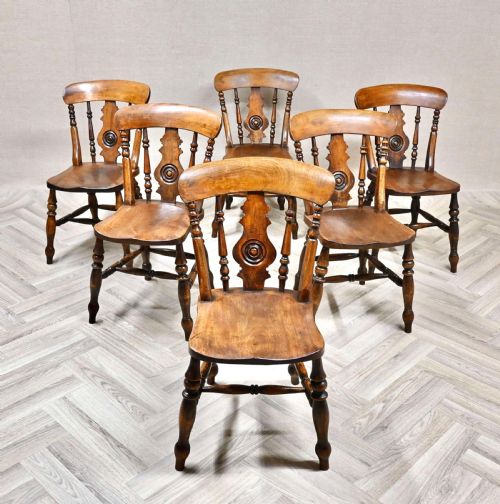
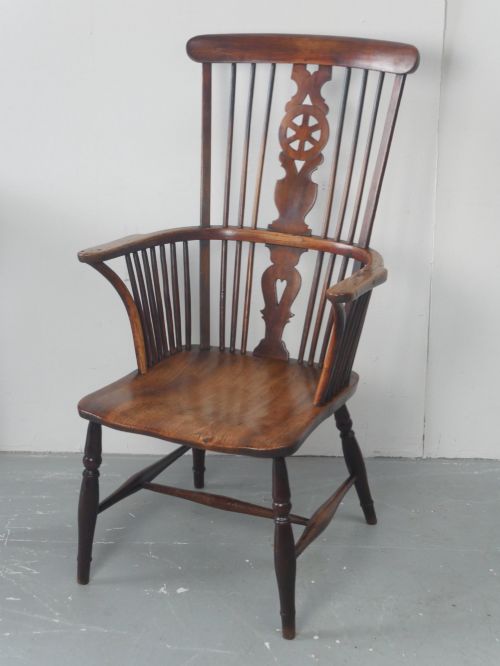
When searching for antique elm kitchen chairs, buyers encounter sturdy seating originating from nineteenth-century farmhouses and rural workshops. The most common forms on this page include Windsor variations alongside simple spindle and lathback dining chairs.
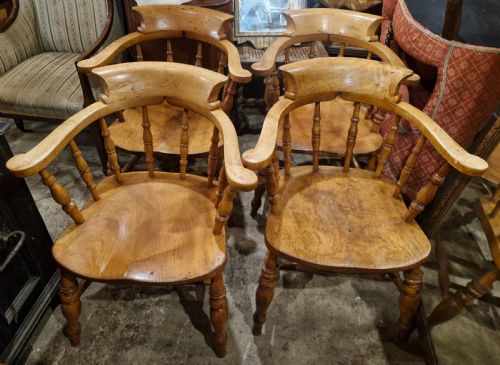
Makers utilised resilient local woods for daily domestic labour, resulting in robust dining chairs and armchairs designed to withstand heavy daily use. These pieces embody English country vernacular traditions, ranging from matched sets to large harlequin groupings.
Materials and construction methods
Chair makers shaped solid elm for the saddle seats, selecting the timber for its resistance to splitting under pressure. Spindles, legs, and bows were commonly turned from ash, beech, or oak to provide rigid structural support.
Traditional Windsor construction relies on pegged joints, where turned legs and back spindles fit directly into drilled apertures in the thick wooden seat. Certain regional variants incorporate rush seating or crinoline stretchers for added stability.
Antique Elm Kitchen Chairs Retail Price Guide 2026
Typical asking prices for elm kitchen chairs among the pieces listed under this phrase on Sellingantiques today, from the lower quarter to the upper quarter. They describe what is for sale here now, not the wider market.
Several chairs preserve deep saddle-shaped depressions in the elm, worn smooth by generations of farmhouse breakfasts.
Distinguishing quality in country seating
Quality rests in the balance of the proportions and the depth of the timber grain developed over generations of use. Chairs displaying clean turning on the legs and well-sculpted elm seats demonstrate superior workshop execution.
The integrity of the original joints and the uniformity of matched sets govern the desirability of the grouping. Subtle details such as crinoline stretchers or bullseye splats separate standard utility seating from finer regional productions.
The Antique Elm Kitchen Chairs Glossary
- Windsor chair
- A wooden chair built with a thick solid seat into which the legs and back are separately inserted. These vernacular seats often feature steam-bent bows and shaped armrests.
- Lathback
- A chair back constructed with horizontal flat wooden slats rather than vertical turned spindles. This vernacular style provides robust support for daily kitchen use.
- Crinoline stretcher
- A curved metal or wooden brace connecting the legs of a chair below the seat. This reinforcement prevents the legs from splaying outward under weight.
- Harlequin set
- A collection of dining chairs that share similar stylistic traits but were gathered from different origins. Such groupings frequently combine related nineteenth-century vernacular forms.
- Spindle back
- A chair back formed of numerous slender turned wooden uprights. These vertical components support the upper bow while keeping the frame relatively lightweight.
Antique Elm Kitchen Chairs: Frequently Asked Questions
How do I care for antique elm chairs?
Maintain the timber by applying natural beeswax occasionally to nourish the dry grain and prevent cracking.
Keep the seating away from direct heat sources and sudden temperature shifts to protect old wooden joints.
Are these chairs suitable for daily dining?
These robust country seats were originally built for heavy daily use in busy farmhouses and kitchens.
Solid timber construction and pegged joints ensure they handle modern dining requirements with dependable strength.
What is a Thames Valley chair?
This regional designation refers to nineteenth-century vernacular seating produced along the Thames valley workshops.
Such chairs frequently combine elm seats with ash or beech framing, exhibiting distinctive local turning styles.
How do I identify a matched set?
Matched sets share identical construction details, timber species, turning patterns, and overall dimensions across all pieces.
Harlequin collections differ by bringing together complimentary regional designs rather than identical workshop outputs.