

Antique Easy Armchairs
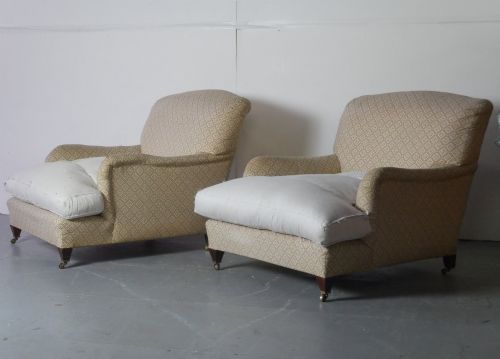
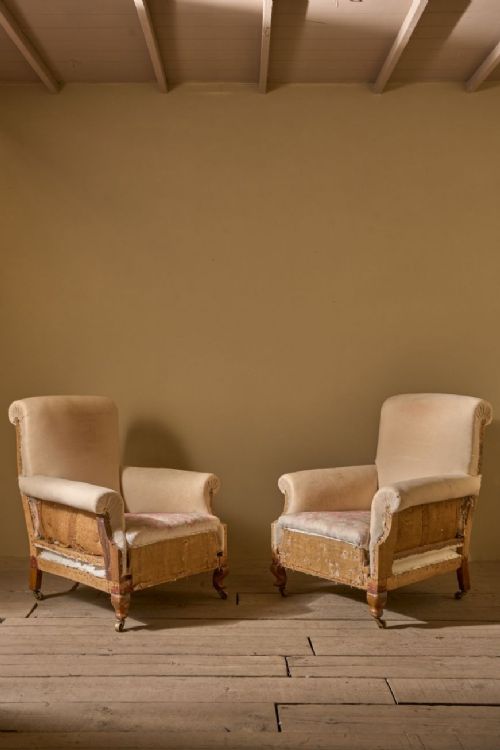
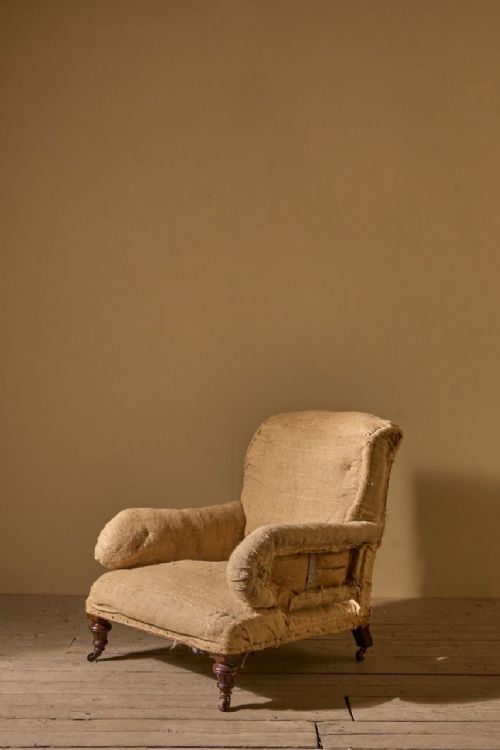
These antique easy armchairs offer deep seating and sturdy wooden frames, built to anchor a room with solid comfort.
Antique Easy Armchairs
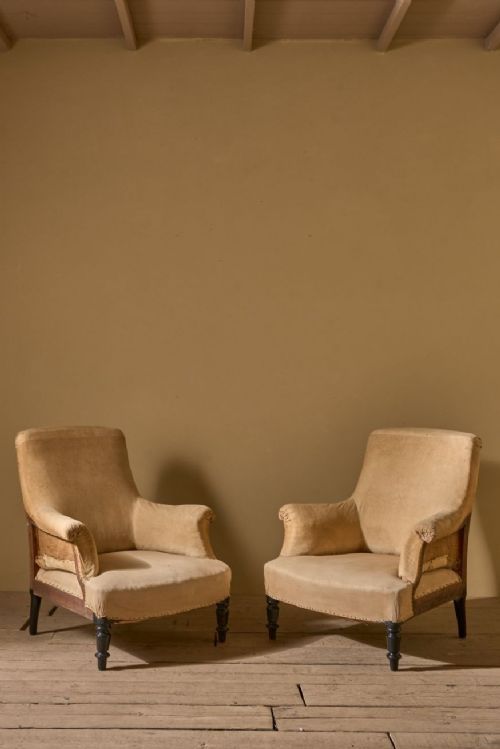
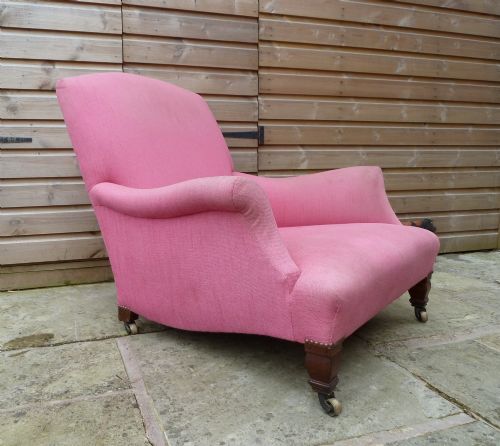
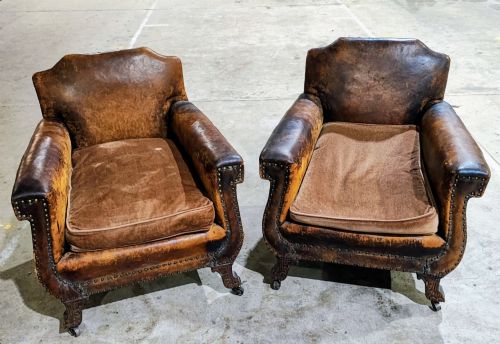
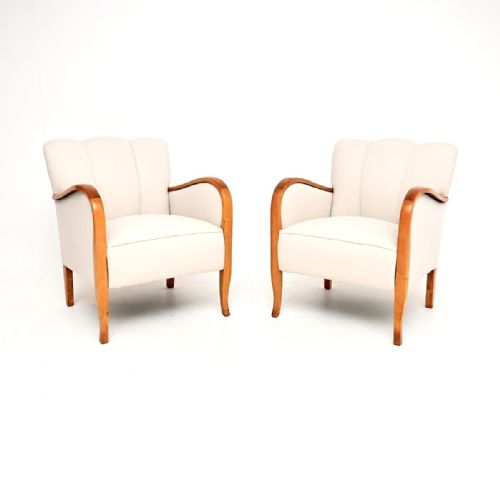
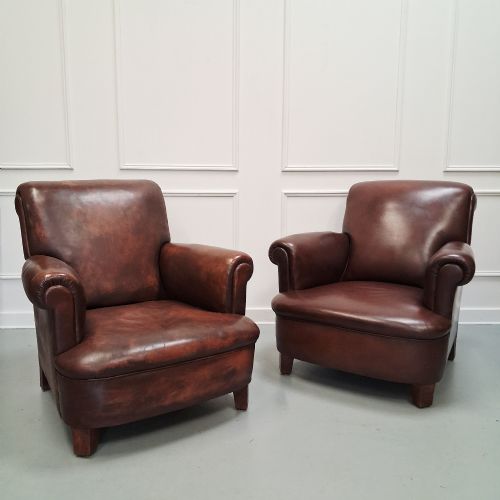
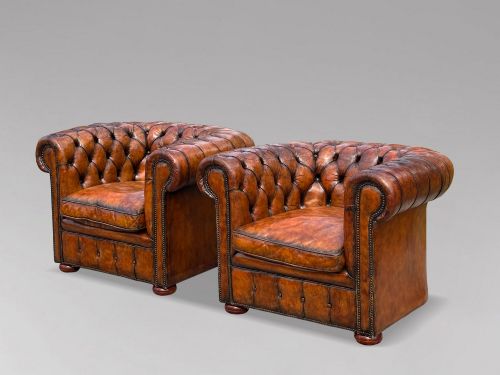
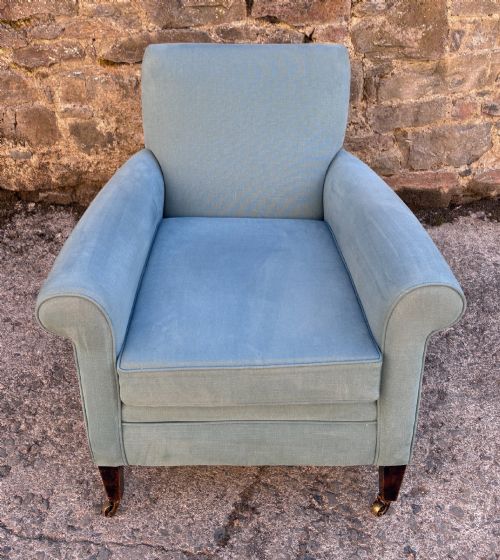
When you search for antique easy armchairs, you encounter heavy Victorian and Edwardian club chairs alongside streamlined Art Deco seating from the nineteen-thirties. The selection spans robust nineteenth-century wingbacks in mahogany and walnut, deep-seated fireside chairs, and George II examples from the eighteenth century.
Most pieces date from the Victorian, Edwardian, and Art Deco eras, surfacing as single chairs or matched pairs. You find country house armchairs alongside specialised forms like colonial planter's chairs and low fireside loungers.
Materials and construction
Frames rely on durable hardwoods including mahogany, walnut, oak, and satin birch, joined to withstand heavy daily use. Upholstery materials range from traditional leather and velvet to calico, fabric, and split cane, supported by brass details.
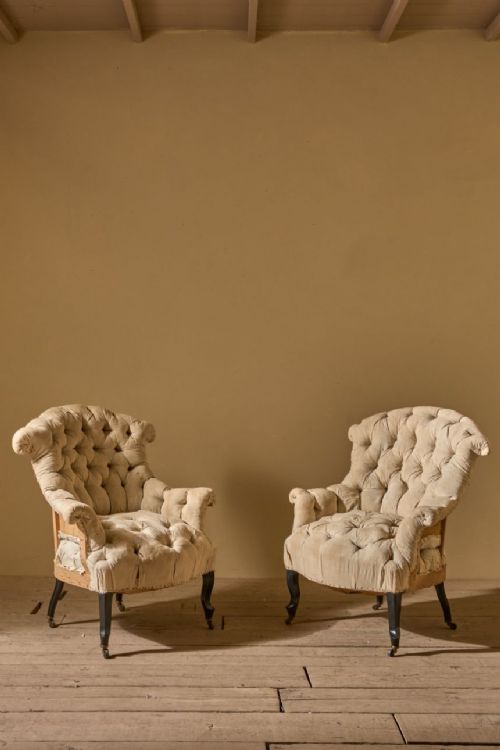
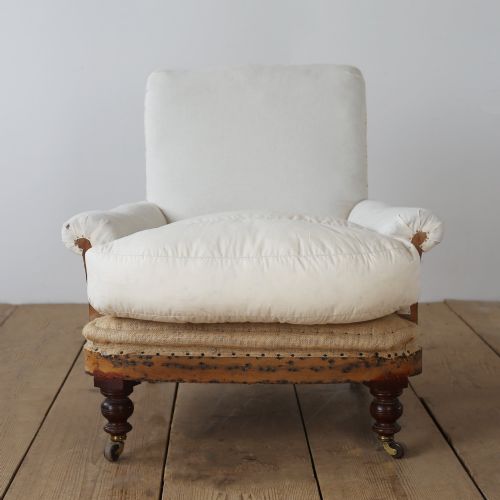
Makers shaped the structural timber into sprung backs and wide arms, finishing the pieces with buttoning or tight upholstery over supportive webbing.
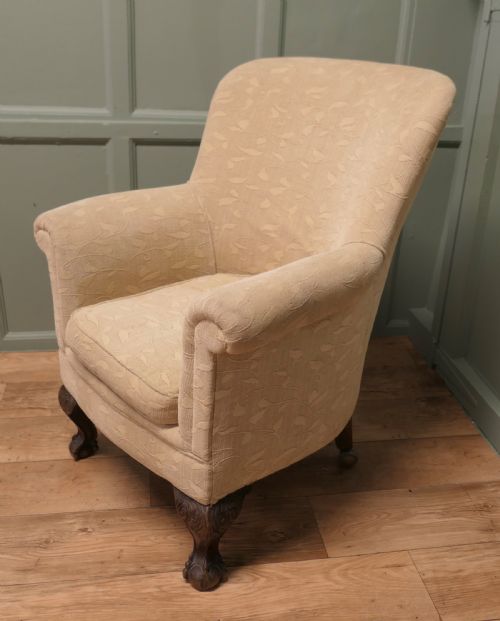
A solitary child's wingback armchair stands among the massive club chairs, scaled down entirely for miniature comfort.
Evaluating workmanship
Quality rests in the integrity of the wooden frame and the proportion of the padding. Superior chairs maintain a heavy, balanced stance with responsive internal springing and carefully fitted timber joints.
The distinction lies in the fidelity of the period style, whether executed in classical walnut frames or geometric Art Deco satin birch silhouettes.
Howard and Sons·Whytock and Reid·SF Cullen
The Antique Easy Armchairs Glossary
- Wingback
- An armchair with side panels designed to shield the sitter from draughts. These high-backed seats appear frequently in eighteenth and nineteenth-century forms.
- Club chair
- A deep, upholstered easy chair designed for lounging. These typically feature leather upholstery and originate from the late nineteenth and early twentieth centuries.
- Bergere
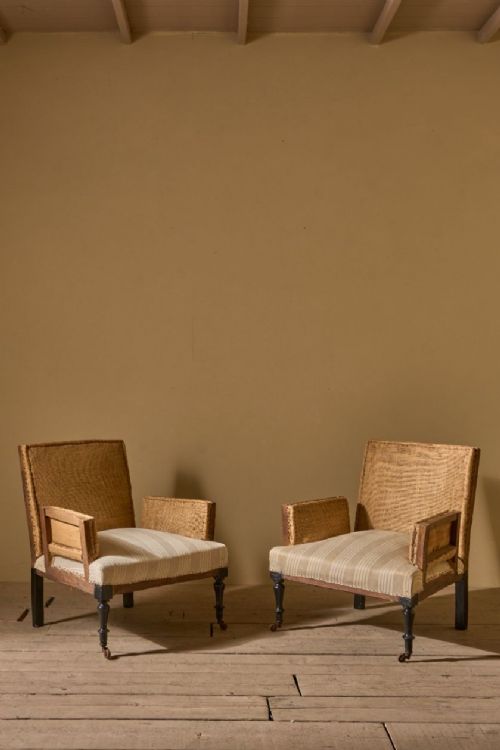
- An enclosed armchair with wooden framing and woven cane panels along the back and sides. These lighter seats often date to the early twentieth century.
- Spoon back
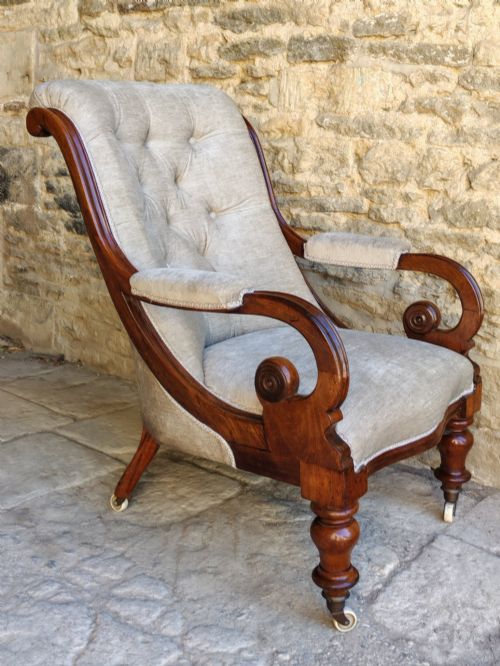
- A Victorian chair style featuring a padded backrest carved in a concave oval shape resembling the bowl of a spoon. This design conforms to the human spine.
- Button back
- An upholstery technique where indentations are secured with buttons pulled deep into the padding. This method keeps the internal stuffing firmly in place.
Antique Easy Armchairs: Frequently Asked Questions
What defines an easy armchair?
An easy armchair is built primarily for relaxation, offering deeper proportions, wider armrests, and softer padding than formal dining or parlour seating.
These chairs developed to anchor domestic living spaces, libraries, and drawing rooms across the Victorian and Edwardian periods.
How do I identify Art Deco armchairs?
Art Deco armchairs from the nineteen-thirties rely on geometric silhouettes, sleek curved lines, and exotic woods like satin birch paired with leather.
They break away from heavy Victorian carving in favour of streamlined forms and functional comfort.
Are these chairs suitable for daily use?
Many of these pieces were engineered for heavy domestic service in country houses and town residences, utilising robust hardwood frames and resilient internal springing.
Provided the upholstery and webbing remain sound, they function reliably as primary seating in modern homes.
How do I tell Victorian from Edwardian chairs?
Victorian armchairs tend to feature darker woods like walnut and mahogany, button-backed upholstery, and ornate framing such as spoon backs.
Edwardian examples often display lighter proportions, simpler lines, and deep-seated comfort intended for relaxed lounging.