


Antique Earthenware Stand
When you search for an antique earthenware stand, you find vessels designed to support everything from cheese domes to heavy garden urns.
Antique Earthenware Stand
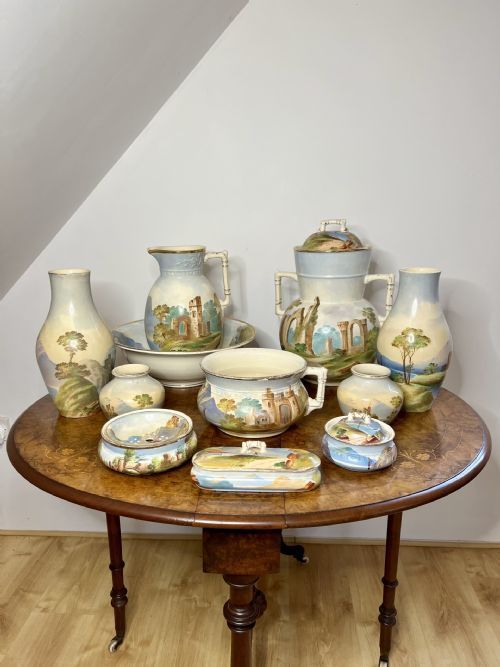
An antique earthenware stand encompasses a diverse group of utilitarian and decorative ceramics, ranging from large garden seats and pedestals to cheese domes, inkstands, and sauce tureen bases. These pieces emerge primarily from 19th-century British potteries, alongside significant examples from continental European workshops and studio potters working into the early 20th century.
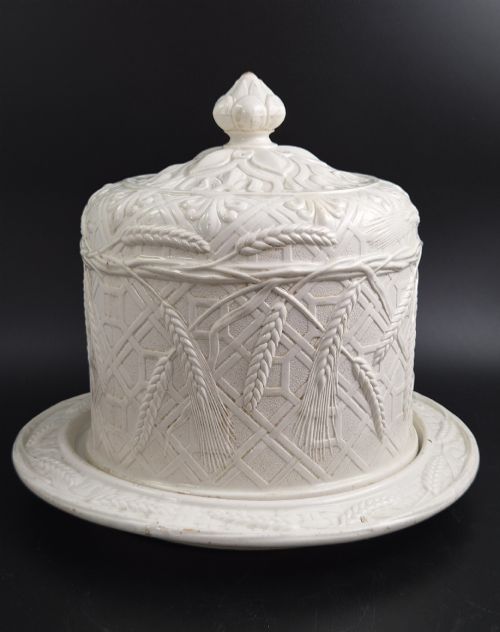
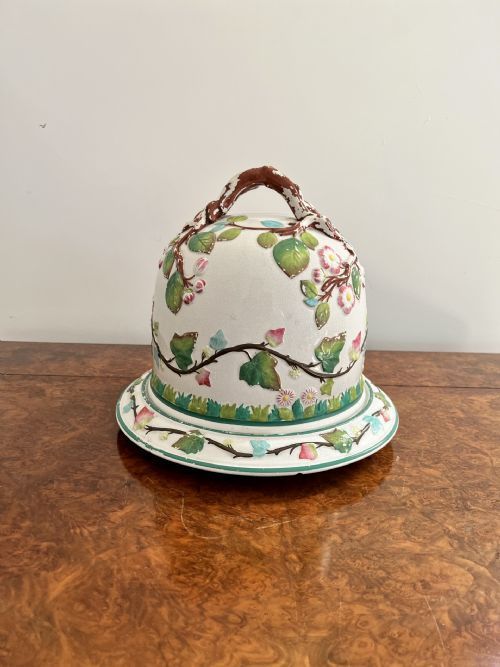
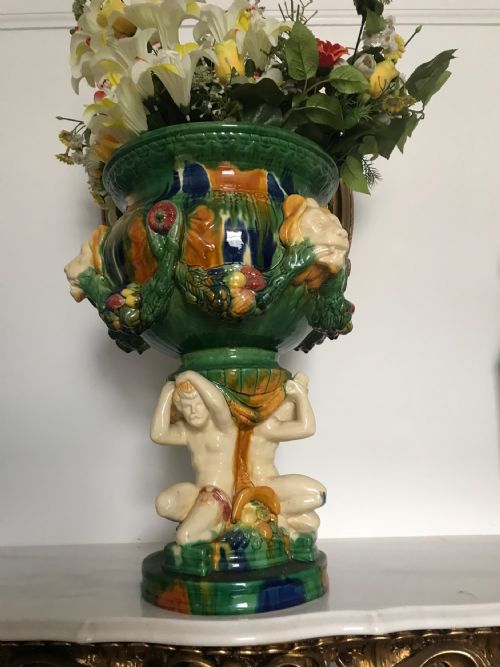
Buyers frequently encounter majolica jardinières on matching pedestals, ironstone cheese dishes with accompanying plates, and glazed terracotta plant holders. Styles span Georgian blue and white patterns, Victorian majolica leaf motifs, and Arts and Crafts faience, reflecting the changing domestic tastes across the Georgian, Victorian, and Edwardian eras.
The utility of these stands dictates their robust build, as many were created to bear the heavy weight of large cheeses, flowering plants, or walking sticks in hallways. Surviving examples demonstrate how households utilised ceramics to elevate everyday functional objects into decorative focal points.
Materials and Technique
The construction of these items relies heavily on earthenware, pearlware, and ironstone bodies, often finished with colourful lead-glazed ceramic surfaces or rich majolica enamels. Potters shaped these clays using moulds or by throwing on a wheel, depending on whether the object required the crisp geometric precision of ironstone or the organic curves of modelled terracotta and majolica.
Glazing techniques define the visual character of the pieces, utilising opaque white tin glazes, translucent coloured majolica lead glazes, and lustre finishes to seal the porous earthenware bodies. Artisans applied hand-painted cobalt underglazes, intricate enamel details, and moulded relief decorations such as leaves, lattice work, and figural bases prior to kiln firing.
Several stands double as resting places for stern Staffordshire greyhounds and watchful lions, keeping guard over your hallway.
Judging Quality
The distinction between standard utility wares and superior pieces rests on the crispness of the moulded relief and the depth of the glaze application. Master potteries achieved finer surface definition and more vibrant, even colour distribution on majolica and ironstone than smaller provincial kilns.
Preservation of the original matching components significantly elevates a piece, particularly in complex assemblies like cheese domes with their matching platters, or jardinières paired with their correct pedestals. The finesse of hand-painted brushwork on studio pottery and transfer-printed blue and white wares also separates routine production from exceptional studio outputs.
Burmantofts Art Pottery·Enoch Wood And Sons·Clement Massier·Julius Dressler·Minton·Spode·Doulton Burslem
The Antique Earthenware Stand Glossary
- Earthenware
- Porous pottery fired at relatively low temperatures, requiring a glazed surface to hold liquids and resist wear. This ceramic body forms the structural foundation for the majority of stands and pedestals.
- Majolica
- A Victorian lead-glazed earthenware characterised by brightly coloured low-firing metal oxide enamels. This technique produced vivid greens, browns, and purples on heavily modelled botanical or figural stands.
- Ironstone
- A dense, durable type of earthenware patented in the 19th century to imitate porcelain. It provides a sturdy white body frequently utilised for heavy-use items like cheese stands and large platters.
- Pearlware
- A refined earthenware developed in the late 18th century featuring a thin glaze with a slight bluish tinge in the pooling areas. It bridges the stylistic gap between creamware and later white ironstone.
- Faience
- Tin-glazed earthenware produced in imitation of continental European potteries. Arts and Crafts makers utilised this technique to achieve rich, opaque surface colours on jardinières and pedestals.
Antique Earthenware Stand: Frequently Asked Questions
What was an earthenware cheese stand used for?
These pieces served dining tables by keeping large cheeses elevated and covered with a matching dome to maintain freshness and display decorative pottery at meals.
The domestic setting of the Victorian dining room relied on such vessels to present foodstuffs with theatrical flair and proper etiquette.
Were garden stands meant for outdoor use?
Many earthenware garden seats and plant stands were designed to withstand outdoor conditions, though fragile majolica or terracotta pieces often remained inside on conservatories and porches.
Frost resistance varied greatly among 19th-century ceramic bodies, leading many owners to keep decorative pedestals protected within domestic interiors.
How do I identify a matched set versus a marriage?
Matched sets share identical clay bodies, glaze characteristics, and wear patterns that indicate they were fired and finished together in the same pottery.
Discrepancies in colour tone, glaze thickness, or sizing between a stand and its upper vessel suggest separate origins brought together at a later date.