


Blue White Pottery Tray
A blue white pottery tray brings cobalt pigment and crisp ceramic form together, offering a practical surface with enduring visual appeal.
Blue White Pottery Tray
A blue white pottery tray encompasses serving platters, pin trays, inkstands, and spoon trays shaped from earthenware, pearlware, and ironstone. These pieces emerge predominantly from the Georgian, Regency, and Victorian periods, reflecting diverse domestic uses across English, French, Dutch, and Japanese workshops.
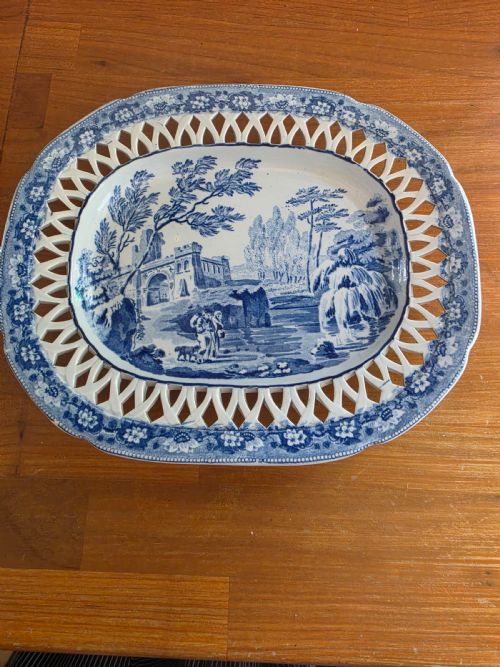
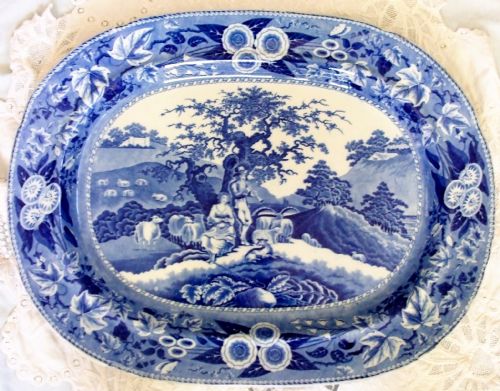
The version most commonly met on this page is the English earthenware or pearlware serving platter decorated with transfer-printed cobalt designs. Makers like Spode, Davenport, and Thomas Lakin produced these platters and dishes in patterns ranging from Chinoiserie scenes to classical ruins.
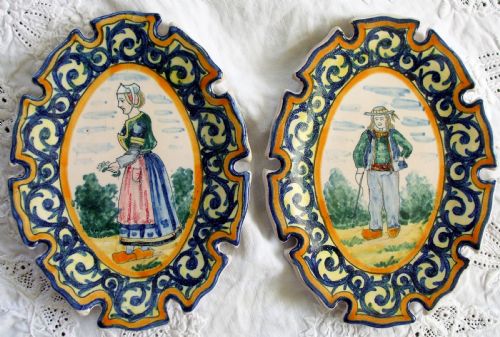
Beyond large platters, smaller forms such as pin trays, vide-poche dishes, and inkstand bases appear regularly. These smaller pieces often originate from Dutch Delft or French faience traditions, bringing tin-glazed earthenware and intricate hand-painted motifs to a compact surface.
Materials and production techniques
Potters shaped these trays using earthenware, pearlware, tin-glazed earthenware, and ironstone, applying a transparent glaze over the ceramic body. Cobalt pigment provided the characteristic blue colour, whether hand-painted on Dutch Delft and French faience or transferred mechanically via copper plates onto English meat plates.
Transfer printing dominated English production during the Georgian and Regency eras, allowing complex pictorial scenes like the Bridge of Lucano or Buffalo patterns to transfer onto large serving platters with precision. Earlier pearlware and creamware bodies offered a smooth, pale ground that made the cobalt pigment stand out sharply.
Firing took place in traditional kilns where pieces required careful placement to prevent glaze flaws and warping, particularly on larger bread stands and cheese dishes. Pierced rims, fretted edges, and moulded details on serving dishes demanded skilled hand-finishing before the final glaze firing.
Listings feature earthenware, pearlware, and ironstone pieces spanning the Georgian, Regency, and Victorian periods.
Evaluating quality and execution
Quality rests primarily in the crispness of the transfer print and the depth of the cobalt pigment against the ceramic body. Superior pieces display sharp outlines without smudging, whereas lesser examples suffer from blurred transfers and uneven colour distribution.
The refinement of the ceramic body and the precision of moulded or pierced details set the better trays apart. Early pearlware bodies and finely potted ironstone exhibit a thinner, more even structure compared to heavier, coarser utility wares.
DAVENPORT·Spode·Thomas Lakin·John Rogers & Son·J. & R. Clews·DON POTTERY·ELKIN KNIGHT & BRIDGWOOD·MASONS IRONSTONE CHINA
The Blue White Pottery Tray Glossary
- Pearlware
- A refined earthenware developed in the late eighteenth century featuring a faint bluish glaze that pooled in recesses to mask the underlying cream colour.
- Transfer printing
- A method of applying detailed designs to ceramics by pressing paper from an engraved copper plate onto the biscuit ware before glazing and firing.
- Tin-glazed earthenware
- Pottery covered in a glaze made opaque with oxide of tin, providing a smooth white surface for hand-painted cobalt decoration as seen in Dutch Delft.
- Ironstone
- A durable heavy ceramic patent developed in the nineteenth century, combining earthenware clay with feldspar to resist chipping.
- Vide-poche
- A small tray or dish intended for emptying pockets of loose items upon entering a room, frequently executed in French faience.
Blue White Pottery Tray: Frequently Asked Questions
How were these trays used?
Larger platters and serving dishes served meat, bread, and cheese at the dining table during the Georgian and Victorian eras.
Smaller trays functioned as pin dishes, spoon trays, or inkstand bases for desks and dressing tables.
How do I date a blue white pottery tray?
Examine the ceramic body, noting whether it is early pearlware, standard earthenware, or heavy ironstone.
Maker marks, pattern names, and stylistic cues like Chinoiserie or Aesthetic Movement motifs help narrow the manufacturing decade.
What is transfer printing?
Transfer printing is a technique where an engraved copper plate transfers a cobalt design onto paper, which is then pressed onto the unglazed pottery.
This method allowed complex pictorial scenes to be replicated consistently across commercial serving dishes.
How do I care for antique ceramic trays?
Wash these pieces gently by hand using mild soap and warm water, avoiding abrasive sponges or harsh chemical detergents.
Display them securely on flat surfaces or plate stands to protect their edges from impact.