


Antique Dutch Faience Plate
These antique dutch faience plate examples bring tin-glazed earthenware into the home, offering hand-painted blue and white or polychrome decoration from earlier centuries.

Antique Dutch Faience Plate
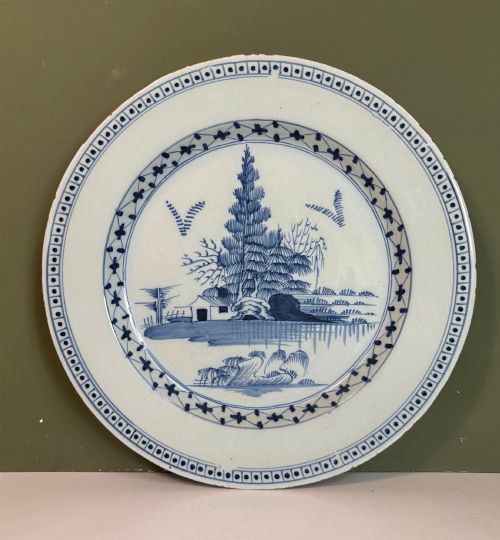
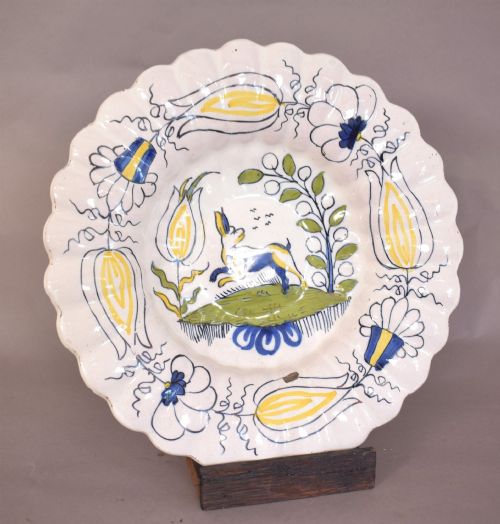
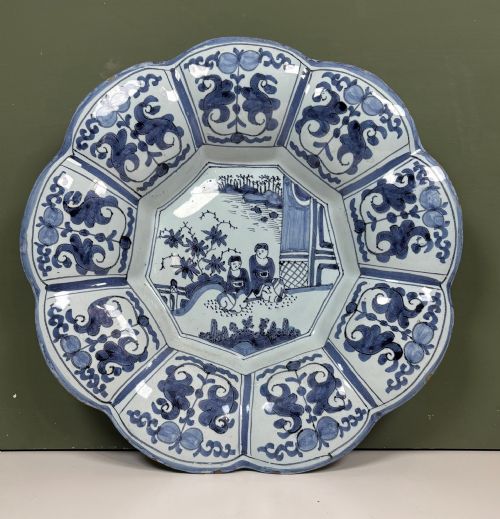
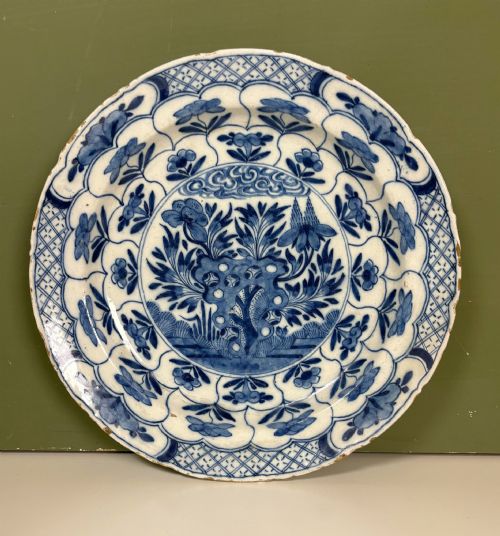
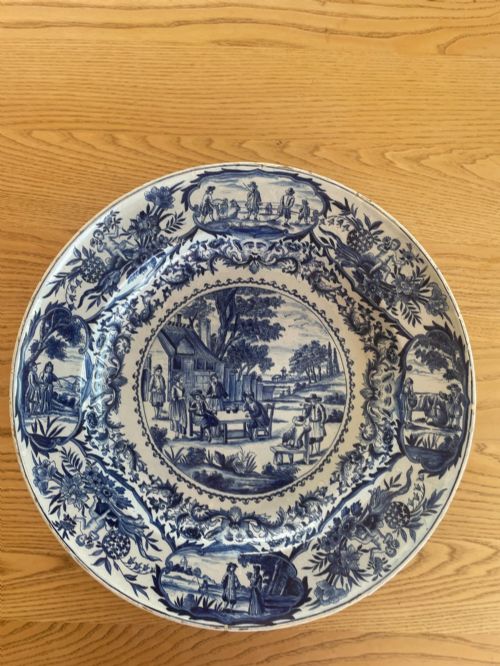
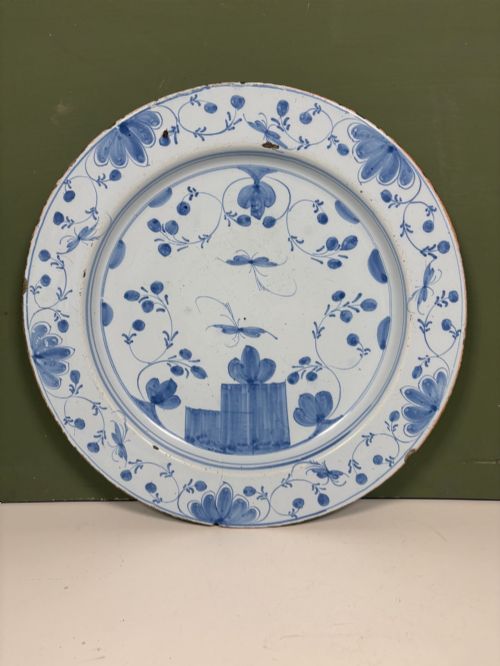
An antique dutch faience plate is a ceramic dish produced in the Netherlands during the seventeenth and eighteenth centuries, often recorded in styles such as Dutch Delftware and Dutch Baroque. These pieces appear in forms ranging from standard plates to large decorative chargers and lobed dishes.
Most items on this page date from the eighteenth century, alongside seventeenth-century examples and objects associated with the year seventeen-eighty. Buyers frequently encounter geometric floral charger plates and blue painted delftware alongside smaller paired items.
Materials and production methods
Potters shaped these objects using earthenware, which was then coated in a white tin glaze to provide a smooth surface for painting. Cobalt pigment supplied the deep blue colour seen across traditional blue and white vessels.
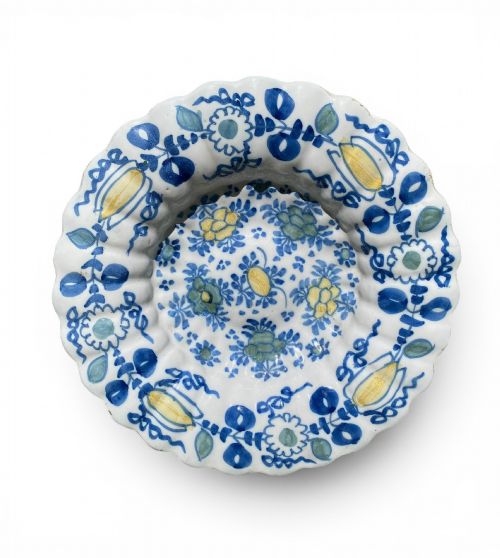
Makers also employed multiple pigments for polychrome decoration, creating colourful floral and geometric motifs. Once painted, the tin-glazed earthenware received a final firing to set the colours firmly into the glaze.
Peacock plates bring a touch of avian splendour to the table, proving that seventeenth-century potters loved a good bird motif.
Distinguishing quality in faience plates
The sophistication of the hand-painted brushwork sets finer examples apart from simpler production, particularly in the precision of geometric floral arrangements and the clarity of cobalt pigment. Finer polychrome and blue-painted specimens demonstrate greater control over line and composition.
Scale and form also influence the character of each piece, with large wall chargers and lobed dishes requiring greater skill in shaping and firing than standard plates.
The Antique Dutch Faience Plate Glossary
- Faience
- Tin-glazed earthenware produced in Europe, noted for its opaque white surface and painted decoration. This technique forms the foundation of traditional Dutch delftware.
- Charger
- A large decorative plate or dish intended primarily for display on walls or sideboards rather than dining use. These substantial pieces often feature elaborate painted schemes.
- Polychrome
- Decoration employing multiple colours rather than a single pigment. In these ceramics, this typically involves a palette of several distinct hues alongside the white glaze.
- Kraak
- A style of imported Chinese porcelain design imitated by Dutch potters. These pieces usually feature panelled borders and central motifs of flowers or birds.
- Waaierbord
- A Dutch term for a specific type of plate design, frequently translated as a peacock plate. These items display distinctive fan-like panel motifs.
Antique Dutch Faience Plate: Frequently Asked Questions
What is a Dutch delft charger?
A Dutch delft charger is a large decorative plate produced in the Netherlands during the seventeenth and eighteenth centuries. These substantial dishes were made for display rather than everyday dining.
Potters decorated them with tin glaze and cobalt pigment, often featuring geometric floral patterns or scenic designs that suited formal domestic interiors.
How do I hang a heavy plate safely?
Heavy earthenware plates require specialised wall hangers that distribute the weight evenly across the rim and base. Spring-loaded brass wires or coated metal brackets provide secure support without gripping too tightly.
Wall placement should avoid areas subject to vibration or direct sunlight, ensuring the tin glaze remains protected from physical impacts and temperature fluctuations.
Were these plates used for dining?
While ceramic plates could serve food, larger chargers were primarily ornamental items displayed on dressers or walls. The softer earthenware body and tin glaze made them susceptible to scratching from metal cutlery.
Smaller plates saw occasional table use among affluent households, yet many survived because owners prized them as decorative works of art.
How can I tell eighteenth-century plates apart?
Eighteenth-century examples often exhibit looser, more varied brushwork compared to strict seventeenth-century formal designs. The evolution from strict blue and white to richer polychrome palettes helps differentiate periods.
Examining the foot ring, glaze thickness, and stylistic motifs provides further clues to the approximate decade of production.