
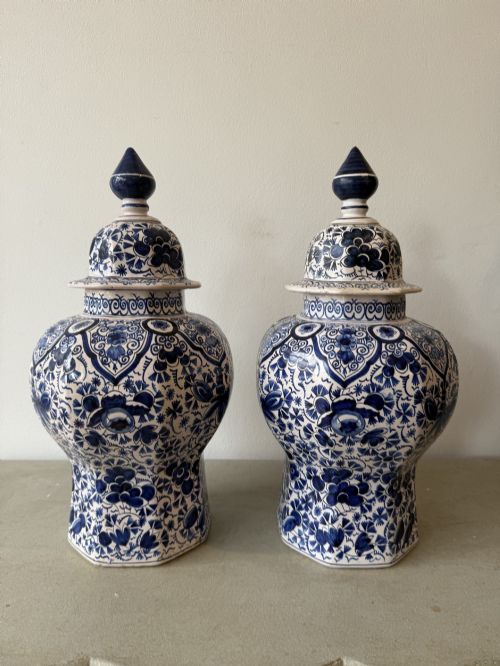


Antique Dutch Ceramic Vase
An antique dutch ceramic vase brings hand-painted blue and white or polychrome glaze into a room through centuries-old Delftware traditions.
Antique Dutch Ceramic Vase
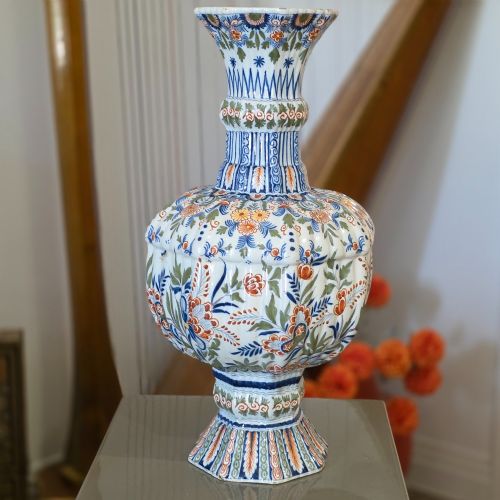
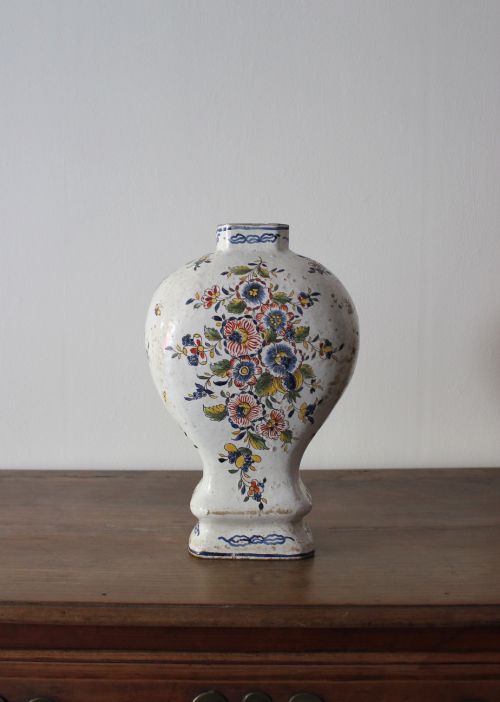
When you search for an antique dutch ceramic vase, you find tin-glazed earthenware and pottery forms ranging from simple jars and jugs to large garden urns and lidded baluster vessels. The examples you meet span from the seventeenth century through the nineteenth century, reflecting enduring styles like Dutch Delftware and Chinoiserie decoration.
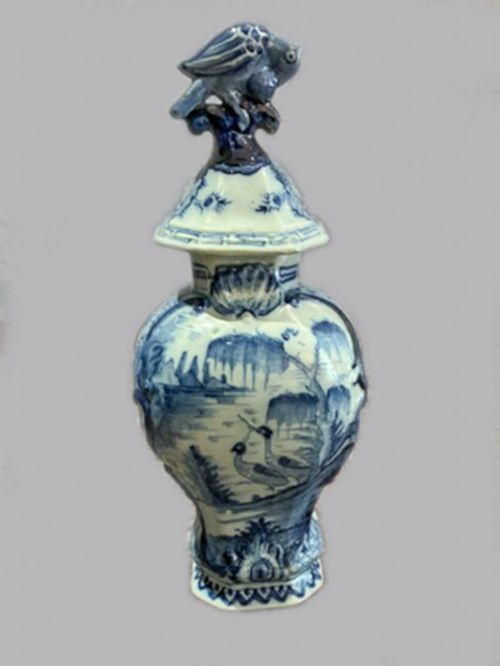
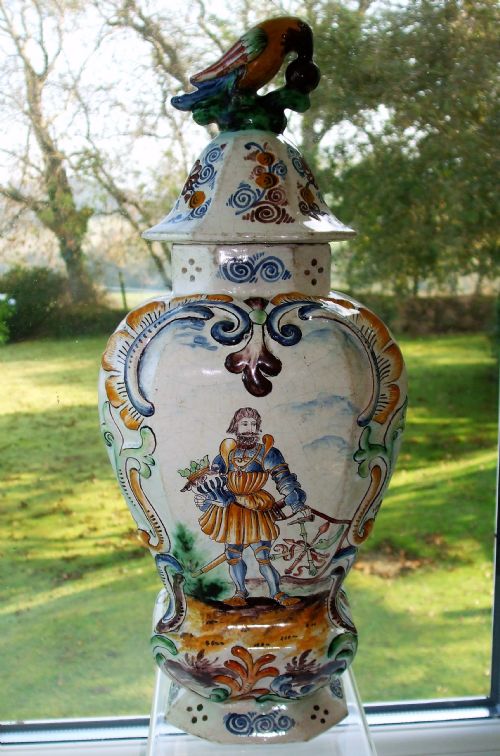
Many of these vessels take the form of baluster vases, beaker vases, and covered jars, alongside pieces later converted into table lamps. The selection frequently includes pairs, such as blue and white lidded vases or polychrome pairs bearing historical factory names.
The aesthetic draws heavily on Dutch Baroque and Chinoiserie motifs, depicting birds, flowers, and figures in cobalt pigment or manganese. Alongside standard ceramic bodies, you encounter garden urns and planters designed for display.
How they were made
Makers shaped these vessels from earthenware and ceramic bodies before applying a tin glaze that provided a smooth, opaque white background for painting. Artisans then hand-painted the surfaces using cobalt pigment or polychrome colours, often incorporating brass mounts or fittings on later conversions.
The decorative process relied on hand-painted brushwork, capturing intricate Chinoiserie scenes, floral arrangements, and avian motifs directly onto the absorbent tin glaze before firing. Ribbed beaker forms and lobed bodies required careful throwing and moulding techniques to achieve the desired silhouette.
Early potters painted delicate birds onto clay surfaces, letting seventeenth-century skies live on indoors.
What varies in quality
The refinement of the hand-painted brushwork sets exceptional pieces apart from standard production, particularly in the rendering of birds, floral details, and figures. Crispness in the cobalt pigment or polychrome palette and the preservation of the tin glaze determine visual impact.
Proportion and scale heavily influence the standing of a vessel, with large garden urns and well-balanced lidded baluster pairs commanding stronger presence. The integrity of the ceramic body and the clarity of the initial moulding shape the overall accomplishment of the work.
3 BELLS Drie klokken Factory·Rozenburg·Louis Victor
The Antique Dutch Ceramic Vase Glossary
- Tin-Glazed Earthenware
- Pottery covered with a lead glaze made opaque by the addition of tin oxide. This white surface served as the canvas for blue and white painting.
- Cobalt Pigment
- A metallic colourant used to achieve deep blue tones under the glaze. It remained stable at high firing temperatures.
- Chinoiserie
- European decorative style reflecting Chinese artistic influences. It appears frequently on seventeenth and eighteenth-century pieces depicting landscapes and figures.
- Baluster
- A vertical architectural form with a swelling lower portion. Vases of this shape are wider at the bottom and taper upward.
- Polychrome
- Decoration employing several colours rather than just blue and white. These examples often feature multi-coloured floral and animal patterns.
Antique Dutch Ceramic Vase: Frequently Asked Questions
What is a delft vase?
A delft vase is a tin-glazed earthenware vessel originating in the Netherlands, traditionally decorated with blue and white designs.
These pieces often feature hand-painted floral motifs or Chinoiserie scenes inspired by imported Asian porcelain.
How do I date an old vase?
Dating relies on examining the ceramic body, the tin glaze characteristics, and the style of the hand-painted decoration.
Seventeenth and eighteenth-century examples display different pigment qualities and potting techniques compared to nineteenth-century revivals.
Can I use these vases for water?
Tin-glazed earthenware is porous and generally unsuited for holding water directly over long periods.
Collectors typically display these vessels dry or use internal liners if they hold botanical arrangements.
What does polychrome mean here?
Polychrome refers to tin-glazed pottery painted with multiple colours instead of traditional cobalt blue.
These works incorporate varied hues to depict birds, flowers, and ornamental scenes across the ceramic surface.
Why are some mounted as lamps?
Many antique vases were converted into table lamps during the nineteenth or twentieth centuries to suit domestic lighting needs.
These conversions involved adding electrical fittings, sometimes retaining the original ceramic body and brass components.