
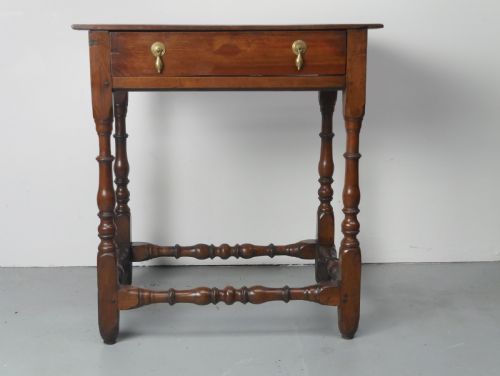


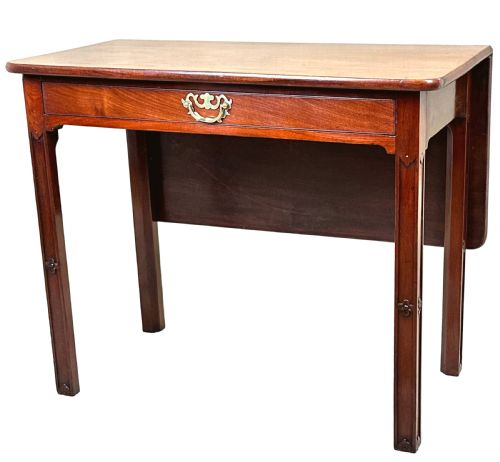

Antique Drop Handle Table
An antique drop handle table brings enduring utility and character to a room, ranging from compact side pieces to elegant pembroke tables.
Antique Drop Handle Table
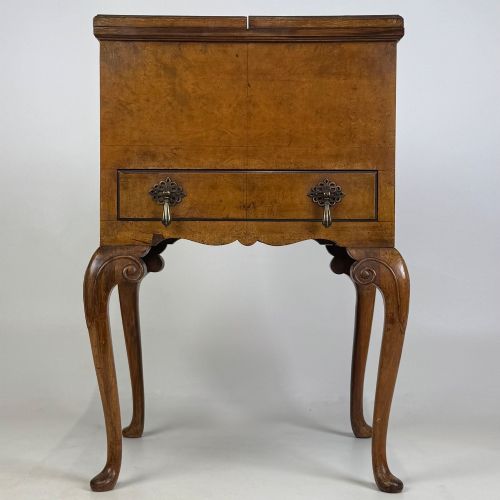
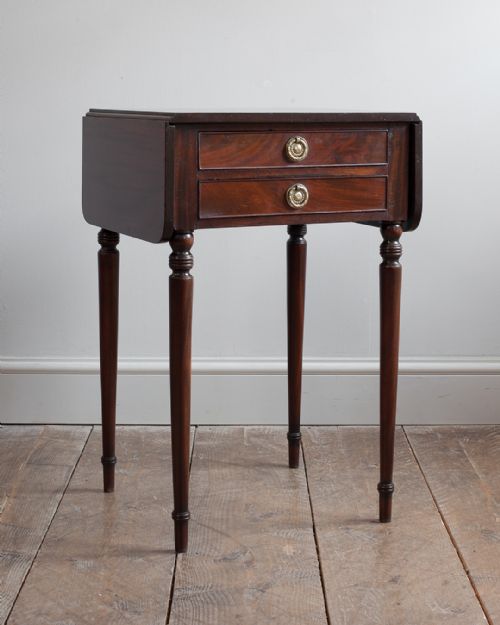
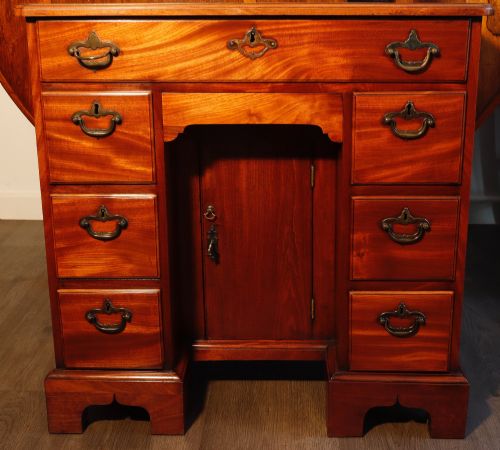
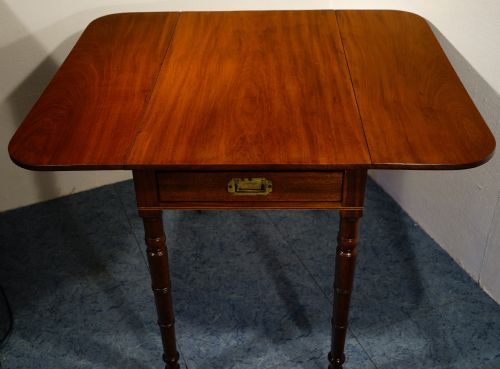
When searching for an antique drop handle table, buyers encounter a variety of forms including side tables, pembroke tables, sofa tables, and lowboys. These pieces serve practical functions in domestic spaces while displaying period craftsmanship.
The selections span multiple eras, encompassing 18th century, Georgian, Regency, Victorian, and Edwardian periods. Country vernacular pieces in oak sit alongside refined mahogany and satinwood examples.
Versions on this page include drop flap side tables and work tables equipped with the characteristic hanging hardware that defines the category. Woods such as fruitwood, burr walnut, and rosewood appear frequently across the different forms.
How these tables were made
Cabinet makers utilised dense timbers such as mahogany, oak, walnut, and fruitwood to construct the frames and surfaces of these tables. Inlays of satinwood and boxwood frequently decorated the more formal examples.
Hardware construction relied on cast and chased brass for the drop handles, secured through the drawer fronts with pins or threaded posts. Joinery methods matched the period, from early peg-jointed oak frames to later dovetailed drawers.
Object types span side tables, pembroke tables, sofa tables, cabinets, dressing tables, bedside tables, and servers.
What varies in quality
The selection of timber dictates the visual impact, from plain country fruitwood and oak to figured plum pudding mahogany, burr walnut, and exotic satinwood veneers. Finer pieces display carefully matched grain patterns across the top and drawer fronts.
Proportion and execution separate standard domestic furniture from exceptional workshop output. Refined turning, precise inlay work, and the retention of original brass drop handles elevate the standing of a piece.
Gillow·Gillington of Dublin
The Antique Drop Handle Table Glossary
- Drop handle
- A pivoting metal handle that hangs down from a fixed backplate when not in use. It is commonly found on drawers of 18th and 19th-century tables.
- Sofa table
- An oblong table designed to stand in front of a sofa, typically featuring drop leaves at the ends and trestle supports or pillar pedestals.
- Lowboy
- A small kneehole dressing table or side table with one or more rows of drawers, standing on relatively tall legs.
- Work table
- A small domestic table designed for sewing and needlework, usually fitted with internal compartments or an attached cloth bag.
Antique Drop Handle Table: Frequently Asked Questions
How do I use an antique drop handle table?
These tables adapt easily to modern rooms as bedside surfaces, lamp tables, or compact desk spaces. Drop leaves on pembroke and sofa tables allow the surface area to expand when needed.
Drawers provide convenient storage for small household items, while the timber finishes add warmth and historical character to traditional and contemporary interiors.
How do I tell Georgian tables apart from Victorian ones?
Georgian tables often emphasise proportion, classical restraint, and structural timbers like mahogany and oak. Decoration may include subtle crossbanding, fine stringing, or brass drop handles.
Victorian and Edwardian examples frequently utilise denser or more exotic woods such as burr walnut and rosewood. They tend to display heavier ornamentation and varied Revival styles.
Are drop handles original to the table?
Original drop handles are secured with period-appropriate fixings and show consistent wear matching the age of the wood around them. Brass casting techniques and patination offer clues to their authenticity.
Replacement handles are common on antique furniture, though matching replacements still complement the overall period aesthetic of the piece.