



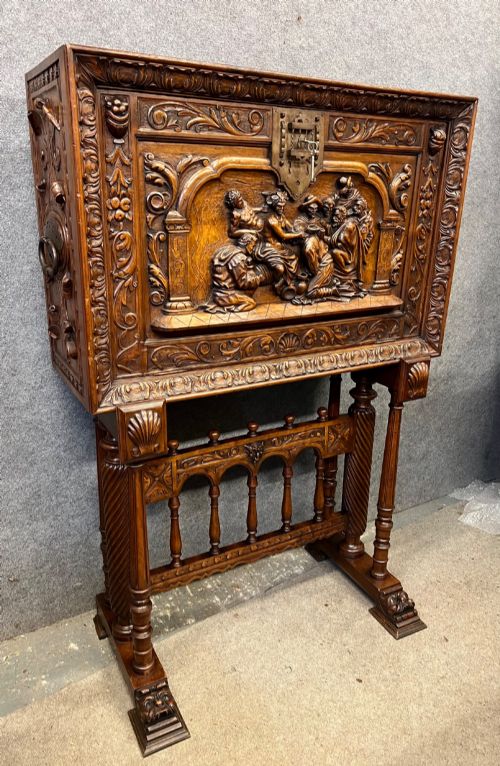
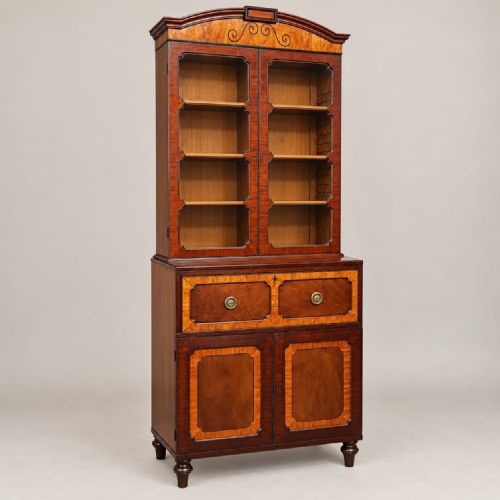
Antique Drop Front Cabinet
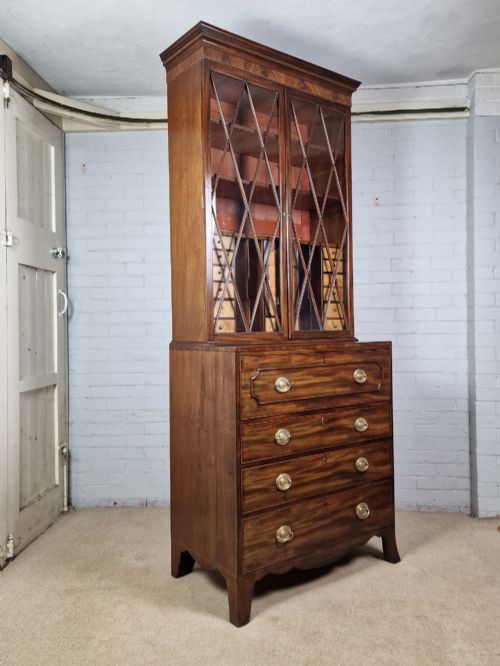
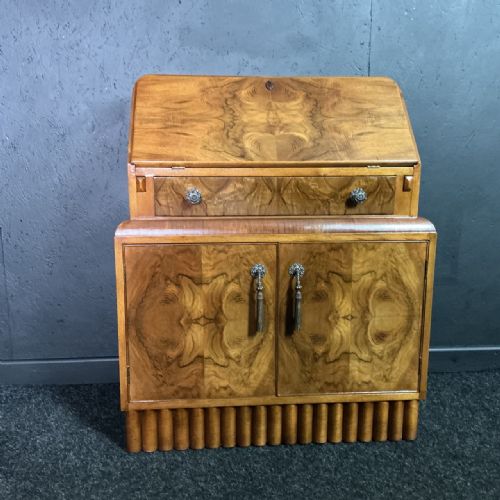
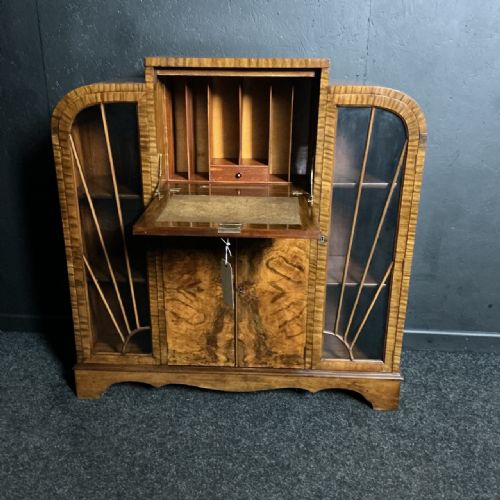
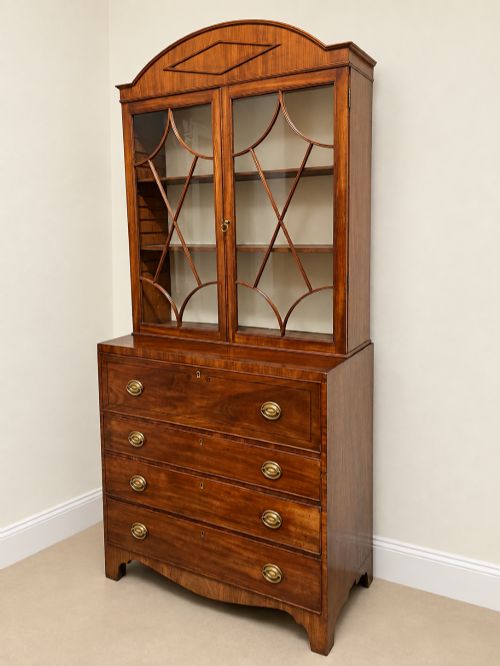
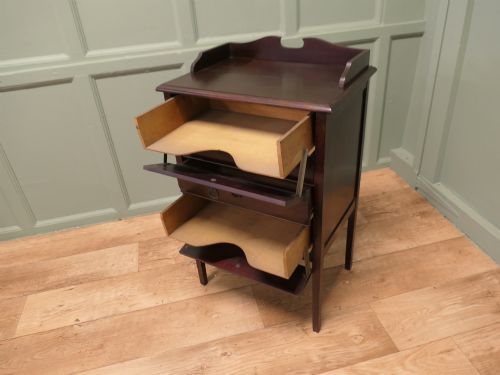
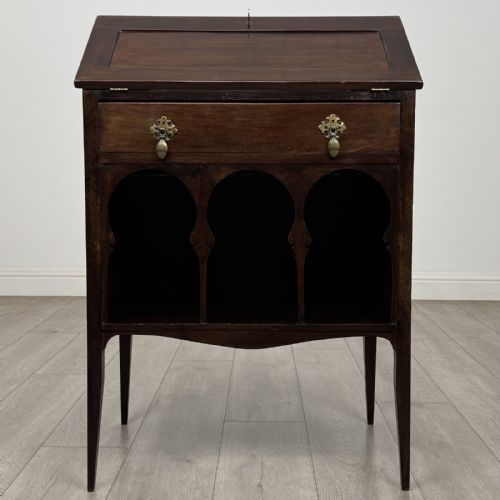
An antique drop front cabinet provides a concealed writing surface or storage space that drops down for use, combining practical organisation with fine cabinet-making.
Antique Drop Front Cabinet
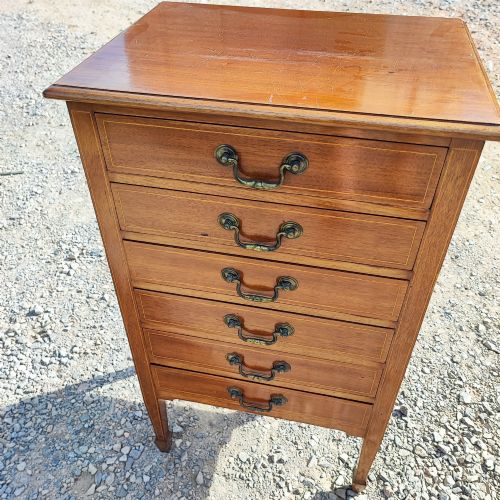
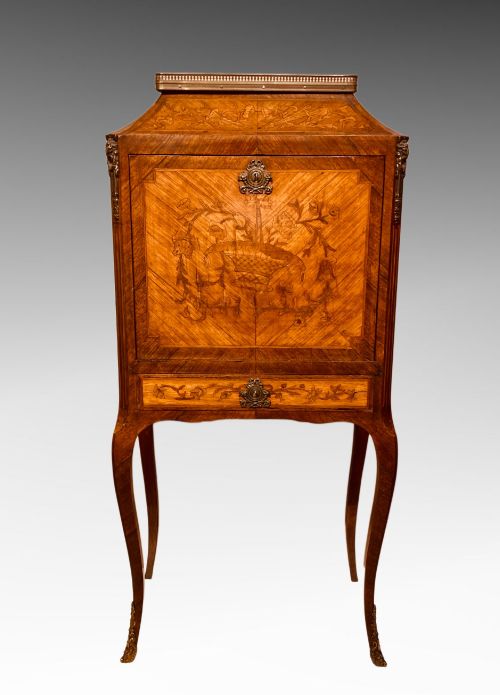
When searching for an antique drop front cabinet, buyers encounter forms ranging from compact Edwardian music cabinets and Art Deco drinks units to substantial Georgian bureaux and French secrétaires à abattant.
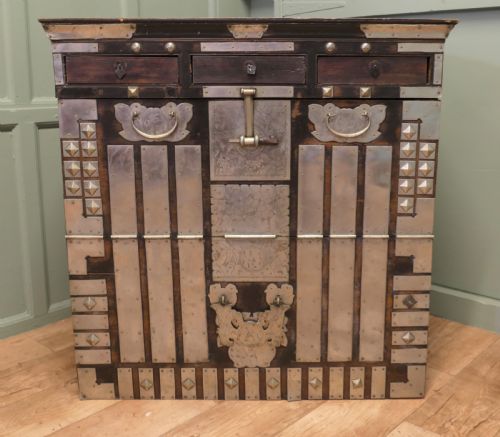
The selection spans centuries, featuring robust 17th-century oak strong boxes, 18th-century walnut escritoires, and 19th-century mahogany bookcases fitted with drop-down writing compartments.
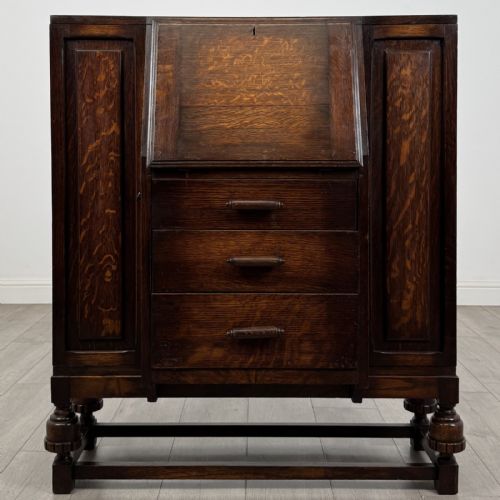
Edwardian oak and walnut bureaux predominate among everyday items, often displaying regional carving styles such as linenfold or green man motifs alongside simpler golden oak finishes.
Materials and construction
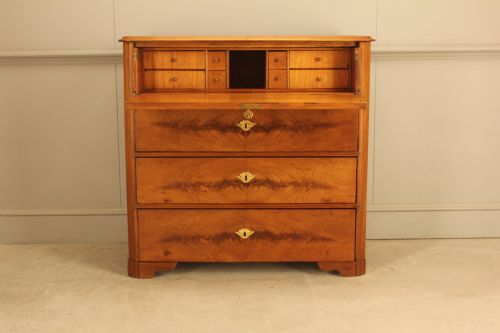
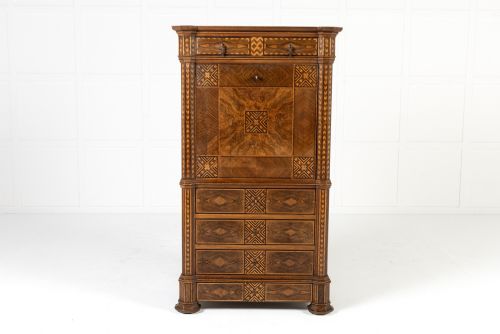
Cabinet makers utilised dense hardwoods including mahogany, walnut, and oak, frequently applying burr walnut, flame mahogany, or kingwood veneers to create striking figuration on the drop fronts.
Structural integrity relied on traditional joinery, supported by brass hinges, escutcheons, and internal drawers, while French and continental pieces occasionally incorporated original marble tops.
Antique Drop Front Cabinet Retail Price Guide 2026
Typical asking prices for drop front cabinet among the pieces listed under this phrase on Sellingantiques today, from the lower quarter to the upper quarter. They describe what is for sale here now, not the wider market.
Listings feature pieces spanning from the 17th century to the 1930s, constructed in mahogany, walnut, oak, and rosewood.
Quality factors
Superior examples display careful timber selection, such as matched herringbone inlay or continuous grain across the falling flap, contrasting with plainer utility pieces.
The complexity of internal fittings - such as secret compartments, pigeonholes, and small drawers - distinguishes finer cabinet-making from simpler production.
ARTHUR BASIL REYNOLDS·LARKIN·GEORGE OAKLEY
The Antique Drop Front Cabinet Glossary
- Bureau
- A desk featuring a sloping drop front that opens to reveal a fitted interior of small drawers and pigeonholes. This form evolved significantly from 17th-century examples to Edwardian writing desks.
- Secretaire abattant
- A tall, upright cabinet with a vertical drop front flap that conceals a writing surface and internal compartments. These pieces frequently originate from 19th-century French workshops.
- Escritoire
- A writing cabinet or desk popular in the 17th and 18th centuries, often constructed in walnut with marquetry or parquetry decoration.
- Linenfold
- A style of wood carving that imitates folded linen, commonly seen on panels of Edwardian oak bureaux.
Antique Drop Front Cabinet: Frequently Asked Questions
What is an antique drop front cabinet?
These pieces comprise furniture items with a hinged panel that lowers to serve as a desk or to access internal storage.
Designs range from Georgian writing bureaux to Edwardian music sheet chests and Art Deco drinks cabinets.
How do I identify a Georgian bureau?
Georgian examples typically feature solid mahogany or walnut construction with bracket feet and brass swan-neck handles. The interior reveals pigeonholes and small drawers behind the sloping flap.
Earlier pieces from this period often incorporate herringbone inlay or finely figured veneers.
Where were secretaire abattants used?
These upright cabinets served as formal writing desks and storage units in 19th-century drawing rooms and libraries.
Their vertical design saved floor space while offering a concealed workspace behind the heavy drop front.
How do I care for walnut veneer?
Keep these cabinets away from direct sunlight and heat sources to prevent the burr walnut or figured veneers from drying out or lifting.
Apply traditional beeswax periodically to nourish the timber and maintain the polished surface.