





Antique Drop Dial
When you search for antique drop dial, you are looking at wall-hung timepieces with extended lower cases built to house pendulums.
Antique Drop Dial
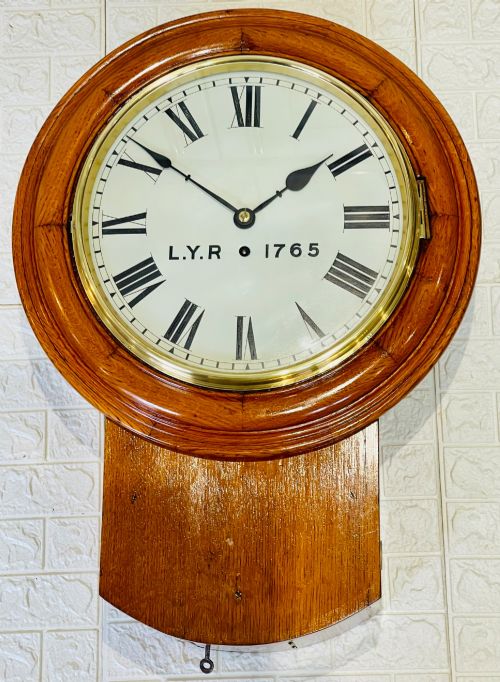
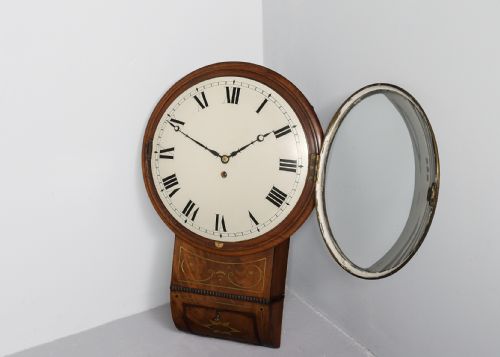
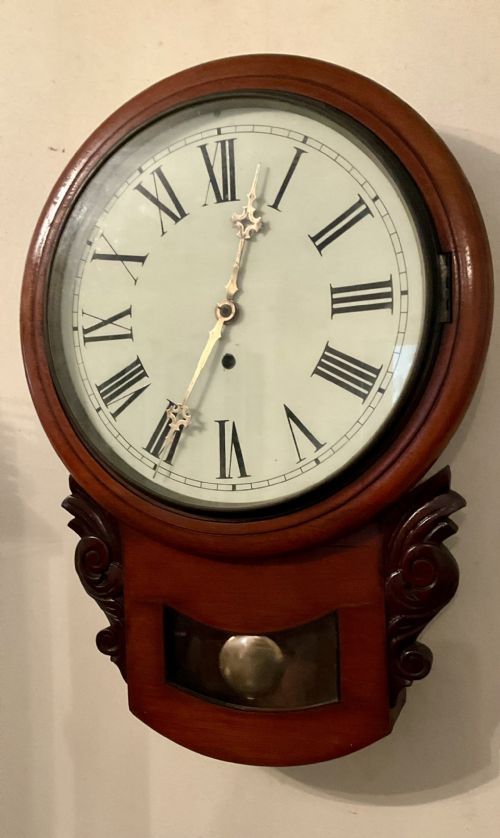
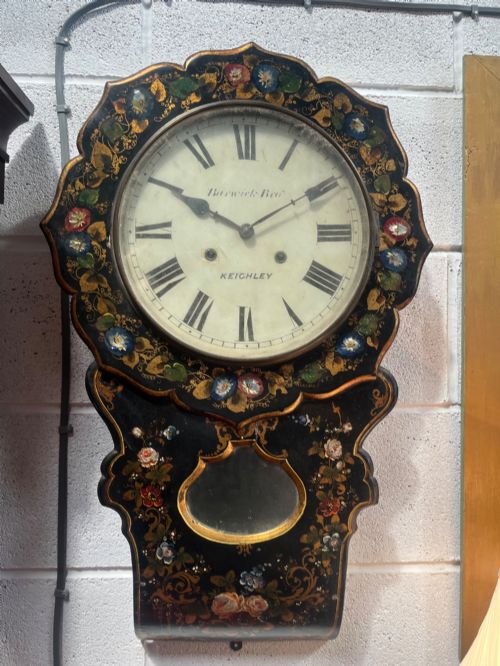
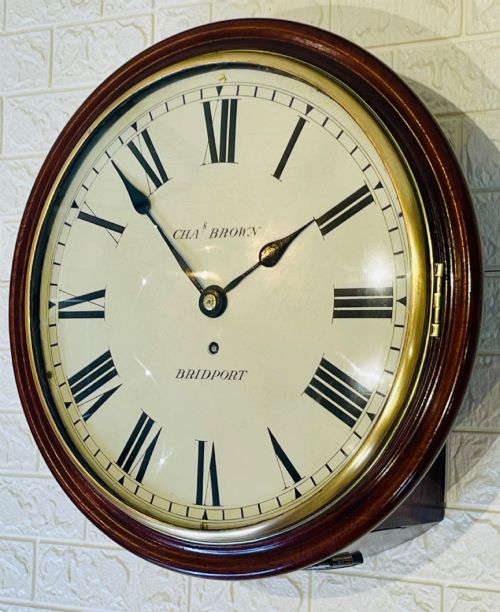
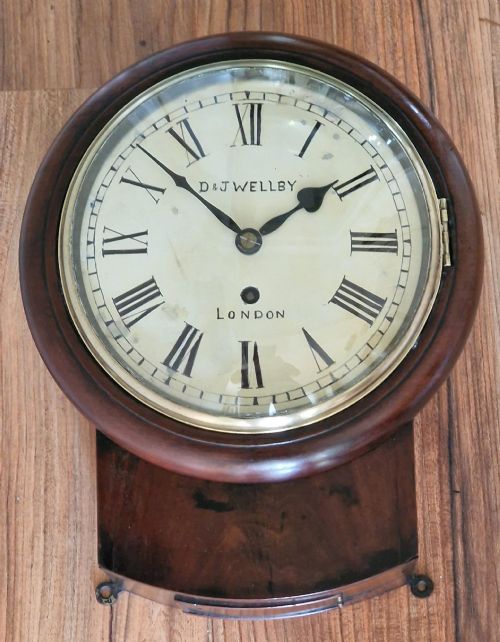
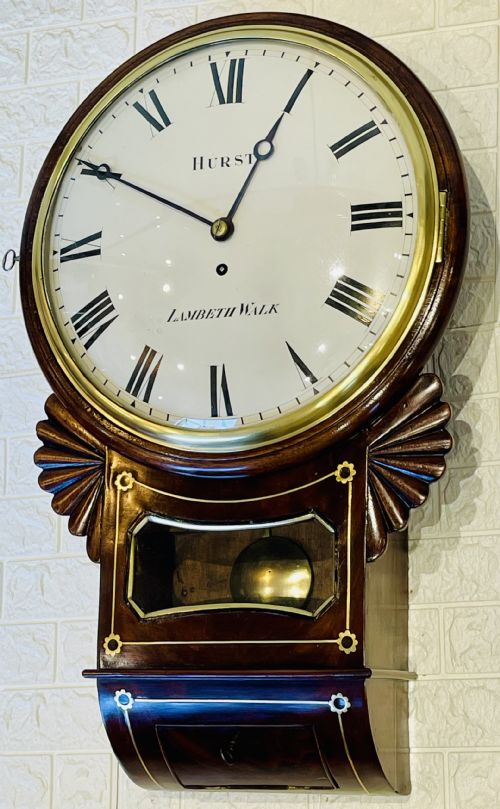
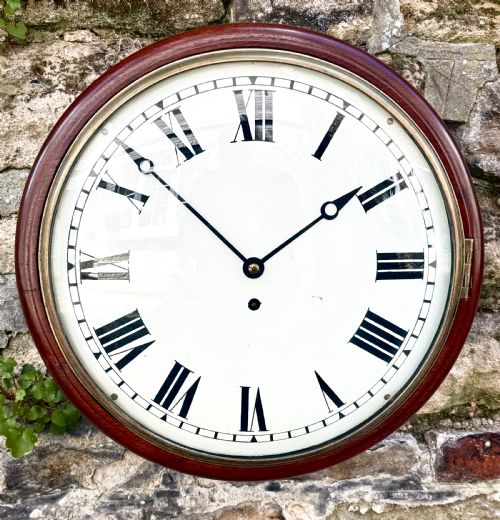
An antique drop dial is a wall-mounted timepiece featuring a circular upper dial case joined to a lower trunk that encloses the pendulum swing. These clocks originated to serve public spaces, railway stations, and domestic halls where reliable timekeeping required clear visibility from a distance.
The versions most commonly met on this page span the Georgian, Regency, and Victorian periods, with mahogany and walnut cases appearing frequently. Railway companies and provincial towns often commissioned these pieces for operational use, resulting in surviving examples marked with station names or company initials.
Constructed primarily as wall clocks, they utilise fusee movements to maintain steady power as the mainspring unwinds. The lower box often includes side access doors to allow easy regulation of the pendulum without removing the entire clock from the wall.
Materials and construction
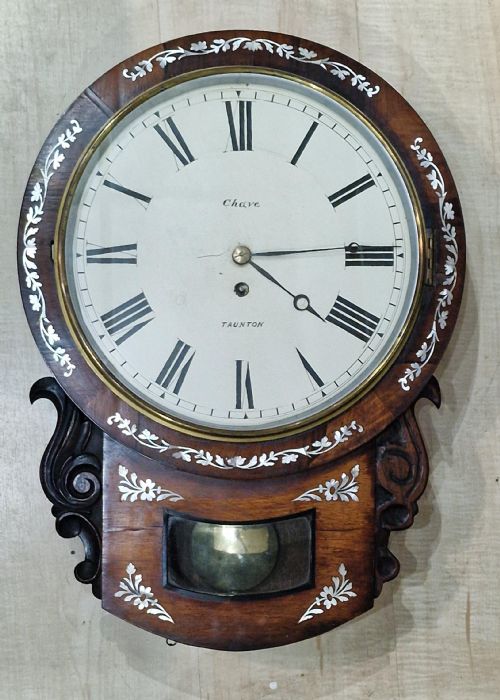
Cabinetmakers built the frames using dense timbers like mahogany, rosewood, and walnut, frequently applying brass inlay, mother of pearl, or fine veneers to the arched or rounded trunk doors. Oak and pine also served as structural woods, particularly in regional railway and tavern clocks.
Clockmakers fitted brass fusee or spring-driven movements behind painted wooden or metal dials, adding bevelled glassbezels to protect the hands. Some examples incorporated twin fusee systems to power bell-striking mechanisms alongside the primary timekeeping train.
Several railway clocks bear operational station stamps, recording the quiet administrative life of past ticket offices.
Variations in quality
Quality rests in the crispness of the cabinetwork, the choice of figured timber veneers, and the fineness of the movement's wheel cutting. Clocks featuring hand-painted dials by known provincial makers or intricate brass and mother-of-pearl inlay demonstrate higher workshop standards.
Proportion also defines the tier of a piece, with smaller eight-inch dial formats and deep, well-figured mahogany or rosewood trunk boxes commanding attention for their refined domestic scale.
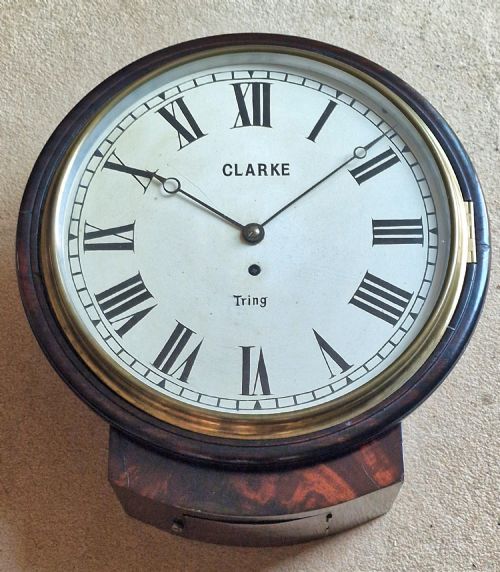
George Clarke Tring·D and J Wellby·Chave Taunton·Samuel Chave·Halliday and Rich·Rudge Swindon·Henry Lamb Windsor·Joseph Mansfield·Potts of Leeds
The Antique Drop Dial Glossary
- Fusee
- A conical pulley connected to the mainspring by a chain or cord, designed to equalise the driving force as the spring unwinds. This mechanism ensures consistent force is delivered to the escapement throughout the running period.
- Drop dial
- A wall clock design where a circular dial case sits above a vertical trunk or box that houses the pendulum. This configuration accommodates the length of the pendulum while maintaining a compact upper face.
- Tavern clock
- A large dial wall clock with an extended trunk, often hung in public houses and meeting rooms during the eighteenth and nineteenth centuries. These pieces typically display bold painted dials for easy reading in low light.
- Dial
- The visible face of the clock showing the hours and minutes, traditionally painted on wood, metal, or convex glass. They frequently bear the signature of the maker and the town of origin.
Antique Drop Dial: Frequently Asked Questions
How do I wind an antique drop dial clock?
Opening the side or front glass bezel provides access to the winding square on the dial face, where a matching key turns gently clockwise.
Care must be taken not to over-wind the mainspring, stopping as soon as resistance is felt to protect the historical movement.
Where were these clocks originally used?
Many examples hung in railway booking offices, station platforms, and railway hotels to keep strict schedules for passengers and staff. Others served in public houses, municipal offices, and large domestic hallways.
Regional stations often stamped the timber cases or painted company initials directly onto the dial faces.
How do I tell a Regency drop dial from a Victorian one?
Regency models generally exhibit cleaner lines with simpler mahogany cases and convex wooden bezels framing the dial. Victorian versions frequently introduce richer veneers like burr walnut, alongside heavier brass inlay and mother-of-pearl decoration.
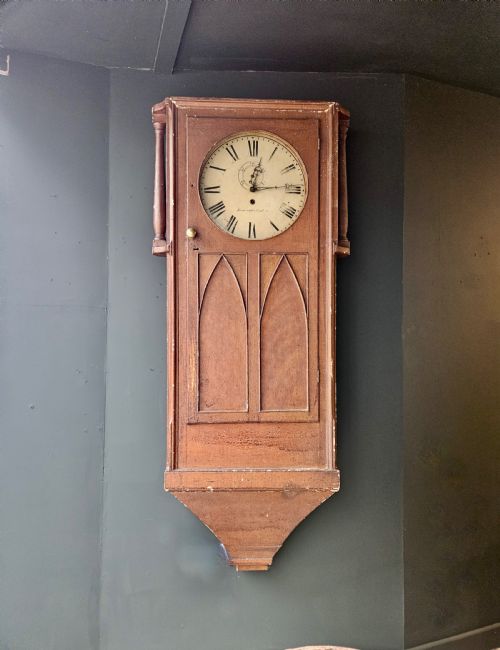
Cabinet proportions also shift, with earlier Regency pieces tending towards restrained elegance while later Victorian examples embrace industrial robustness or Gothic revival motifs.
How do I keep a fusee wall clock running accurately?
Mounting the clock firmly to a solid wall using the original hanging bracket prevents vibration from interfering with the pendulum beat. Adjusting the small nut beneath the pendulum bob allows fine-tuning if the clock gains or loses time.
Regular professional servicing keeps the brass train clean and prevents old lubricants from gumming up the delicate fusee chain.