


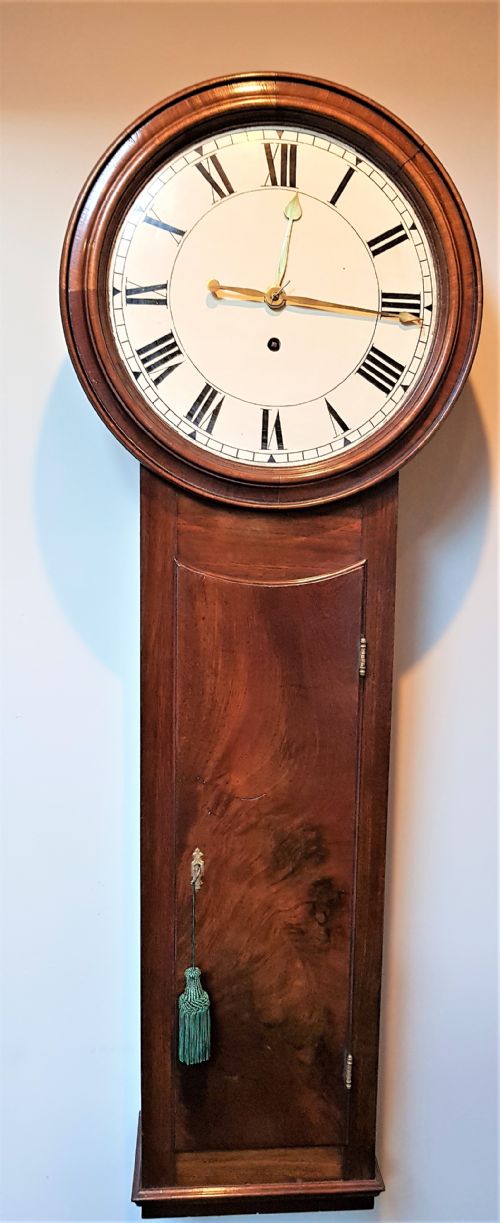

Vintage Tavern Clock
These vintage tavern clock pieces are large wall timepieces offering striking dials and honest timekeeping.
Vintage Tavern Clock
When you search for vintage tavern clock pieces, you look at large circular wall dials intended to be read from a distance in public rooms or large halls. The examples appearing on this page span the 18th century, Georgian period, 1800, 1850, and the 19th century.
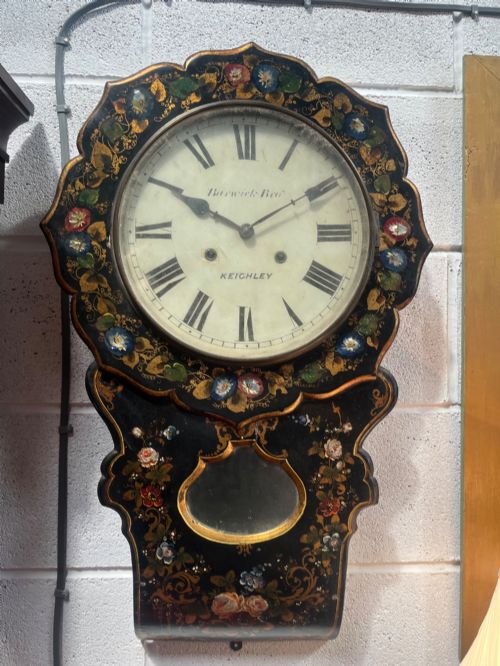
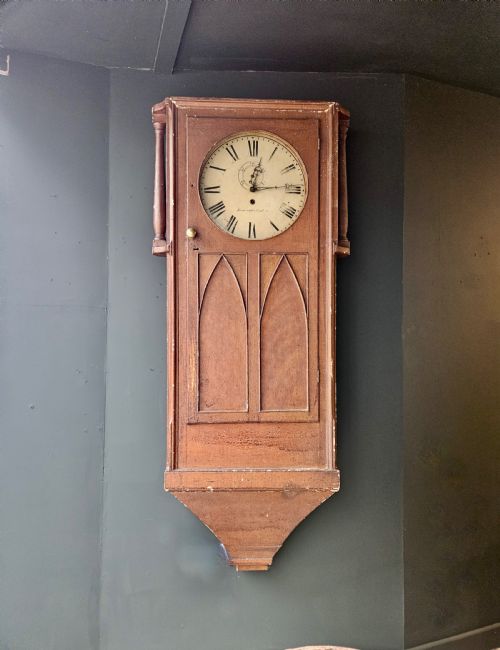
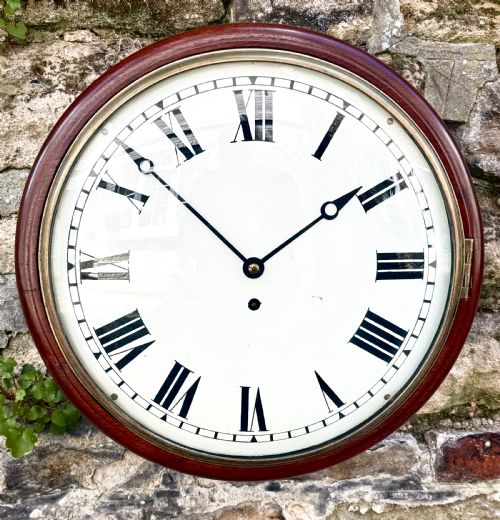
You meet various forms on this page, including wall hanging clocks with painted decoration, Gothic pine tavern clocks in original paint, and early 19th century English dial clocks. Other representations include mahogany tavern clocks, George III mahogany dial clocks, early wall clocks, cased verge wall clocks, Norwich style weight driven drop dial clocks, and small Regency octagonal wall clocks.
What varies in quality
Quality rests in the survival of original painted decoration on the dial and case surfaces, alongside the integrity of the timber housing. Pieces retaining their early painted finishes and untouched secondary woods command stronger interest.
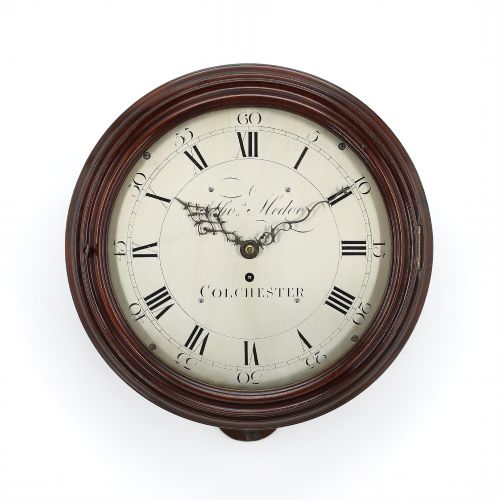
The sophistication of the movement, such as early verge escapements signed by makers like Thomas Hedge of Colchester or Peter Debaufre, elevates an example. Simpler regional pieces display different degrees of cabinet-making skill in their mahogany or pine construction.
Listings on this page include mahogany, pine, and ebonised wood materials combined with brass and glass components.
Thomas Hedge of Colchester·J. Beckett of London·Peter Debaufre
The Vintage Tavern Clock Glossary
- Dial clock
- A wall-mounted timepiece featuring a prominent circular face designed for clear legibility. These dials often sit behind protective glass within a wooden surround.
- Verge
- An early type of escapement mechanism controlling the release of the gear train in pendulum clocks. This precise mechanical arrangement governs the beat of the clock.
- Drop dial
- A wall clock case featuring a short trunk hanging below the circular dial, frequently housing a weight-driven movement. The trunk provides space for the fall of the driving weight.
- Gothic Revival
- A design style drawing inspiration from medieval architecture, seen here in pine cases with period characteristics. This aesthetic brings pointed forms and decorative motifs to utilitarian timepieces.
Vintage Tavern Clock: Frequently Asked Questions
Where were tavern clocks used?
These large wall clocks hung in public houses, coaching inns, and assembly rooms where many people needed to check the time simultaneously. Their bold dials ensured legibility across a busy room.
Domestic spaces also adopted them later, particularly in large halls or kitchens where wall space permitted a substantial circular dial.
How do I wind a wall clock?
Winding depends on whether the movement is driven by weights or springs. Weight-driven drop dial clocks require the weights to be pulled up periodically using a key or crank.
Careful handling of the pendulum and weights ensures the movement continues running accurately without putting stress on the suspension spring.
What is a verge escapement?
The verge escapement is an early mechanical regulating device used in antique timepieces before the widespread adoption of the anchor escapement. It interacts with the crown wheel to regulate the rotation of the gear train.
Examples featuring this mechanism, such as those by Peter Debaufre or Thomas Hedge, represent earlier horological traditions.
How do I identify a Georgian dial clock?
Georgian dial clocks typically feature mahogany cases with clean proportions and straightforward circular bezels housing painted or wooden dials. The joinery and timber choice reflect the prevailing cabinet-making standards of the eighteenth and early nineteenth centuries.
Details such as brass bezels, signature placement on the dial face, and weight-driven movements help confirm the period.