




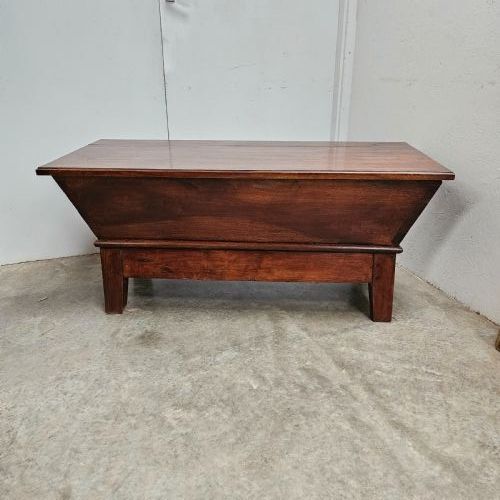


Antique Dough Trough
An antique dough trough is a domestic timber vessel made for bread-making, prized by collectors for its honest utility and weathered surface.
Antique Dough Trough
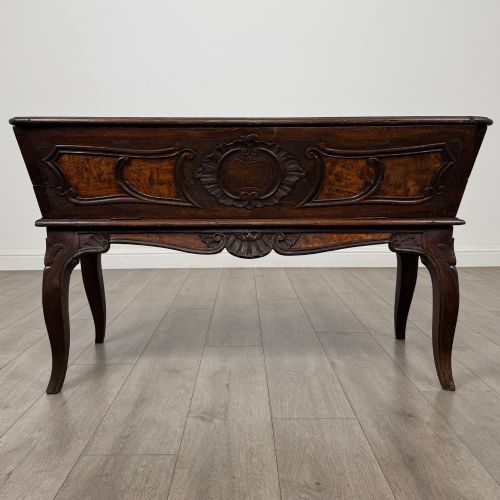
When you search for an antique dough trough, you are examining heavy wooden containers and bins designed originally for kneading and proving bread. The examples on this page span from the eighteenth century to the early twentieth century, originating from French, Swedish, and general rustic farmhouse traditions.
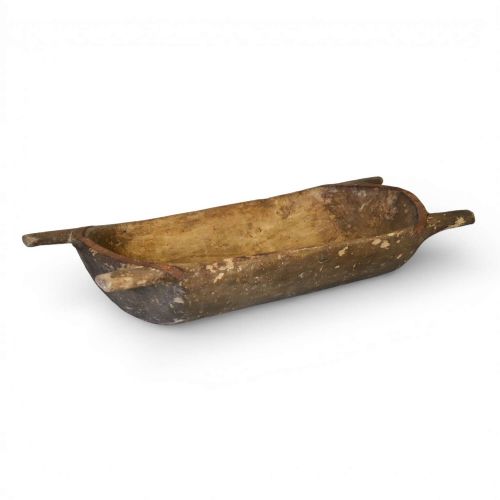
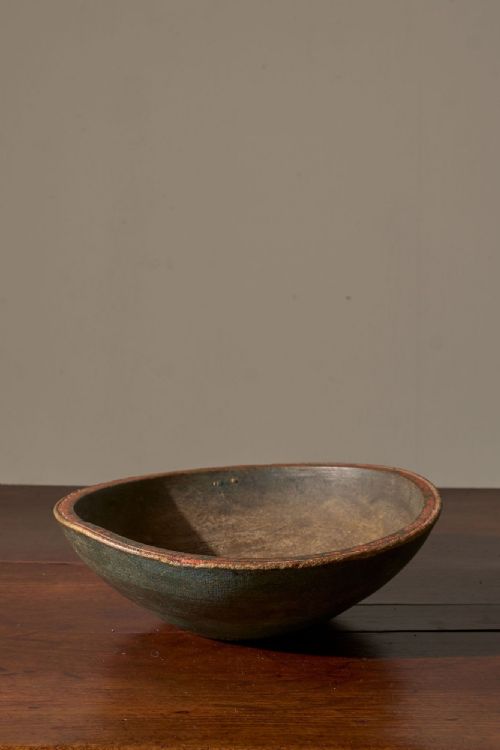
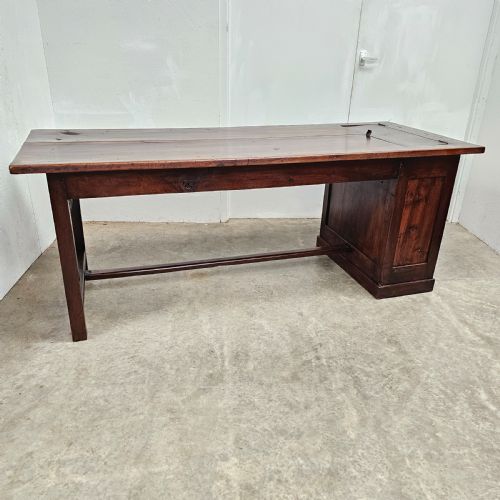
You will encounter several distinct forms among these listings, ranging from deep floor-standing dough bins and cupboards in walnut and pine to smaller hand-carved sycamore and elm bowls and prep tables. These domestic pieces served central roles in rural kitchens before domestic baking shifted to industrial bakeries.
The regional styles vary from French provincial and country designs to Scandinavian pieces, often utilising local timber like solid pine, elm, and walnut. Each piece displays the marks of daily domestic labour through patination and tool marks left by the maker.
Materials and construction
These vessels are fashioned from solid woods such as pine, walnut, elm, and sycamore, often shaped by hand out of a single log or joined with pegged boards. Artisans utilised local timber available in their regions, resulting in sturdy structures built to withstand heavy daily kneading.
Surfaces frequently show the natural grain enhanced by decades of use, alongside occasional painted finishes in Swedish and country pieces. The construction relies on traditional carpentry methods, including pegged joints and hollowed-out dug-out techniques for the bowls.
Geographic origins represented include French provincial, Swedish country, and general rustic farmhouse traditions.
Assessing quality and character
Quality in an antique dough trough rests in the integrity of the timber, the depth of the patination, and the honesty of the wear. Pieces that retain their original unblemished structural form and display a rich, warm surface hold greater visual weight.
The distinction between ordinary utility items and finer examples lies in the balance of proportions and the evidence of early hand-carving techniques. Refinished or heavily altered timber diminishes the historical continuity that collectors seek in rural treen and furniture.
The Antique Dough Trough Glossary
- Patina
- The surface sheen and colour developed over decades of handling, cleaning, and exposure to light. It serves as a key indicator of age and genuine use.
- Treen
- Small domestic wooden objects and utensils made by turners and joiners. This category includes bowls, spoons, and smaller troughs.
- Dug-out
- A vessel formed by hollowing out a single solid log rather than joining multiple planks together. This method provides immense structural strength.
- Prooving box
- A specialised container or coffer used to hold dough at a stable temperature while yeast causes it to rise before baking.
Antique Dough Trough: Frequently Asked Questions
What is a dough trough used for?
These vessels were utilised in historical kitchens for mixing flour, water, and yeast, and leaving the dough to rise. The deep sides contained the ingredients during heavy manual kneading.
Today, they function primarily as decorative storage containers, side tables, or display pieces in domestic interiors, holding blankets or books.
How do I date an antique dough trough?
Dating relies on examining the tool marks left on the timber, the construction joints, and the wood species used. Eighteenth-century and nineteenth-century pieces often show hand-adzed surfaces and pegged joinery.
Later pieces from the twentieth century tend to display more uniform machine sawing and simpler construction methods, alongside different wear patterns.
Are these troughs made from solid wood?
The pieces listed consist entirely of solid timbers such as pine, walnut, elm, and sycamore. Rural makers utilised local woods that were readily available and durable enough for food preparation.
Solid construction ensures the vessels survive centuries of heavy use without the veneer delamination common in later furniture.
How should I clean a wooden dough bowl?
Maintenance requires only dusting with a dry, soft cloth to protect the historic surface. Avoid using harsh chemical cleaners or excess water which can strip the aged patination.
Applying a light, natural wax occasionally helps nourish dry timber without altering the authentic appearance built up over generations.