


Antique Double Desk
An antique double desk delivers workspace from both sides, bringing period presence and generous proportion into a room.
Antique Double Desk
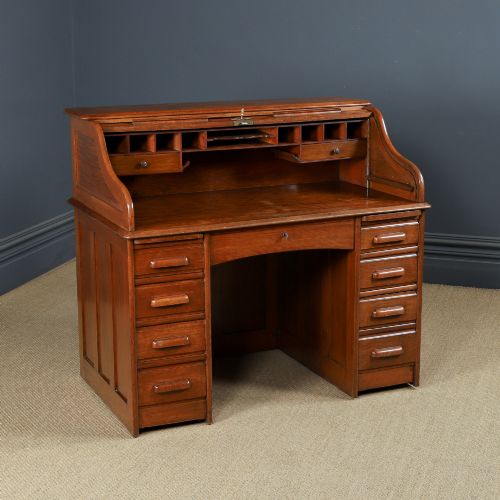
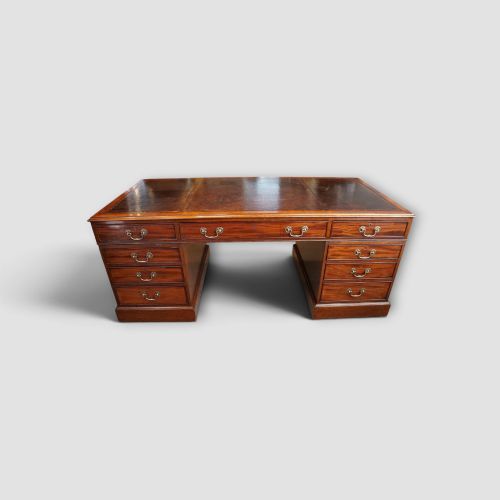
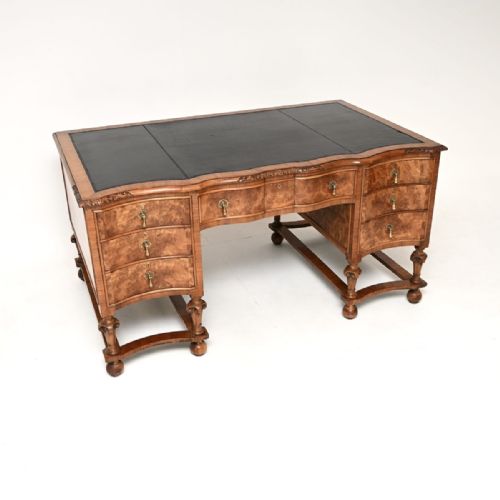
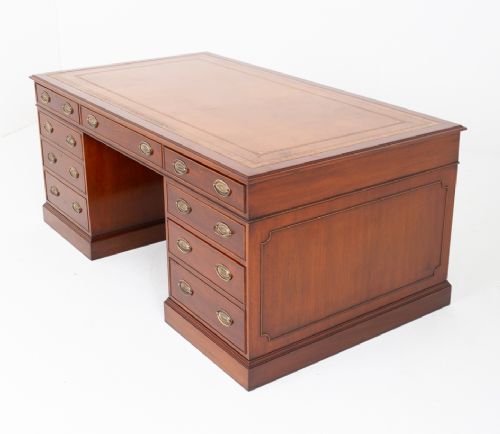
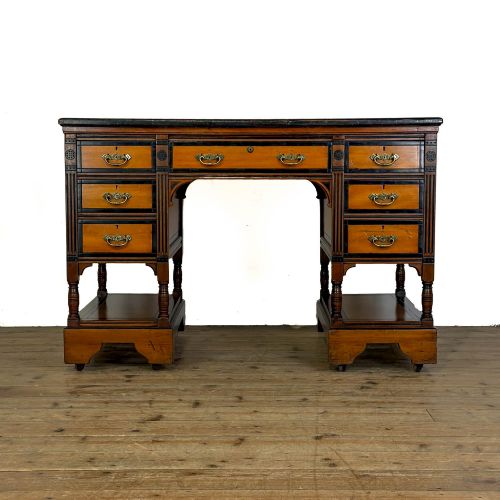
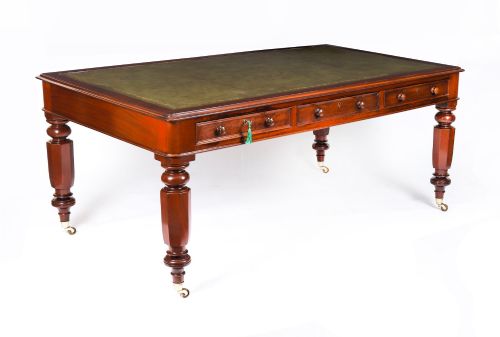
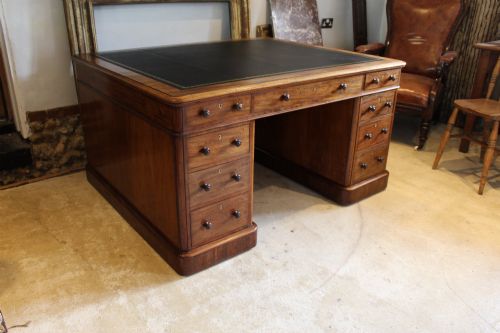
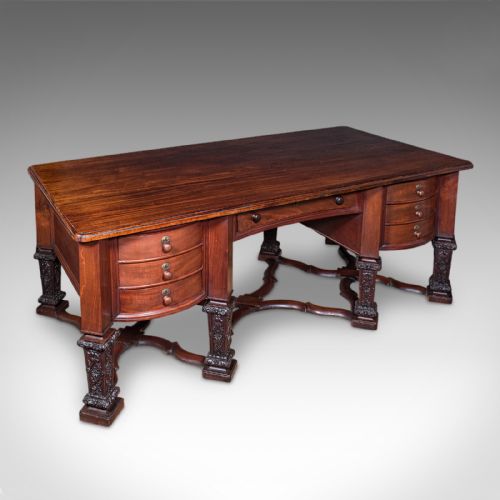
When you search for an antique double desk, you encounter pieces designed for two people to sit opposite one another or finished on every side to stand away from a wall. The examples appearing here span the eighteenth and nineteenth centuries, including robust Victorian library tables, substantial mahogany pedestals, and burr walnut partner desks.
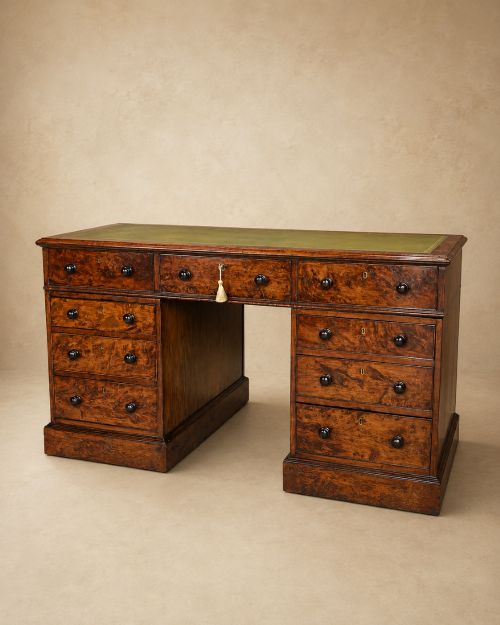
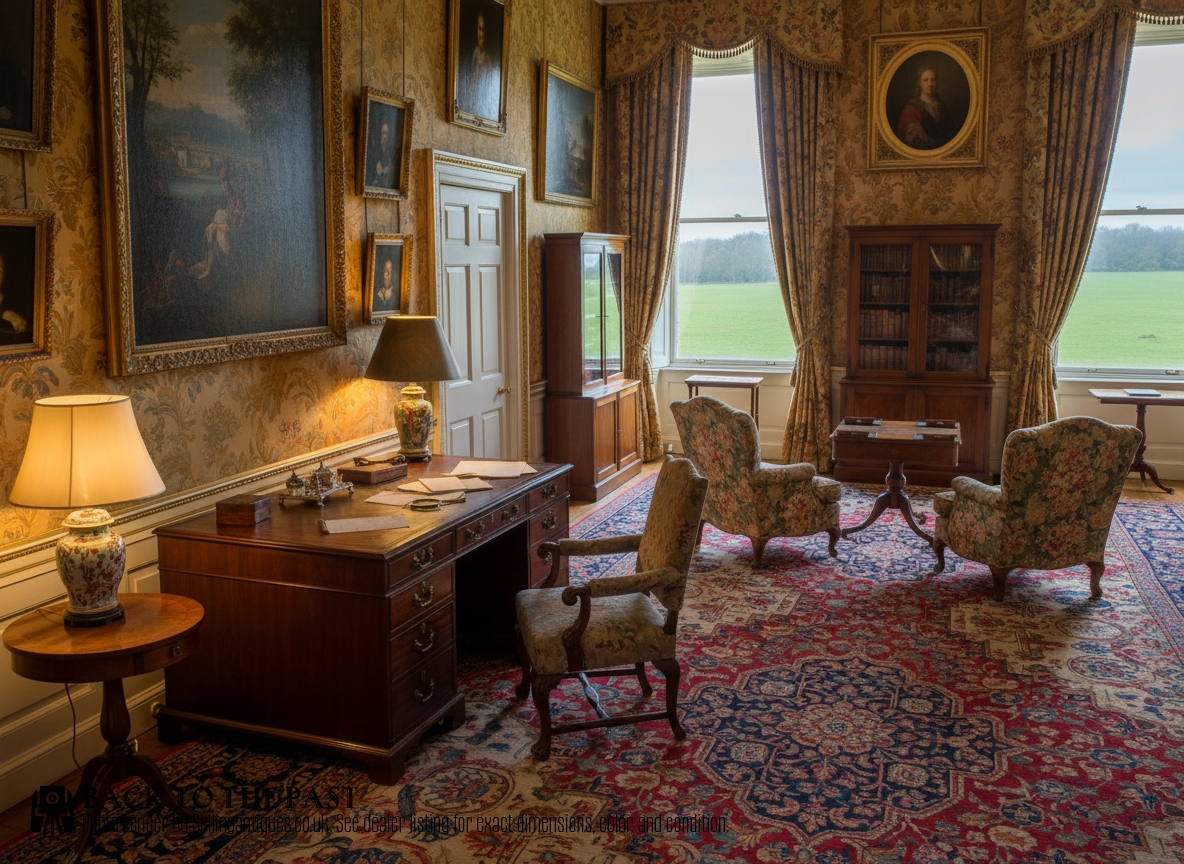
The layout generally takes the form of a pedestal desk with banks of drawers flanking a central kneehole, or a partners writing table with drawers set into the frieze above turned or tapering legs. Many feature inset leather writing surfaces and double-sided drawer arrangements that allow independent access from either flank.
How they were made
Cabinetmakers constructed these pieces using solid timbers like mahogany, oak, and walnut, frequently applying figured veneers or burr walnut to prominent surfaces. Drawer linings commonly employ secondary woods such as oak or pine, joined with hand-cut dovetails that indicate traditional workshop methods.
Secondary materials played an essential structural and decorative role, with brass hardware, castors, and handles fitted to drawers and pedestals. Inset writing surfaces utilised leather, often tooled with blind or gilt decoration around the perimeter.
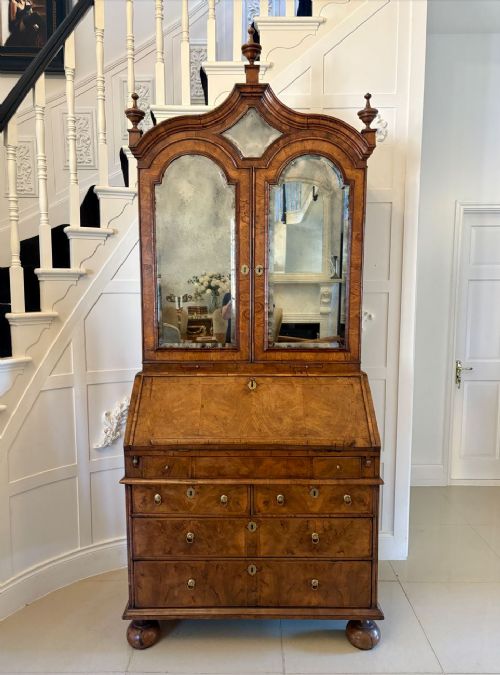
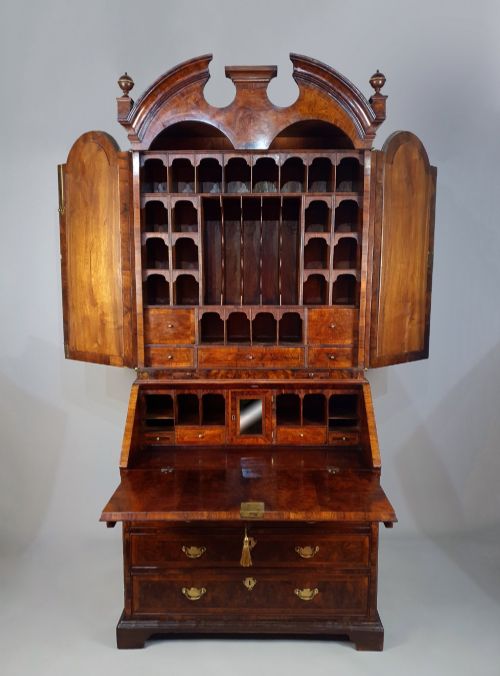
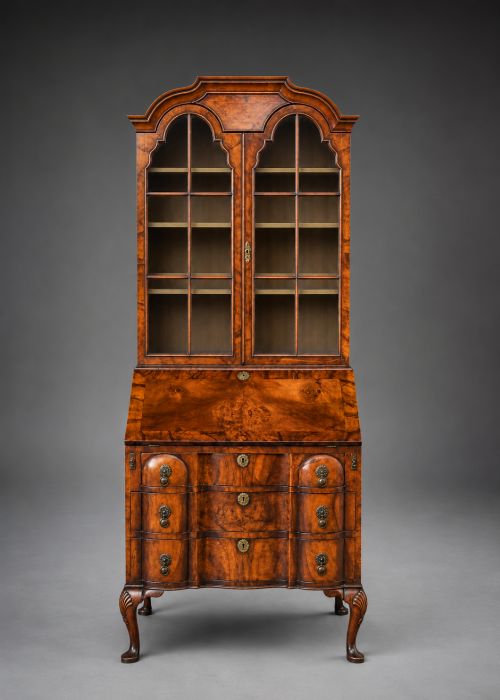
The archive includes double-action writing slopes and bureau bookcases alongside standard partner desks from the nineteenth century.
What varies in quality
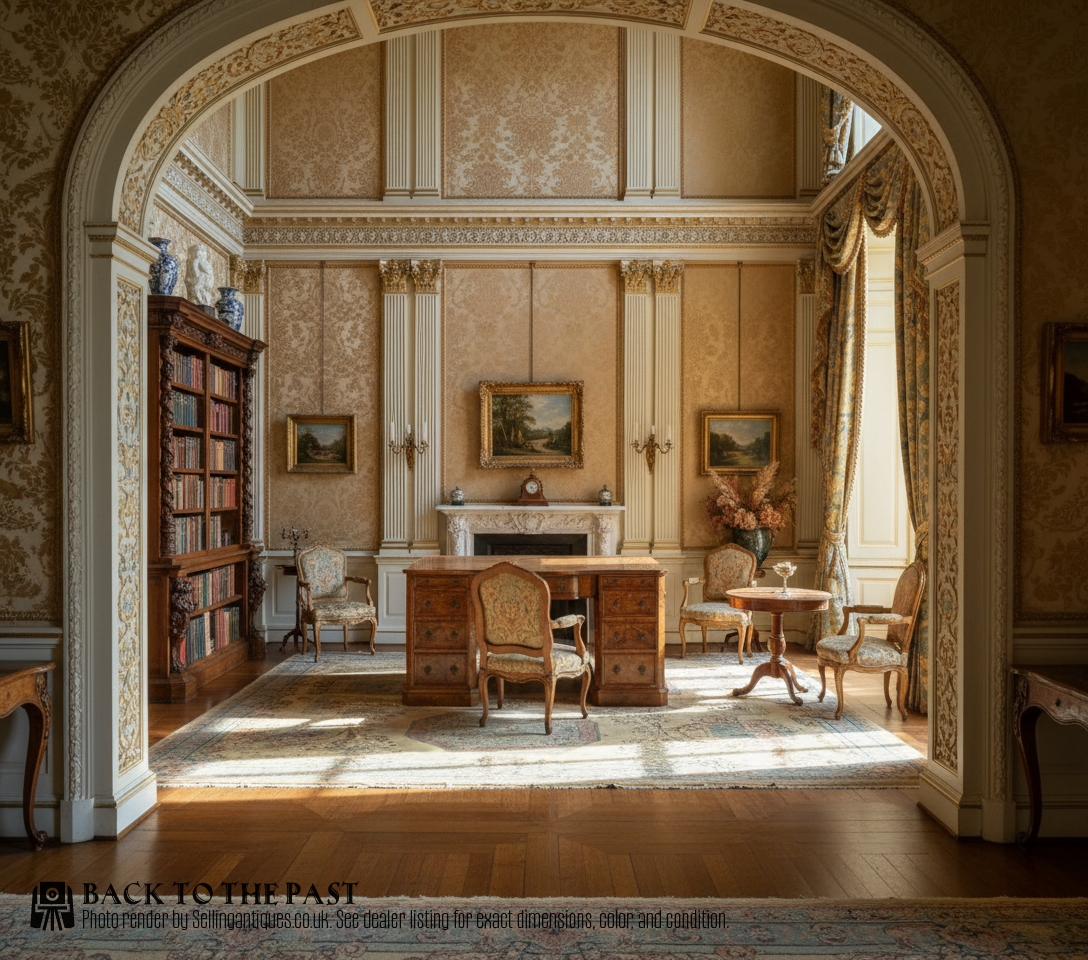
The grade of timber selection distinguishes standard utility pieces from exceptional examples, particularly the choice of figured mahogany or highly grained burr walnut across large uninterrupted surfaces. Cabinetmaking ambition shows in whether the back and sides receive the same decorative attention as the front, ensuring the piece looks correct from every angle.
Proportion and secondary detail reveal the maker's hand, from the crispness of applied mouldings and featherbanding to the retention of matching original brasses and fitted interior compartments.
Maple and Co·Charles Andrea Nosotti·Gillows
The Antique Double Desk Glossary
- Partners Desk
- A large double-sided desk designed for two people to work opposite one another, featuring drawers and cupboards accessible from both flanks.
- Pedestal Desk
- A form comprising two freestanding drawer columns that support a top surface containing one or more frieze drawers.
- Burr Walnut
- Timber taken from the growth excrescences of walnut trees, yielding intricate, swirling grain patterns highly prized for cabinet veneers.
- Featherbanding
- A decorative inlay technique using narrow strips of veneer arranged in a herringbone pattern around the borders of panels or drawer fronts.
- Frieze
- The horizontal section of a desk situated directly beneath the top working surface, frequently housing operational drawers.
Antique Double Desk: Frequently Asked Questions
What is an antique double desk?
An antique double desk is a large workspace traditionally built for two users, featuring drawers and pedestals accessible from both sides so the piece can float in the middle of a room.
These pieces emerged to serve partners in banks, law firms, and stately homes, requiring substantial floor space and offering generous storage within the pedestals.
How do I care for the leather top?
Leather writing surfaces require gentle cleaning with a slightly damp cloth followed by a neutral leather cream to preserve the supple hide and gilt tooling.
Avoid placing direct heat sources or harsh solvents near the leather, as historic hide dries out easily under modern indoor conditions.
Are these desks finished on all sides?
True double-sided desks and partners desks feature finished panels, drawers, or dummy drawers on the reverse side so they look correct away from a wall.
Single-sided pedestal desks have plain backs and must be placed flush against a wall, making proper inspection of the rear essential before purchase.
How do I tell Victorian from Georgian desks?
Georgian desks typically exhibit restrained classical proportions, solid mahogany construction without heavy mouldings, and simpler bracket feet or straight legs.
Victorian examples frequently display bolder proportions, richer veneers such as burr walnut, more elaborate carving, and plinth bases with concealed castors.