
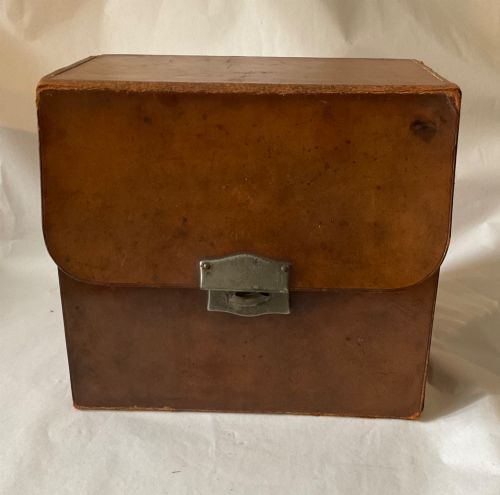



Antique Doctor Chest
An antique doctor chest is a fitted wooden travelling case designed to hold medicines and instruments, offering a tangible link to historical medical practice.
Antique Doctor Chest
When you search for an antique doctor chest, you encounter compact timber boxes designed for medical practice, medicine storage, and travelling use. The selection spans George III, Georgian, Regency, Victorian, Edwardian, and early twentieth century periods, reflecting changing medical needs over two centuries.
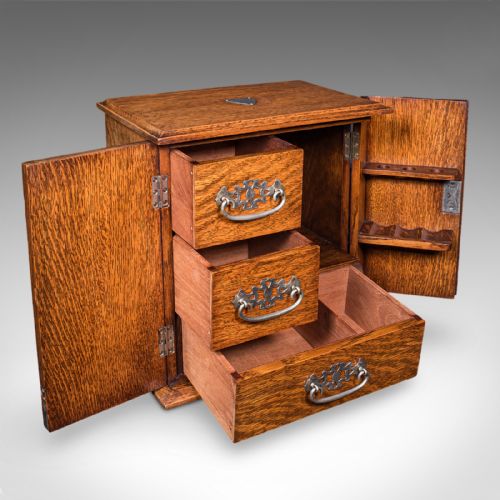
You are most likely to meet mahogany apothecary boxes, fitted cabinets, and travelling cases on this page. These pieces frequently incorporate internal drawers and glass bottles, alongside variations such as smoking cabinets and Scandinavian wooden bags.
Object types on offer range from early medical carrying chests to decorative boxes and collectors cabinets. The forms vary from Georgian inlaid mahogany boxes to 1920s small medical carrying chests.
How they were made
Cabinet makers constructed these pieces primarily in mahogany, oak, and pine, frequently employing rich wood veneers and decorative inlay. Brass fittings such as carrying handles and lock plates reinforced the corners and edges for travel.
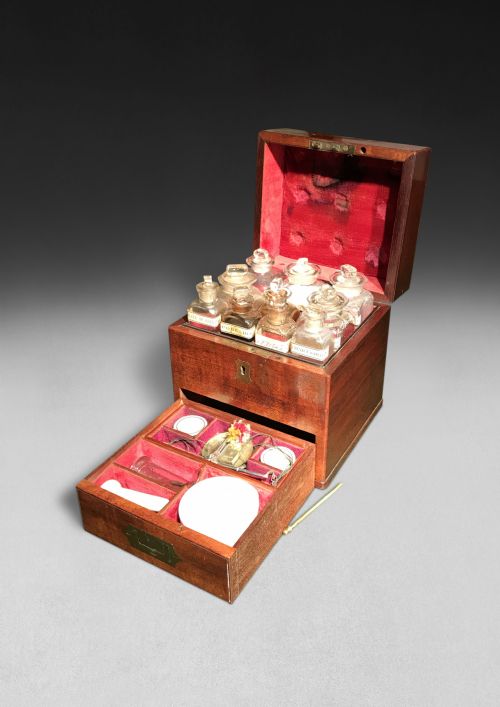
Interiors were meticulously fitted to secure glass bottles, often lined with materials like velvet or leather to cushion fragile contents. Drawers operated beneath the main compartments to store scales, pestles, and medical components.
Listings feature mahogany, oak, and pine construction paired with brass hardware, velvet, and glass bottles across Georgian to Edwardian periods.
What varies in quality
The standard of timber selection and inlay separates the finer boxes from simpler utilitarian pieces. Master cabinet makers utilised superior mahogany with precise dovetailing and flush-fitting brass hardware.
Completeness of the internal contents dictates distinction, particularly the presence of original labelled glass bottles and functioning brass locks. Finer examples retain their fitted drawers and delicate compartments intact.
The Antique Doctor Chest Glossary
- Apothecary box
- A fitted wooden chest designed to store medicines, drugs, and small dispensing instruments. These boxes feature internal compartments sized for specific glass phials.
- Mahogany
- A durable tropical hardwood favoured by cabinet makers for its rich grain and stability. It forms the primary structure of many Georgian and Victorian medical chests.
- Fitted interior
- An internal arrangement of partitions, ledges, and small drawers built into a chest. This design kept bottles and tools secure during travel.
- Inlay
- A decorative technique where contrasting woods or metals are inserted into the timber surface. Georgian pieces frequently display fine line inlay around the lid edges.
Antique Doctor Chest: Frequently Asked Questions
What were antique doctor chests used for?
These chests served as portable pharmacies for physicians and practitioners travelling to patients. They carried necessary drugs, powders, and liquids safely in partitioned compartments.
Inside, glass bottles held various remedies while small drawers stored scales and measuring tools. This organisation allowed a doctor to dispense medicine directly at a patient's home.
How do I date an apothecary chest?
Dating relies on timber types, construction methods, and hardware styles found on the piece. Georgian and Regency chests often feature fine mahogany veneers and flush brass handles.
Later Victorian and Edwardian examples show shifts in manufacturing techniques and lock designs. Examining the internal bottle shapes and paper labels also helps pinpoint the era.
Are the glass bottles usually original?
Many surviving chests retain a collection of their original glass bottles, though replacements occur frequently over time. Original phials often fit precisely into their designated wooden slots.
Some bottles still bear remnants of paper labels indicating historical apothecary contents. Checking the uniformity of the glass helps determine if the set remains together.
How should I care for a wooden medicine chest?
Keep the timber away from direct sunlight and dramatic humidity changes to protect the wood and veneer. Occasional light waxing maintains the polished mahogany or oak surface.
Handle internal brass fittings and delicate lid hinges with care. Avoid moisture contact with any remaining historical paper labels inside the drawers.