




Georgian Mahogany Medicine Box
A georgian mahogany medicine box brings the compact precision of the apothecary straight to your table with fitted bottles and brass hardware.
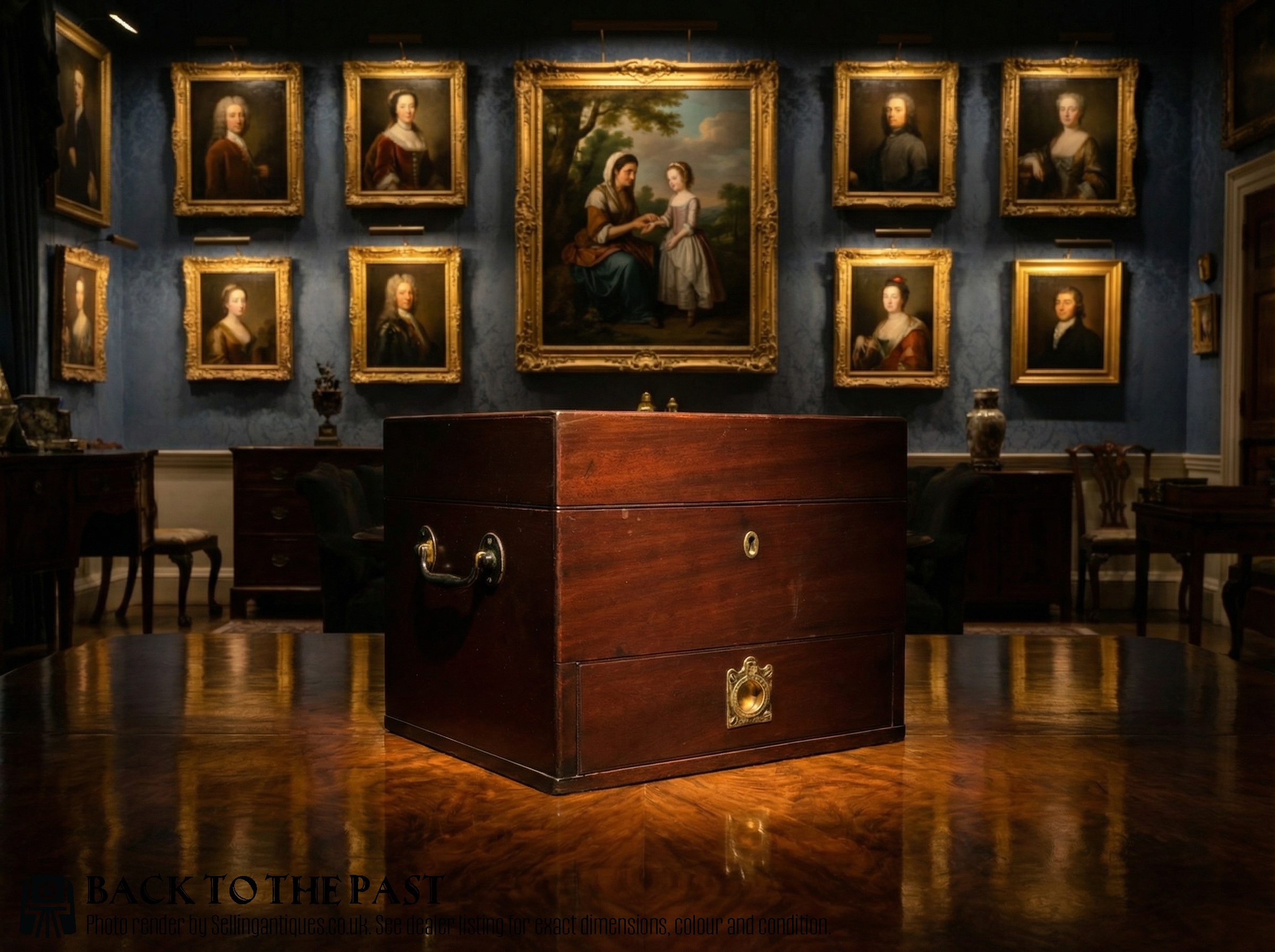
Georgian Mahogany Medicine Box
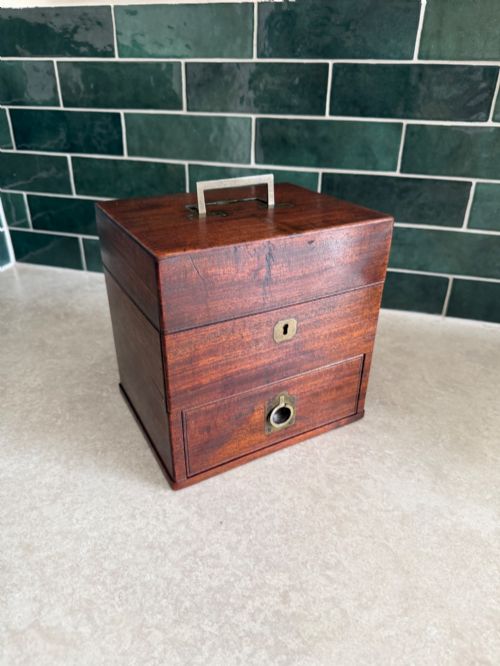
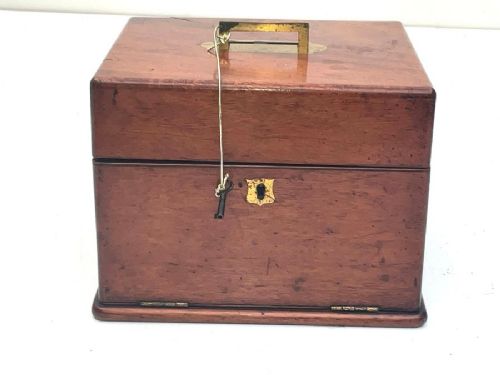
A georgian mahogany medicine box provides a fascinating glimpse into domestic and professional healthcare from the Georgian, Regency, and Victorian periods. These pieces typically take the form of apothecary boxes, chemist's cases, or tabletop cabinets designed to secure fragile glass bottles and medical supplies.
The versions most commonly met on this page span the late eighteenth and early nineteenth centuries, often featuring fitted interiors and secret drawers. Their sturdy timber construction and brass carrying handles reflect a portable design intended for travel or campaign use.
Materials and construction
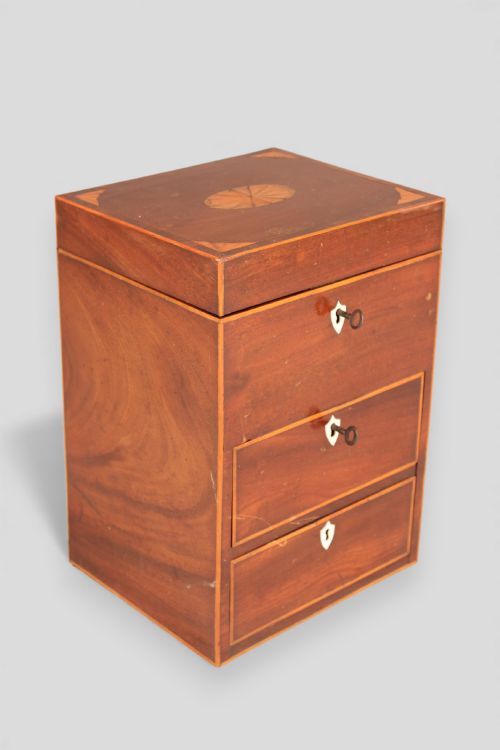
Makers built these pieces primarily from rich mahogany, sometimes embellishing the exterior with fine boxwood inlay and contrasting stringing. Sturdy brass fittings such as flush carrying handles, corner brackets, and locks reinforced the cases for frequent transport.
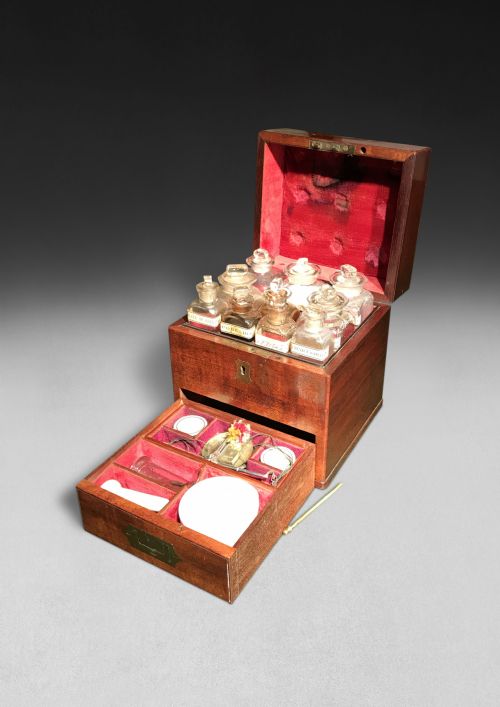
Internal layouts relied on precision joinery to create snug compartments for glass bottles, small scales, and velvet-lined spaces. Iron components frequently supported the interior mechanism, while bone details occasionally appeared on drawer pulls or measurement tools.
Listings feature mahogany, brass, glass, velvet, bone, and boxwood inlay across Georgian, Regency, and Victorian periods.
Assessing quality and completeness
The distinction between standard examples and superior pieces often lies in the survival of original glass bottles and internal fittings. A complete set with its original contents and untouched drawer arrangement commands greater interest from collectors.
Cabinetmaking finesse also dictates value, where tight dovetail joints, carefully matched mahogany grain, and crisp boxwood inlay elevate the work. The presence of functioning brass locks and well-preserved velvet linings further separates ordinary utility boxes from finer campaign items.
The Georgian Mahogany Medicine Box Glossary
- Apothecary box
- A portable wooden chest fitted with internal compartments designed to hold medicinal bottles, scales, and ingredients. These boxes were essential for doctors and households before modern pharmacies.
- Campaign case
- A sturdy piece of furniture or box constructed with flush brass handles and reinforced corners for military or travel use. They were built to withstand the rigours of transit.
- Boxwood inlay
- The practice of embedding contrasting light-coloured boxwood into the darker mahogany surface to create geometric borders or decorative lines. This technique highlights the skill of the cabinetmaker.
- Stringing
- A narrow strip of contrasting timber inlaid into shallow channels on the cabinet face. It adds subtle linear decoration to the exterior of the box.
Georgian Mahogany Medicine Box: Frequently Asked Questions
What did they use a georgian mahogany medicine box for?
These boxes served as portable dispensaries for storing liquid medicines, powders, and compounding tools. Doctors and wealthy households relied on them to treat common ailments at home or while travelling.
Inside, the fitted compartments kept glass bottles secure against the bumps of carriage journeys. Many included small scales and mixing drawers for preparing exact doses.
How do I date a georgian mahogany medicine box?
Dating relies on examining the construction methods, hardware style, and timber choices. Earlier pieces from the mid-eighteenth century often display simpler lines and distinct brasswork compared to later Regency examples.
The presence of specific hardware, such as recessed brass handles or key escutcheons, helps narrow down the decade. Comparing the dovetailing and internal layout to known examples aids in accurate attribution.
Are original bottles usually included?
Some pieces retain their original blown glass bottles, sometimes complete with ground glass stoppers and original labels. Finding a box with a full set of matching bottles is less common than finding the empty cabinet.
When bottles do survive, they provide valuable clues about the original contents and medical practices of the period. Collectors prize sets that remain entirely undisturbed.
How should I care for the mahogany and brass?
Maintain the wood by applying a quality beeswax polish occasionally to nourish the dry mahogany and preserve its deep colour. Avoid placing the box in direct sunlight or near heat sources to prevent the timber from warping.
Keep the brass hardware clean with a soft cloth rather than harsh metal cleaners that might damage the surrounding wood. Handle the fitted drawers and lids gently to protect the aged joints.