




Mahogany Pharmacy Cabinet
These mahogany pharmacy cabinet pieces are functional antique containers that bring genuine historical utility and rich timber grain to any interior.
Mahogany Pharmacy Cabinet
A mahogany pharmacy cabinet encompasses practical storage pieces originating from medical, apothecary, and chemist environments, spanning Georgian, Regency, and Victorian eras. These items range from compact, fitted countertop boxes and medicine chests to large banks of drawers, display cabinets, and shop counters.
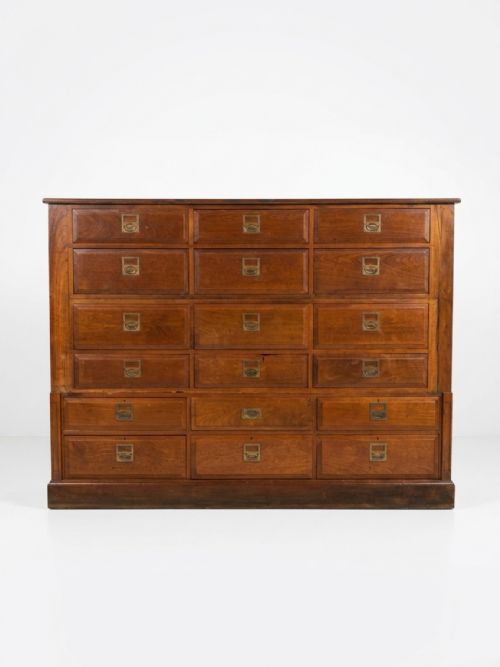
Buyers encountering this selection most frequently meet 19th-century banks of drawers, apothecary boxes, and chemist shop fittings. These forms reflect the functional demands of historical dispensaries, utilising dense timber and multi-drawer layouts designed to organise botanical ingredients, remedies, and instruments.
Origins include domestic medical chests alongside commercial retail fittings from chemist shops and veterinary practices. Pieces vary from small portable boxes intended for travel to substantial wall-hanging and freestanding shop units.
How they were made
Makers utilised solid mahogany as the primary timber, occasionally supported by secondary woods such as pine for internal framing. Surfaces display rich natural grain, sometimes enhanced with inlaid details on finer Georgian and Victorian boxes.
Listings feature mahogany, glass, brass, pine, paint, and paper across Georgian, Regency, Victorian, and 1920 periods.
What varies in quality
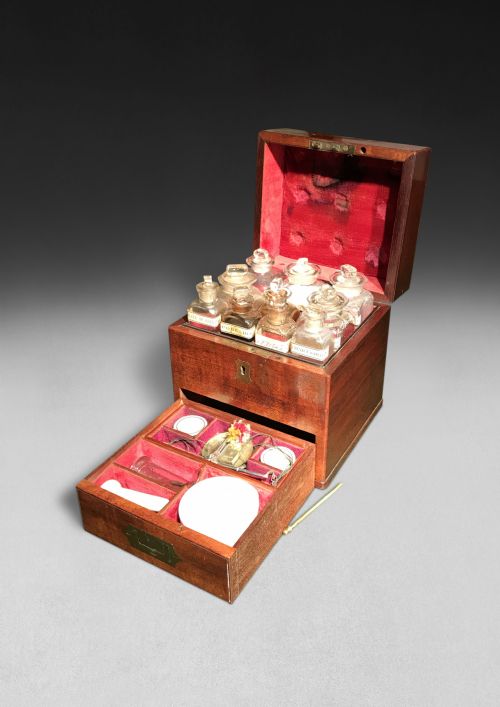
Quality rests upon the integrity of the timber, the precision of the joinery, and the completeness of original internal fittings. Superior examples retain their original brass hardware, glass bottles, and fitted compartments rather than replacement elements.
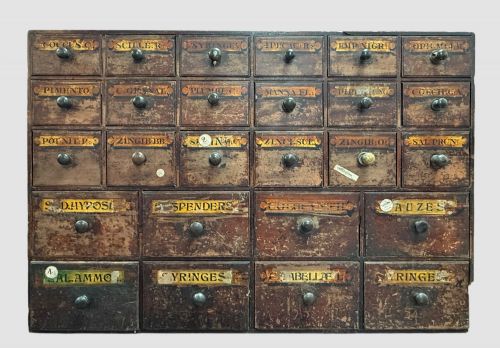
Commercial shop fittings and larger banks of drawers derive value from scale, proportion, and the survival of authentic retail paint or period labels. Smaller boxes distinguish themselves through sophisticated internal partitioning and refined exterior inlay work.
The Mahogany Pharmacy Cabinet Glossary
- Apothecary box
- A portable wooden chest fitted with internal compartments and glass bottles for storing medical preparations. These boxes date from the Georgian, Regency, and Victorian periods.
- Bank of drawers
- A multi-drawer storage unit designed for commercial or dispensary use, offering numerous small compartments for organising goods. They form a staple of Victorian chemist shop fittings.
- Medicine chest
- A specific container designed to hold remedies and medical instruments for domestic or travel use. They often feature secure locks and specialised internal layouts.
- Shop counter
- A large freestanding retail furniture piece incorporating display glass and storage drawers. They served historical chemists and opticians for customer transactions.
- Secretaire chest
- A tall cabinet form incorporating a writing surface alongside conventional drawers. French examples occasionally originate from historical pharmacy interiors.
Mahogany Pharmacy Cabinet: Frequently Asked Questions
What were pharmacy cabinets used for?
Historical practitioners utilised these cabinets to store botanical ingredients, liquid remedies, pills, and specialised medical instruments safely within dispensaries and shops. Portable versions allowed travellers and physicians to carry essential medicines on journeys.
Larger banks of drawers and shop counters provided systematic organisation for daily retail trade in Victorian and Edwardian chemist premises.
How do I date a mahogany pharmacy cabinet?
Dating relies on examining construction techniques, hardware styles, timber characteristics, and overall form across periods like the Georgian, Regency, and Victorian eras. Early examples often feature fine inlay work and tailored box compartments.
Later Victorian and 1920 pieces tend toward robust commercial shop fittings, multi-drawer banks, and large display cabinetry.
Are original glass bottles usually included?
Some surviving apothecary boxes retain their original fitted glass bottles and internal glassware, whilst others have lost them over centuries of use. Cabinets designed for shop display generally focus on shelving and glazed doors rather than internal medicine bottles.
Collectors value pieces complete with their original bottles and paper labels, though empty cabinets remain entirely authentic.
Where should I place a pharmacy cabinet at home?
Compact apothecary boxes and medicine chests suit tabletops, desks, or specialised shelving where their timber grain and brass details remain visible. Larger banks of drawers and countertop display cabinets function effectively as standalone statement furniture in living spaces or kitchens.
Keeping them away from direct heat sources protects the antique mahogany timber and original finishes.