



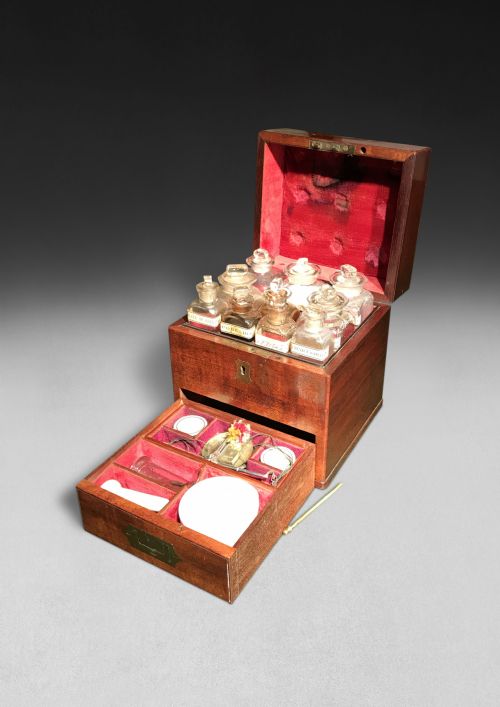

Georgian Medicine Cabinet
A georgian medicine cabinet holds the remedies and private cures of an earlier century within a neat timber box.
Georgian Medicine Cabinet
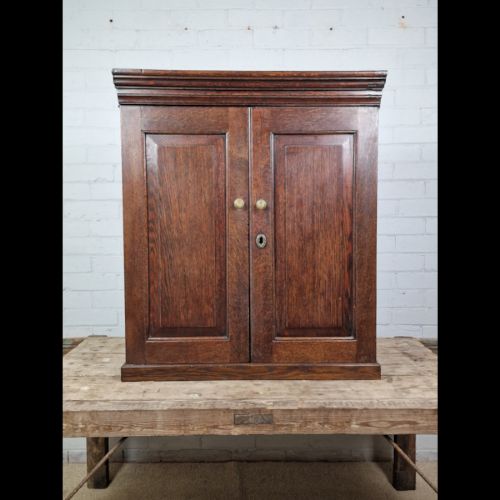
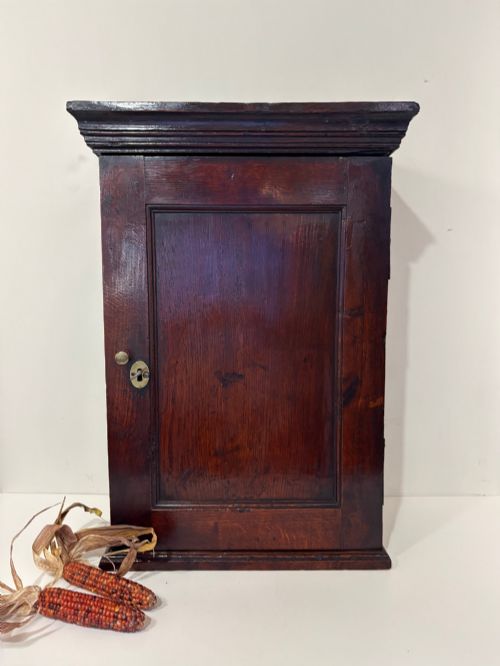
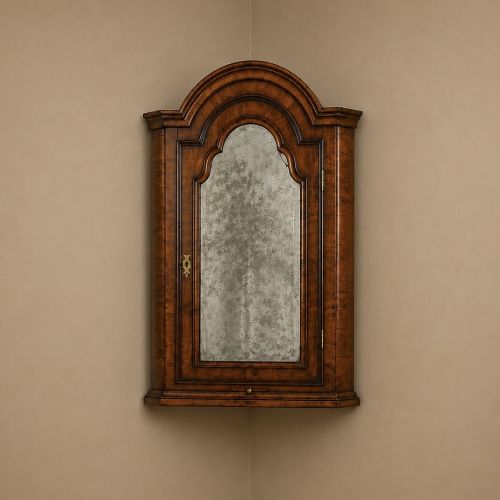
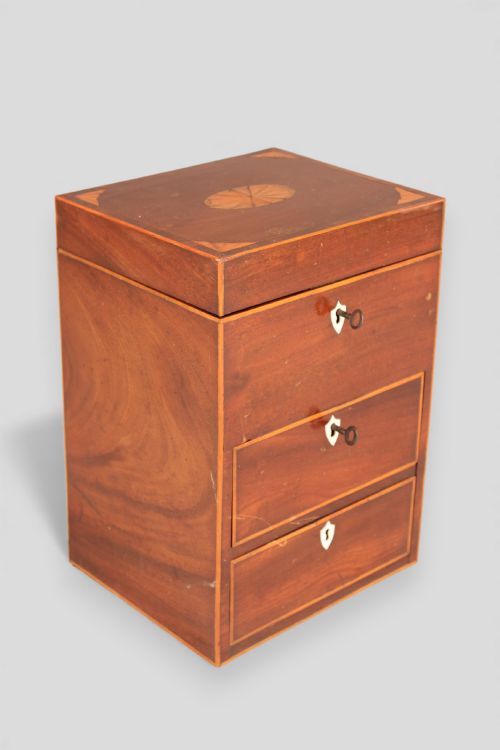
When you search for a georgian medicine cabinet, you encounter compact wall cupboards, hanging corner pieces, and portable apothecary boxes designed to hold bottles and powders safely. These utilitarian containers protect fragile glass and valuable ingredients from light and moisture.
The pieces on this page span the eighteenth and nineteenth centuries, including items from the Georgian, Regency, and Victorian periods. Oak and mahogany dominate the selection, appearing in forms ranging from plain spice cupboards to fitted chests with interior compartments.
How they were made
Cabinetmakers built these pieces primarily in solid oak and mahogany, often utilising walnut or incorporating brass hardware for hinges, locks, and lifting handles. Inlay work in lighter woods sometimes decorates the exterior surfaces of the finer mahogany boxes.
Interiors feature fitted partitions of varying complexity, designed to secure small glass bottles, vials, and apothecary scales. Some boxes include velvet-lined compartments or sliding candle slides, while wall-hung versions rely on sturdy peg construction and panelled doors.
Some medicine chests still hold faint herbal aromas trapped within the timber after centuries of storing dried roots and powders.
What varies in quality
The standard of timber selection and the precision of the interior joinery set the superior examples apart from simpler utilitarian pieces. Grain matching across a mahogany door or box lid indicates a maker who paid close attention to visual harmony.
The survival of original internal fittings, such as glass bottles and brass locks, defines the desirability of an apothecary chest. Pieces that retain their complete layout offer a more complete picture of historical use than those altered or emptied over time.
The Georgian Medicine Cabinet Glossary
- Apothecary box
- A portable wooden chest fitted with internal partitions, designed to transport medicines, scales, and compounding tools securely. These boxes often feature brass carrying handles and secure locking mechanisms.
- Hanging corner cupboard
- A wall-mounted storage unit constructed with a flat front and angled sides to fit snugly into the corner of a room. These pieces maximise storage space in smaller domestic interiors.
- Spice cupboard
- A small wall-mounted cabinet traditionally used for storing culinary or medicinal herbs and spices. They typically feature a single panelled door and internal shelving or small drawers.
- Candle slide
- A thin pull-out wooden shelf positioned beneath a cupboard door to hold a candle for illumination. This feature provides necessary light when searching for contents in dimly lit rooms.
Georgian Medicine Cabinet: Frequently Asked Questions
What is a georgian medicine cabinet?
A georgian medicine cabinet is a wooden storage piece created to hold domestic remedies, potions, and medical supplies during the eighteenth and early nineteenth centuries. These items range from small wall-hung cupboards to portable apothecary boxes fitted with internal dividers.
Cabinetmakers constructed them to keep dangerous or delicate substances secure and organised within the home or the practitioner's workspace.
How were apothecary boxes used?
Apothecary boxes served as portable dispensaries for physicians travelling to patients or for wealthy households managing their own routine health needs. The internal compartments held glass bottles, powders, scales, and pestles.
Owners kept the lids locked to prevent children or servants from accessing potent or toxic ingredients stored within the fitted interior.
How do I date a medicine cabinet?
Dating these pieces involves examining the timber species, construction techniques, and hardware style. Earlier eighteenth-century examples frequently utilise solid oak with simple panelled doors, whereas later Georgian and Regency versions often feature mahogany with delicate string inlay and brass bracket feet.
The presence of hand-cut dovetails and original locks also provides reliable chronological clues.
Where were wall cupboards placed?
Wall cupboards and hanging corner units were typically positioned in kitchens, bedchambers, or private dressing rooms where remedies needed to be close at hand. Corner cabinets made efficient use of wasted space in smaller domestic quarters.
Their elevated placement kept potentially harmful medical preparations safely out of the reach of young children.
Did these cabinets include glass bottles?
Many surviving apothecary boxes retain their original collection of blown glass bottles, sometimes with ground glass stoppers still intact. These bottles held specific liquid mixtures and dry compounds required for daily treatments.
Finding a complete set of matching bottles within an undisturbed interior is an uncommon occurrence that enhances the historical interest of the piece.