


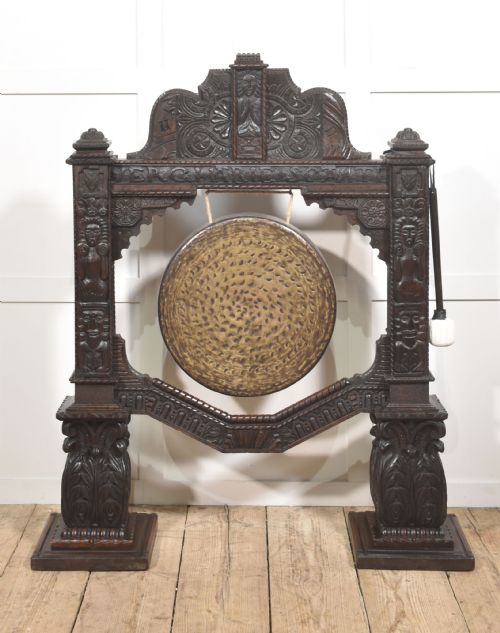


Antique Dinner Bell Gong
An antique dinner bell gong summons households to the table with resonant brass, bronze, and copper struck against timber stands.
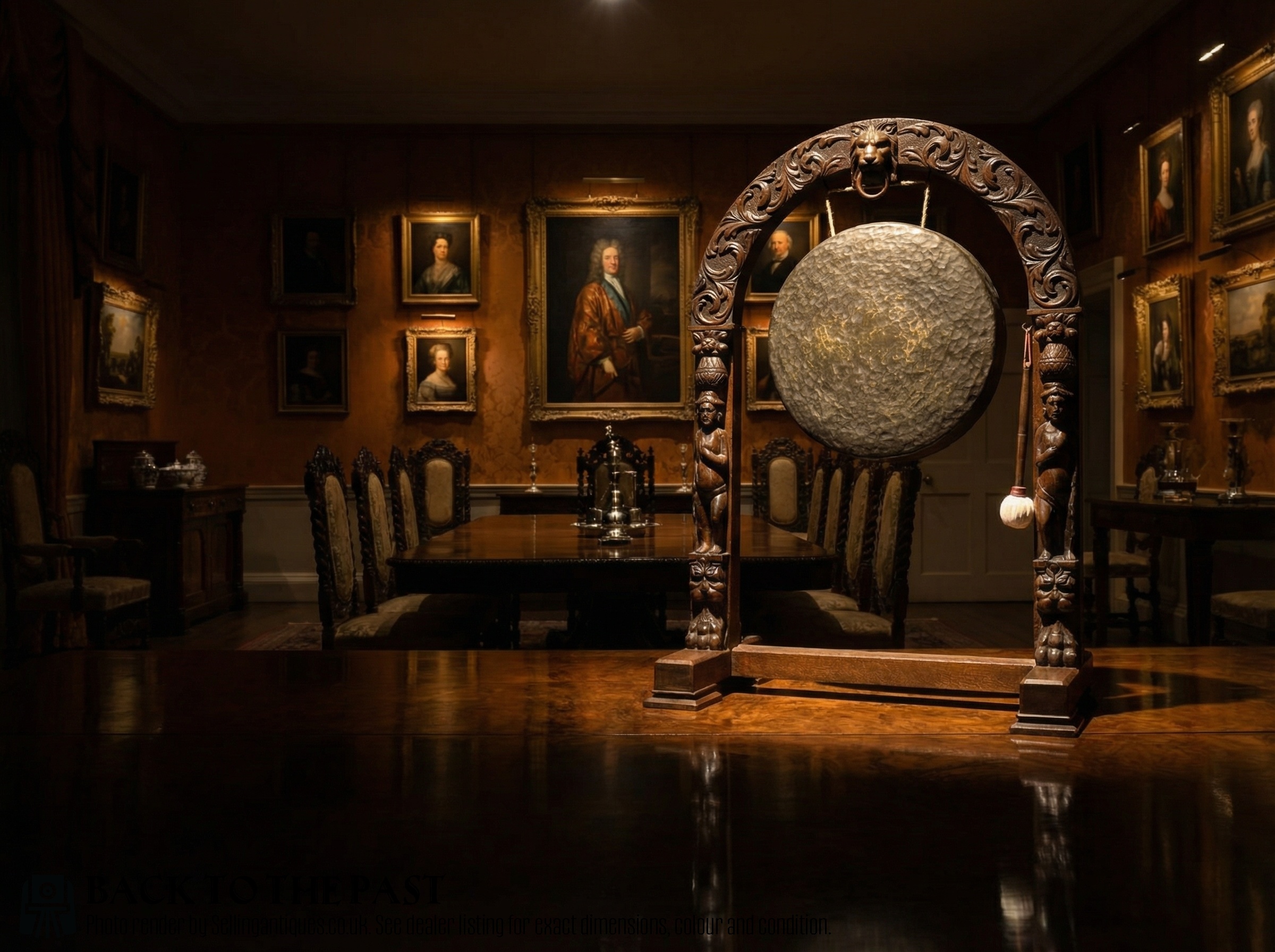
Antique Dinner Bell Gong
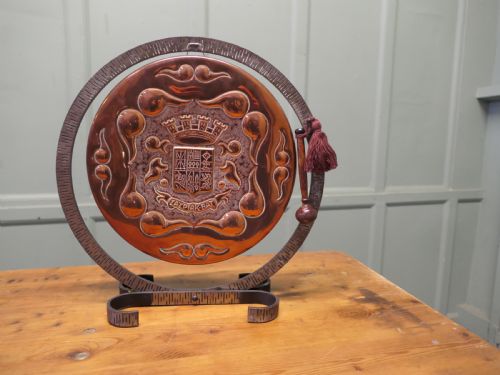
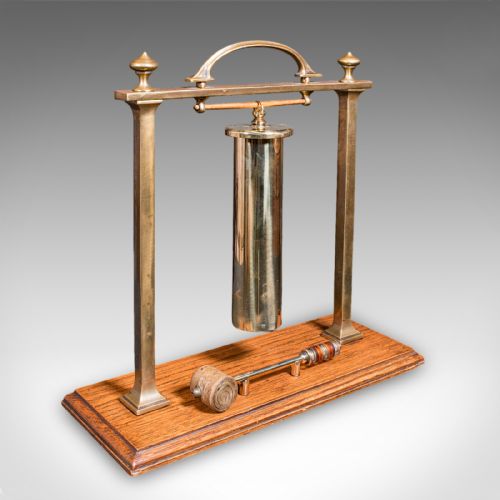
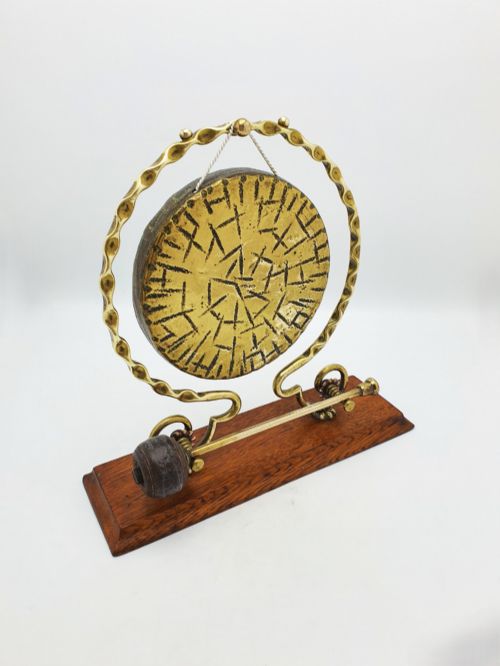
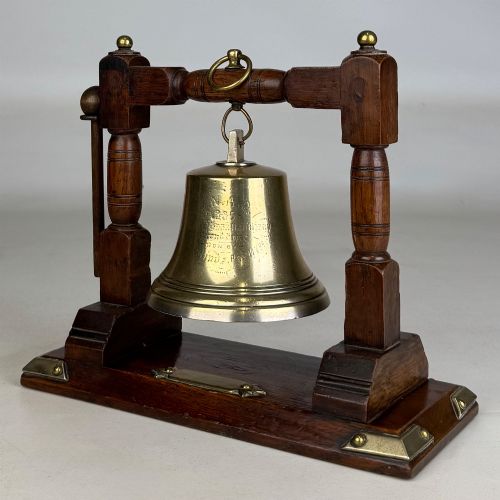
An antique dinner bell gong consists of a suspended metal disc or tube paired with a handheld striker, mounted within a wooden or metal frame for tabletop or wall placement. These pieces summon diners in grand houses and domestic settings alike, serving both a functional and decorative purpose.
The versions met on this page span the nineteenth and early twentieth centuries, including Victorian, Edwardian, and Art Nouveau designs. Examples range from simple tabletop brass gongs on oak bases to monumental carved structures and novelty forms.
Origins stretch from British workshops to international influences such as Japanese, Chinese, Burmese, and Basque folk art traditions. Buyers encounter varied formats including table gongs, wall chimes, and tea ceremony gongs.
Materials and construction
Metals form the acoustic heart of each piece, utilising brass, bronze, copper, silver plate, and iron. Artisans shaped these through hand hammering, casting, and specialised tuning to achieve the desired resonance when struck.
Supporting frameworks rely on dense hardwoods including oak, mango wood, and bamboo, frequently enhanced by carving or cord suspension. The juxtaposition of resonant metal against seasoned timber defines the physical structure of the form.
Listings feature items dated from the nineteenth century through the Edwardian period, constructed in brass, oak, bronze, and silver plate.
Assessing quality in a gong
Quality rests upon the purity of the metal alloy and the precision of the hand hammering, which dictates the clarity and sustain of the tone produced. A superior piece delivers a sustained, resonant chime rather than a dull thud.
The craftsmanship of the supporting stand reveals the maker's dedication, distinguishing mass-produced items from deeply carved oak or intricate Art Nouveau brasswork. The harmony between the acoustic properties of the bell and the structural integrity of the frame separates standard examples from exceptional ones.
The Antique Dinner Bell Gong Glossary
- Gong
- A suspended metal disc or plate struck with a mallet to produce a deep resonant note. They form the primary sound-producing element of these assemblies.
- Striker
- A mallet or handheld hammer designed specifically to hit the gong without damaging the metal surface. These frequently feature matching wooden handles.
- Japonisme
- A nineteenth-century artistic movement reflecting Japanese aesthetic influences on European design. This style appears in decorative motifs applied to frames and stands.
- Palazzo
- A large stately Italian building or palace, lending its name to grand architectural wall chimes. These multi-strike variations offer complex acoustic outputs.
Antique Dinner Bell Gong: Frequently Asked Questions
How do I clean the metal gong?
Dust gently with a soft dry cloth to preserve the aged surface and natural patina accumulated over decades.
Avoid abrasive metal polishes that strip historical character and alter the acoustic properties of the piece.
Were these used outdoors?
These pieces served primarily within interior spaces like dining rooms, halls, and verandas to call residents to meals.
Exposure to damp outdoor conditions damages the wooden frames and degrades the cord suspension.
How do I date an oak stand?
Examine the depth of the hand carving, the timber grain, and the specific mounting brackets holding the cord.
Victorian and Edwardian joinery techniques differ markedly from later twentieth-century production methods.
What causes a dull tone?
A muted sound usually results from incorrect cord tension or the striker resting directly against the metal.
The metal must hang freely from its suspension cord to vibrate fully without dampening.