
Antique Dining Room Furniture
Antique dining room furniture encompasses tables, chairs, sideboards, and dumbwaiters spanning Georgian to Art Deco periods, offering functional historical craftsmanship for hosting meals.
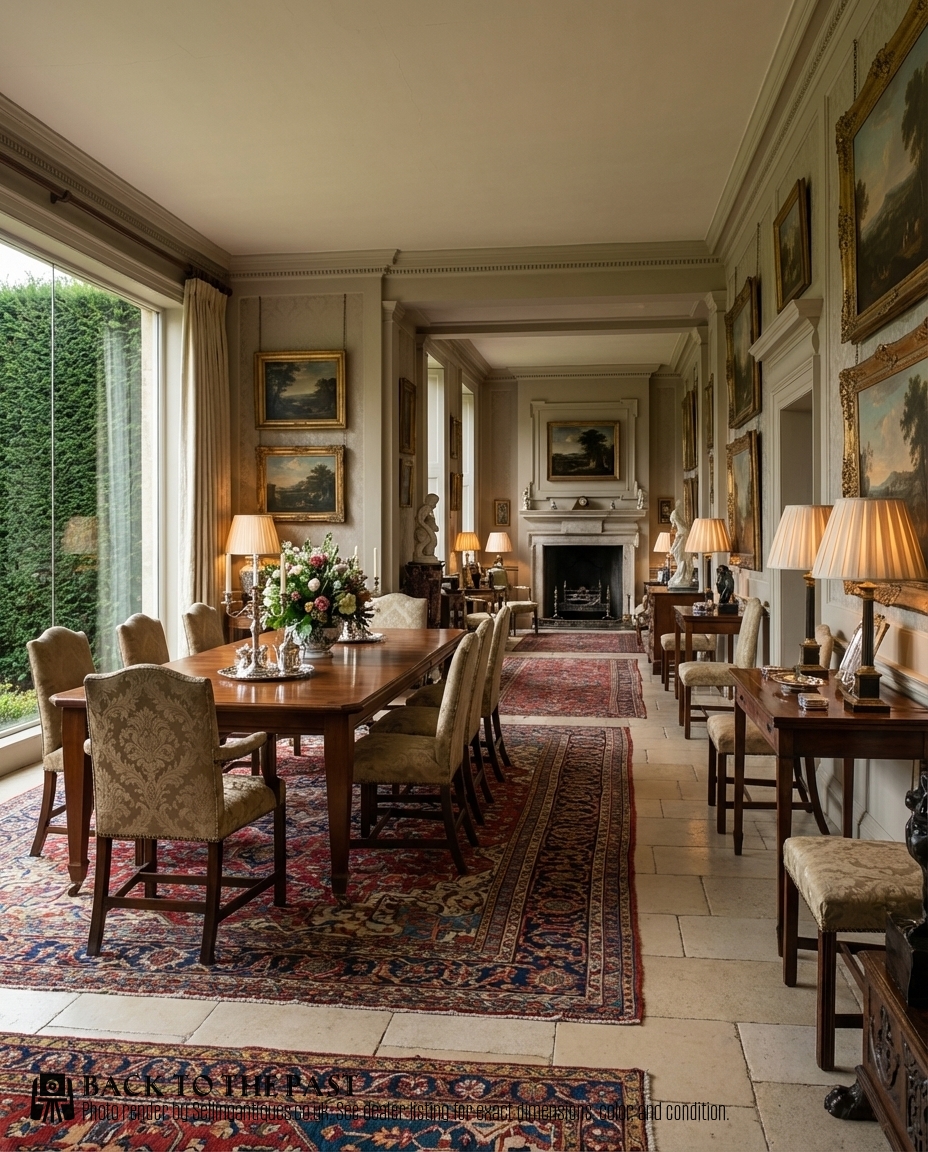
Antique Dining Room Furniture
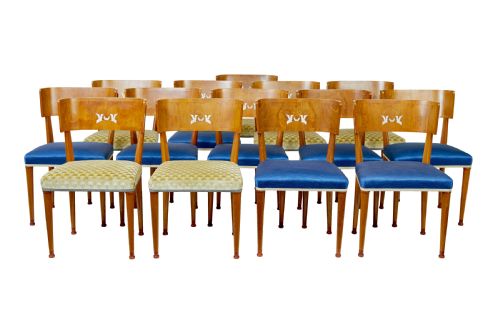
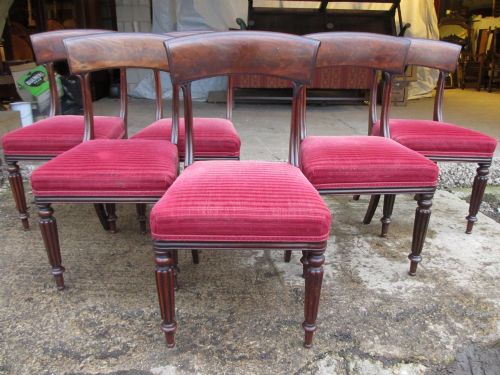
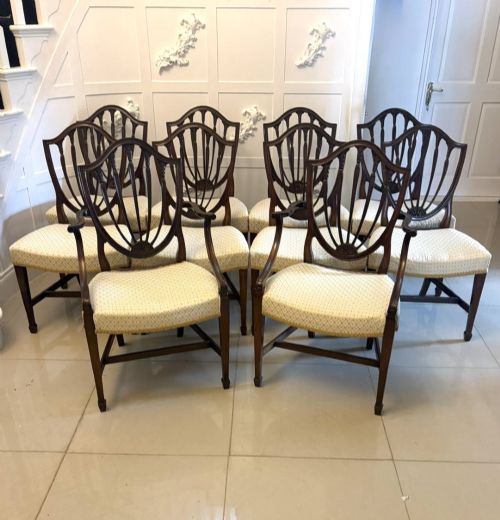
Antique dining room furniture consists of large timber pieces designed for formal meals and entertaining, primarily featuring tables, dining chairs, and sideboards. These items span periods from the Georgian era through the Victorian and Edwardian decades up to Art Deco designs.
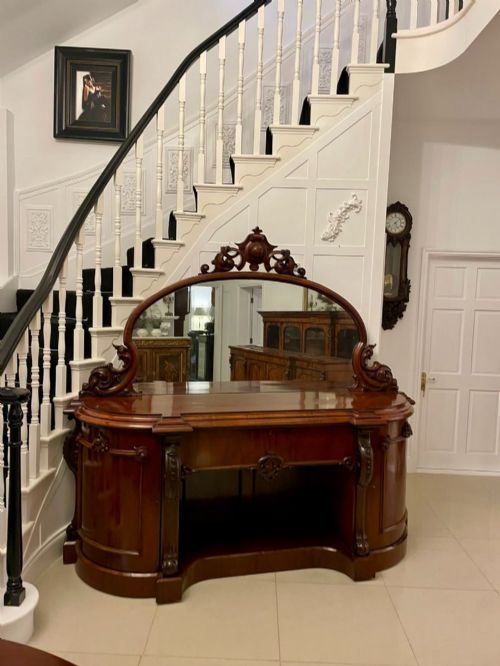
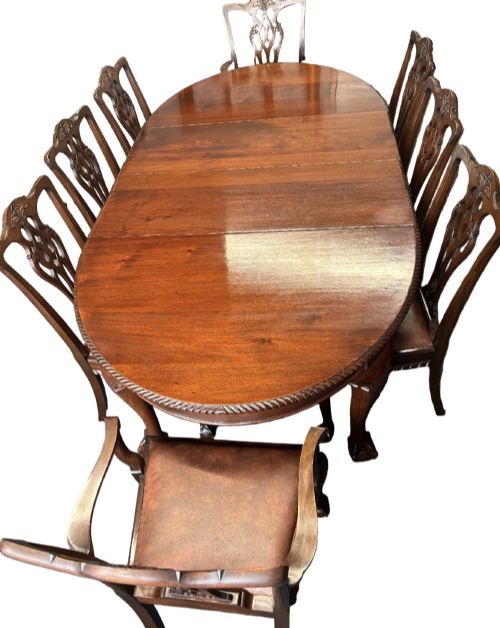
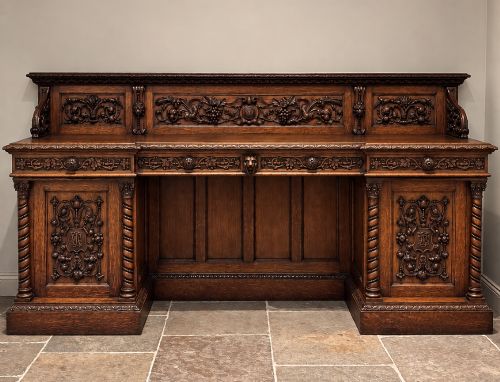
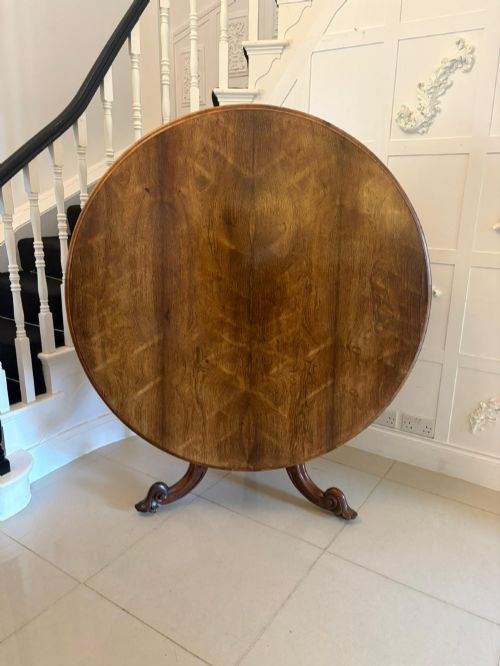
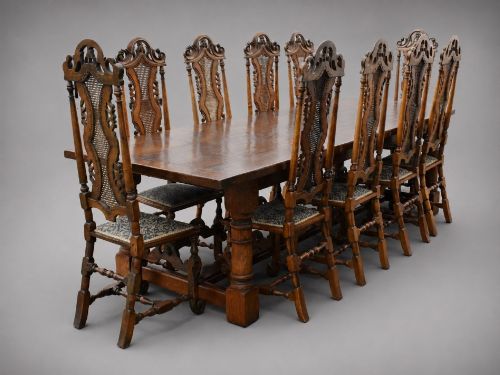
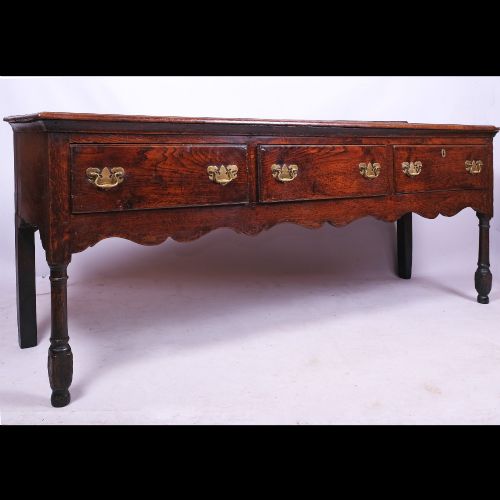
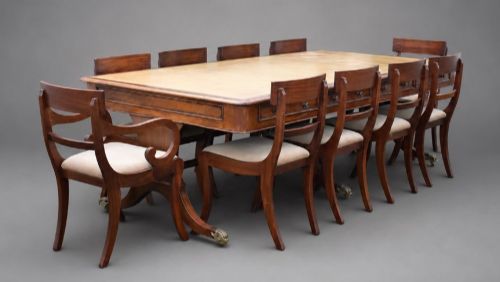
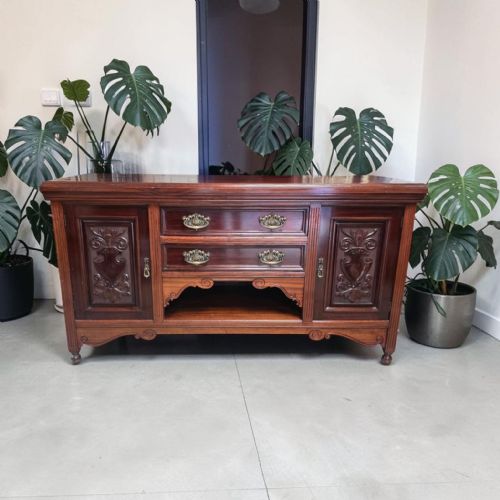
The most common items found in this category are sideboards and dining tables paired with matching chair sets. Sideboards range from mirror-back display cabinets to simpler servers and buffets, while tables appear as extending models, circular formats, or large boardroom tables.
Makers and designers from London, Nottingham, and other centres produced these formal dining sets using traditional joinery and cabinet-making methods. Pieces often reflect specific revival movements or contemporary twentieth-century styles such as Art Deco.
How they were made
Cabinet makers utilised dense hardwoods such as mahogany, oak, and walnut, frequently selecting burr walnut veneers or satinwood and maple for decorative surfaces. These timbers provided the structural strength required for large dining tables and heavy sideboards.
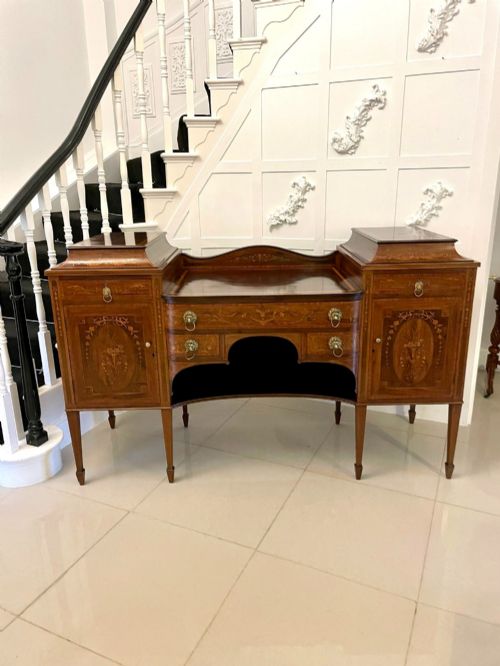
Surface decoration involved intricate marquetry inlay, carved details, and polished finishes that highlighted the natural grain of the wood. Upholstered elements on dining chairs incorporated leather or fabric seating secured to frames of oak or mahogany.
Antique Dining Room Furniture Retail Price Guide 2026
Typical asking prices for dining room furniture among the pieces listed under this phrase on Sellingantiques today, from the lower quarter to the upper quarter. They describe what is for sale here now, not the wider market.
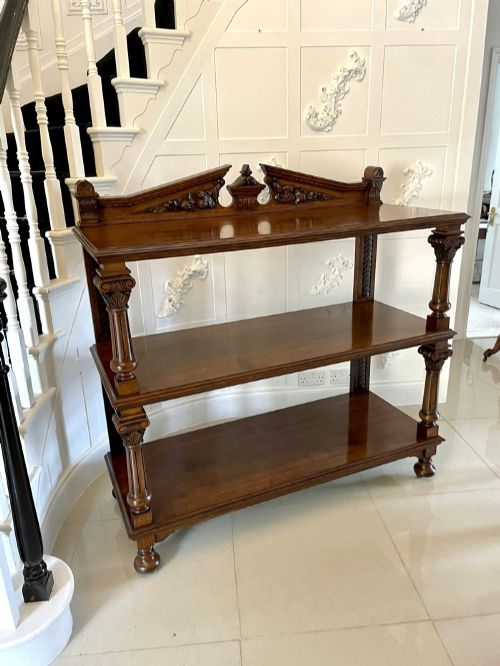
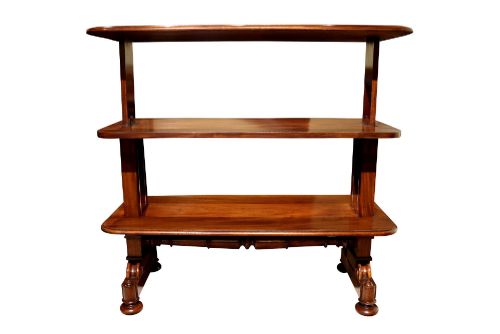
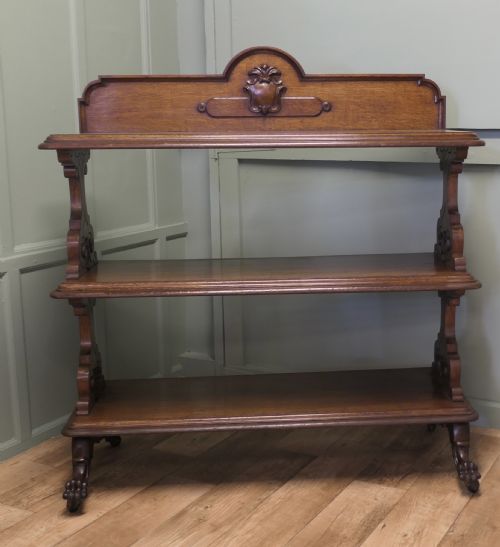
Multi-tiered dumbwaiters once allowed diners to pass the port in absolute privacy by eliminating the need for hovering servants.
What varies in quality
The standard of a piece depends heavily on the selection of timber and the precision of the carved or inlaid ornamentation. High-end items display finely figured mahogany or burr walnut veneers alongside hand-carved motifs executed by skilled workshops.
Structural integrity differentiates simpler utility pieces from works produced by notable firms and cabinet makers. Consistent matching across large sets of dining chairs and fully integrated extension mechanisms for tables indicate higher original manufacture.
Hewetsons London·Maple And Co·Whytock And Reid·Hamptons Of Pall Mall London·Harry And Lou Epstein
The Antique Dining Room Furniture Glossary
- Dumbwaiter
- A multi-tiered freestanding serving stand used to hold dishes and utensils near the dining table without requiring servant attendance during meals.
- Sideboard
- A long serving cabinet placed against the dining room wall for storing tableware and presenting food.
- Marquetry
- Decorative patterns formed by fitting together thin pieces of wood veneer and other materials onto a solid timber surface.
- Cellarette
- A dedicated cabinet or box designed to hold wine bottles and decanters securely beneath or beside the dining table.
- Chippendale style
- Furniture designs inspired by eighteenth-century cabinet maker Thomas Chippendale, characterised by carved details and classical proportions.
Antique Dining Room Furniture: Frequently Asked Questions
How do I choose the right dining table size?
Measure your dining room space carefully to ensure adequate clearance around the table when chairs are pulled out for seating. Consider extending models that allow flexibility for accommodating larger groups during gatherings.
Matching the table length with an appropriate number of dining chairs ensures a balanced layout. Larger rooms can support triple pillar tables or extensive boardroom formats.
What is the difference between a buffet and a sideboard?
Sideboards generally feature deeper storage cupboards and sometimes mirror backs designed for display and heavy serving tasks. Buffets often present a slightly lower profile intended specifically for serving food during meals.
Both forms utilise solid timbers like oak or mahogany and serve as primary storage furniture within formal dining spaces.
How do I care for antique mahogany dining surfaces?
Maintain polished wood surfaces by dusting regularly with a soft cloth and avoiding exposure to direct sunlight or extreme temperature shifts. Use protective mats beneath hot dishes and liquids to prevent marks on the timber.
Apply specialist wax polish periodically to nourish the grain and preserve the finish without creating a heavy buildup.
How do I identify Art Deco dining furniture?
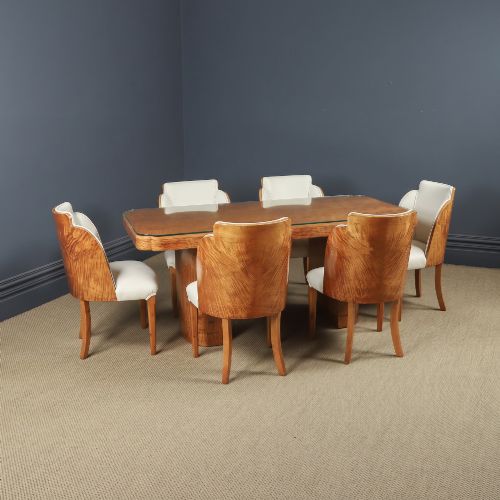
Art Deco pieces from the twentieth century often feature streamlined geometric forms, smooth polished surfaces, and exotic veneers like burr walnut or satinwood. These designs frequently appear in matching dining suites comprising tables, leather chairs, and sideboards.
Cabinet makers such as Epstein and Hamptons produced distinctive examples during this period that break away from traditional Victorian revival styles.