
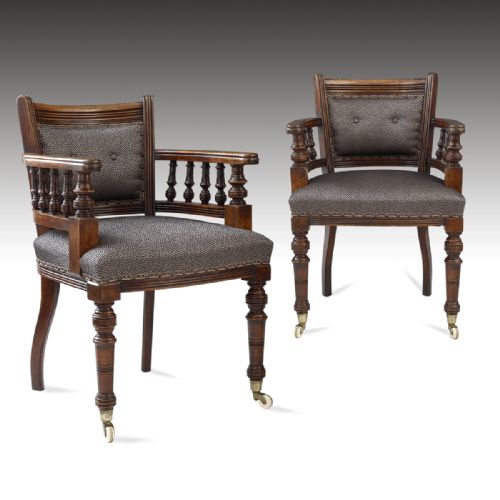
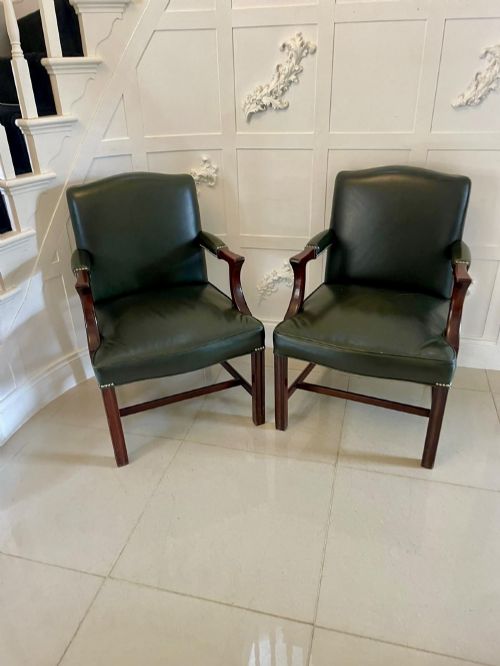
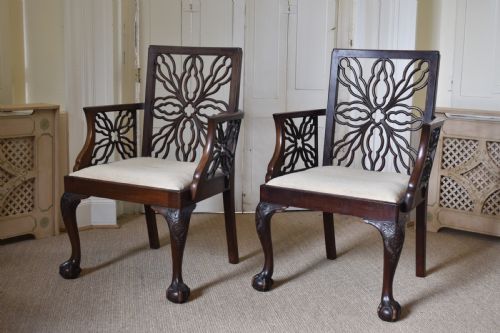
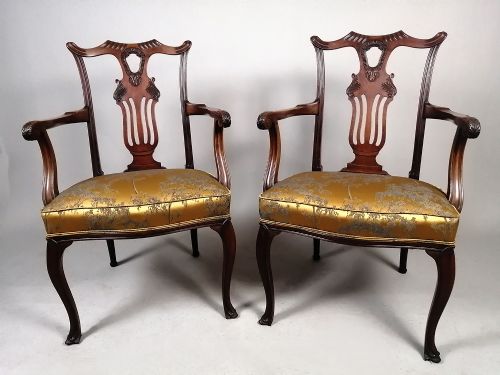
Antique Desk Armchairs Pair
An antique desk armchairs pair brings matched seating to a study, combining supportive proportions with period timber.
Antique Desk Armchairs Pair
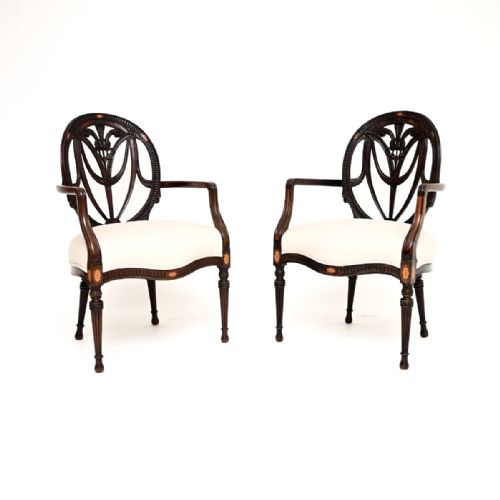
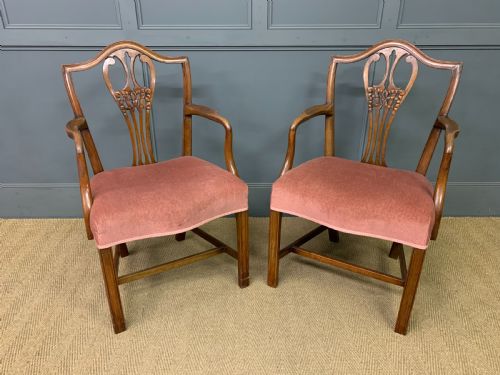
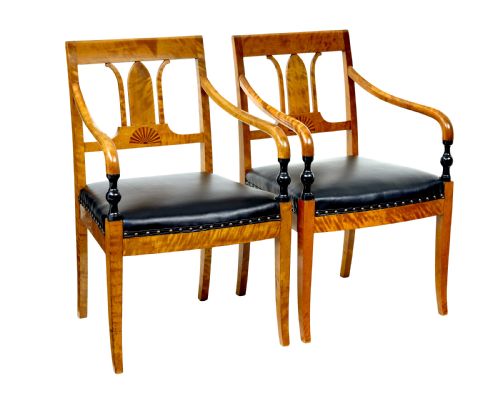
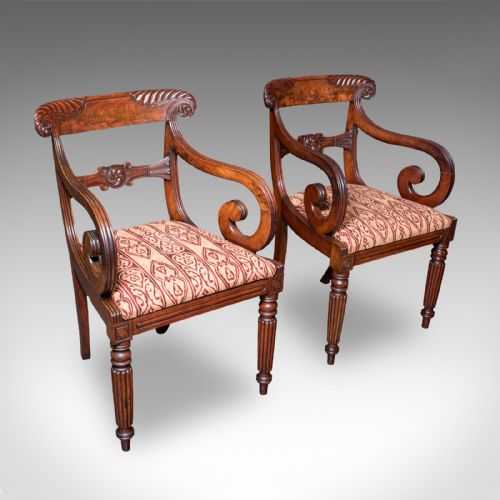
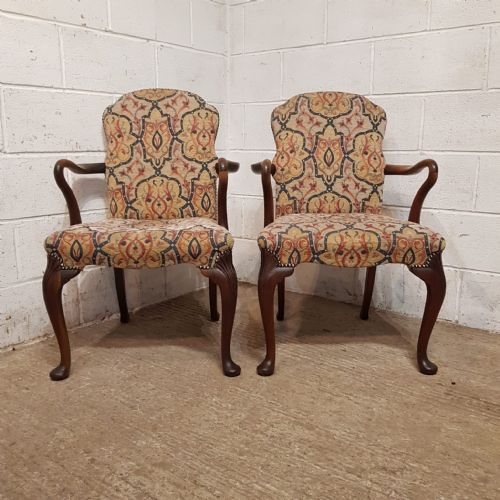
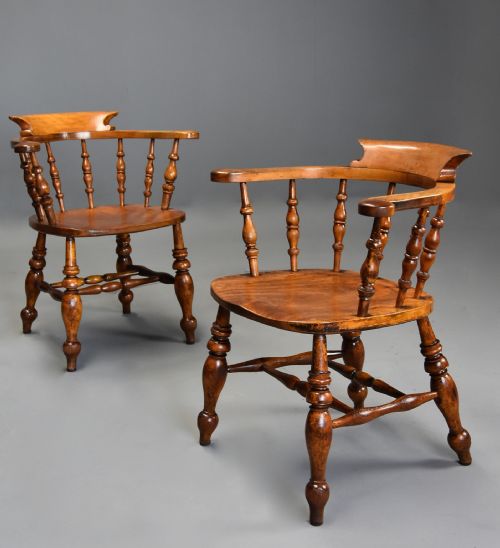
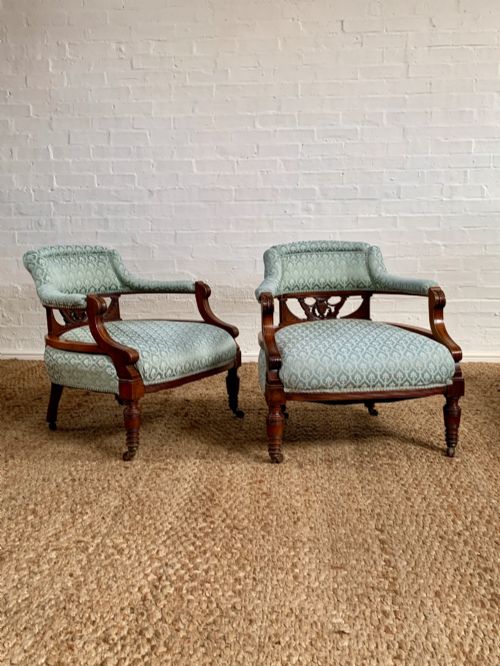
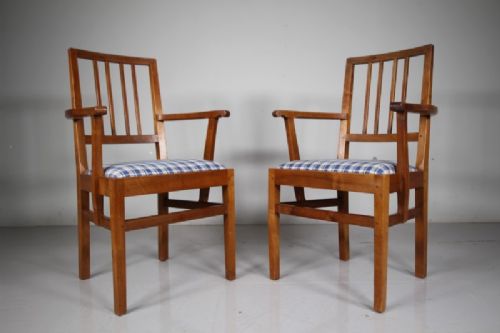
An antique desk armchairs pair consists of two matching seats designed for writing tables, libraries and studies. They appear in forms ranging from captain's chairs and smokers bows to upholstered library and Gainsborough seats.
The materials span mahogany, walnut, oak, elm and birch, frequently paired with leather, fabric or cane inserts. These seats arrive from periods including the Georgian and Regency eras, the Victorian epoch, Edwardian decades and the 1930s.
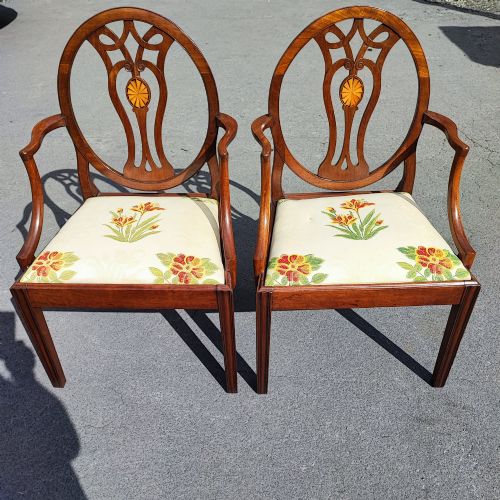
Most examples found here date from the nineteenth and early twentieth centuries, reflecting revival styles like Chippendale, Hepplewhite and Sheraton alongside utilitarian captains forms.
How they were made
Cabinetmakers constructed the frames using solid timbers such as mahogany, walnut and oak, often employing bentwood techniques for curved elements like captain's chair top rails. Joinery relied on traditional mortise and tenon construction to withstand daily movement at a desk.
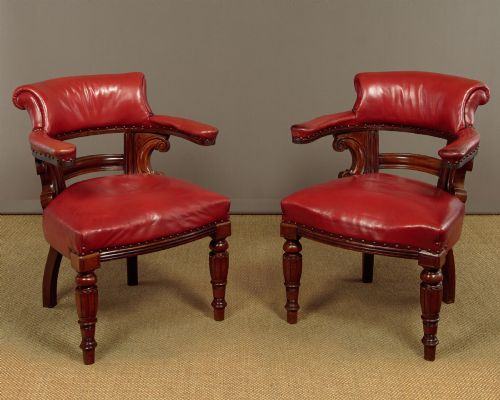
Upholstered versions integrated leather, fabric, velvet or cane panels secured to supportive webbing or cane bases. Decorative detailing encompassed brass inlay, hand carving, turned spindles and contrasting wood inlays.
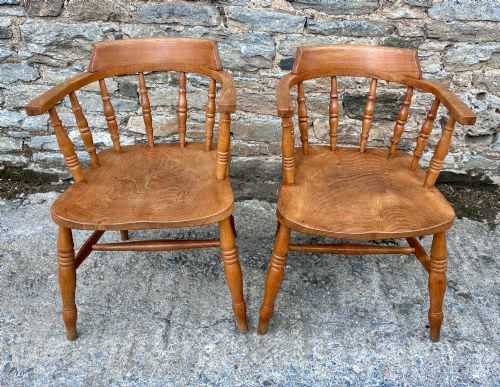
Elm captain's chairs preserve the subtle indentations of nineteenth-century writers who leaned firmly into their daily correspondence.
What varies in quality
Quality rests in the crispness of timber carving, the selection of figured wood veneers and the integrity of structural joinery. Better pairs display balanced proportions and cohesive grain patterns across both chairs.
The refinement of secondary elements, such as precise brass inlay or well-turned arm supports, distinguishes standard workshop production from finer cabinet work.
Edward Barnsley·Gillows
The Antique Desk Armchairs Pair Glossary
- Carver
- An armchair, typically designed for the head of a dining table or for use at a desk, featuring open arms attached to the seat rail.
- Captain's chair
- A low-backed wooden armchair with a curved top rail supported by spindles, originating in the eighteenth and nineteenth centuries.
- Gainsborough chair
- A wide, upholstered armchair with open padded arms, low seat and square legs, popular during the Georgian period.
- Bergère
- An enclosed armchair with upholstered back and sides, often featuring exposed wooden framing and cane panels.
- Smoker's bow
- A sturdy vernacular wooden armchair with a low rounded back, closely related to the Windsor chair tradition.
Antique Desk Armchairs Pair: Frequently Asked Questions
How were desk armchairs used historically?
These seats served primarily in studies, home offices and libraries for writing, reading and administrative tasks. Their enclosed or semi-enclosed arms provided support during long hours at a partner desk or bureau.
Pairs often equipped twin workspaces or grand partners' desks in formal Victorian and Georgian interiors, ensuring symmetrical seating arrangements for study occupants.
Are these chairs comfortable for daily work?
Many period versions offer supportive posture through curved wooden backs or upholstered cushioning. Models featuring leather pads and upholstered seats provide softer support for extended sitting.
Buyers intending daily desk use frequently look for comfortable proportions and appropriate seat heights relative to modern writing tables.
How do I identify Regency from Victorian examples?
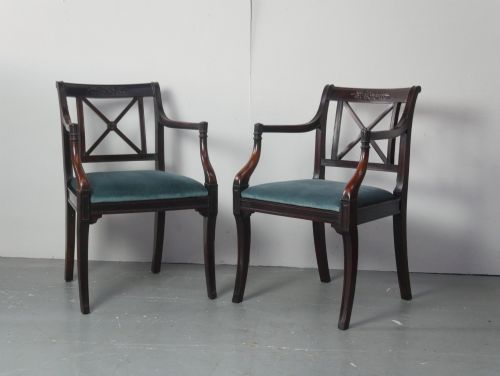
Regency models tend to feature classical influences such as saber legs, brass inlay and lyre backs executed in dark mahogany. They reflect an aesthetic influenced by ancient Roman and Greek designs.
Victorian pieces often exhibit heavier timber frames, darker walnut tones, and revival styles such as Gothic or robust button-tufted upholstery reflecting nineteenth-century industrial production.
Can I mix these with modern desks?
These wooden and leather seats integrate readily into contemporary workspaces by introducing natural grain and historical character. Their traditional silhouettes provide a contrasting focal point against minimalist or industrial desks.
Matching pairs maintain visual symmetry in a home office while offering functional seating derived from historical cabinet traditions.