
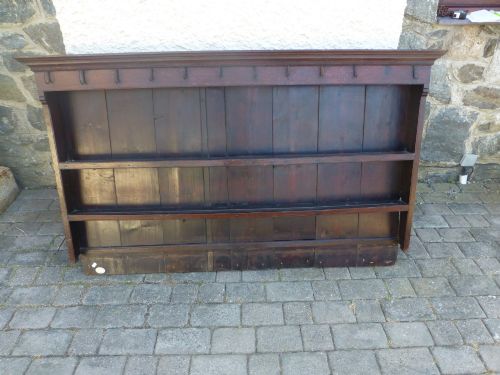
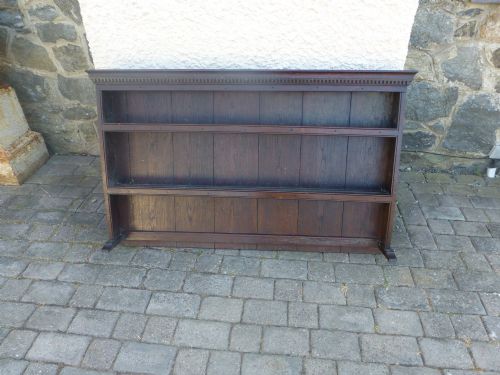
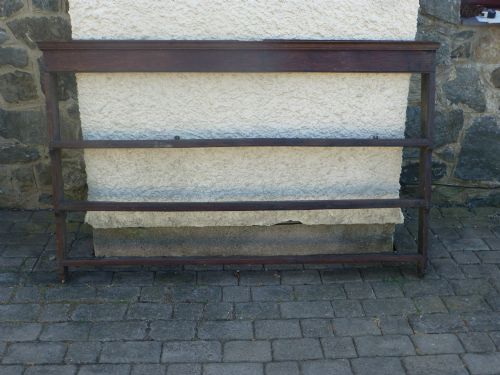
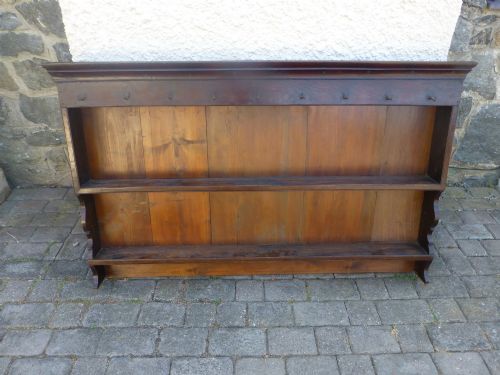
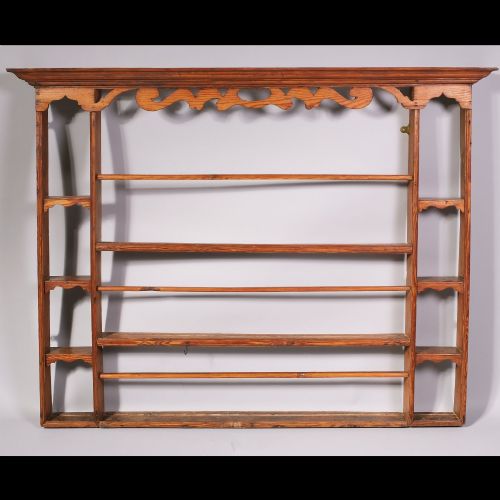
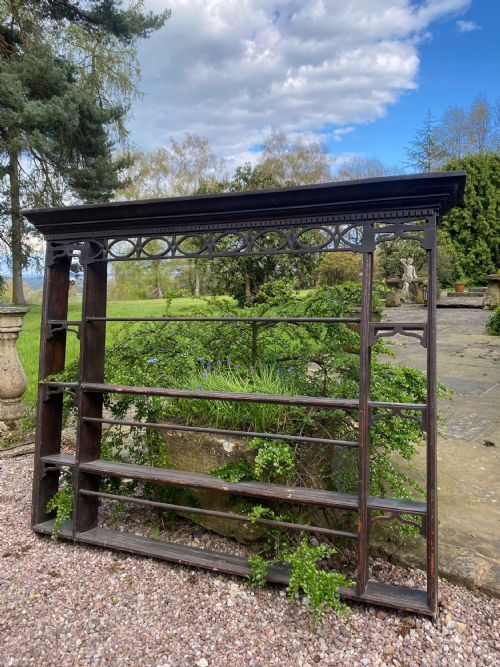
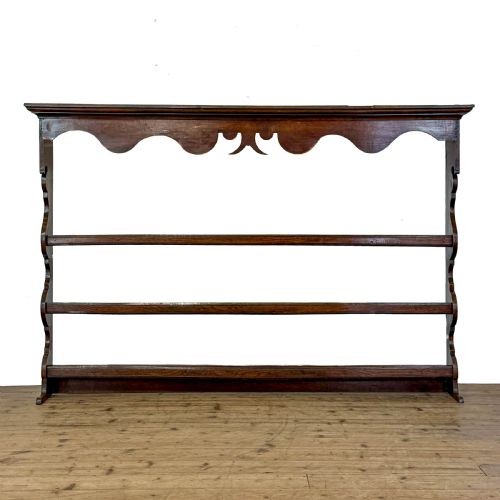


Antique Delft Shelf
These pieces of antique delft shelf display plates and domestic wares against kitchen walls, bringing period utility and timber character into modern rooms.
Antique Delft Shelf
An antique delft shelf serves primarily to display ceramics and plates, appearing as wall-mounted plate racks, hanging racks, or dresser racks. These forms emerge principally from the eighteenth century, alongside Georgian and English Country styles.
The pieces on this page span the seventeenth, eighteenth, and nineteenth centuries, with occasional interpretations from around nineteen hundred. Oak and pine dominate the timber selection, alongside fruitwood, walnut, and stained oak.
How they were made
Joiners constructed these racks predominantly from native hardwoods like oak and softwoods such as pine, using traditional pegging and jointing methods. Surfaces often show the natural grain of the wood, sometimes enhanced by inlay or marquetry.
Detailing on better examples includes fretwork and architectural elements such as Corinthian columns, reflecting the prevailing Georgian and Gothic Revival aesthetics of their period.
Some eighteenth-century pine racks feature delicate fretwork alongside robust Corinthian columns, proving rustic makers had grand architectural ambitions.
What varies in quality
Age and originality of the surface timber dictate the character, where untouched patination and original structural members elevate a piece above later adaptations.
The Antique Delft Shelf Glossary
- Plate rack
- A wall-mounted or hanging fixture specifically designed with vertical slats or grooves to hold plates upright. These units keep domestic crockery accessible and visible in domestic kitchens.
- Dresser rack
- The upper shelving section of a dresser, sometimes found separated and hung independently upon a wall. It provides multiple tiers for displaying ceramics.
- Marquetry
- The art of applying pieces of veneer to a structure to form decorative patterns. This technique appears on select nineteenth-century examples.
- Fretwork
- Ornamental perforated wood carving executed in patterns. It adds decorative lightness to the crests or friezes of better racks.
Antique Delft Shelf: Frequently Asked Questions
How do I hang an antique delft shelf safely?
Secure the rack directly into wall studs using heavy-duty fixings suited to the weight of aged timber. Distribute the load evenly across the mounting points.
Because these shelves often hold heavy ceramics, professional installation ensures the wall structure supports the combined weight of timber and plates.
Are these racks meant for kitchens only?
Historically utilised for storing and displaying ceramic plates in domestic culinary spaces, these racks function equally well in dining rooms or living areas today. They provide vertical display space for collections without occupying floor area.
Placing them outside the kitchen allows for the display of decorative ceramics or books while preserving period character.
How can I tell eighteenth-century oak from later wood?
Examine the timber for distinctive medullary rays, hand-cut surface tool marks, and the deep patination that develops over centuries of exposure. Eighteenth-century oak typically exhibits tighter growth rings and heavier mass than modern equivalents.
Construction joints, such as handmade pegs rather than modern screws, further indicate the period of manufacture.
Did these shelves originally belong to dressers?
Many racks functioned as the upper tier of a two-part dresser before becoming separated over time. These pieces were subsequently adapted for direct wall hanging.
Evidence of former attachment points or differing wood wear can sometimes indicate whether a rack spent its life mounted independently or atop a base.