
Antique Decorative Pottery Urns
These antique decorative pottery urns bring historic ceramics, majolica and stoneware into modern interiors.
Antique Decorative Pottery Urns
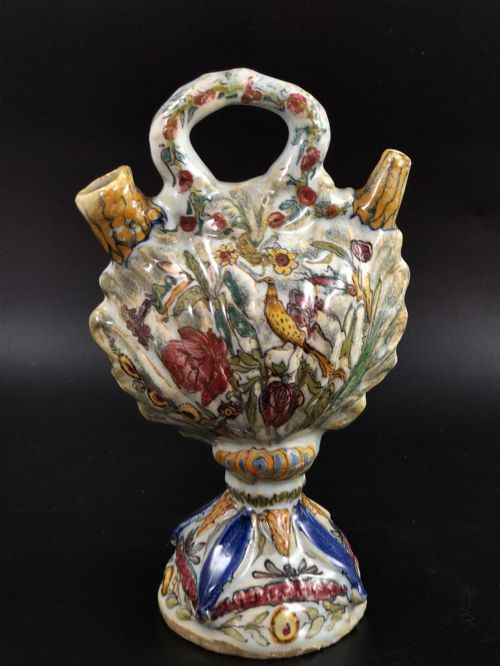
When you search for antique decorative pottery urns, you encounter vessels spanning the nineteenth century through the early twentieth century, including Victorian, Edwardian, Art Nouveau and Art Deco periods. These forms originate from British potteries, continental European workshops and Japanese export centres.
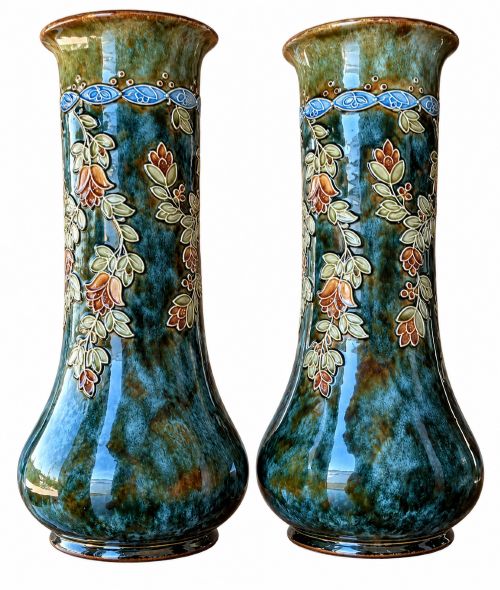
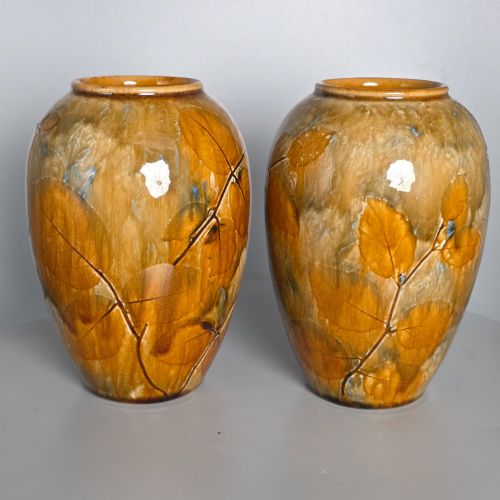
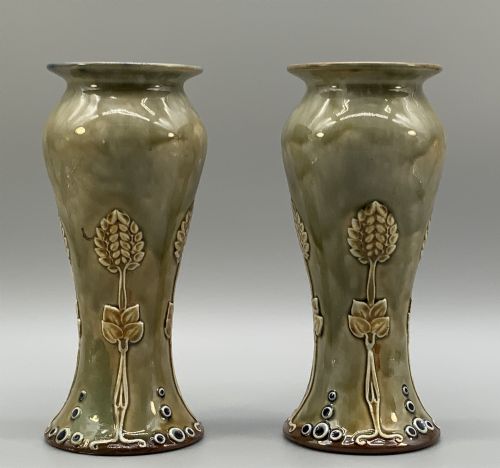
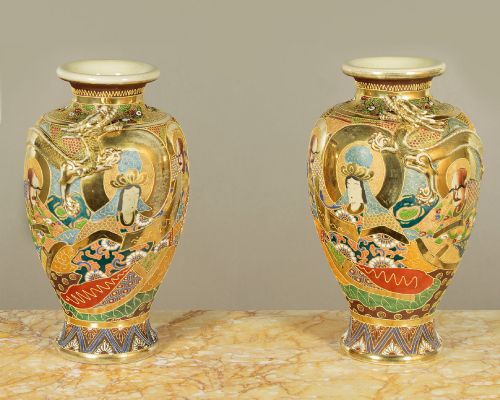
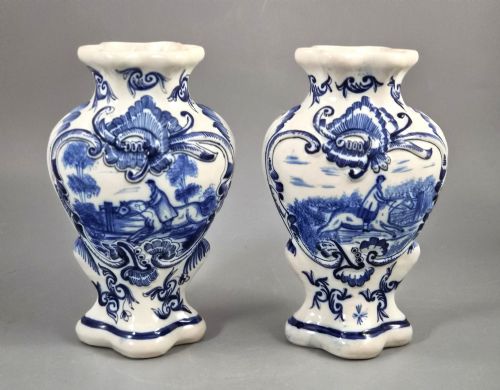
The selection here encompasses earthenware, porcelain, stoneware and faience fashioned into vases, flasks, jars and garnitures. You will regularly find pairs and matching sets alongside singular focal pieces.
Makers ranged from large commercial factories to specialised art potteries, producing items intended primarily for interior display rather than functional use.
How they were made
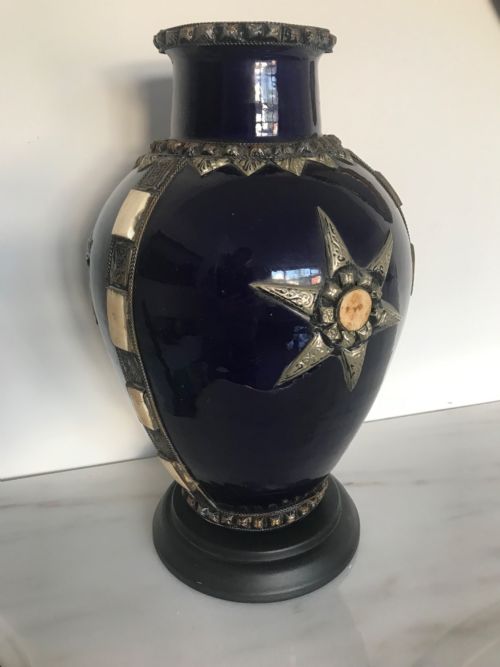
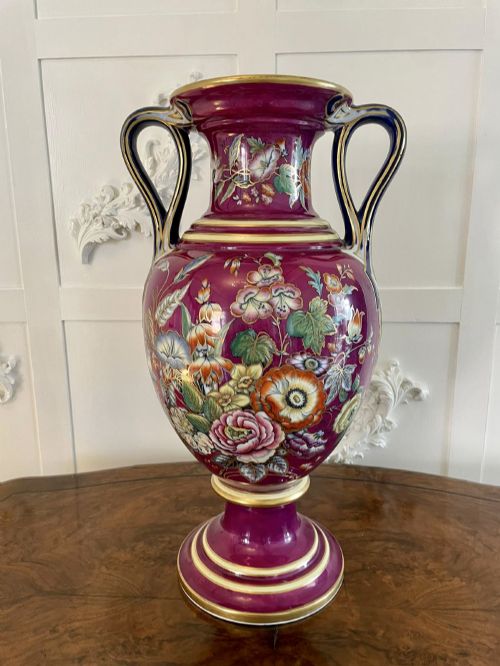
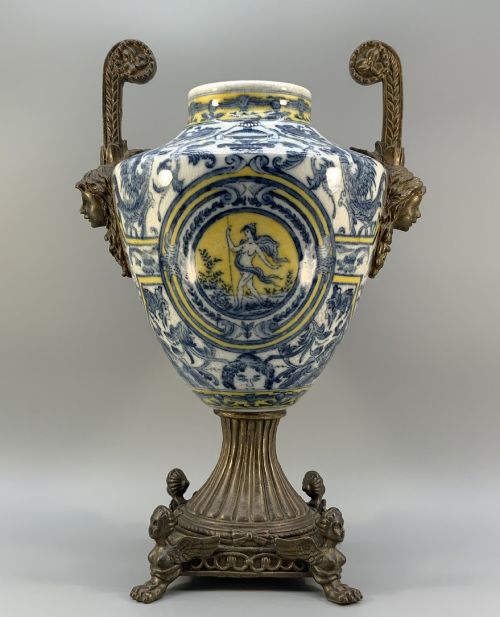
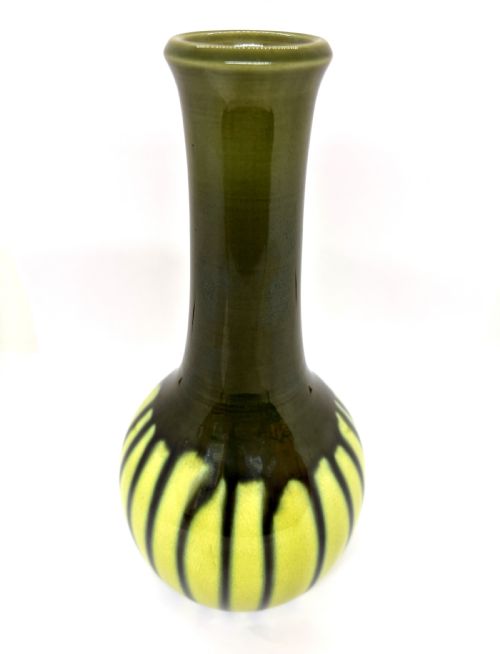
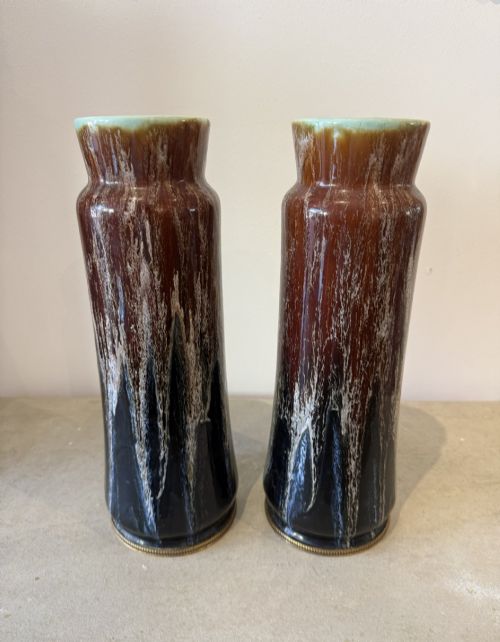
Ceramic bodies were shaped from earthenware, stoneware, porcelain or faience, then finished with coloured glazes, enamel or gold leaf. Many pieces incorporate additional elements such as bronze mounts, silver cabochons or copper effects.
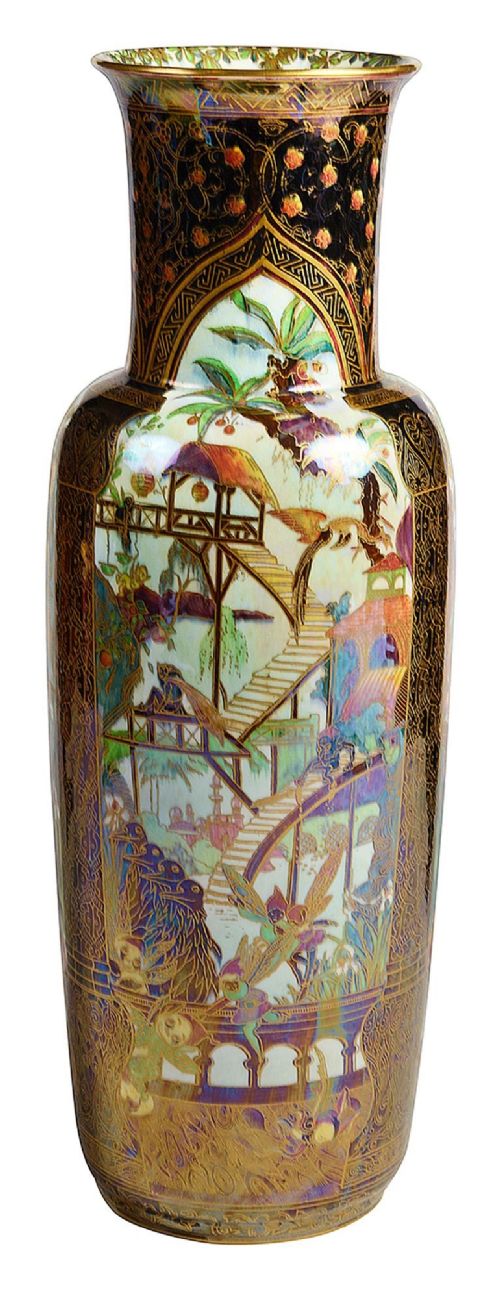
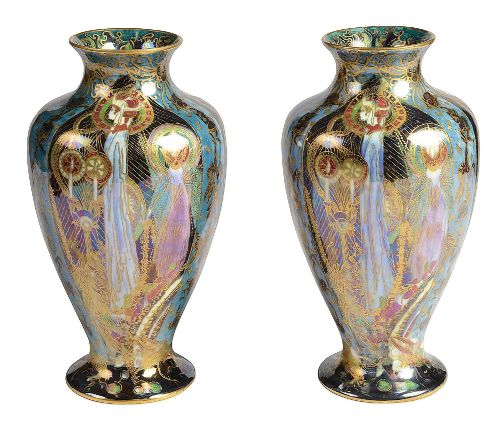
Decoration relied on hand painting, transfer printing and specialised lustre techniques developed by prominent European and Japanese potteries. Artists applied glazes and pigments before firing in kilns to achieve the characteristic finishes of the period.
Several makers decorated their pottery with metallic lustre glazes specifically formulated to mimic the iridescent wings of exotic tropical parrots.
What varies in quality
Quality depends on the precision of the hand painting, the depth and consistency of the glaze, and the clarity of any applied decorative motifs. Pieces decorated by named designers or prominent studios generally demonstrate superior execution.
The crispness of the moulding, the integration of metal mounts and the balance of the overall composition distinguish finer examples from standard commercial production.
Royal Doulton·Wedgwood·Boch Freres·Mettlach·Carlton Ware
The Antique Decorative Pottery Urns Glossary
- Faience
- Tin-glazed earthenware produced in Europe, often featuring painted decoration over an opaque white glaze. This technique was widely utilised by French and German potteries during the nineteenth century.
- Majolica
- Low-fired earthenware covered with an opaque tin glaze and painted with metallic oxide colours. Italian and continental workshops produced substantial quantities of these vibrantly coloured vessels.
- Stoneware
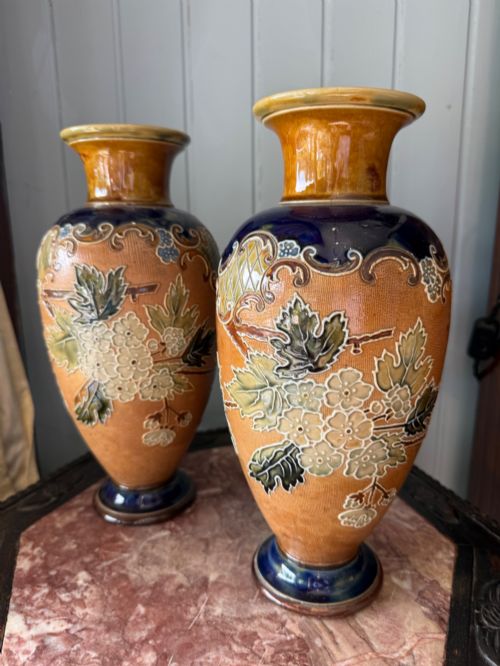
- A dense, impermeable ceramic fired at high temperatures until the clay body vitrified. British firms frequently employed this durable material for salt-glazed and slip-decorated vessels.
- Lustre
- A type of ceramic glaze containing metallic elements that produce an iridescent, metallic sheen upon firing. Wedgwood and Minton applied this finish to create reflective surfaces.
- Garniture
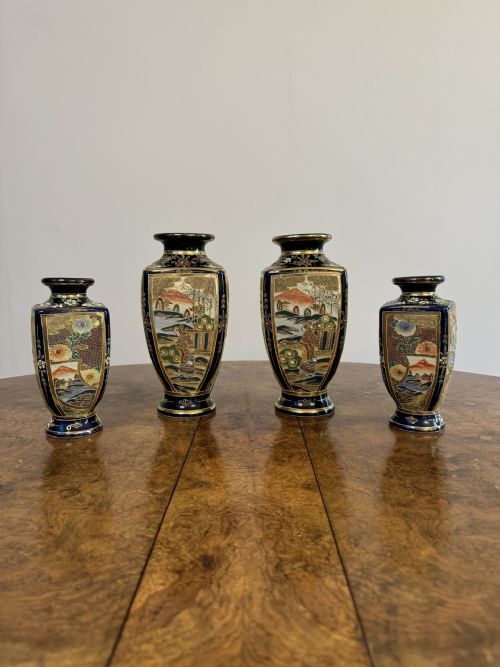
- A set of matching ceramic vases or urns designed to be displayed together on a mantelpiece or sideboard. These matched groups typically consist of three or more vessels.
Antique Decorative Pottery Urns: Frequently Asked Questions
What periods do these pieces date from?
The inventory spans the nineteenth century through the Art Deco era of the 1930s, encompassing Victorian and Edwardian manufacturing dates.
Many objects carry specific decade attributions or reflect distinct design movements such as Art Nouveau and the Meiji period.
Were these vessels used for flowers?
Most of these items were created as decorative display pieces rather than functional flower holders. Their intricate surface decoration and delicate mounts indicate they served primarily as interior ornaments.
Larger garnitures and covered urns were traditionally placed on mantelpieces or architectural ledges.
How do I distinguish Japanese export ceramics?
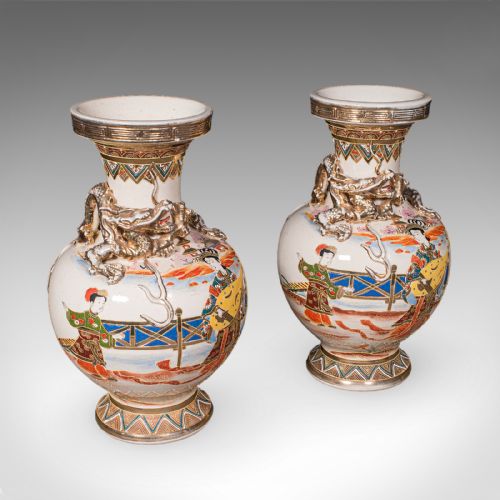
Japanese pieces from this era frequently feature Satsuma earthenware with crackle glazes or Kutani porcelain with detailed pictorial scenes. These items often incorporate extensive gilding and traditional motifs.
Signatures or workshop stamps on the base typically identify the specific kiln or region of production.
What is art pottery?
Art pottery refers to ceramic vessels produced in the late nineteenth and early twentieth centuries by independent studios and skilled artisans. These makers prioritized artistic expression over mass production.
Workshops experimented with novel glaze formulations, slip trailing, and hand-painted motifs executed by named artists.