



Edwardian Stoneware Vase Pair
These edwardian stoneware vase pair selections bring robust utility and flowing naturalism together into a balanced mantel display.
Edwardian Stoneware Vase Pair
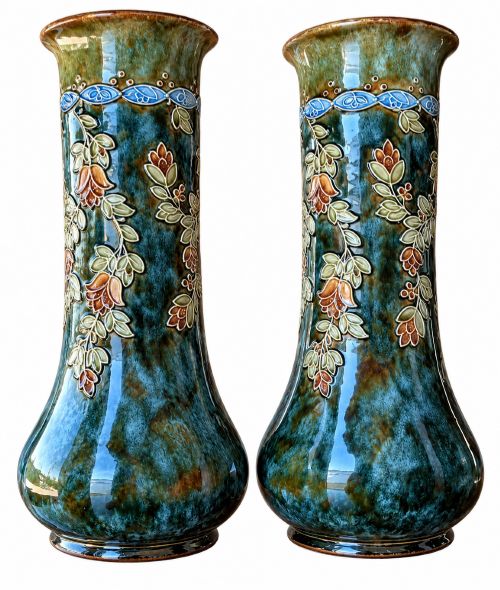
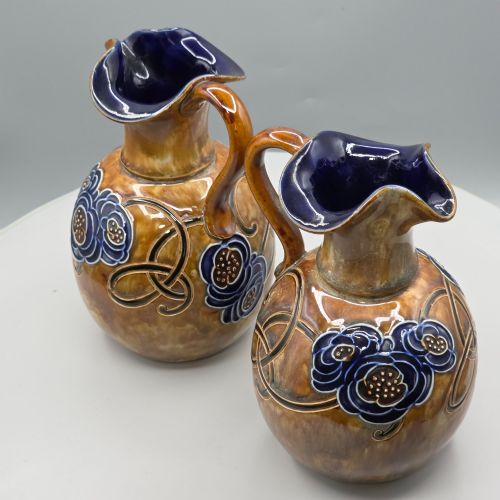
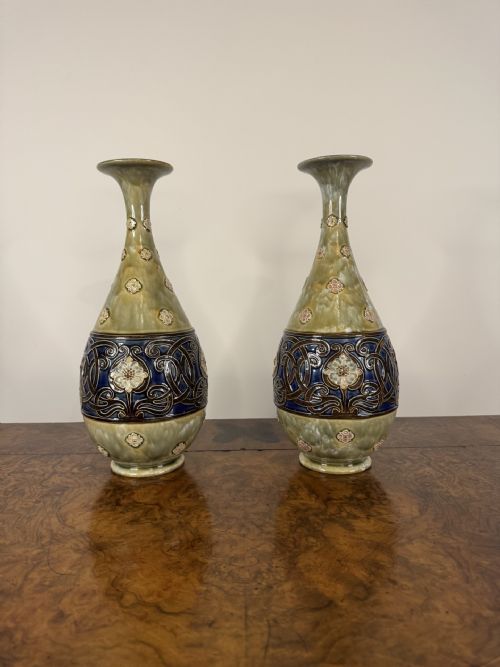
An edwardian stoneware vase pair offers matching vessel designs created for domestic display, mostly emerging from the early twentieth century alongside late Victorian outputs. These symmetrical objects span baluster profiles, jugs, and shaped decorative forms that reflect the applied arts movements of their era.
Art Nouveau and Arts and Crafts influences dominate the aesthetic, translating organic motifs into durable ceramic bodies. The pieces on this page showcase how workshops paired functional vessels with intricate surface decoration.
How they were made
Potters shaped durable stoneware bodies on the wheel or in moulds, preparing a dense ceramic base capable of holding liquid and resisting wear. Artisans then applied glazes, enamels, and occasional gold leaf accents to the fired surfaces.
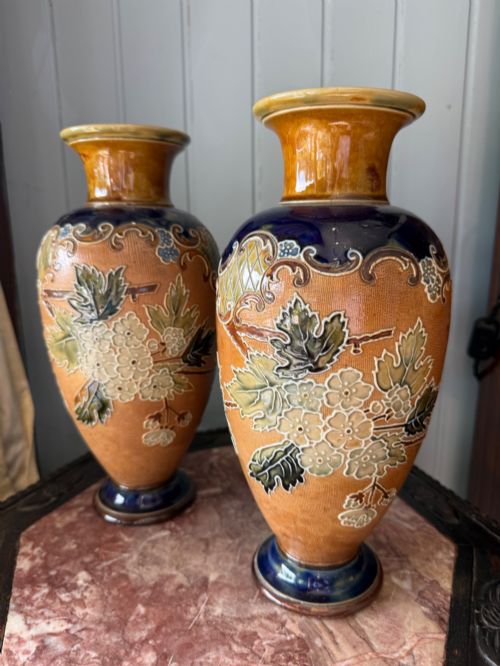
Decoration relied on hand-worked techniques, including textured finishes like Slater's Patent application and painted floral or leaf patterns. Firing in kilns set the vitreous glazes and fixed the enamel colours permanently to the stoneware.
Edwardian Stoneware Vase Pair Retail Price Guide 2026
Typical asking prices for edwardian stoneware vase pair among the pieces listed under this phrase on Sellingantiques today, from the lower quarter to the upper quarter. They describe what is for sale here now, not the wider market.
Early decorators occasionally pressed real Nottingham lace directly into damp clay to achieve intricate textured backgrounds.
What varies in quality
The distinction between standard production and top tier work rests on the clarity of the design and the reputation of the decorator. Named artists who signed their stoneware elevate the artistic merit of a pair well beyond anonymous factory output.
Control during the glazing and firing process dictates the sharpness of the surface detail and the depth of the enamel decor. Finer pairs display balanced symmetry between both vessels and precise application of organic patterns.
Royal Doulton·Louisa Wakely·Ethel Beard
The Edwardian Stoneware Vase Pair Glossary
- Stoneware
- A dense, hard ceramic material fired at high temperatures until semi-vitrified. It remains impervious to liquids even without glazing.
- Baluster
- A vase form featuring a rounded lower body that tapers into a narrower neck. This classic shape provides stability and visual balance for symmetrical pairs.
- Enamel
- Opaque vitreous composition fused to the ceramic surface during a secondary low-temperature firing. It adds vibrant colour detail over the base glaze.
- Slater's Patent
- A decorative technique involving lace or fabric pressed into damp clay to create textured patterns. Workshops often highlighted these textured areas with coloured enamels and gold leaf.
Edwardian Stoneware Vase Pair: Frequently Asked Questions
Why were they made as pairs?
Matched pairs served as symmetrical mantelpiece ornaments, framing a clock or central mirror in formal Edwardian reception rooms. The identical heights and complementary decorative schemes satisfied the era's taste for balanced interior arrangement.
Crafting two matching vessels required skilled throwing and coordinated decorating to ensure the pair looked unified once fired.
How do I identify Art Nouveau styling?
Art Nouveau design relies on flowing, organic lines inspired by natural forms like plant stems, seed pods, and autumn leaves. On these vessels, you will see whiplash curves and stylised floral motifs wrapping around the stoneware body.
This aesthetic rejected rigid Victorian geometry in favour of dynamic movement across the ceramic surface.
Can I use them for fresh flowers?
Stoneware is naturally vitreous and water-tight, meaning these vessels can hold water safely without seeping moisture through the ceramic body. However, historic enamel and gold leaf decorations deserve careful handling to avoid accidental scratching.
Many collectors prefer to display them dry to preserve the fragile surface enamels and delicate painted details.
How do I date an unmarked pair?
Dating relies on comparing the stylistic combination of shapes, glazes, and textural techniques against documented factory timelines. The presence of specific floral motifs and Arts and Crafts lettering styles often points toward the nineteen-tens.
Examining the base for impressed workshop ciphers provides the most reliable chronological anchor.