

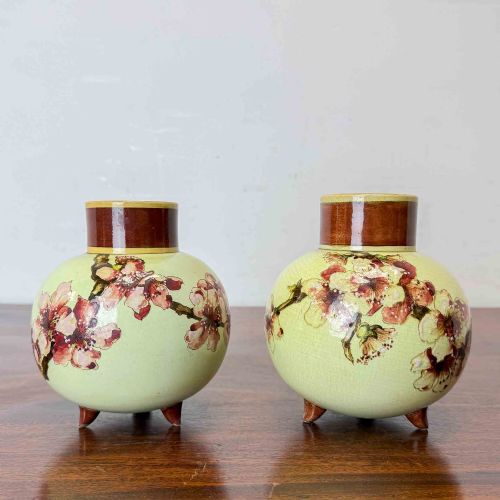


Doulton Ceramic Flower Vases
These doulton ceramic flower vases bring remarkable studio pottery and intricate glaze work straight into a room.
Doulton Ceramic Flower Vases
When you search for doulton ceramic flower vases, you encounter a varied assortment of decorative vessels originating from famous potteries like Lambeth and Burslem. The selection spans the nineteenth century through the Edwardian era, incorporating Victorian, Arts and Crafts, and Art Nouveau aesthetics.
You are most likely to meet stoneware and earthenware pieces, often formed as pairs or single beaker-form vessels. Makers utilised distinct techniques, ranging from Slater's patent finishes to delicate hand-painted floral enamel work.
The assortment includes specialised forms such as planters and mandarin ware alongside traditional vases. These objects reflect the changing decorative tastes across several decades of British ceramic production.
How they were made
Potters shaped these vessels using robust stoneware and fine earthenware, applying specialised glazes to achieve rich surface textures. Methods such as Slater's patent technique involved pressing lace or fabric directly into the damp clay before firing to create intricate patterns.
Artisans decorated many pieces by hand using enamel floral motifs and coloured grounds, as seen in cherry blossom designs and yellow ground mandarin ware. Workshops also incorporated moulded elements, such as three-dolphin bases, to support the main beaker forms.
Doulton Ceramic Flower Vases Retail Price Guide 2026
Typical asking prices for doulton ceramic flower vases among the pieces listed under this phrase on Sellingantiques today, from the lower quarter to the upper quarter. They describe what is for sale here now, not the wider market.
Some Doulton artists could not resist adding three-dolphin bases to their beaker forms, proving that Victorian mantelpieces deserved a touch of marine drama.
What varies in quality
The distinction between standard production pieces and superior examples lies in the ambition of the design and the precision of the hand decoration. Work attributed to known artists or executed with complex moulded elements demonstrates a higher level of artistic ambition.
The crispness of the impressed patterns and the depth of the glaze application determine the visual success of stoneware items. Pairs that retain matching coloration and balanced decorative motifs command greater attention from collectors.
Royal Doulton Lambeth·Doulton Burslem·Ethel Beard·R Allen·Charles Noke
The Doulton Ceramic Flower Vases Glossary
- Stoneware
- A dense, hard ceramic fired at high temperatures until vitrified, making it impermeable to liquids. This material forms the durable body of many Lambeth vessels.
- Faience
- Earthenware decorated with opaque coloured glazes, often featuring hand-painted botanical or pictorial subjects. This technique allows for vibrant surface decoration.
- Mandarin ware
- A style of ceramic finish characterised by bright monochrome grounds and specific decorative palettes. Pieces utilising this finish often date to the early twentieth century.
- Slater's patent
- A manufacturing process where lace, netting, or other textured materials are pressed into wet clay to create intricate background patterns. This method adds tactile interest beneath the glaze.
- Beaker-form
- A vessel shape featuring straight or gently flared sides rising from a distinct base. This form supports the display of detailed surface ornamentation.
Doulton Ceramic Flower Vases: Frequently Asked Questions
Can these vases hold water?
Many stoneware and glazed earthenware pieces are fully vitrified and watertight, making them suitable for fresh flower arrangements. However, pieces with complex interior construction or delicate applied elements are better used for display alone.
Inspect the interior of the vessel for any hairline cracks or original manufacturing flaws before filling it with liquid. Using a small glass liner inside older vases provides extra protection for fragile materials.
How do I identify Art Nouveau examples?
Art Nouveau pieces typically feature organic, flowing lines, stylized floral motifs, and sinuous plant forms. The glaze colours often lean toward muted greens, blues, and earthy tones that complement the naturalistic subjects.
Examine the overall silhouette of the vase for asymmetry and whiplash curves characteristic of the period. Maker marks and registration numbers from the late nineteenth or early twentieth century further confirm the style.
What defines Lambeth stoneware?
Lambeth stoneware is known for its heavy, durable body, salt-glazed finishes, and incised or moulded geometric decoration. The Lambeth studio focused heavily on artisan craftsmanship and experimental surface textures.
Look for impressed factory stamps specific to the London pottery alongside artist initials scratched into the clay base. These marks indicate the collaborative studio environment typical of the Lambeth works.