




Antique Cutlery Holder
An antique cutlery holder keeps your table organised with period character, ranging from fitted mahogany boxes to silver knife rests.
Antique Cutlery Holder
When you search for an antique cutlery holder, you encounter a diverse group of items designed to store, display, or rest dining implements. The selection spans utilitarian kitchen boxes to decorative table accessories.
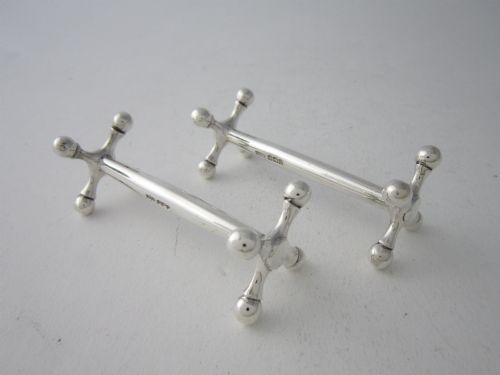
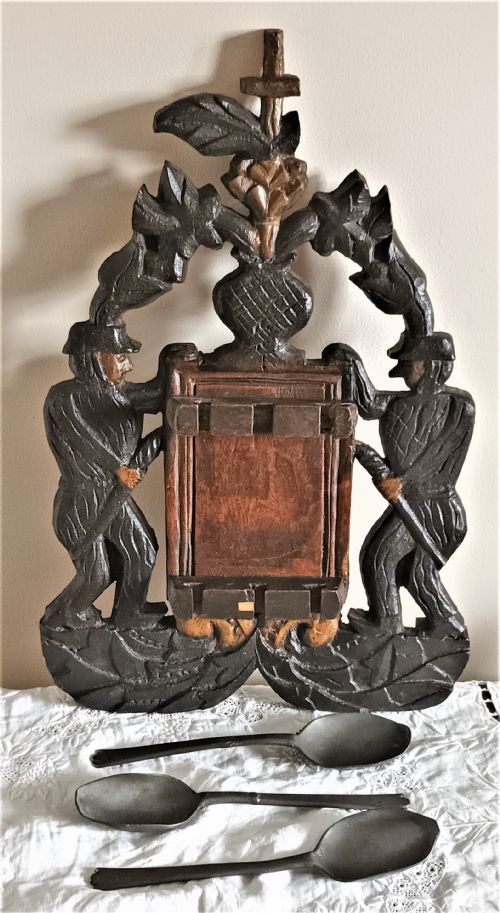
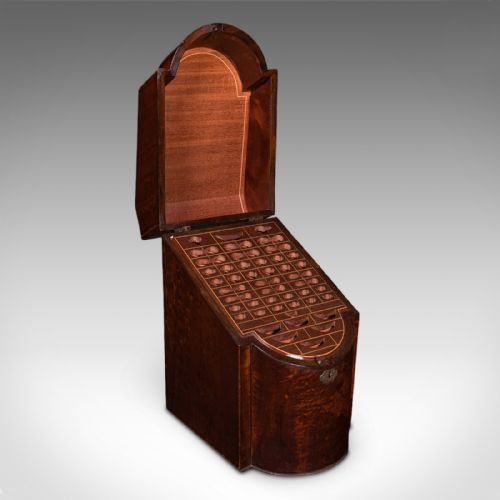
The most common forms on this page include Georgian and Victorian mahogany knife boxes, oak spoon racks paired with pewter spoons, and silver plated knife rests from the nineteenth century.
Originating largely from English country houses and domestic kitchens, these pieces reflect the changing demands of dining from the seventeenth century through the Art Deco period.
How they were made
Cabinet makers utilised dense timbers such as mahogany, oak, walnut, and fruitwood, often incorporating wood inlay and brass hardware for structural reinforcement and visual contrast.
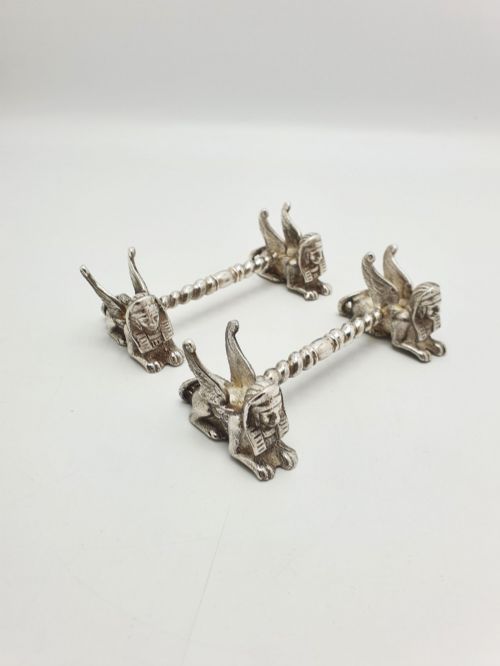
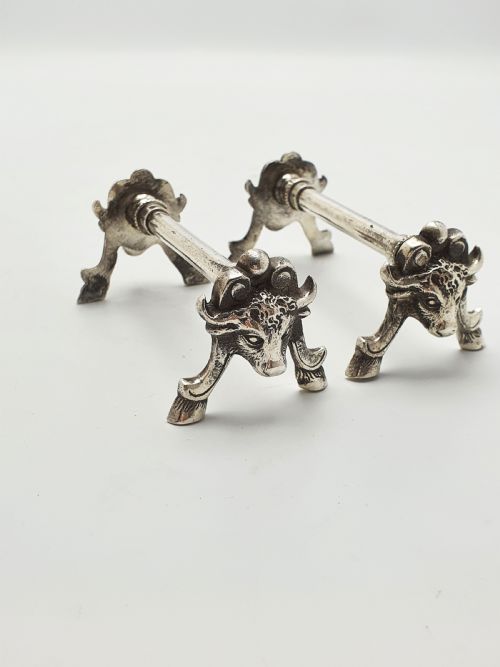
Silversmiths and platers employed sterling silver and silver plate to fashion knife rests and spoon rests, casting naturalistic figures like sphinxes, lions, and bull heads.
Joinery methods range from pegged joints in rustic pine and oak spoon racks to fine dovetail construction in polished mahogany knife boxes.
Victorian dining etiquette demanded that knife rests keep gravy off the tablecloth, leading makers to cast everything from rampant lions to sphinxes.
What varies in quality
Quality rests upon the crispness of cast detail in silver or silver plate and the depth of figure in timber surfaces. Finer items show considered selection of grain and careful execution of inlay.
Construction integrity separates everyday kitchen utility pieces from high-status country house items. Well-preserved interiors in fitted canteens and original brasses elevate a piece significantly.
Creswick
The Antique Cutlery Holder Glossary
- Knife Rests
- Small supports placed on the table to keep soiled knife blades off the cloth between courses. They appear in silver plate, solid silver, and various metals.
- Spoon Rack
- A wall-mounted wooden rack designed to display spoons upright. They frequently accompany early pewter trefid spoons.
- Knife Box
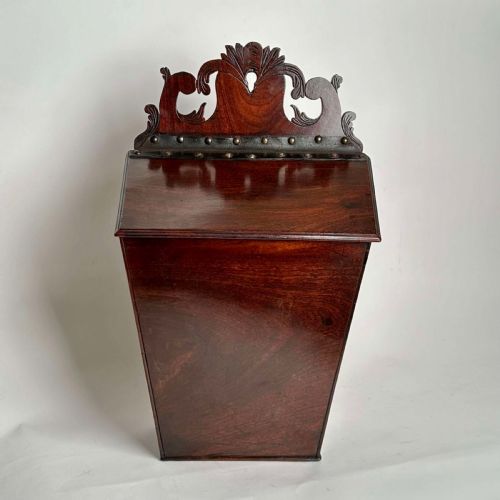
- A slant-front or upright wooden box built to store table knives vertically. Georgian examples often feature serpentine fronts and interior dividers.
- Trefid Spoon
- An early form of spoon featuring a three-lobed terminal handle. These typically appear alongside antique oak spoon racks.
- Butler's Carry
- A portable wooden tray or box with a central upright handle used for transporting cutlery and small household items.
Antique Cutlery Holder: Frequently Asked Questions
What is an antique cutlery holder used for?
These pieces served practical roles in historic dining rooms and kitchens, from resting individual knives between courses to storing full canteens of cutlery.
Today, collectors utilise them both for their original domestic purpose and as decorative accents that bring period materials into modern interiors.
How do I identify a Georgian cutlery box?
Georgian knife boxes typically feature sloping lids, serpentine or straight mahogany fronts, and fitted interior slots designed for upright blade storage.
Many incorporate brass carrying handles and escutcheons, reflecting the cabinet making standards of the eighteenth and early nineteenth centuries.
What materials are silver knife rests made from?
Silver knife rests appear in both solid sterling silver, bearing traditional assay office hallmarks, and silver plate over a base metal foundation.
Sheffield plating and electroplate techniques were commonly used by nineteenth century makers to produce heavier ornamental designs.
How do I care for wooden knife boxes?
Wood surfaces benefit from occasional application of quality wax to nourish the grain and protect the polished mahogany or oak from drying out.
Keep them away from direct heat sources and dramatic humidity shifts to preserve the original joinery and interior fitted sections.