


Antique Cut Paper Profile
An antique cut paper profile captures a likeness with crisp black paper mounted behind glass, offering a direct and intimate window into past lives.
Antique Cut Paper Profile
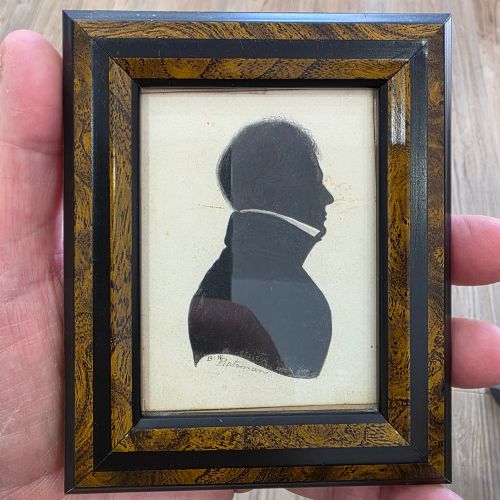
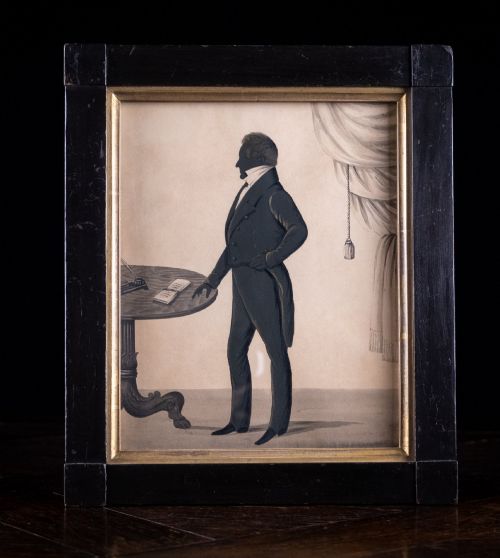
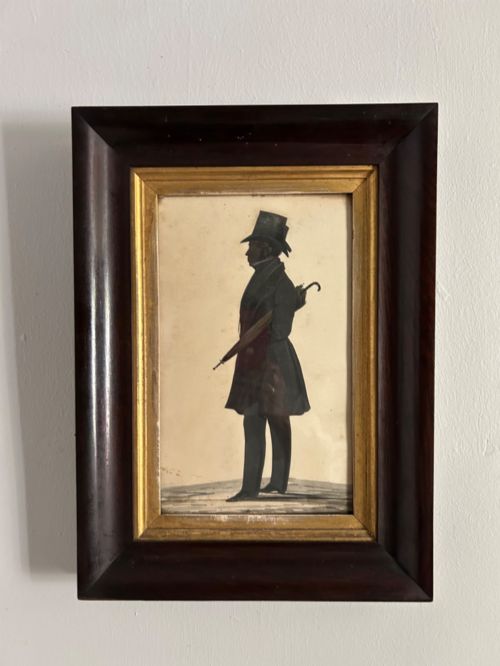
When you examine an antique cut paper profile, you are looking at likenesses shaped by hand from dark paper before the widespread use of photography. These works appear across the Georgian, Regency, and Victorian periods, taking forms from simple head portraits to elaborate conversation pieces.
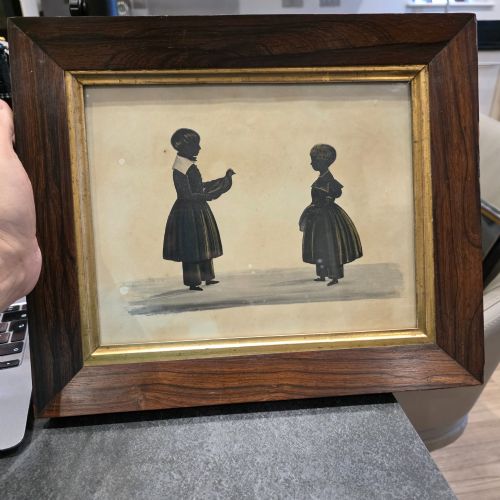
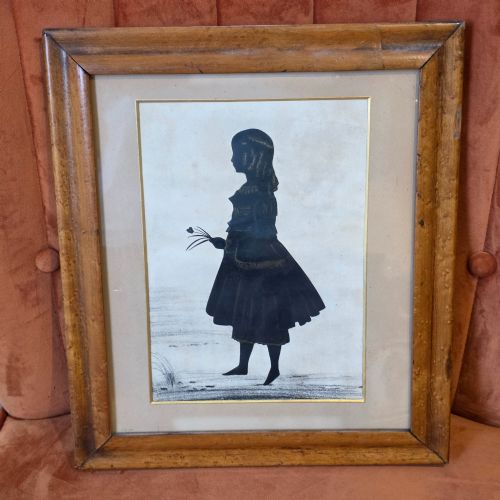
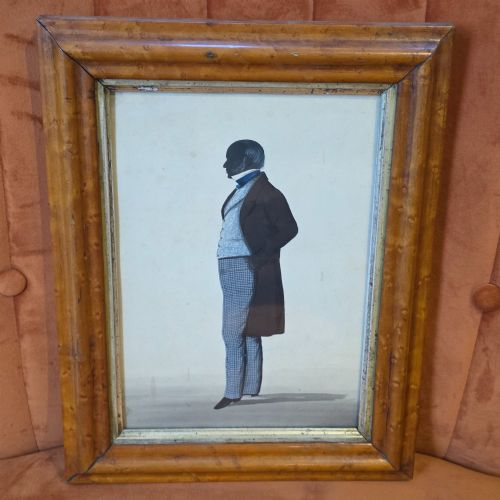
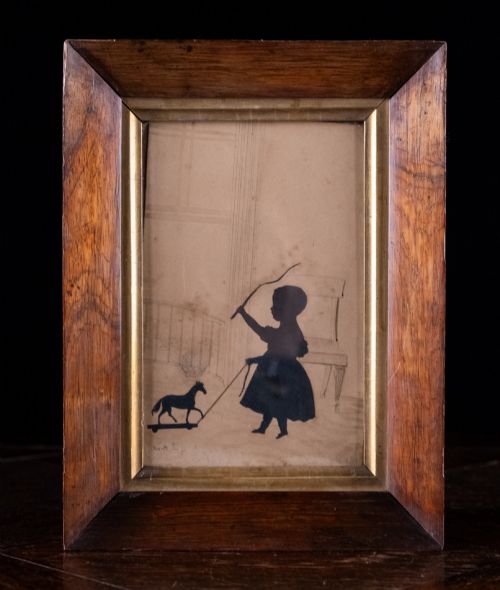
The pieces on this page include framed silhouette art depicting gentlemen, ladies, children, and animals, often presented in maple, ebony, or gilt frames. You will encounter single portraits alongside larger framed pictures featuring multiple figures.
The origins span various British workshops and galleries, showing styles that range from folk art simplicity to highly detailed cut-paper and watercolour compositions.
Materials and methods
Maker's tools relied on fine paper and sharp blades to cut profiles freehand, sometimes augmented with ink, gold leaf, or pastel highlights. Artists mounted these delicate cut-outs against pale backgrounds to create sharp contrast.
Framing typically involved wood such as maple or ebony, fitted with glass to protect the paper from dust and moisture. Brass hangers and accents frequently completed the presentation.
Judging quality and execution
The distinction between ordinary and superior work lies in the precision of the scissor-work and the expressiveness achieved within the silhouette. Skilled hands captured subtle details like costume, hair texture, and posture without relying on internal drawn lines.
Context also plays a part, as works with documented attributions, contemporary signatures, or original framing retain a higher degree of historical integrity.
Bateman·Frith·Augustin Edouart·Hubard Gallery·Frederick Frith·Alfred Darbyshire·Royal Victoria Gallery·Nathaniel Bermingham·Cyrus Lomas·Skeolan
The Antique Cut Paper Profile Glossary
- Silhouette
- A portrait profile filled in with a solid dark colour, typically black, cut from paper or painted. The term originates from Etienne de Silhouette, a French minister of finance.
- Conversation piece
- An artwork depicting a group of figures engaged in a common activity or interaction. These compositions often show families or children with animals in domestic settings.
- Gilt
- A thin layer of gold leaf applied to frame mouldings or used directly on the portrait artwork to highlight details such as buttons, lace, or jewellery.
- Profile
- A side-on view of a human head or figure. This format allowed portraitists to record recognisable likenesses rapidly.
- Full-length
- A portrait showing the entire figure from head to toe rather than just the bust or shoulders. These examples often include accessories like walking canes, hats, or pets.
Antique Cut Paper Profile: Frequently Asked Questions
How are profiles dated?
Dating relies on costume details, hairstyles, framing materials, and occasional handwritten notes on the reverse of the artwork. Clothing styles offer the most reliable clues for placing a piece within the Georgian or Victorian eras.
Paper ageing and backing methods also help confirm the period of creation.
Were these made by amateurs?
Both travelling professionals and talented amateurs produced profile art. Professionals often worked in galleries or toured towns offering rapid likenesses to clients.
Amateur work frequently appeared in family albums or decorative framed wall art.
How should I hang them?
Keep framed pieces away from direct sunlight to prevent the paper and any watercolour pigments from fading. Stable indoor humidity protects the paper from warping inside the frame.
Group them with other small framed works at eye level for the best visual impact.
What is a conversation piece?
A conversation piece is a multi-figure portrait showing people interacting in a room or landscape setting. These framed scenes often include children, dogs, and domestic objects.
They represent a more ambitious form of silhouette art than standard single head profiles.