



Victorian Cut Paper Silhouette
These nineteenth-century pieces are victorian cut paper silhouette works, prized for capturing likeness and character through delicate blade work and ink details.
Victorian Cut Paper Silhouette
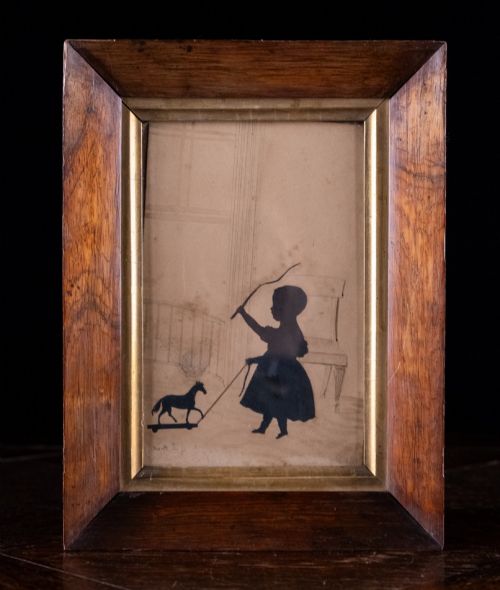
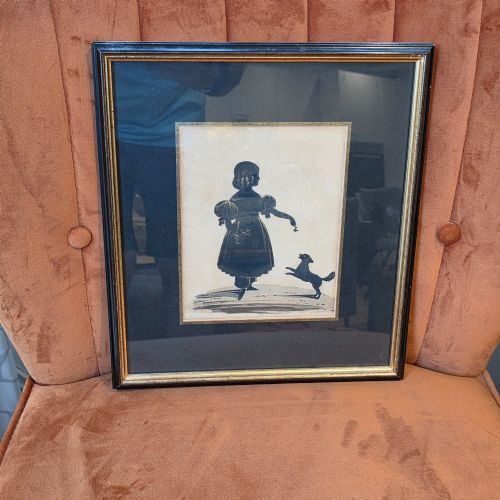
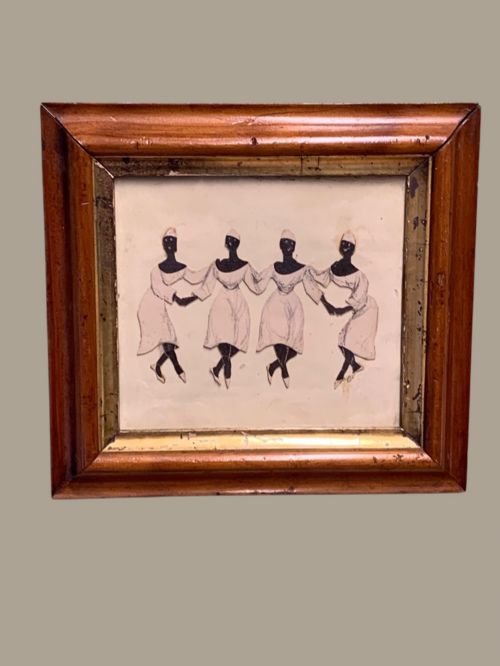
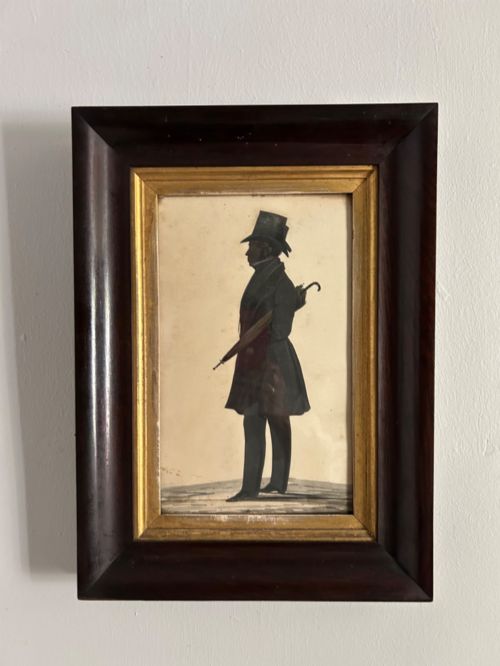
A victorian cut paper silhouette captures a profile or narrative scene entirely from dark paper mounted against a lighter background. These works range from simple single portraits of ladies and gentlemen to complex conversation pieces involving multiple figures, children, animals, and delicate watercolour additions.
You will encounter pieces originating across the nineteenth century, spanning the Regency period through to the late Victorian era around eighteen eighty. The forms appear as framed wall art, portrait miniatures, and larger collage scenes featuring full-length figures.
Makers and galleries such as the Hubard Gallery and artists including Augustin Edouart shaped the standard for these portraiture works. Pieces often include added ink highlights, gold leaf accents, and occasionally signature inscriptions detailing the sitter or studio.
Materials and construction
The finished works are housed behind glass within wooden frames, frequently utilising rosewood or gilt brass surrounds. Gold leaf highlights occasionally accent the silhouettes, adding depth and contrast to the dark paper forms.
Victorian Cut Paper Silhouette Retail Price Guide 2026
Typical asking prices for victorian cut paper silhouette among the pieces listed under this phrase on Sellingantiques today, from the lower quarter to the upper quarter. They describe what is for sale here now, not the wider market.
Dogs and horses frequently make unexpected appearances in these cut paper scenes, sharing the frame with elegant nineteenth-century gentlemen and ladies.
Judging the work
The distinction between ordinary output and superior work rests entirely on the precision of the knife handling and the liveliness of the subject. Master cutters achieved remarkable anatomical accuracy and fluid movement without relying on printed outlines or excessive ink additions.
Compositional ambition also elevates certain pieces far above standard portrait profiles. Conversation pieces showing multiple interacting figures, animals, and detailed background watercolour wash demonstrate the height of the silhouette cutter's skill.
William James Hubard·Augustin Edouart·Frederick Frith·Alfred Darbyshire·Skeolan
The Victorian Cut Paper Silhouette Glossary
- Silhouette
- A portrait or scene cut from dark paper or painted in solid dark profile. The form relies on outline alone to convey the likeness of the sitter.
- Conversation piece
- An artwork depicting a group of figures engaged in a common activity or conversation. These complex scenes often include children, pets, and detailed interior or exterior settings.
- Hollow cut
- A technique where the profile is cut out from the centre of a sheet of white paper, which is then laid over a dark background fabric or paper.
- Full-length
- A portrait depicting the entire figure of the sitter from head to toe rather than a standard bust or head and shoulders crop.
Victorian Cut Paper Silhouette: Frequently Asked Questions
How do I date a silhouette?
Dating relies heavily on the clothing styles, hairstyles, and framing materials visible in the piece. Reference points can often be found through the signature of known profilists or gallery stamps on the reverse.
Nineteenth-century costume changes rapidly, allowing you to distinguish Regency period dress from late Victorian attire with reasonable accuracy.
Were silhouettes made by hand?
Professional profile artists cut these works entirely by hand using small scissors or specialised knives. The skill required meant that artists could produce a recognisable likeness in minutes.
While some domestic examples show less refined scissor work, professional gallery pieces display extraordinary precision.
How should I display my silhouette?
Keep framed pieces away from direct sunlight to prevent the paper ground and any watercolour additions from fading. Maintaining stable indoor humidity protects both the paper and the original wood or gilt frames.
Original glass and backing papers should be preserved whenever possible to maintain the integrity of the piece.
What is a conversation piece?
A conversation piece is a detailed artwork showing multiple people interacting within a shared space. These larger compositions frequently include children, domestic animals, and furniture.
They represent a more ambitious form of silhouette art compared to simple single-person portrait profiles.