






Antique Curule Seat
An antique curule seat offers classical elegance and practical form, bringing distinctive X-shaped frames into modern interiors.
Antique Curule Seat
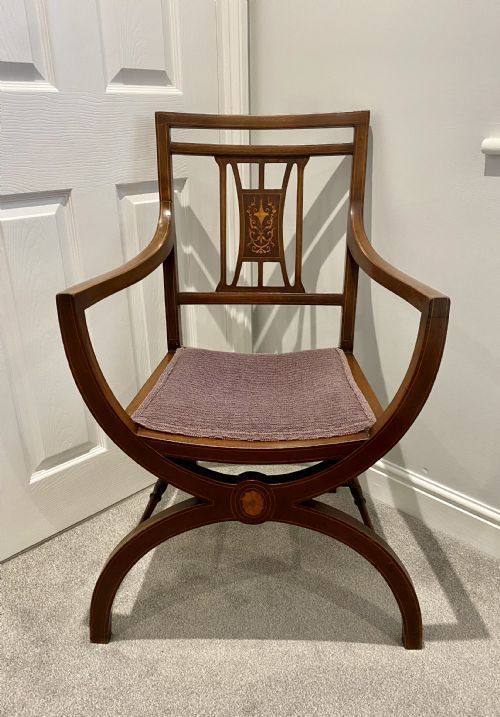
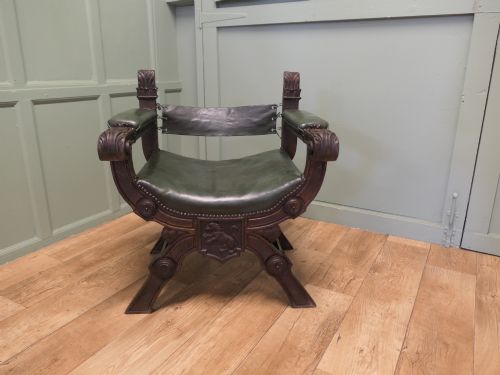
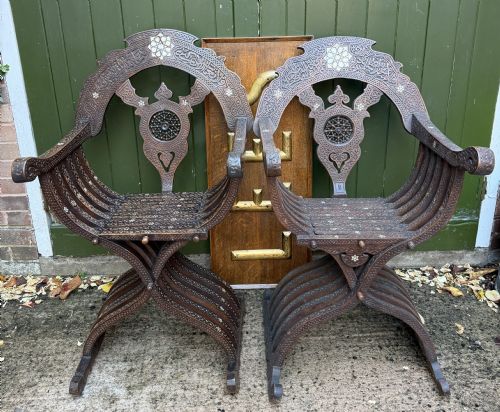
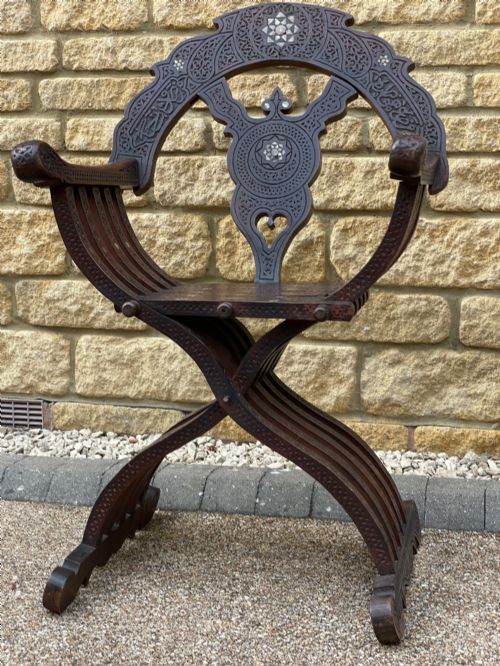
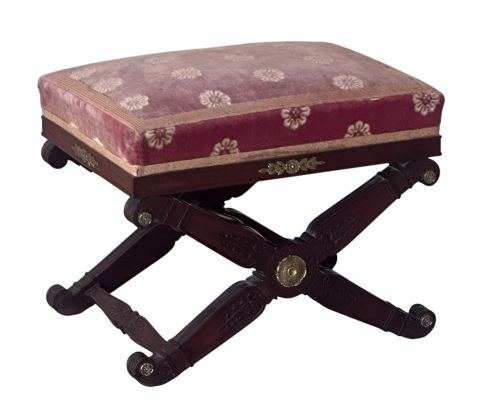
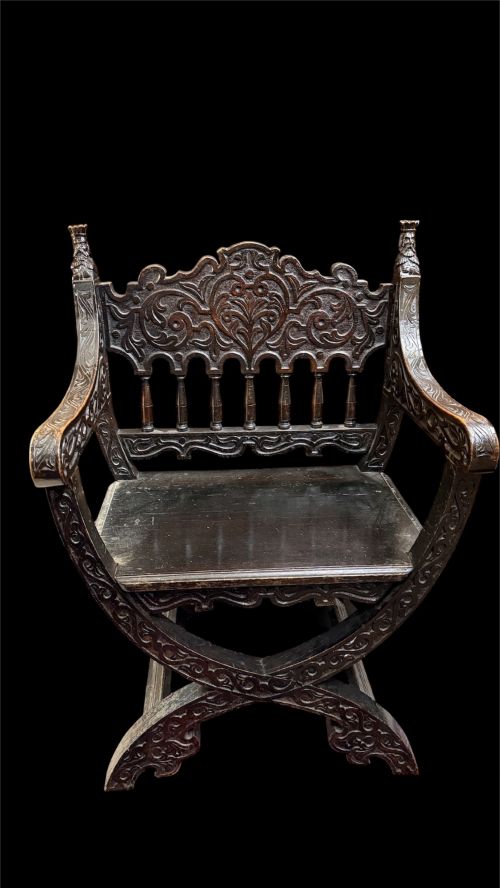
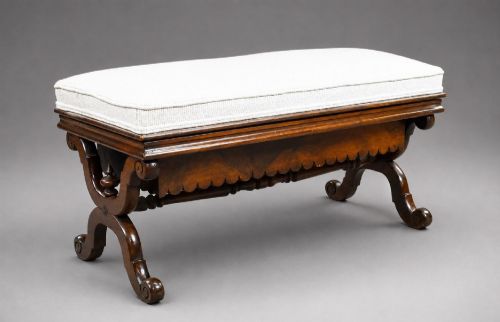
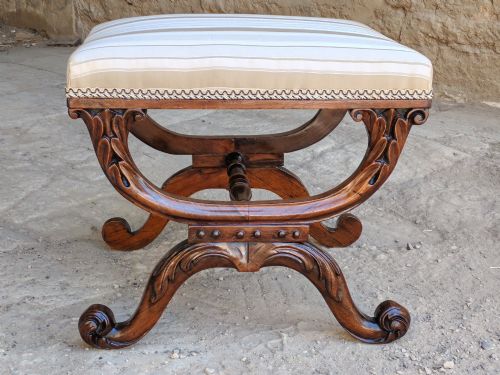
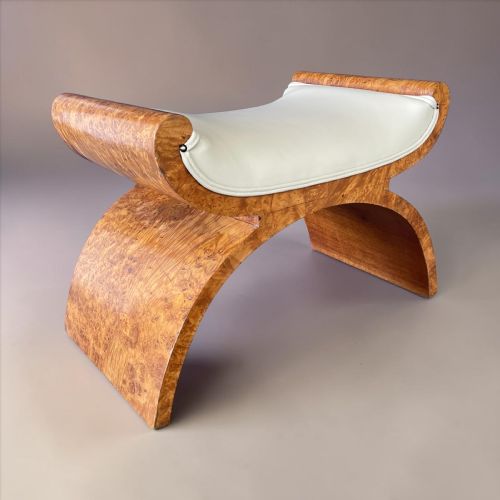
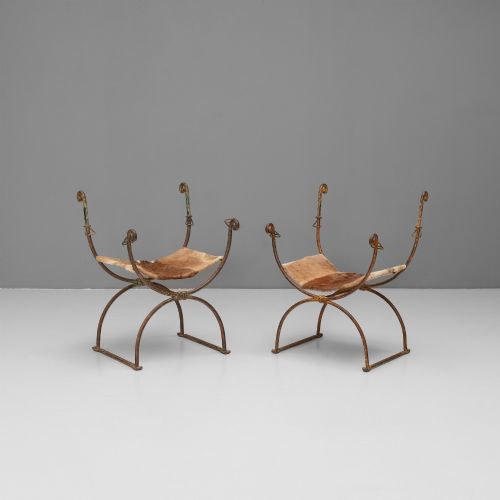
An antique curule seat takes the ancient X-frame archetype and adapts it into stools and footstools produced across the nineteenth and early twentieth centuries. These forms draw heavily on neoclassical, Regency, and William IV design traditions, referencing Roman folding chairs with fixed cross-leg bases.
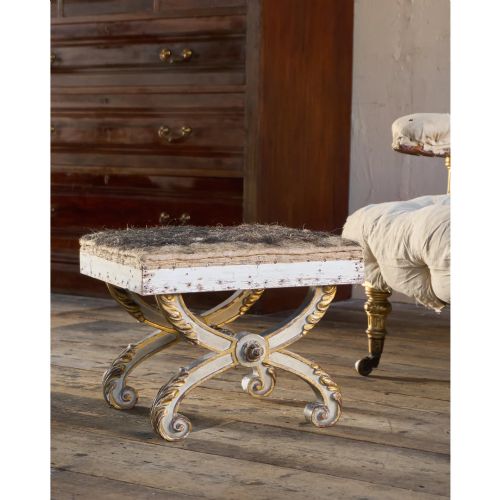
Buyers browsing this selection most frequently encounter smaller forms such as dressing table stools and footstools. These surviving pieces often feature upholstered seats supported by elaborate wooden X-frames rather than standard four-legged designs.
How they were made
Cabinetmakers constructed these frames using timber such as satinwood, mahogany, and carved oak, sometimes applying gesso and giltwood finishes for ornamental richness. Painted wood surfaces also appear, offering varied aesthetic treatments ranging from subdued tones to bright metallic leaf.
Upholstery forms an integral part of the construction, utilising fabrics like red damask or standard textiles fitted over the X-frame structures. Caning also appears on specific seating variations, providing a lighter textural contrast to heavy carved woodwork.
Antique Curule Seat Retail Price Guide 2026
Typical asking prices for curule seat among the pieces listed under this phrase on Sellingantiques today, from the lower quarter to the upper quarter. They describe what is for sale here now, not the wider market.
Current listings feature materials ranging from giltwood and satinwood to cane and red damask upholstery.
What varies in quality
Quality separates pieces through the crispness of wood carving and the sophistication of the primary timber selection. Finer examples display deeply articulated neoclassical motifs and precise joinery along the complex curves of the X-frame.
The choice of surface finish further dictates distinction, where genuine gilding or expertly applied gesso outshines simpler painted treatments. Original upholstery materials and well-preserved cane work add significant integrity to surviving examples.
Miles & Edwards
The Antique Curule Seat Glossary
- Curule stool
- A seat featuring a distinctive X-shaped folding frame derived from ancient Roman magistrate chairs. This form provides both architectural presence and sturdy support.
- Giltwood
- Timber coated with a thin layer of gold leaf or gold paint to create a luminous surface. It is frequently paired with gesso mouldings.
- Gesso
- A plaster-like mixture applied to wood surfaces as a smooth base for gilding or painting. It allows craftsmen to model intricate low-relief decorations.
- X-frame
- A structural support consisting of two curved members crossing in the centre to form an X. This geometry defines the silhouette of curule seating.
Antique Curule Seat: Frequently Asked Questions
Where were these stools used?
These compact seats originally functioned as dressing table stools, footstools, or flexible portable seating in formal drawing rooms and boudoirs. Their modest footprint allowed them to be easily moved around grand domestic spaces.
Today, buyers place them at the foot of a bed, beneath a console table, or beside a fireplace to introduce sculptural neoclassical lines into a room.
How do I date an antique X-frame stool?
Dating relies on examining the timber species, decorative motifs, and construction methods used in the frame. Pieces from the Regency and William IV periods often feature heavy mahogany and classical scrolls, whereas Edwardian or later nineteenth-century examples may utilise satinwood or lighter painted finishes.
Comparing the carved ornament against established neoclassical and Victorian design vocabularies helps pinpoint the era of manufacture.
Are these stools comfortable?
Most surviving examples function primarily as decorative occasional seating or footstools rather than long-term lounging chairs. The upright X-frame design prioritises architectural silhouette over ergonomic cushioning.
Upholstered tops provide adequate support for short durations, making them ideal for vanity areas or ornamental placement.