




Antique Cupid Statuette
An antique cupid statuette captures the classic winged messenger in bronze, porcelain, and marble from the eighteenth, nineteenth, and early twentieth centuries.
Antique Cupid Statuette
An antique cupid statuette represents the classical figure of love, often shown as a winged boy with a bow, arrows, or participating in mythological figure groups. When exploring these pieces, you will encounter diverse forms ranging from single cabinet figures to large decorative sculptures.
The selections available span multiple eras, including Georgian, Victorian, and later periods like Art Deco. You are most likely to meet nineteenth-century bronze putti and eighteenth-century porcelain figure groups depicting scenes with Father Time or Venus.
Originating from English, French, and German workshops, these statuettes serve primarily as decorative works of art. They reflect the enduring appeal of neoclassical and rococo revival styles across centuries of European craftsmanship.
How they were made
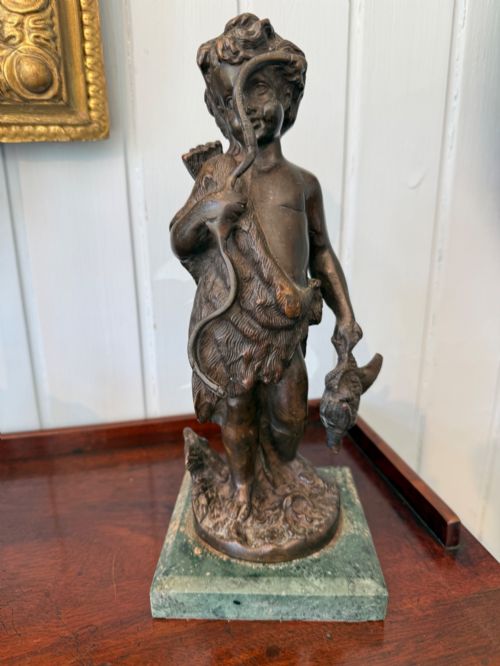
Bronze statuettes are cast using traditional foundry methods, frequently finished with gilding, gold leaf, or mounted on inlaid wood bases. Sculptors of the nineteenth century utilised bronze to capture fine details in the wings, hair, and facial expressions of the cherubs.
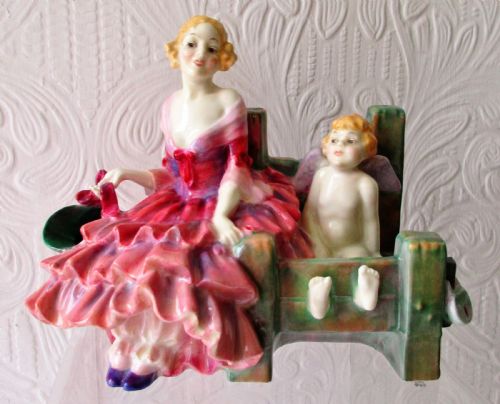
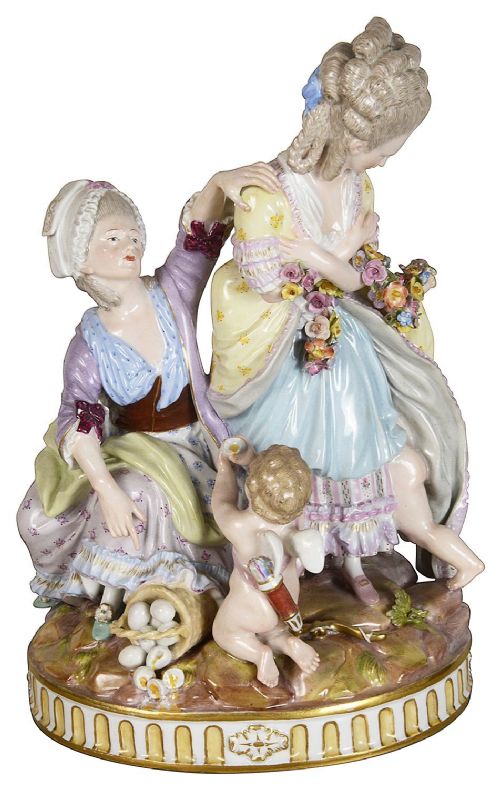
Porcelain examples, such as those from Derby, Meissen, and Samson Paris, employ soft-paste porcelain and enamel painting. Artisans shaped these ceramic pieces into complex figure groups before firing and hand-colouring the surfaces.
Father Time is caught busy clipping cupid's wings in eighteenth-century porcelain.
What varies in quality
The refinement of the modelling separates standard decorative items from superior sculptural works. Finer bronzes show crisp chasing in the feather work and musculature, while better porcelain figures display delicate enamel painting and intricate multi-figure composition.
The distinction also lies in the material execution and base preparation. Pieces mounted on bespoke inlaid wooden bases or signed by established modellers and foundries generally represent higher tiers of period production.
Samson Paris·Early Derby·Meissen·Johann Joachim Kändler·B. Rezl
The Antique Cupid Statuette Glossary
- Putto
- A plump, naked child depicted in classical art, often winged and synonymous with a cherub or cupid in nineteenth-century bronze and porcelain figures.
- Biscuit Porcelain
- Unglazed ceramic fired to a matte, porous white finish that resembles marble, commonly used for eighteenth-century figures.
- Soft-Paste Porcelain
- An early ceramic composition of glass and clay materials fired at lower temperatures, characteristic of eighteenth-century factories like Derby.
- Gilt Bronze
- Metalwork coated in a thin layer of gold or gold leaf, frequently applied to nineteenth-century French statuettes.
- Neoclassical
- A revival style drawing inspiration from classical antiquity, dominant in many Georgian and nineteenth-century sculptural works.
Antique Cupid Statuette: Frequently Asked Questions
What is a putto?
A putto is a representation of a small, winged child found frequently in Renaissance and neoclassical art. In nineteenth-century bronzes, these figures often take the form of cupids or cherubs.
They appear singly or as part of larger sculptural groups on wood bases.
Are these figures made of bronze or porcelain?
Both materials are common in this category. You will find cast bronze examples with gilding alongside soft-paste porcelain figures from factories like Meissen and Derby.
Each medium employs different techniques, from metal casting to enamel painting on ceramic.
How do I identify a Georgian piece?
Georgian and eighteenth-century pieces often feature soft-paste porcelain and detailed figure groups depicting mythological narratives. Makers from this era, such as Derby, produced distinct unglazed biscuit porcelain.
These early works typically date from the late seventeen-hundreds.
Where were these statuettes made?
The pieces originate primarily from European workshops in England, France, and Germany. French foundries specialised in bronze statuettes, while German and English potteries focused on porcelain.
Makers ranged from major factories to individual sculptors.