



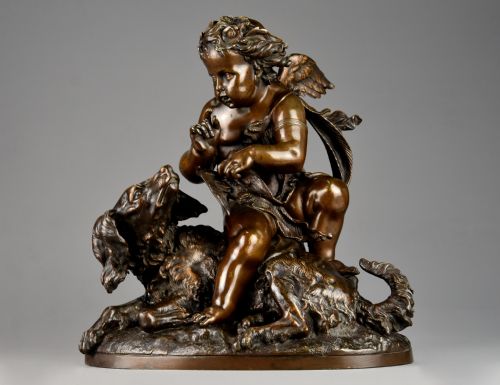
Patinated Bronze Cherub
When you seek a patinated bronze cherub, you are looking at cast metal figures of winged infants shaped by French and Italian workshops.
Patinated Bronze Cherub
A patinated bronze cherub represents winged infant figures cast in metal, often styled as putti, amorini, or classical cupids. These sculptural pieces appear across the nineteenth century in various decorative and functional objects.
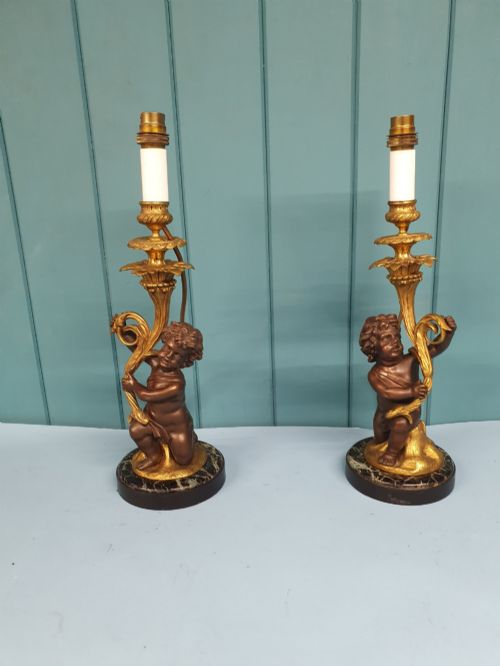
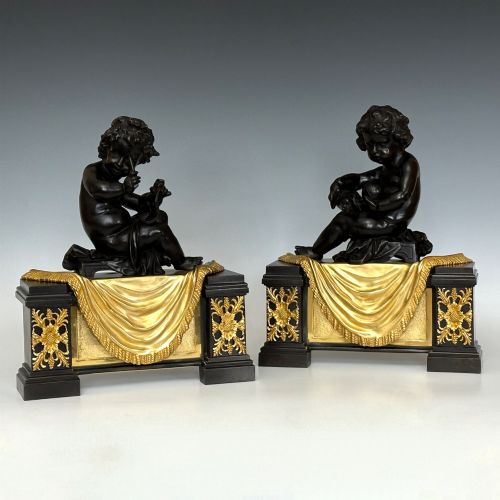
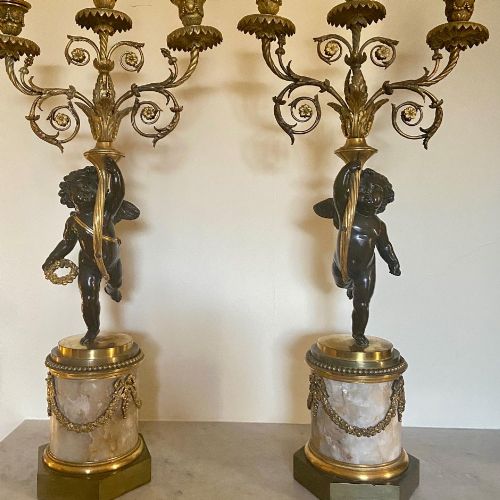
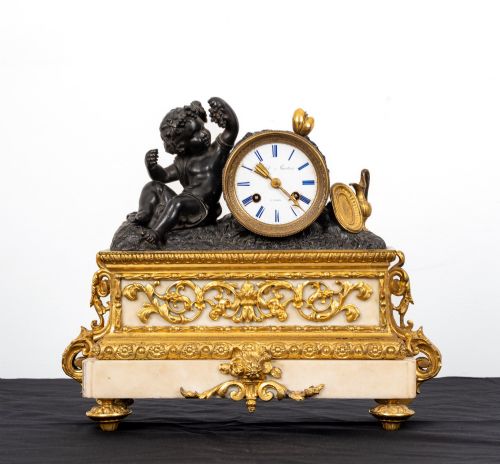
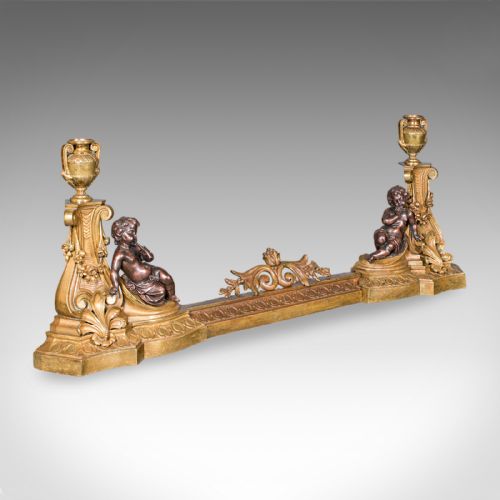
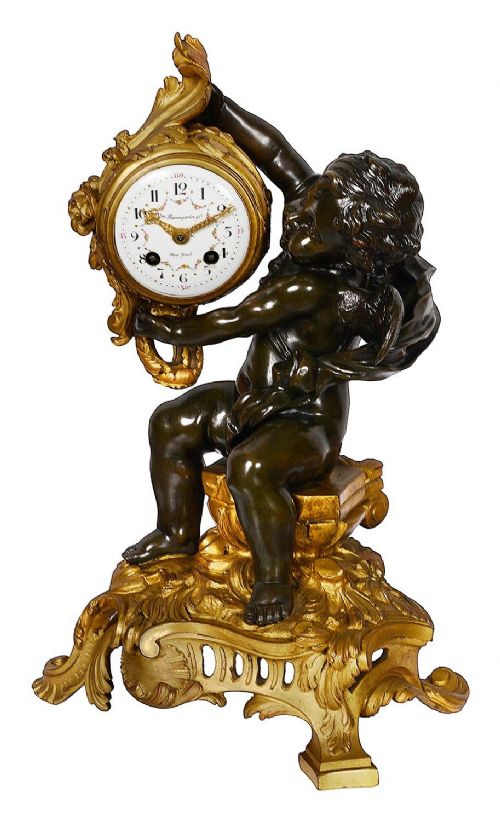
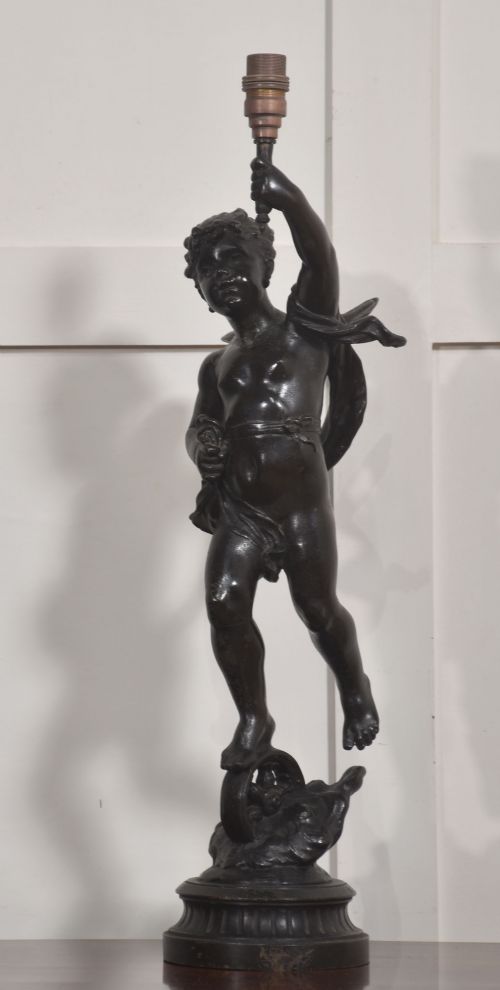
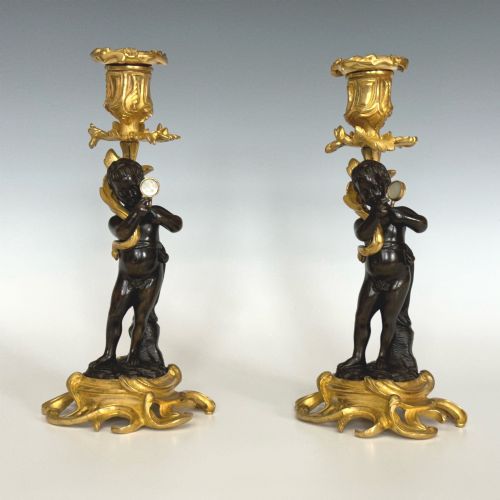
The version most commonly encountered on this page is the nineteenth-century French or Italian domestic object, such as a candlestick, mantel clock, table lamp, or pair of chenets. Many draw upon classical Grand Tour themes, French Empire, or Louis XVI styles.
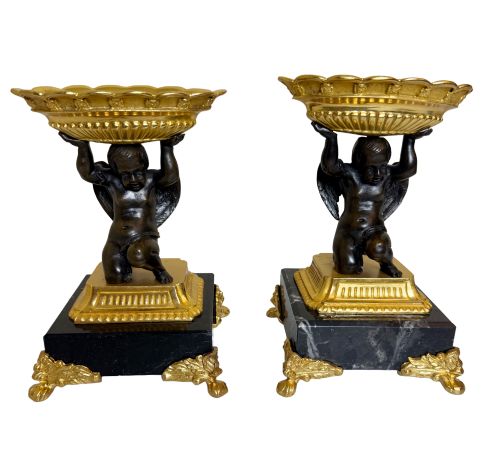
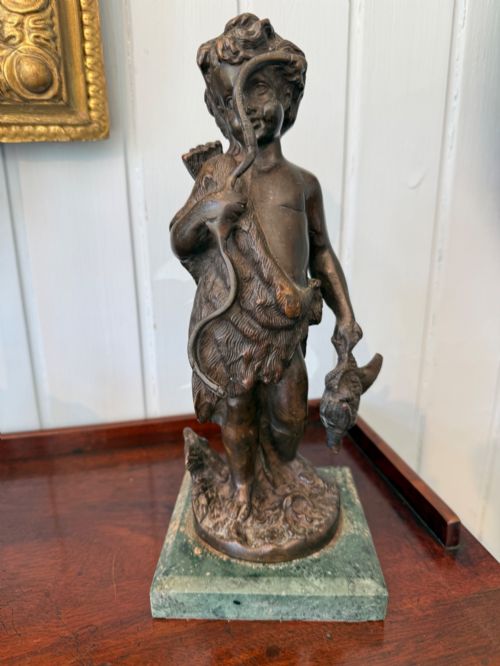
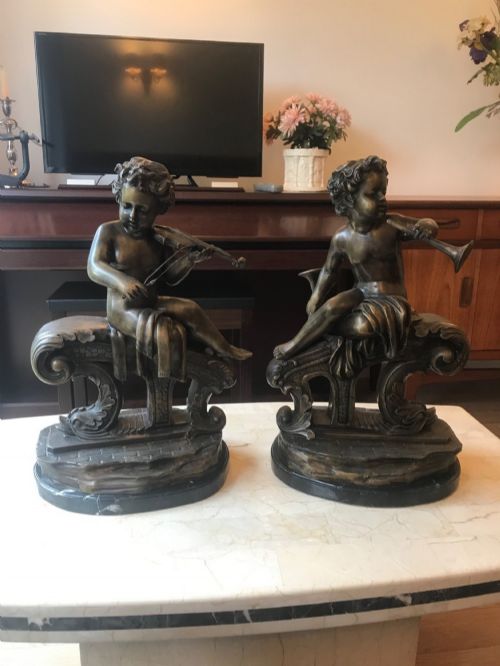
Beyond standalone sculptures, these figures serve as mounts on marble tazzas, garniture sets, and wall lights. They frequently hold musical instruments, bows, or torches, integrating figural art into utilitarian household items.
How they were made
These pieces are produced through metal casting, utilising bronze as the primary medium supplemented by ormolu highlights and marble bases. Artisans apply chemical treatments to the bronze surface to achieve dark patination.
Gilding techniques deliver contrasting gold-toned ormolu details against the darkened patinated bronze body. Mounts are secured to white or coloured marble plinths, tazzas, and clock bodies using threaded pins and nuts.
Listings feature nineteenth-century materials including patinated bronze, gilt bronze, ormolu, marble, enamel, glass, and wood.
What varies in quality
Quality separates through the crispness of the metal chasing and the depth of the surface patination. Finer castings preserve delicate facial expressions, hair strands, and feather details on the wings without softening.
The weight of the bronze and the selection of accompanying materials, such as heavy statuary marble or detailed ormolu mounts, indicate the tier of the piece. Signatures from recognised founders or artists further distinguish superior examples.
Francois Redmond·Siffel and Cartier·K and O·Clodion·Lefebvre of Belgium·Dumond
The Patinated Bronze Cherub Glossary
- Patinated bronze
- Bronze that has been treated with chemical solutions to produce a darkened or antiqued surface colour. This finish protects the metal and highlights sculptural contours.
- Putto
- A plump, naked winged infant depicted in classical art. These figures appear frequently as musicians or hunters in nineteenth-century metalwork.
- Ormolu
- Gilt bronze produced by applying a mixture of gold and mercury to a bronze base. This technique creates a bright golden finish on decorative mounts.
- Grand Tour
- A cultural journey undertaken by wealthy young Europeans to collect classical antiquities and souvenirs. Italian workshops catered to this trade with bronze models.
- Chenet
- A metal firedog placed at the hearth to support logs. Pairs often incorporate figural bronze cherubs into their neoclassical designs.
Patinated Bronze Cherub: Frequently Asked Questions
What is a patinated bronze cherub used for?
These pieces function primarily as decorative objects, sculptures, or components of lighting and mantel clocks. They sit upon desks, mantels, and tables to provide classical ornament.
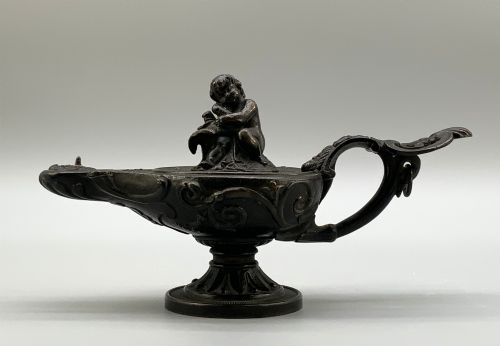
Many examples double as utilitarian items such as candlesticks, oil lamps, inkstands, and fireplace chenets. Their designs integrate mythological figures into everyday nineteenth-century interiors.
How do I identify French nineteenth-century styles?
French nineteenth-century pieces often reflect historical revivals such as Louis XVI, Empire, or Rococo styles. Look for architectural marble bases and symmetrical ormolu mounts.
Signatures or foundry marks can sometimes be found stamped on the bronze base. The presence of classical motifs like conch shells and floral garlands points toward nineteenth-century workshop production.
How should I care for patinated bronze?
Dust the surface regularly with a soft, dry cloth to prevent grime accumulation. Avoid using chemical cleaners or abrasive polishes that strip the dark patination.
Keep pieces away from direct moisture and extreme temperature fluctuations to protect the underlying metal and marble mounts. Wax can be applied sparingly by specialists if required.
What is the difference between putti and cherubs?
Putto refers specifically to the classical motif of a chubby winged infant derived from mythological art. In nineteenth-century decorative arts, the terms putto, cherub, and cupid are often used interchangeably.
Sculptures may depict these figures holding attributes like torches, bows, or musical instruments. The physical form remains consistent across these descriptive titles.