


Antique Cruet Stand
An antique cruet stand brings the dining table together, holding bottles and casters for seasoning meat and fish with style.
Antique Cruet Stand
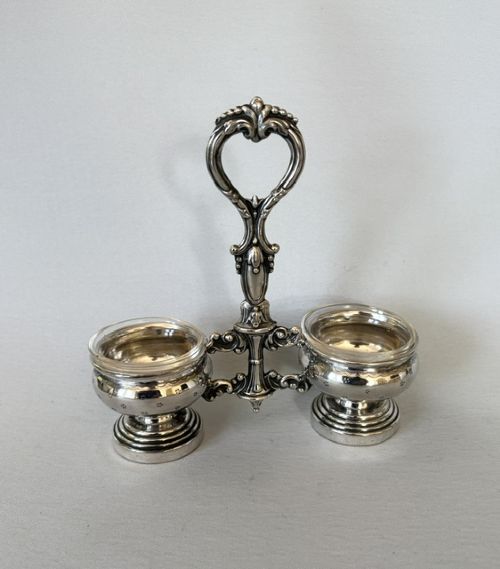
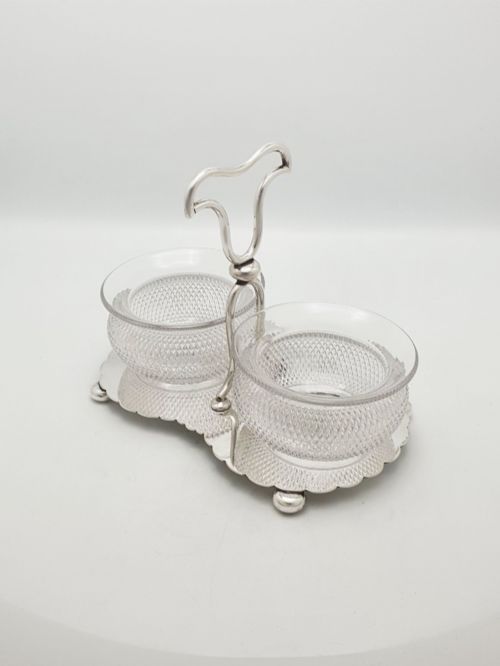
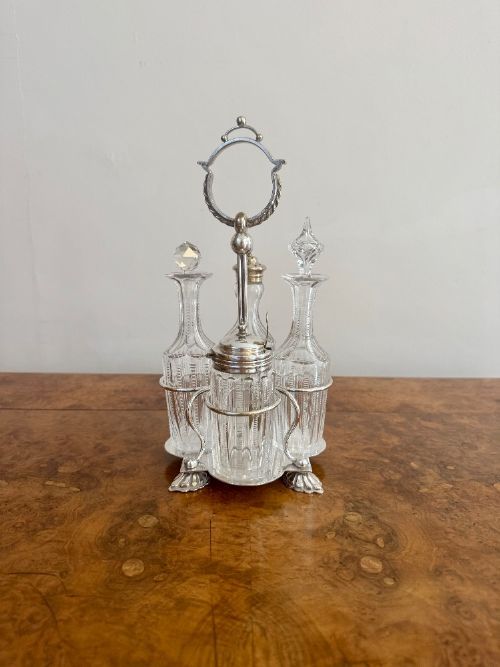
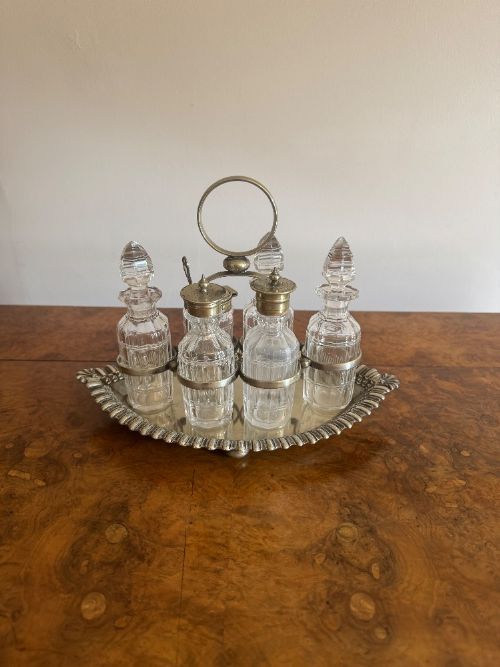
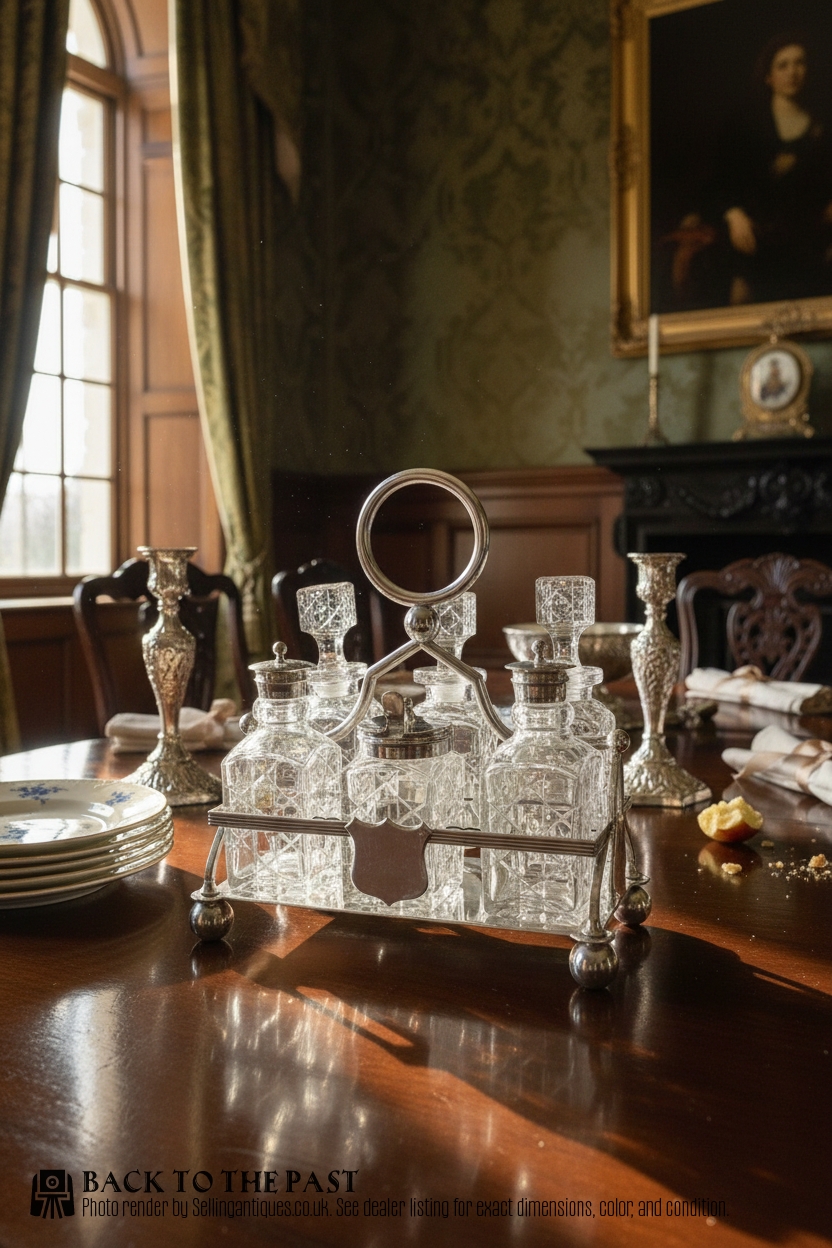
An antique cruet stand is a portable tabletop frame designed to carry bottles, jars and casters for vinegar, oil, mustard, salt and pepper. These pieces appear frequently from the Georgian, Victorian and Edwardian periods, taking forms from simple bachelor frames to large multi-bottle set pieces.
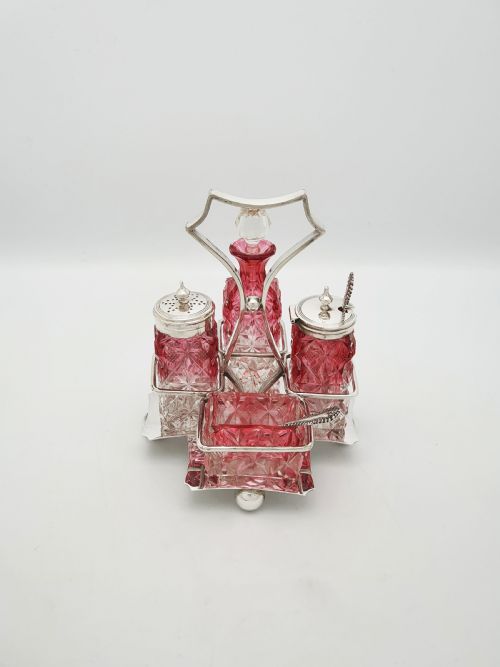
The most common examples on this page are Edwardian and Victorian silver plated frames fitted with cut glass bottles. Buyers also encounter sterling silver pieces from the eighteenth and nineteenth centuries, alongside oak and electroplated nickel silver models.
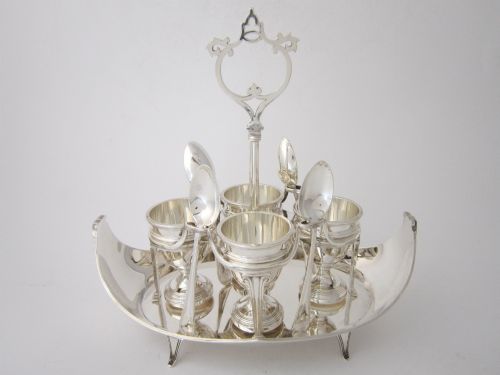
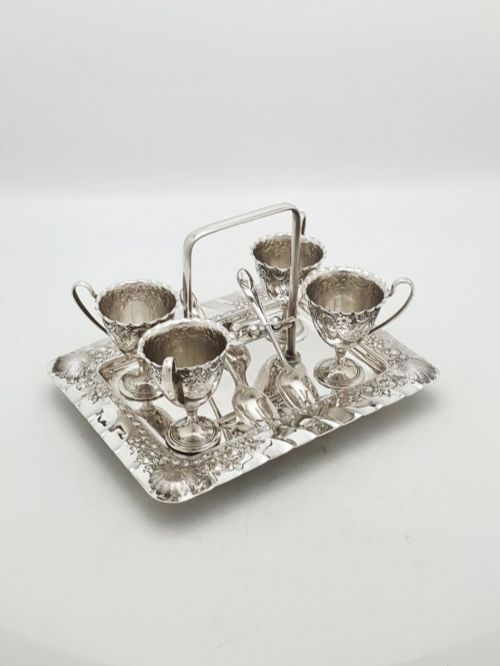
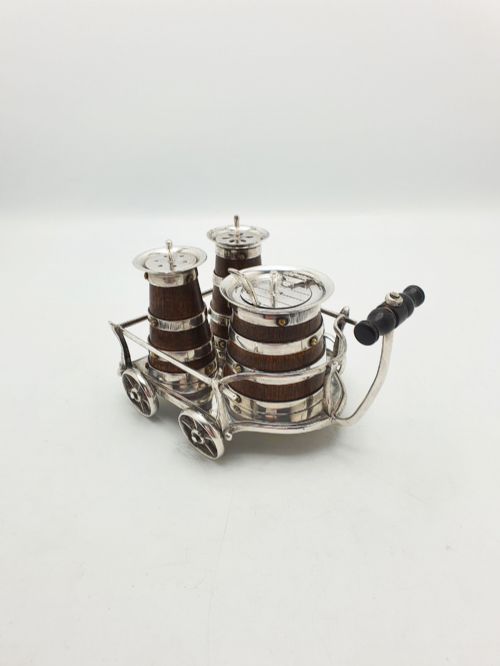
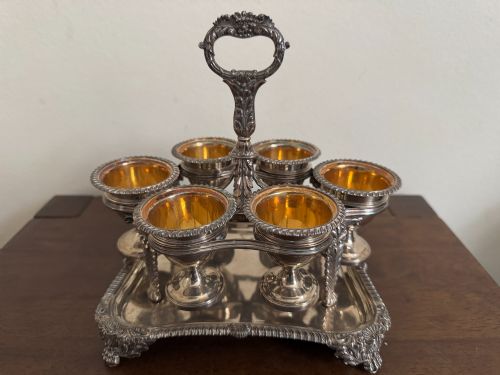
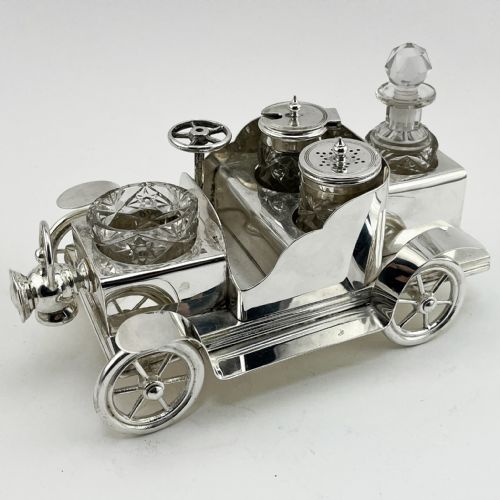
Form follows function across the selection, ranging from standard condiment stands and decanter sets to specialist egg cruet sets and novelty farmyard frames. Each type serves a distinct dining role, uniting practical table service with decorative metalwork and glass.
Materials and construction
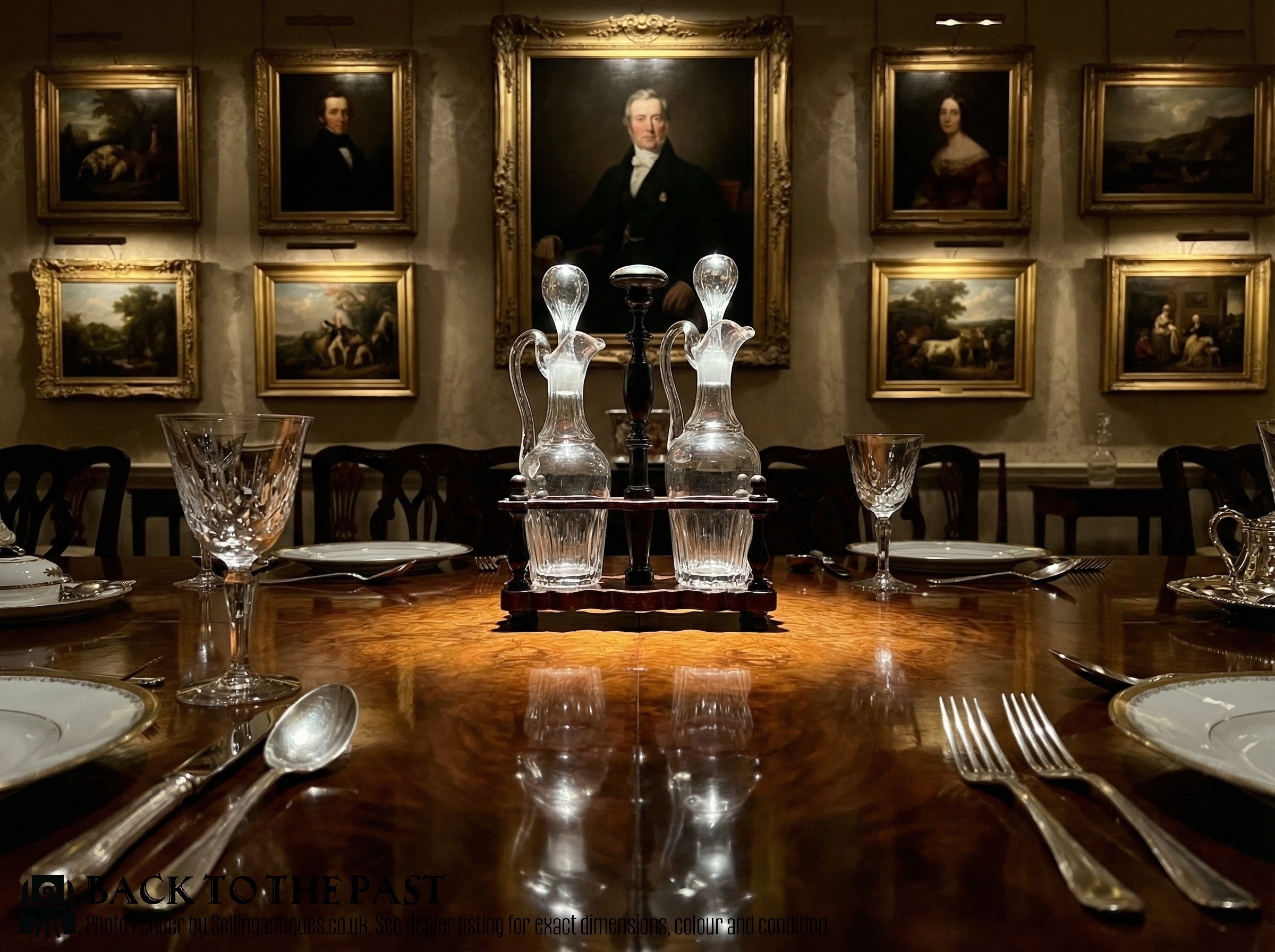
Silversmiths and electroplaters constructed the frames using sterling silver, Old Sheffield plate, electroplated nickel silver and silver plate, often pairing the metal with robust oak or mahogany bases. Metalwork techniques involved casting, stamping and embossing to create intricate handle designs and decorative rims.
Glass components rely on heavy lead crystal and cut glass, sometimes featuring cranberry flashed surfaces that catch the light. Master glasscutters shaped bottles and decanters with geometric facets, matching them precisely to the dimensions of the metal carrier frames.
Listings feature silver plate and cut glass most frequently, alongside sterling silver, oak, mahogany, and electroplated nickel silver.
Quality variations
Quality rests on the crispness of the metal casting and the completeness of the original glass fittings. Superior stands display sharp chased or embossed details on the frame and handles without softening from wear or over-enthusiastic polishing.
The integrity of the set matters deeply, distinguishing pieces that retain their matching matched-number bottles from those assembled later with mismatched glass. Heavy crystal weights, clear hallmarks on silver elements, and sturdy frames separate master smiths' work from standard commercial production.
William Burwash·Charles Thomas Fox·Mappin Brothers·Walker & Hall·Elkington & Co·Hester Bateman
The Antique Cruet Stand Glossary
- Cruet stand
- A frame or stand designed to hold condiment bottles, casters and jars for table service. These pieces keep seasonings organised and portable during meals.
- Caster
- A small perforated jar or bottle used for sprinkling sugar, salt or pepper over food. They form an essential component of traditional multi-bottle cruet sets.
- Silver plate
- A layer of silver bonded to a base metal such as copper or nickel brass. This technique allowed nineteenth-century makers to produce durable tableware with the appearance of solid silver.
- Old Sheffield plate
- An early form of plated metal created by fusing a sheet of silver to a copper core before rolling. It is identified by subtle traces of copper visible where the silver layer has worn.
- Egg cruet
- A specialist tabletop frame designed to hold soft-boiled eggs alongside matching spoons and salt cellars. They were particularly popular during the Victorian and Edwardian periods for breakfast service.
- Cranberry glass
- A rich red-pink glass coloured by the addition of gold chloride to the molten batch. It frequently appears in decorative cruet bottles from the late nineteenth century.
Antique Cruet Stand: Frequently Asked Questions
How do I date an antique cruet stand?
Dating relies upon examining silver hallmarks, maker marks, and structural styles across the metal frame. Georgian pieces exhibit different casting weights and handle shapes compared to Victorian or Edwardian examples.
The type of glass and the plating method also offer clues. Old Sheffield plate points towards earlier nineteenth or late eighteenth century production, while electroplated nickel silver indicates a post-1840 origin.
Are the glass bottles usually original?
Many surviving stands retain their original cut glass bottles, though replacements occur frequently due to accidental breakages over the decades. Inspecting the glass fit within the metal rings helps determine if the bottles belong to the frame.
Matching facet patterns and uniform glass wear indicate that the bottles have lived together since manufacture. Minor variations in tint or cut do not diminish the decorative appeal of the set on a dining table.
How were cruet stands used historically?
Cruet stands sat at the centre of dining tables to provide guests with immediate access to condiments, vinegars and oils. Diners used the individual casters and stoppers to season meat, fish and vegetables according to personal taste.
Specialist variants like egg cruets served specifically during morning breakfast routines. Their portable frames allowed servants to transfer the complete seasoning service effortlessly between the kitchen and the dining room.
How do I care for silver plated stands?
Cleaning requires a soft microfibre cloth and a gentle, non-abrasive silver cream formulated to protect delicate plating. Avoid harsh chemical dips that strip the underlying metal layers and ruin antique patination.
Glass components should be washed separately in warm soapy water and dried thoroughly before returning them to the frame. Regular dusting prevents tarnish build-up in the recessed chasing and embossed details.