


Georgian Glass Condiment Set
These georgian glass condiment set pieces are table arrangements of cut crystal bottles and silver stands that bring formal dining history straight to the sideboard.
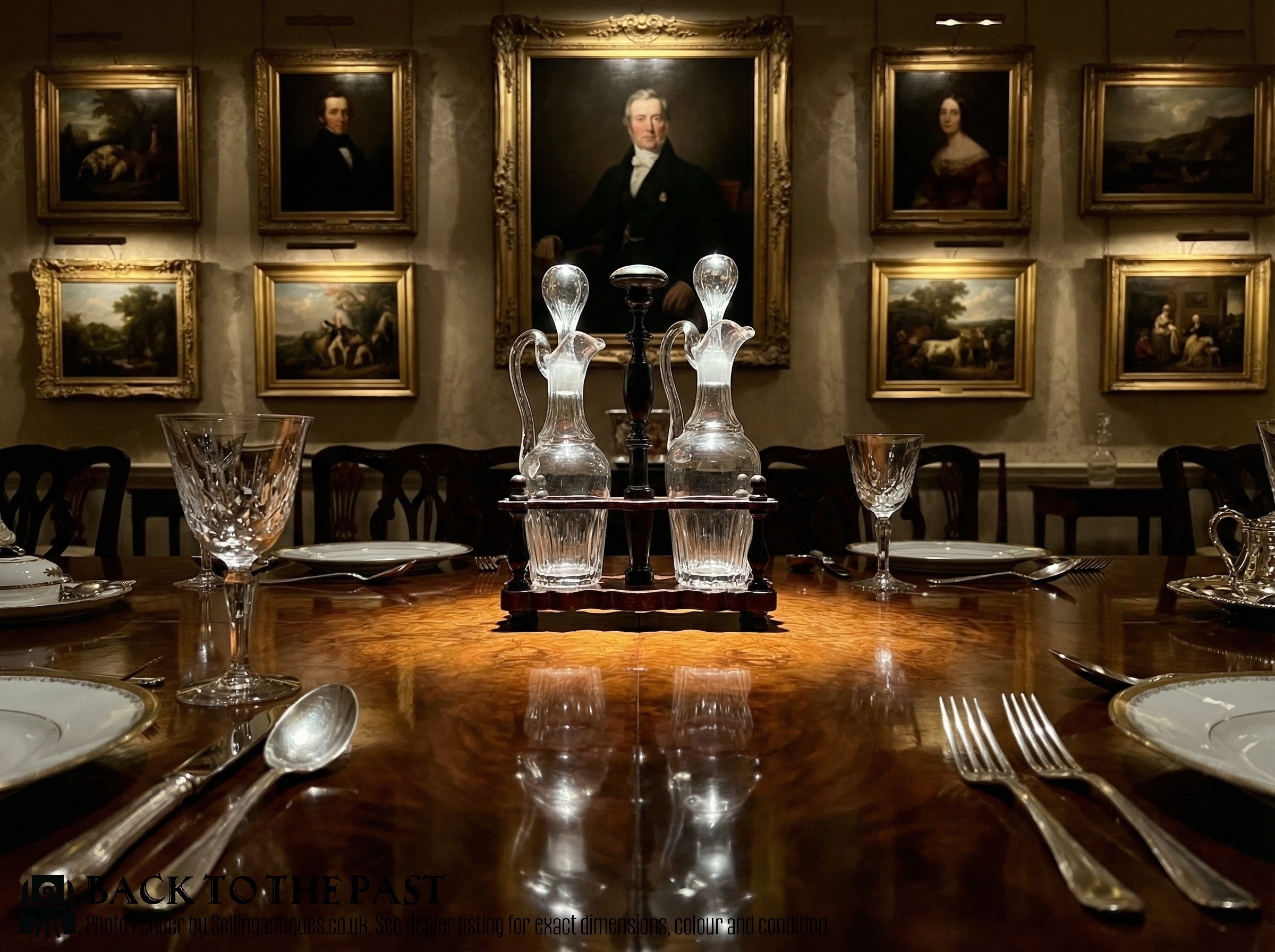
Georgian Glass Condiment Set
When you search for a georgian glass condiment set, you encounter multi-bottle cruet frames, standalone table salts, and caster combinations designed for the dining table. The selection relies heavily on Georgian, Regency, and George III periods, alongside later Victorian interpretations.
Most examples combine cut glass or lead crystal containers with frames of sterling silver, Old Sheffield plate, silver plate, or ebonised wood. These formations range from three-bottle decanter stands to seven-bottle cruet sets complete with original blue glass liners.
Materials and construction
Makers utilised heavy lead crystal and cut glass for the condiment bottles and salt cellars, frequently incorporating cobalt glass liners to hold specific seasonings. These glass elements were shaped by hand-blowing and deep wheel-cutting.
The supporting frames and stands integrate sterling silver, Sheffield plate, and ebonised mahogany wood, sometimes featuring silver mounts and hallmarks that record the London assay office and dates such as 1761, 1790, and 1819.
Listings feature periods spanning the eighteenth century through to late nineteenth-century interpretations, utilising cut glass, sterling silver, and ebonised wood.
Distinctions in quality
Quality rests on the integrity of the fitted glass components and the matching completeness of the set, such as retaining all original bottles and casters within the stand. Sets that preserve their delicate blue glass liners and undamaged cut crystal demonstrate higher fidelity to the original design.
The craftsmanship of the metalwork, from the weight of the solid silver to the precision of the frame casting by known makers, separates standard production pieces from the finest dining table accessories.
Charles Thomas Fox·Hester Bateman
The Georgian Glass Condiment Set Glossary
- Cruet set
- A fitted frame holding multiple bottles, jars, or castors for vinegar, oil, and condiments at the dining table.
- Lead crystal
- A heavy, brilliant form of glass containing lead oxide, used for clarity and deep cutting in Georgian tableware.
- Sheffield plate
- A fused composite material of a silver sheet layered over a copper base, typical of antique tablewares.
- Caster
- A small jar with a perforated top used for sprinkling sugar or dry spices over food.
- Blue glass liner
- A vibrant cobalt insert placed inside open salt cellars to protect the silver from chemical corrosion by salt.
Georgian Glass Condiment Set: Frequently Asked Questions
What is a cruet set?
A cruet set is a decorative table frame that holds glass bottles, cruets, and castors for oils, vinegars, and seasonings during a meal.
These sets sat at the centre of the dining table for guests to serve themselves before individual condiment bowls became common.
How do I identify a Georgian piece?
Georgian pieces are identified through period characteristics like hand-cut lead crystal, Sheffield plate frames, and sometimes London hallmarks.
The styles span the reigns of the Georges, encompassing restrained classical lines and ornate Regency flourishes.
What were the blue glass inserts for?
The vibrant blue glass liners sat inside open table salts to prevent the corrosive action of salt from damaging the silver frame.
They added a striking contrast of colour against polished silver and clear crystal.
How were these sets used?
They were used on dining tables to hold essential liquid and dry seasonings for food preparation during formal meals.
Servants or diners would lift individual bottles from the central stand to season dishes.