
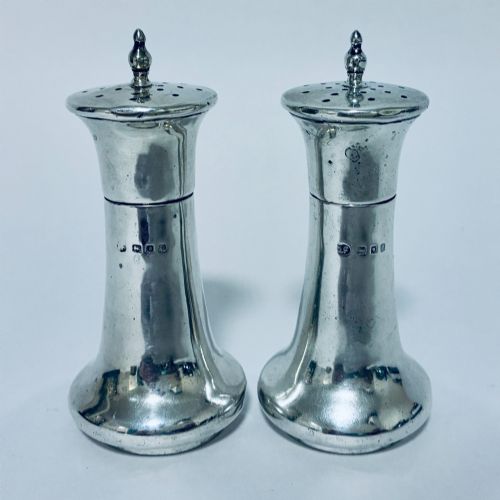
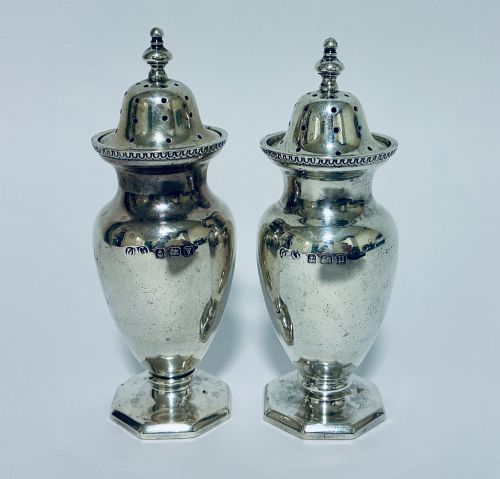


Georgian Condiment Set
These georgian condiment set pieces bring dining room polish, pairing sterling silver and cut glass for the table.
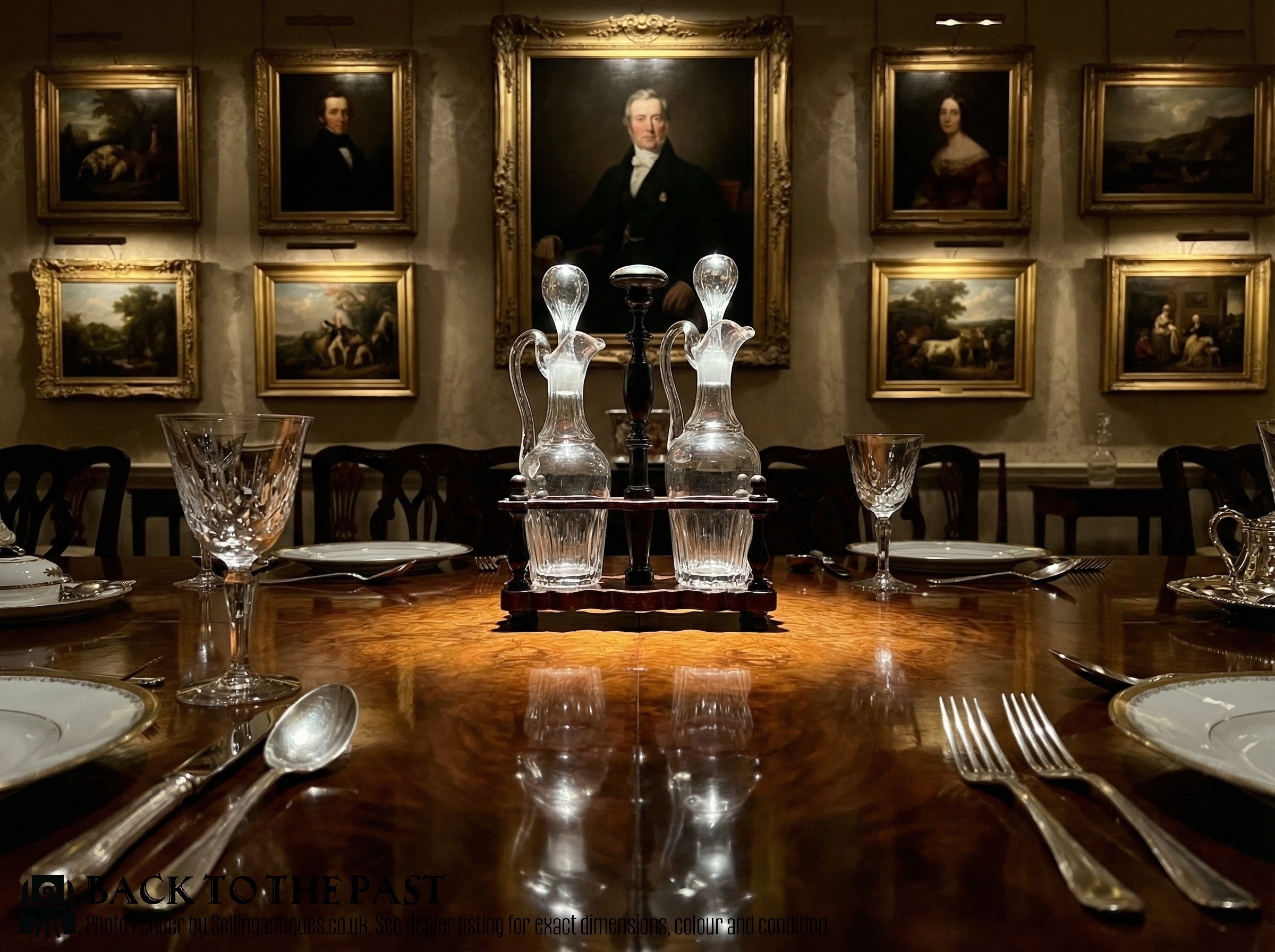
Georgian Condiment Set
A georgian condiment set brings together cruet stands, salt cellars, pepper casters, and condiment jars for the dining table. The selection spans multi-bottle frames in silver and old Sheffield plate alongside individual pairings of silver salts and glass pots.
Most examples date across the eighteenth and nineteenth centuries, taking forms like boat-shaped table salts, Warwick cruet sets, and treen spice towers. Makers utilised sterling silver, silver plate, lead crystal, turned wood, and boxwood to construct these functional tableware items.
Buyers also encounter later revivals from the twentieth century alongside pieces from the Georgian and Victorian eras. The range includes cased four-piece sterling silver sets and porcelain supper sets fitted with lazy susans.
Judging the quality
Quality rests upon the crispness of the silversmith's work, the weight of the metal, and whether matching bottles and original glass liners remain intact. Maker marks from prominent silversmiths elevate certain stands and casters above standard workshop output.
The clarity and depth of the cut glass bottles, together with the structural integrity of frames in silver, plate, or ebonised wood, separate finer examples from routine pieces.
A multi-tiered treen spice tower hides aromatic secrets inside stacked wooden compartments that twist apart.
Charles Thomas Fox·Matthew Boulton·George III·Hester bateman·Viners·William Comyns
The Georgian Condiment Set Glossary
- Cruet stand
- A frame or stand holding multiple bottles, jars, or castors for condiments at the dining table. These frames often feature a central carrying ring and support silver-mounted glass containers.
- Caster
- A small jar with a perforated lid used for sprinkling sugar, pepper, or other dry seasonings. Pairs and sets appear frequently in both sterling silver and silver plate.
- Salt cellar
- A small open vessel or covered container holding salt for table use, frequently fitted with a blue glass liner. Salt cellars often rest on three or four small feet.
- Treen
- Small handmade wooden objects produced by turning or carving. Spice towers and boxes represent this category within condiment pieces.
Georgian Condiment Set: Frequently Asked Questions
How were condiment sets used?
These sets sat at the centre of the dining table to hold salt, pepper, mustard, and oils for guests to season their food during meals.
Servants or diners lifted individual castors, bottles, and salt cellars from the cruet stand as dishes were served.
Are original glass liners important?
Original glass liners add significant value and authenticity to salt cellars and condiment pots. Finding a piece with its matched blue glass liner intact is a notable advantage.
Replacements are common, so original components help confirm the piece remains complete.
How do I clean silver condiment parts?
Cleaning requires gentle silver polish and a soft cloth to protect hallmarks and engraved details. Harsh abrasives will damage the thin layers found on old Sheffield plate.
Glass bottles and liners lift out easily for washing in warm soapy water away from the metal frames.
What is old Sheffield plate?
Old Sheffield plate involves fusing a layer of silver to a copper core before shaping the metal into stands and frames. This method predates electroplating and produces a warm tone.
Items made this way show subtle copper seams where the underlying metal peeks through after generations of polishing.