


Antique Coupe Glasses
These antique coupe glasses span Georgian, Victorian and Art Deco periods, bringing tactile weight and hand-cut sparkle to celebratory toasts.
Antique Coupe Glasses
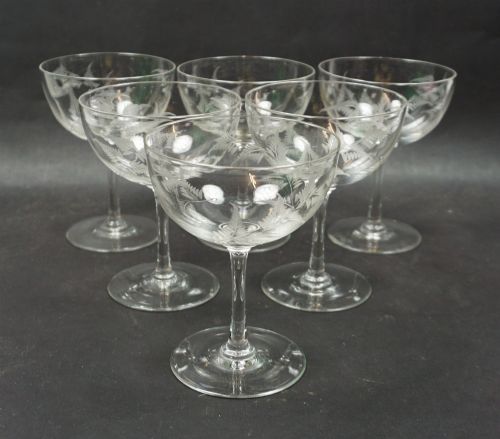
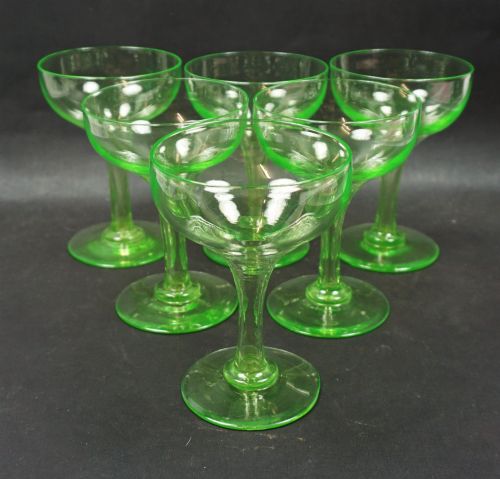
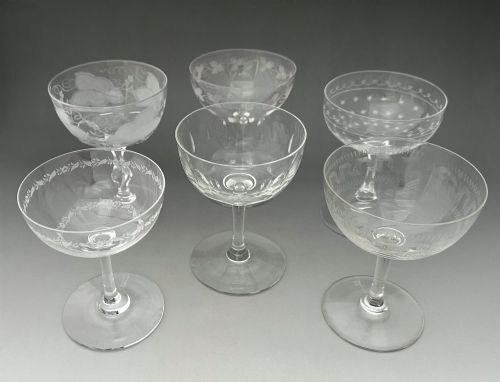
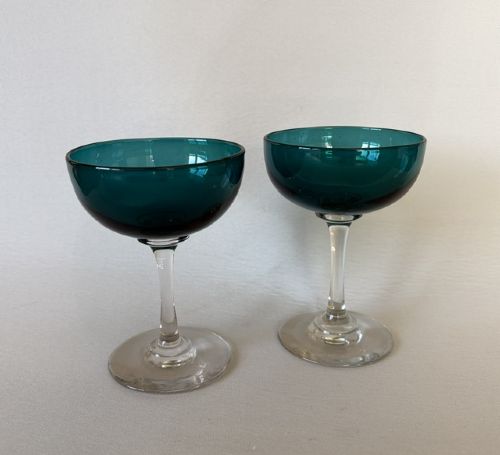
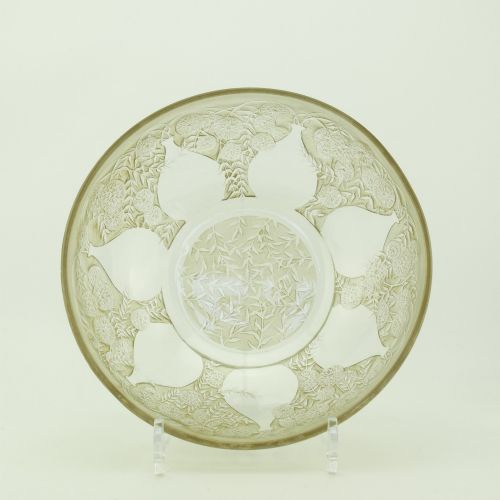
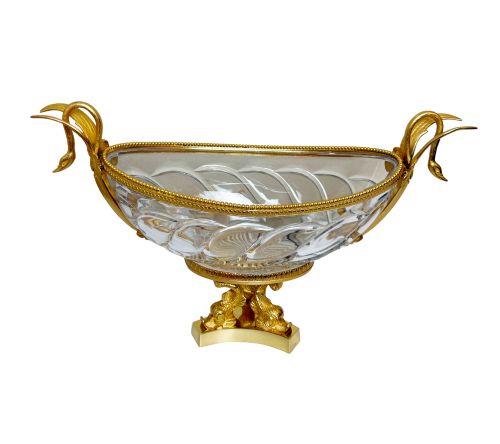
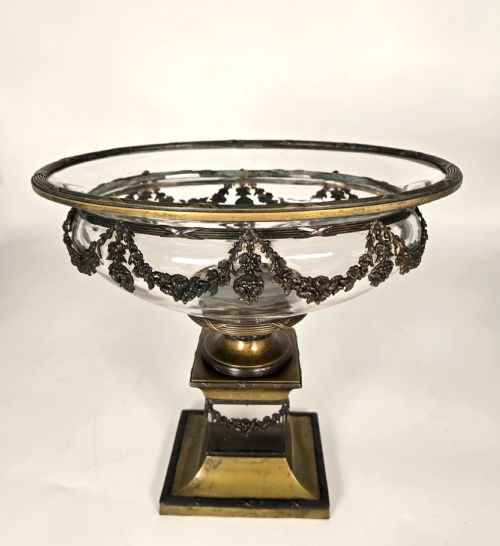
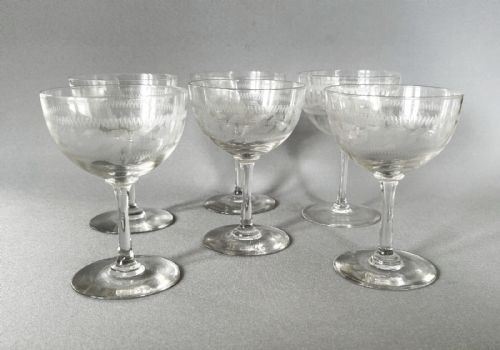
When you search for antique coupe glasses, you encounter shallow stemmed vessels historically designed for champagne, sparkling wine, and desserts. The selections available range from sturdy Victorian cut glass bowls to Edwardian matched sets and striking Art Deco opalescent pieces. Forms stretch beyond simple glassware to include larger centrepieces, dessert dishes, and heavy pedestal bowls.
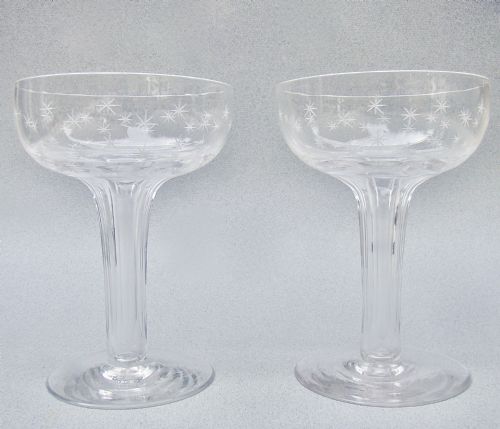
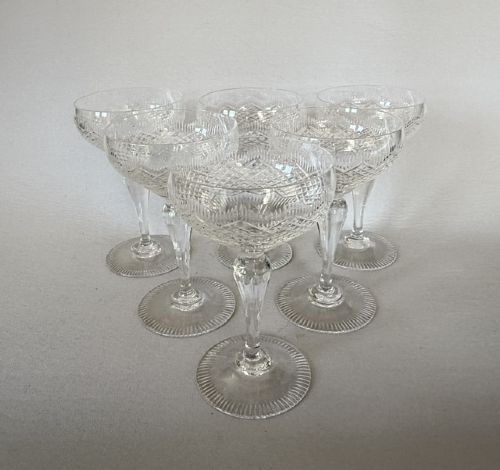
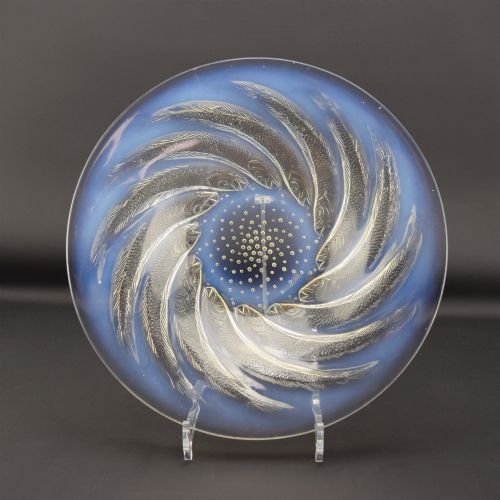
Victorian examples frequently showcase star-etching, facet-cut stems, and flash-over crystal in cranberry, red, or green hues. Edwardian sets lean towards Greek key patterns and fine etching, while early twentieth-century makers introduce coloured glass and opalescent finishes. The underlying material changes from early lead crystal and clear glass to heavier gilt bronze mounts.
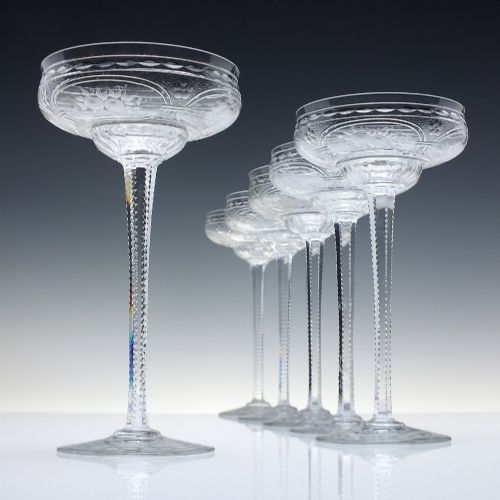
Sets vary significantly in scale and composition, appearing as pairs, small groups of six, or larger table services. Alongside standard champagne coupes, you find specialist sweetmeat glasses with opaque twist stems and large footed bowls suited for display. Their primary historic function as drinking vessels gives way in larger formats to decorative table centrepieces.
How they were made
The fabrication of these pieces relies primarily on blown and cast glass, often shaped into lead crystal or opalescent glass. Molten material is worked by hand, producing thick walls and substantial bases that give antique glassware its distinctive heft. Surface decoration is then achieved through wheel-cutting, star-etching, and surface engraving.
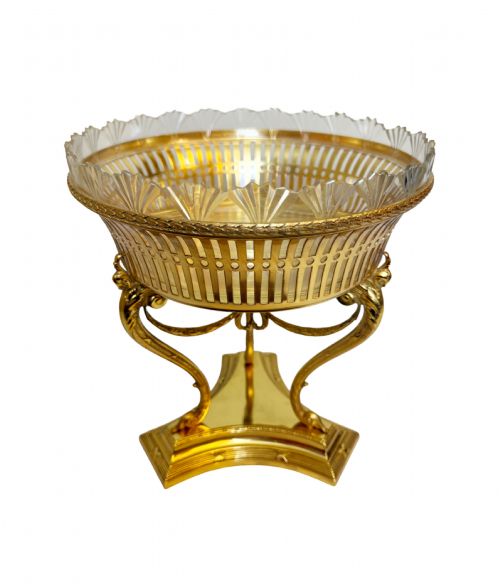
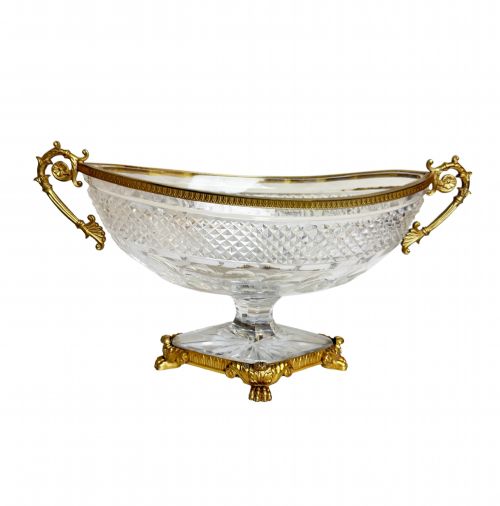
Many sophisticated examples incorporate mixed media, mounting glass bowls within gilt bronze, ormolu, or sterling silver frames. Coloured effects are frequently produced using overlay techniques, where a thin layer of cranberry, green, red, or amber glass sits over a clear crystal base. These layered surfaces are subsequently cut away to reveal the contrasting transparent material underneath.
Antique Coupe Glasses Retail Price Guide 2026
Typical asking prices for coupe glasses among the pieces listed under this phrase on Sellingantiques today, from the lower quarter to the upper quarter. They describe what is for sale here now, not the wider market.
Victorian garden parties demanded matching amber glasses to keep wandering wasps guessing which drink was theirs.
What varies in quality
Quality rests on the crispness of the cutting, the depth of the wheel-engraving, and the weight of the crystal. Finely detailed motifs like convolvulus or fruiting vines require exceptional hand-skill, separating master glass-cutting from basic commercial production. Clarity in the crystal and purity of colour in overlay pieces further distinguish superior examples.
The integration of secondary materials defines the upper tier of decorative bowls and centrepieces. Gilt bronze mounts and ormolu stands demonstrate superior casting and chasing work that complements the central glass insert. Consistency across matched sets of multiple glasses also dictates value, as surviving large groups remain scarce.
Rene Lalique·Fritz Heckert·Viners
The Antique Coupe Glasses Glossary
- Coupe
- A shallow, broad-bowled stemmed glass historically used for champagne and sparkling wine. Its wide rim allows bubbles to dissipate quickly.
- Crystal
- Glass containing substantial lead oxide content, which increases brilliance, weight, and light refraction. It produces a clear, resonant ring when struck.
- Opalescent glass
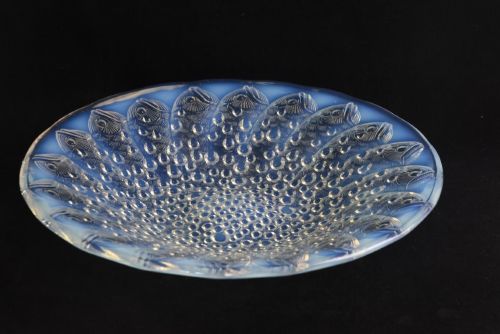
- Glass that diffuses light and displays a milky, iridescent sheen with shifting tones. It gained immense popularity during the Art Deco period.
- Overlay
- A technique where a layer of coloured glass is fused over a clear or contrasting base. Subsequent cutting through the outer layer exposes the lower colour.
- Sweetmeat glass
- A small, shallow pedestal bowl designed for serving sweets, comfits, or nuts. They often feature elaborate stems such as opaque twists.
Antique Coupe Glasses: Frequently Asked Questions
How do I identify Victorian cut glass?
Victorian cut glass exhibits sharp, geometric facets and deep star-etching across heavy lead crystal. The hand-cut edges show slight irregularities and polished finishes distinct from modern moulded glass.
Coloured overlay versions from this era reveal clear crystal beneath when cut through, adding visual depth to the piece.
Can I use antique champagne coupes for dining?
Antique coupes can be utilised for special occasions, provided they are handled with care. Their lead crystal and hand-blown construction make them more delicate than modern commercial glassware.
Hand washing in warm, soapy water is essential to preserve surface gilding, enamel work, and delicate wheel-engraved motifs.
What defines Art Deco glass?
Art Deco glass relies on stylised floral motifs, geometric symmetry, and opalescent or deeply coloured finishes. Pieces from this era often feature figural elements and thick, moulded relief decoration.
Designers of the period moved away from traditional Victorian cutting towards innovative optical effects and tactile textures.