
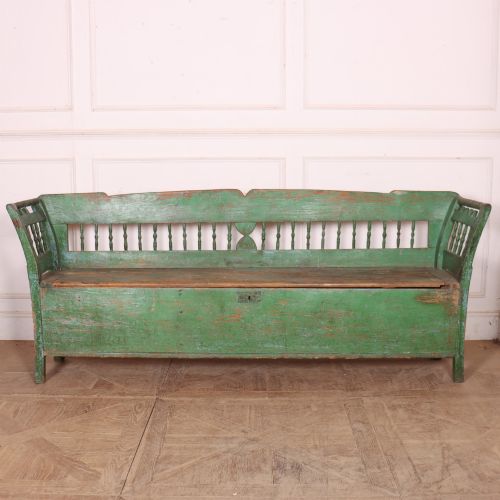
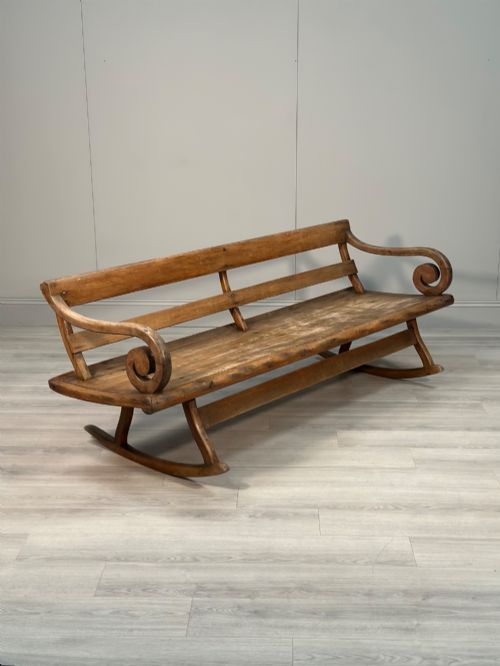
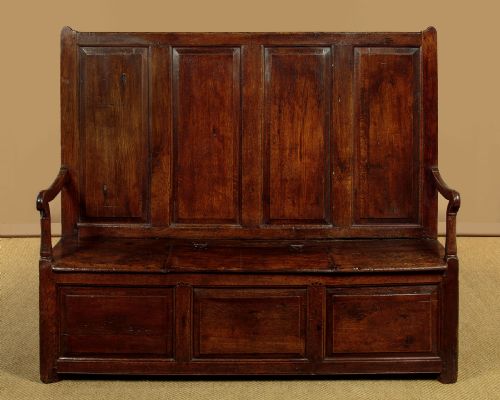
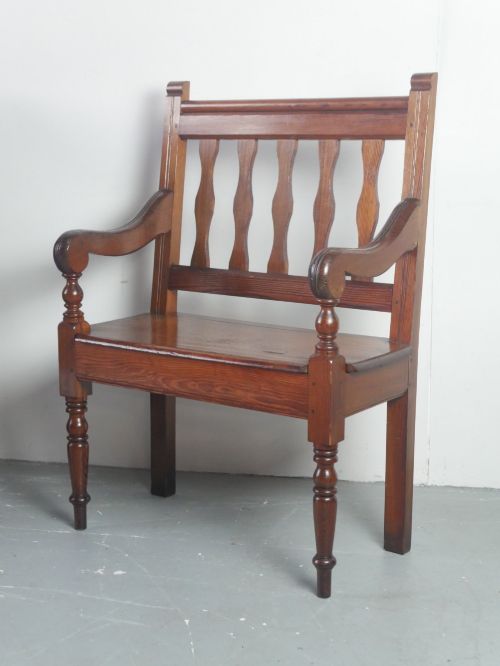
Antique Country Settle
An antique country settle offers solid timber seating rooted in centuries of domestic and tavern life.
Antique Country Settle
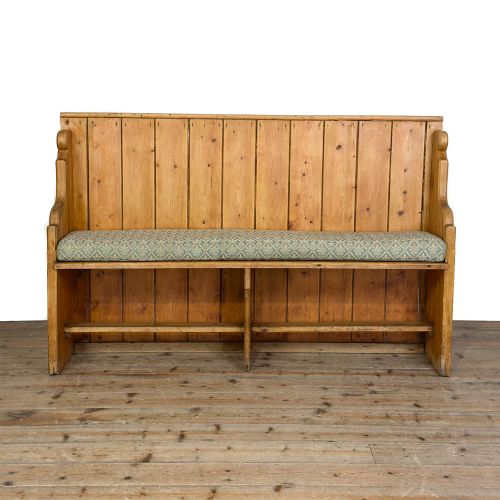
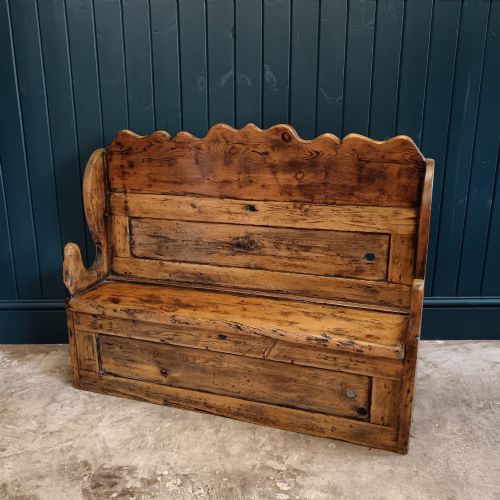
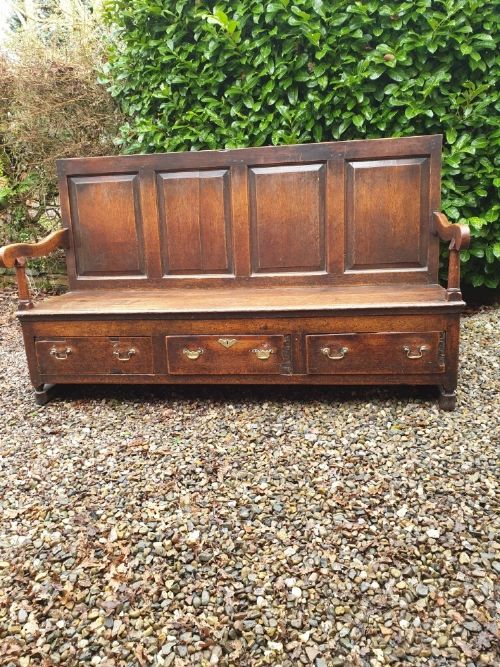
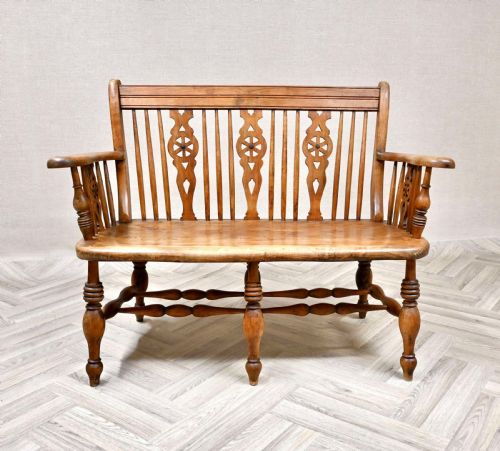
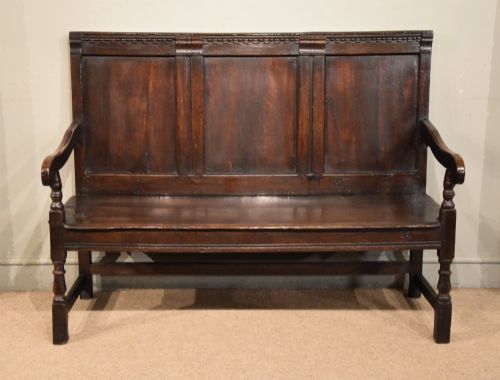
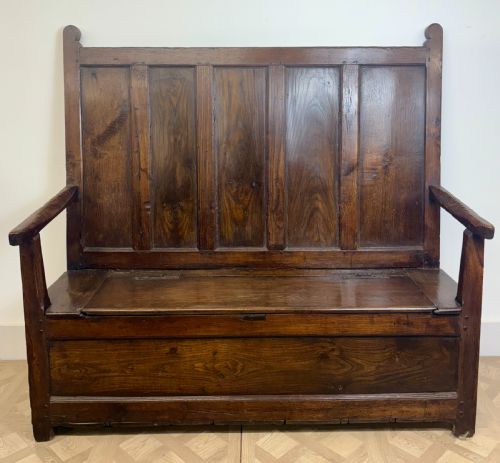
An antique country settle provides high-backed wooden seating designed originally to block draughts in rural homes and public houses. These pieces often incorporate enclosed box bases beneath the seat for domestic storage.
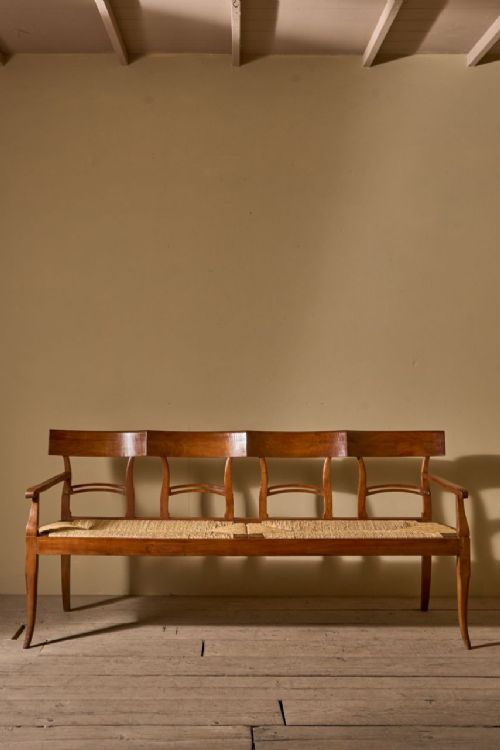
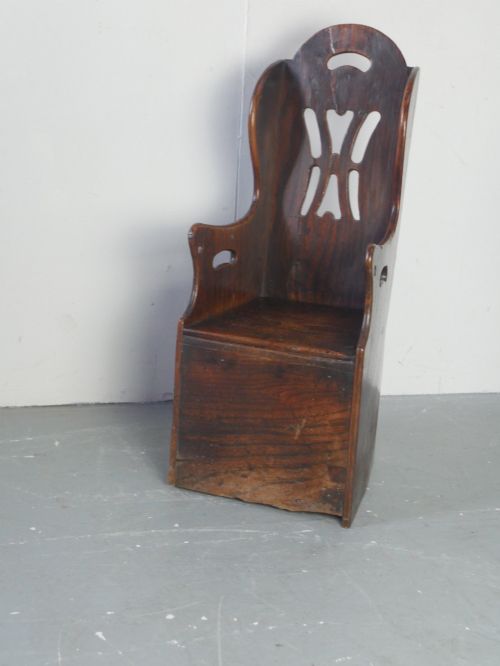
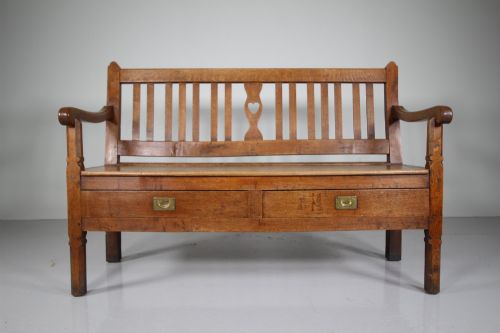
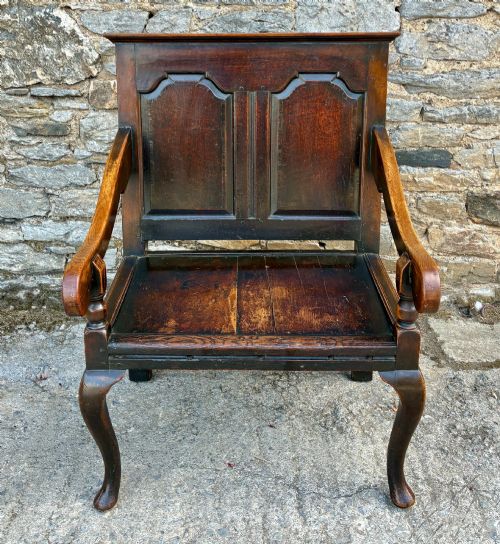
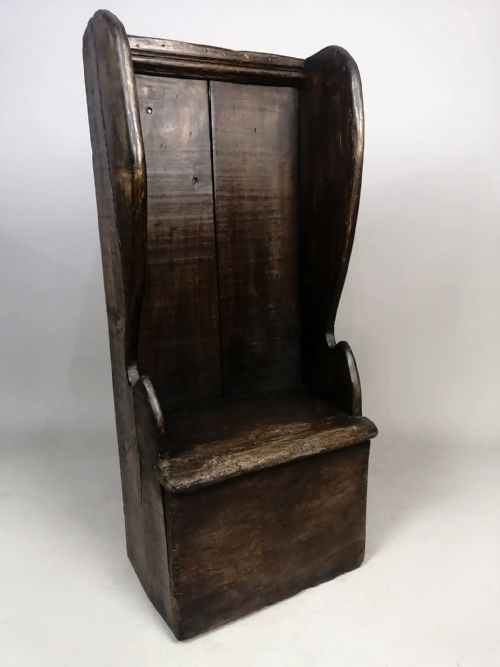
The selections span from seventeenth-century oak examples to nineteenth-century pine and fruitwood variants. Buyers frequently encounter vernacular forms including panel-backed seats, lambing chairs, and tavern pews.
Regional variations shape the inventory, encompassing English, Welsh, Irish, and continental European styles. These sturdy benches function primarily as hallway seating or statement fireside furniture.
How they were made
Cabinetmakers built these wooden benches using native hardwoods and softwoods such as oak, pine, elm, ash, and cherrywood. Joinery relied on pegged frames and panel construction to withstand heavy daily use.
Surface treatments range from waxed patinas to original painted finishes or decorative carvings. Iron hardware such as hinges and brackets frequently reinforces structural joints on box bases and high backs.
Several examples feature integrated box compartments once relied upon to keep family belongings safe from farmyard drafts.
What varies in quality
The proportion of original timber remaining in the structure separates utilitarian workshop pieces from finer regional examples. Intricate panel carving, enclosed box compartments with original lids, and distinct regional framing elevate a piece.
Surface integrity determines the character of surviving finishes, distinguishing authentic historic wax patinas or early paint layers from later interventions.
The Antique Country Settle Glossary
- Box settle
- A wooden bench featuring an enclosed storage compartment beneath the seat. This form kept household items secure and elevated occupiers above cold stone floors.
- Panel-back
- A backrest constructed from fitted wooden panels held within a grooved frame. This technique provided structural rigidity against warping in unheated rooms.
- Peg joined
- A method of securing timber joints using wooden dowels rather than metal fasteners. This traditional joinery appears frequently in earlier vernacular furniture.
- Patina
- The surface sheen and colour developed by wood through decades of handling, waxing, and exposure to light. Collectors value untouched surfaces that reflect long age.
Antique Country Settle: Frequently Asked Questions
What is an antique country settle used for?
These wooden benches served historically as communal seating near hearths, blocking cold drafts with their high panelled backs. Many incorporated enclosed box storage beneath the seat for blankets and household provisions.
Today, buyers place them in hallways, kitchens, or living spaces as practical seating with integrated storage. Their robust construction makes them enduring additions to traditional and contemporary interiors alike.
How do I date an old settle?
Dating relies on examining construction methods, timber species, and joinery details. Pieces utilising pegged frames without modern metal screws often point towards eighteenth-century or earlier craftsmanship.
Changes in stylistic motifs, panel thickness, and wood patination also help establish age. Oak and ash predominate in earlier periods, while pine and fruitwood appear more frequently in later nineteenth-century examples.
Are settles comfortable for daily sitting?
Most antique settles feature upright wooden backs and solid timber seats designed for draft exclusion rather than lounging. Adding loose cushions or pads easily softens the seating surface for modern daily use.
Their upright posture suits hallways and dining areas where formal or temporary seating is preferred. The depth and height of the seat vary significantly depending on the regional workshop origin.
What wood are country settles made from?
Oak forms the primary timber for many early pieces, prized for its durability and strength. Pine, elm, ash, and cherrywood also appear frequently across regional and vernacular examples.
Some specimens feature painted finishes or mixed timbers where secondary woods were utilised for internal box construction. Each material reflects the local resources available to the rural cabinetmaker.