




Oak Wing Back Chair
An oak wing back chair offers draught-excluding comfort by the hearth, drawing you in with its protective upholstered wings and sturdy timber frame.
Oak Wing Back Chair
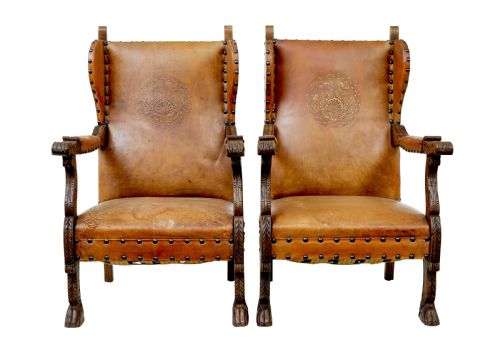
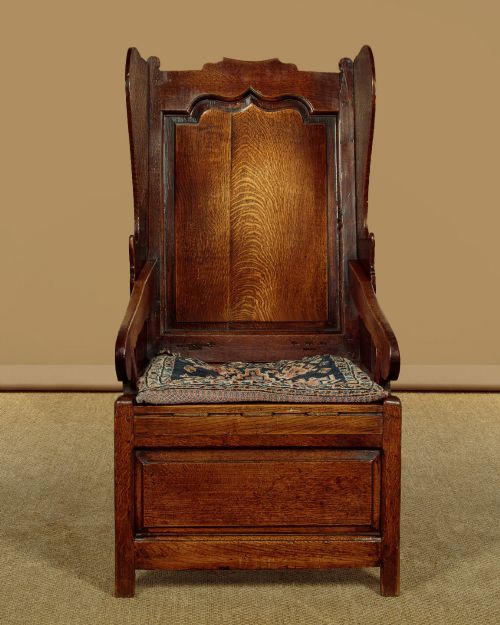
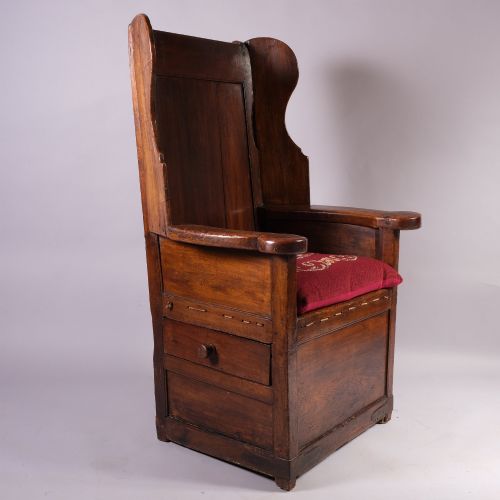
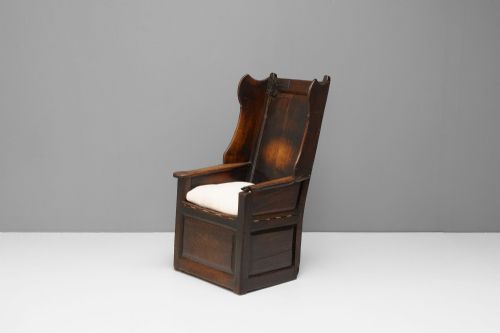
An oak wing back chair is a substantial fireside seat designed to block household draughts while providing a supportive upright posture. The form encompasses traditional lambing chairs, library armchairs, and high-backed reading seats originating across centuries.
The versions you meet most frequently on this page date from the eighteenth and nineteenth centuries, alongside Edwardian interpretations and later variations. These pieces appear in regional vernacular styles, including Lakeland, Welsh, and Scottish origins.
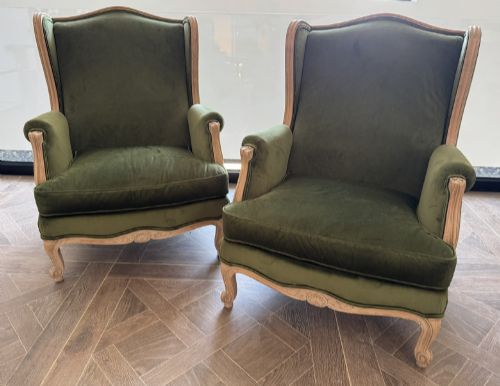
Makers utilised solid oak alongside walnut and hardwood frames, pairing the timber structures with leather, velvet, fabric, or textile upholstery. Armchair and rocking chair formats both emerge within the selection.
How they were made
Carpenters constructed the structural frames from solid oak and associated hardwoods, frequently employing pegged joints and traditional turnings. Selected examples incorporate carved detailing such as lion motifs or Carolean styling.
Upholstery methods involved securing leather, velvet, or textile coverings over supportive padding and webbing to form the distinctive winged back and armrests. Brass accents appear on specific iterations to finish the construction details.
Listings feature oak wing back chairs spanning the seventeenth to the twentieth century, including Edwardian and Victorian interpretations.
What varies in quality
Quality rests upon the integrity of the timber frame and the authenticity of the period construction. Pieces retain greater character where the oak shows honest grain and the structural joinery remains undisturbed through generations of use.
The standard of upholstery and the suitability of the materials applied to the wings and seat influence the overall finish. Regional variations in proportion and the presence of documented vernacular origins elevate the standing of individual examples.
The Oak Wing Back Chair Glossary
- Lambing chair
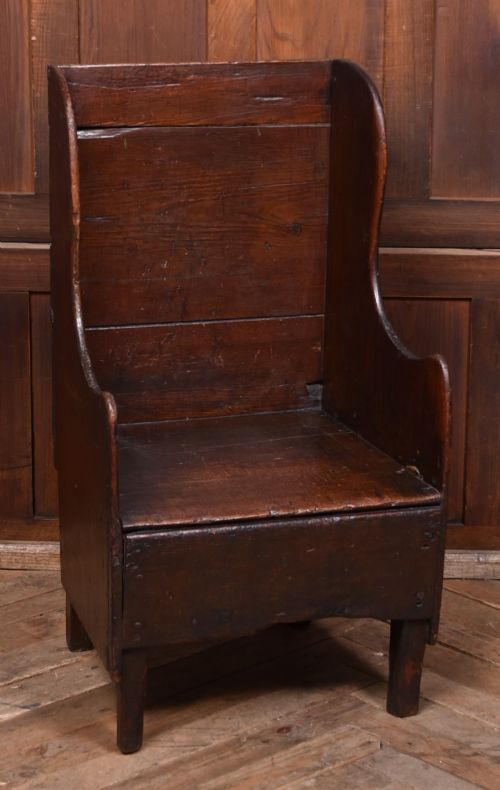
- A traditional fireside seat featuring solid wooden sides or enclosed wings designed to shield the occupant from cold draughts. These examples frequently incorporate storage compartments beneath the seat.
- Wingback
- An armchair style characterised by extensions flanking the upper back designed to trap heat and deflect air currents away from the head. This form developed significantly during the seventeenth and eighteenth centuries.
- Vernacular
- Furniture designed and built by local craftspeople using regional traditions and readily available materials rather than following metropolitan fashion. Lakeland and Welsh pieces demonstrate these distinct local characteristics.
- Carolean
- A decorative style spanning the late seventeenth century, marked by rich carving, scrolling woodwork, and ornate joinery. Later revival pieces frequently borrow these exuberant motifs.
- Orkney chair
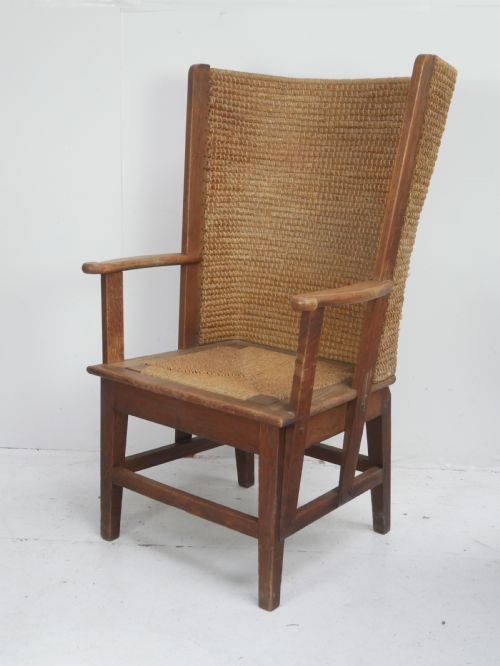
- A distinct regional seating form featuring a straw-backed construction woven on a wooden frame, offering a unique profile within island vernacular design.
Oak Wing Back Chair: Frequently Asked Questions
How do I date an oak wing back chair?
Dating relies upon examining the timber characteristics, construction methods, and joinery style employed within the frame. Earlier examples display hand-cut pegs and adzed surfaces, whereas nineteenth and twentieth-century versions reveal more standardised machine work.
Stylistic cues such as leg turnings, the shape of the wings, and regional vernacular traits help narrow the period of manufacture. Comparing these elements with documented archive pieces provides further clarity.
Where were these chairs used?
These seats traditionally occupied positions beside the hearth in domestic parlours, farmhouses, and libraries where draughts posed a daily challenge. The protective wings shielded the user while they read, sewed, or rested near the fire.
Larger library and reading chairs also found places in formal drawing rooms and studies during the Victorian and Edwardian eras. Their substantial presence suited spaces designed for entertaining and private contemplation.
Are lambing chairs different from standard wing backs?
Lambing chairs typically feature solid wooden sides enclosing the lower section rather than fully upholstered wings and arms. This timber construction offered superior protection against severe household draughts in rural dwellings.
Standard wing back chairs rely entirely on padded upholstery across the upper extensions and armrests for comfort and insulation. Both forms served similar fireside functions across different social and regional contexts.
How do I care for leather upholstery on antique chairs?
Leather upholstery benefits from regular dusting with a soft, dry cloth to prevent dirt accumulation in the natural creases. Maintaining stable ambient humidity levels protects the hide from drying and cracking over time.
Avoid placing antique leather seating in direct sunlight or close to active heat sources. Professional conservation advice ensures appropriate treatments are applied without altering the original patina.