
Antique Country Rush Chairs
Antique country rush chairs bring rustic charm to an interior through woven seats and vernacular timber frames.
Antique Country Rush Chairs
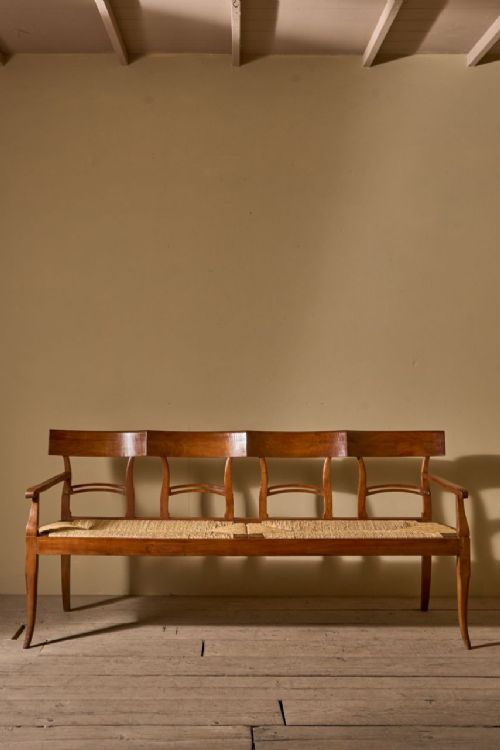
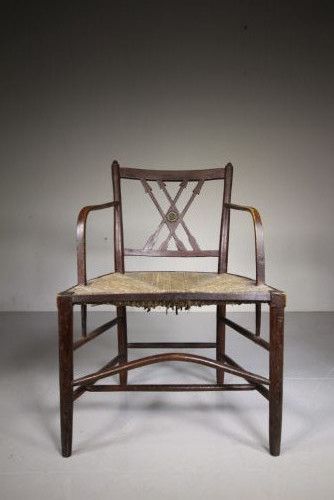
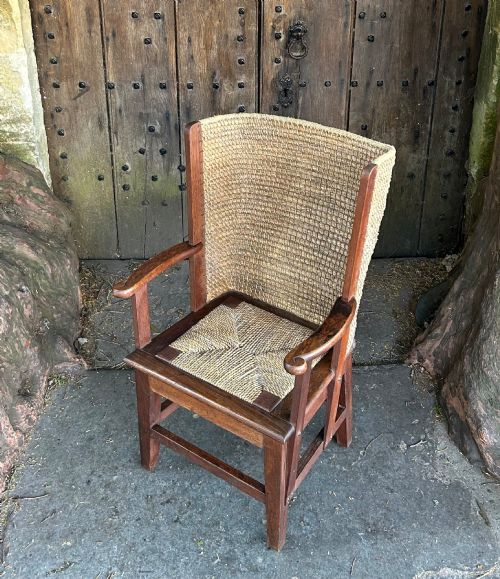
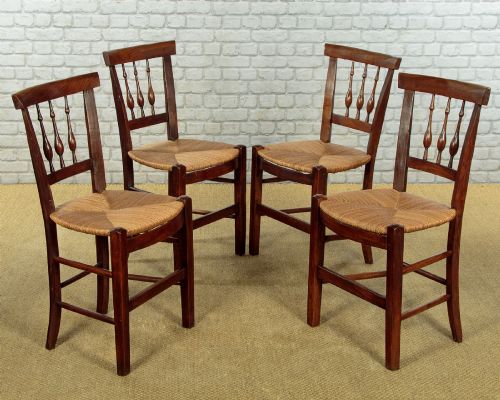
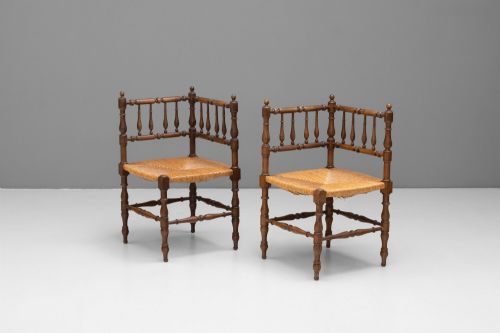
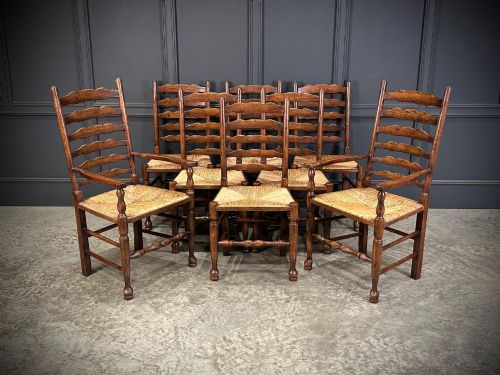
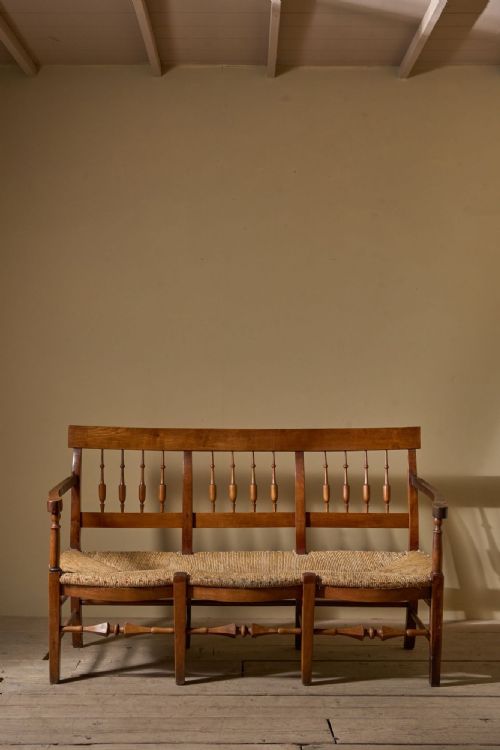
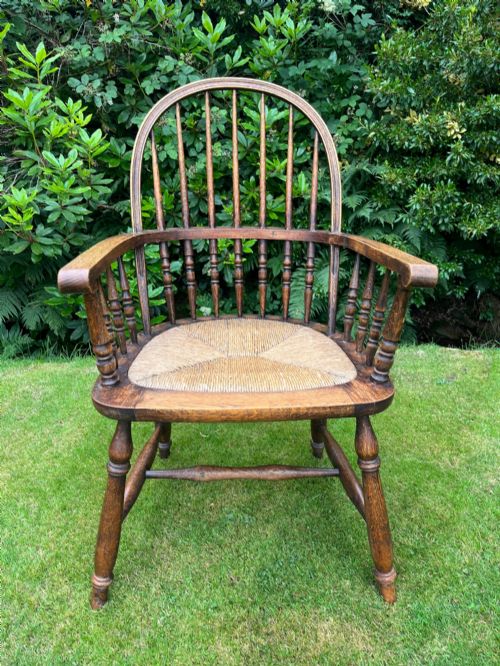
When you search for antique country rush chairs, you are looking at utilitarian seating built for everyday domestic use in farmhouses, cottages and provincial kitchens. The selection spans single dining chairs, carver armchairs, rocking chairs, benches and children's high chairs originating from English, French, Flemish and Dutch traditions.
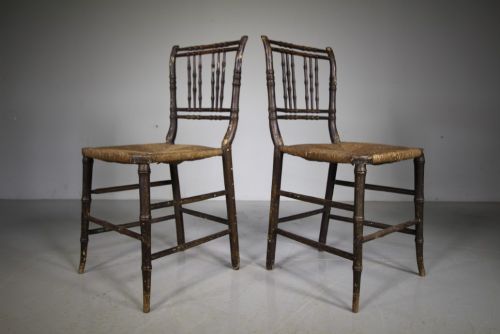
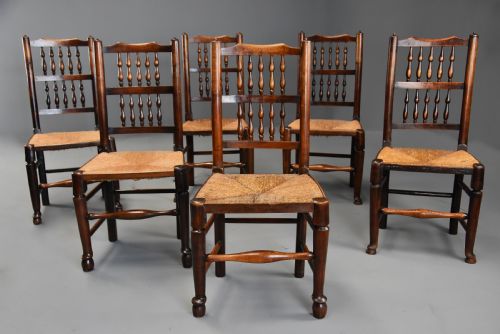
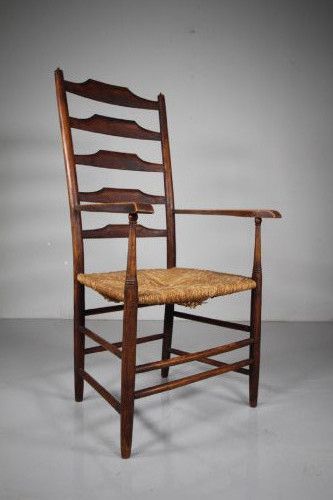
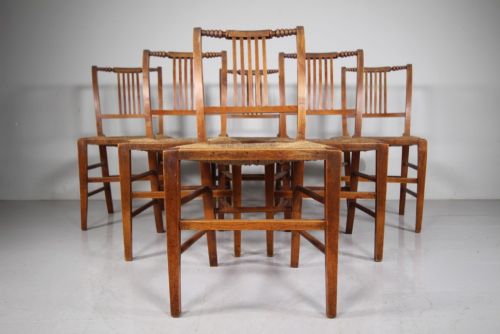
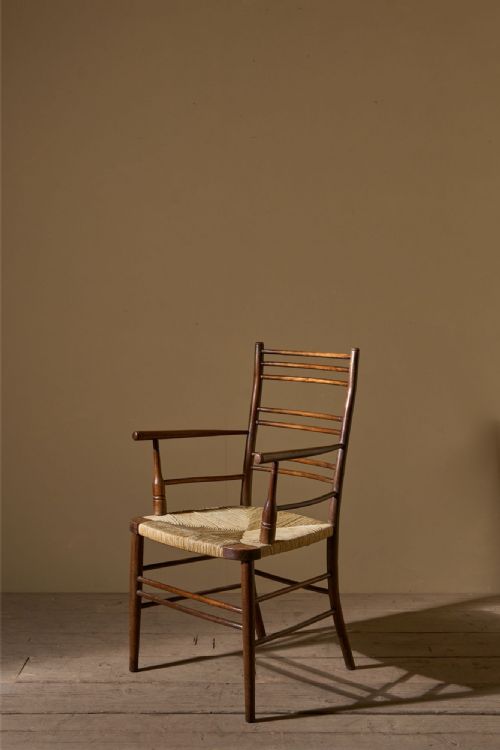
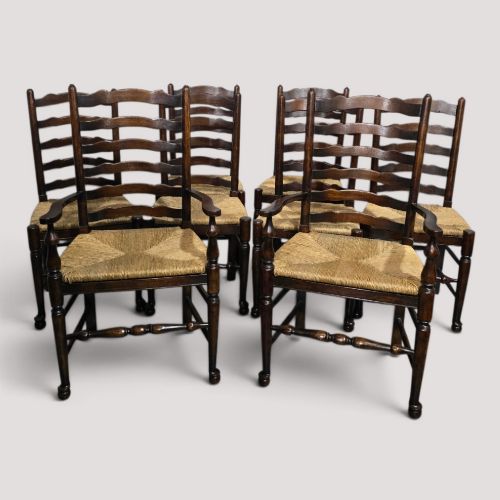
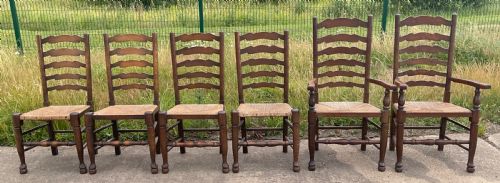
The version you are most likely to meet on this page is the ladder back or spindle back dining chair from the nineteenth century, constructed with a timber frame and a woven rush seat. These pieces draw on regional styles such as Lancashire, Cheshire and Yorkshire designs, alongside Arts and Crafts interpretations from the later period.
How they were made
Maker-craftsmen built these frames using regional hardwoods available locally, predominantly turning to ash, elm, beech and oak, supplemented by fruitwood and cherrywood for specific components. Spindles, legs and stretchers were typically turned on a pole lathe, while seats were tightly hand-woven using dried marsh grass or rush around a wooden rung framework.
Many chairs display structural vernacular techniques such as pegged joints and steam-bent components to form curved crest rails or hoop backs. Surface treatments vary from bare polished timber to original historic paint finishes or stained beech mimicking higher-status woods.
Listings feature ash, elm, oak, beech and fruitwood frames combined with traditional rush seating across the eighteenth, nineteenth and early twentieth centuries.
What varies in quality
The distinction between ordinary utility seating and superior examples lies in the integrity of the timber selection and the precision of the turning. Better chairs utilise finely figured native hardwoods like elm and ash with well-balanced proportions and crisp spindle profiles that have survived decades of daily use without excessive timber shrinkage or replacement stretchers.
Seat execution also dictates standard, as densely twisted rush woven with uniform tension maintains its structure far longer than loose or flattened cordage. Originality of surface finish, whether undisturbed historic paint or deep patinated timber, elevates the standing of a piece considerably.
Philip Clissett·E W Godwin
The Antique Country Rush Chairs Glossary
- Rush
- Dried marsh grass used for hand-weaving flexible, durable chair seats. It provides a springy texture that adapts to the sitter over time.
- Ladder back
- A chair frame featuring horizontal wooden slats between the upright rear posts. This regional vernacular design was widely adopted in British and continental kitchens.
- Spindle back
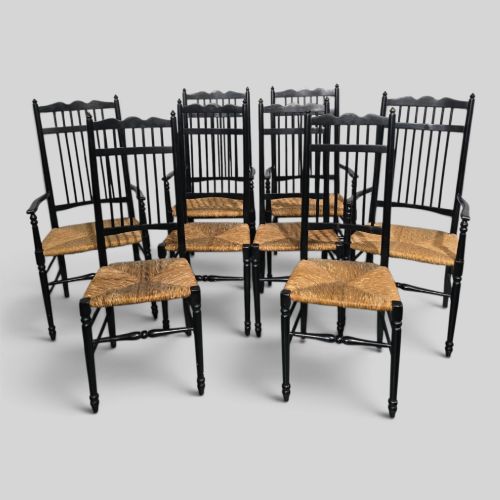
- A seating construction utilising thin turned wooden uprights supporting the backrest. These members are typically secured into bentwood or straight rails.
- Harlequin set
- A collection of dining chairs that match in general style and era but display subtle individual variations in turning or dimension. These groups assembled over time rather than originating from a single workshop.
- Carver
- An armchair designed with supportive armrests, traditionally placed at the head of a dining table. In country sets, a pair of carvers frequently accompanied a larger number of side chairs.
Antique Country Rush Chairs: Frequently Asked Questions
What is a rush seat made of?
Rush seats are constructed from natural marsh plants or river grasses dried and twisted into long cords before being hand-woven around the frame.
This traditional technique creates a resilient and flexible platform that supports the body comfortably.
How do I care for antique rush?
Keep rush seats away from damp conditions and excessive dryness to prevent the natural fibres from becoming brittle or rotting.
Dust them gently with a soft brush and avoid applying liquid furniture polishes directly to the woven surface.
Are harlequin sets authentic?
Harlequin sets consist of chairs gathered together because they share a common period, material and regional vernacular style.
These collections reflect how country households historically acquired and accumulated dining seating over many years.
How do I date a ladder back chair?
Dating relies on examining the turning style of the spindles, the method of joint construction and the wear patterns on the lower stretchers.
Earlier eighteenth-century examples often feature heavier section timbers and more rustic joinery compared to later nineteenth-century interpretations.