


Traditional Country Spindle Chairs
Traditional country spindle chairs are vernacular wood seats built for everyday use, offering sturdy comfort and honest regional design.
Traditional Country Spindle Chairs
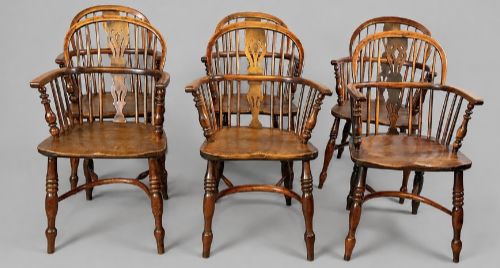
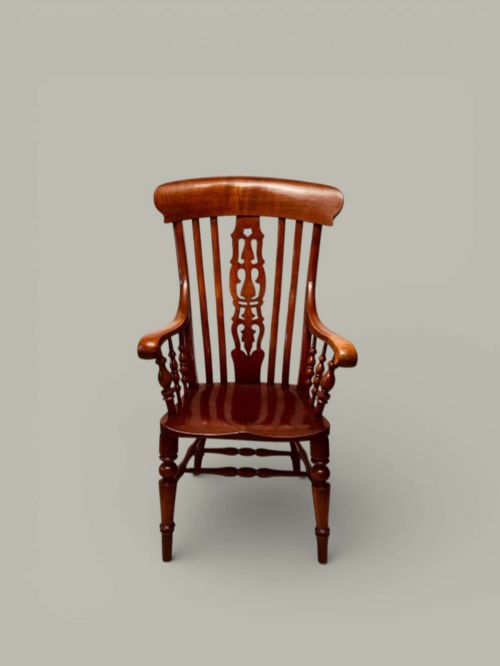
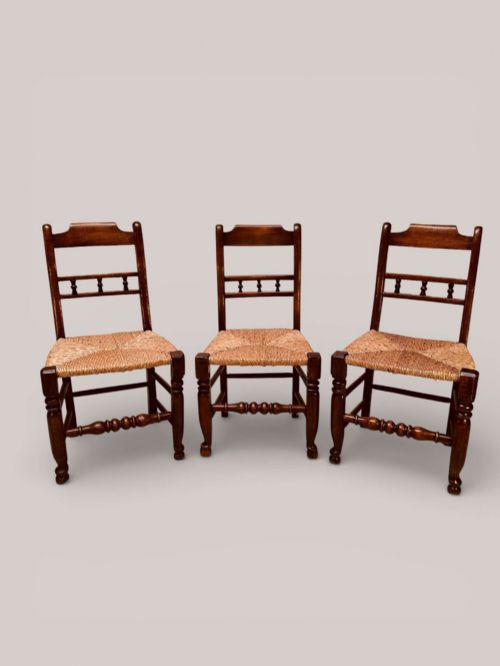
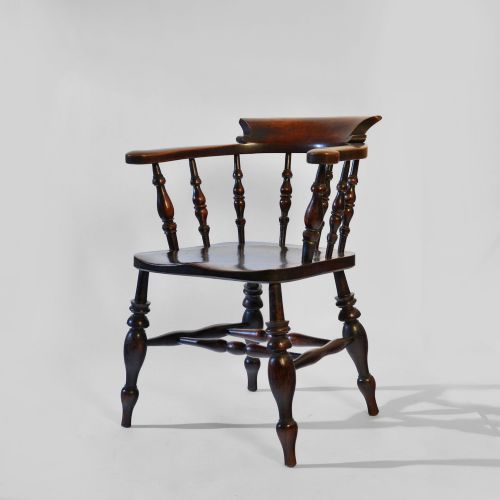
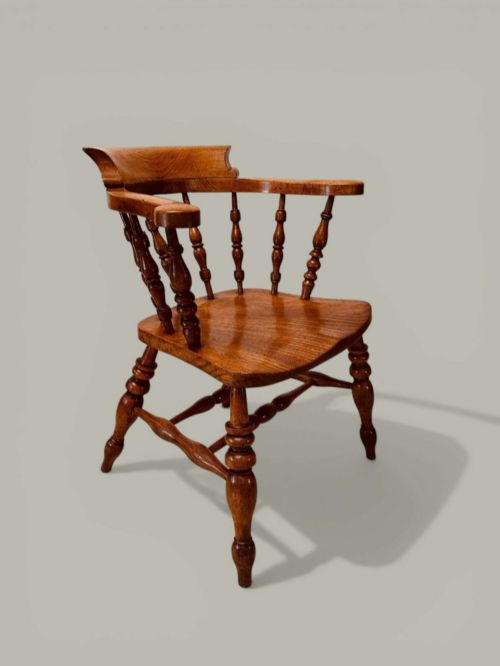
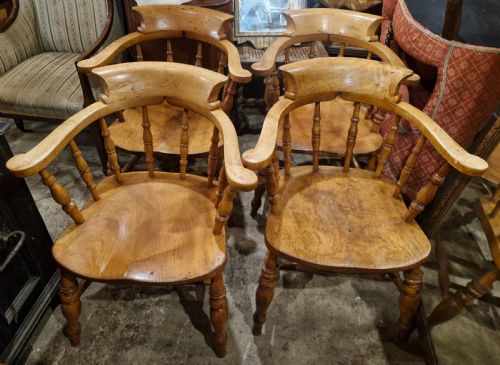
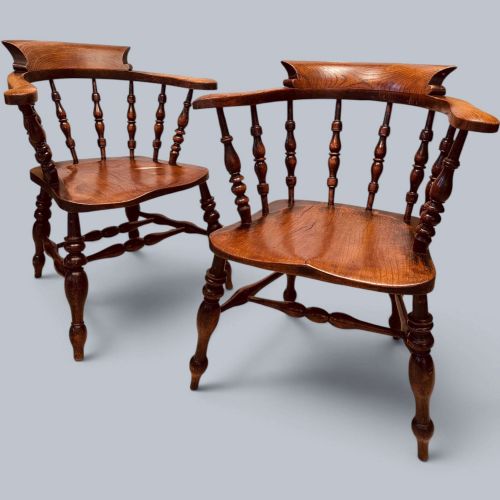
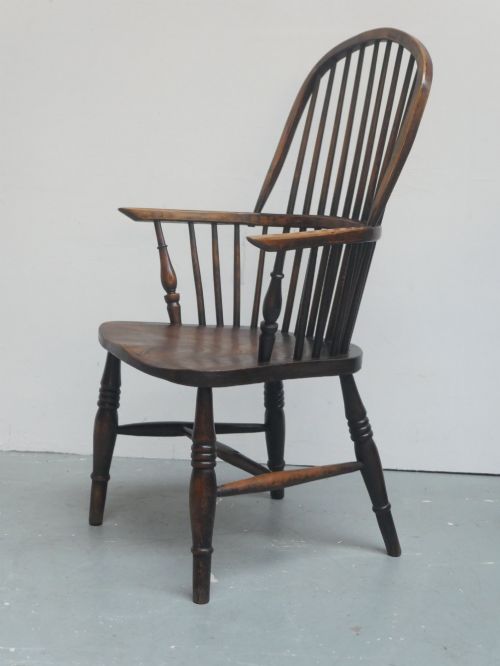
Traditional country spindle chairs encompass a wide variety of vernacular seating from the eighteenth, nineteenth, and early twentieth centuries, including Windsor armchairs, smokers' bows, and kitchen dining chairs. These practical pieces were shaped by local makers using regional timbers, resulting in distinct regional forms such as Thames Valley stick backs and West Country high hoop backs.
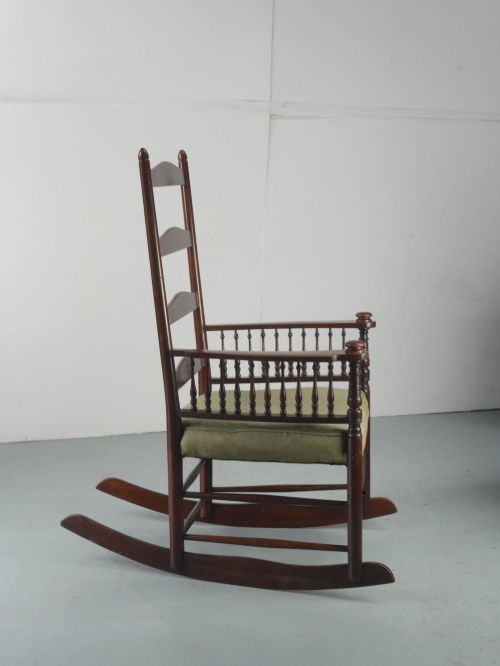
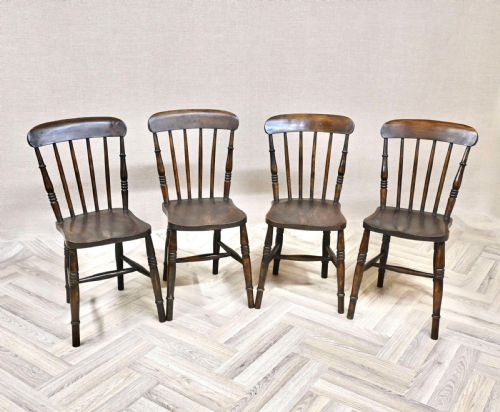
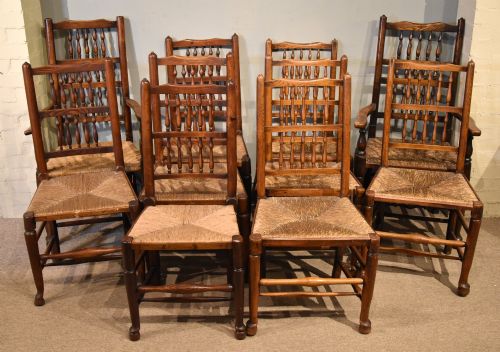
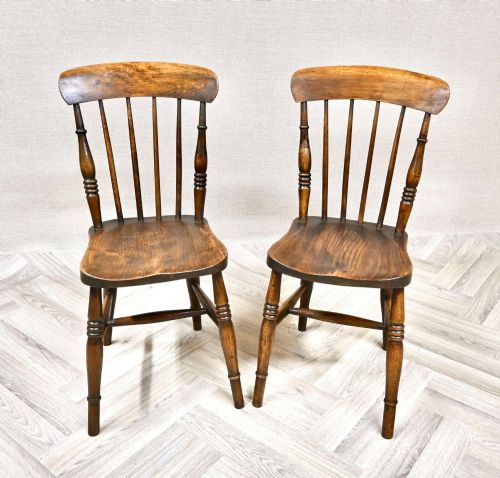
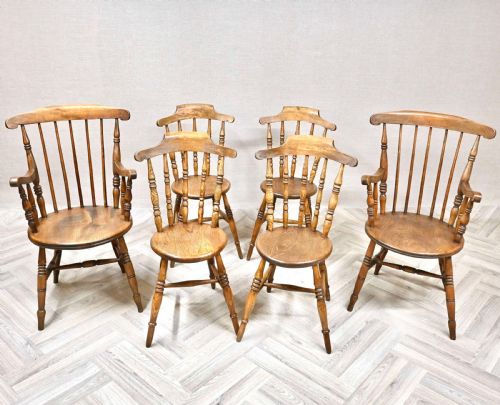
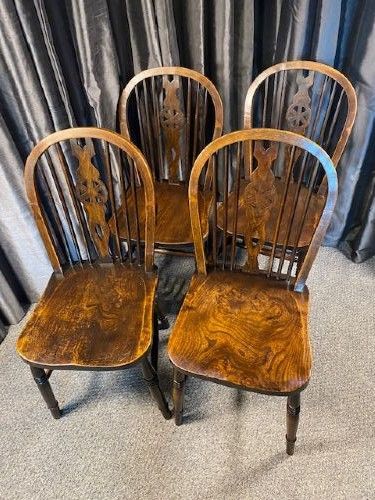
Buyers browsing this selection will frequently encounter nineteenth-century elm and beech kitchen dining chairs, often found in matched sets or harlequin groups. Alongside these dining forms, the listings feature sturdy armchairs, low rocking chairs, and occasional corner seats designed for farmhouses and country houses.
Materials and construction
Construction relies heavily on combining native timbers, typically pairing robust elm for shaped seats with resilient ash or beech for bentwood components and spindles. This mixed-wood method uses the specific mechanical properties of each tree, such as the split-resistance of elm for solid saddles and the flexibility of ash for steam-bent bows.
Joinery methods depend on traditional green woodworking techniques, including wedged tenons and through-dovetails that secure spindles directly into the heavy seat block. Surfaces are frequently finished with simple wax or oil dressings that highlight the natural grain and develop a deep patina through decades of use.
Traditional Country Spindle Chairs Retail Price Guide 2026
Typical asking prices for traditional country spindle chairs among the pieces listed under this phrase on Sellingantiques today, from the lower quarter to the upper quarter. They describe what is for sale here now, not the wider market.
A tiny Swedish rocking chair built for a child sits quietly among the heavy farm timbers, reminding us that small people needed proper seating too.
Evaluating quality
The presence of a rich, undisturbed surface patina and retained maker marks elevate certain examples above standard utilitarian seating. Proportional balance and the preservation of original turned components without heavy replacement parts distinguish the finer survivals in this tradition.
J SPENCER
The Traditional Country Spindle Chairs Glossary
- Windsor chair
- A wooden chair built with a solid heavy timber seat into which the legs and back spindles are directly inserted. This design relies on a distinct thick saddle base for structural stability.
- Smoker's bow
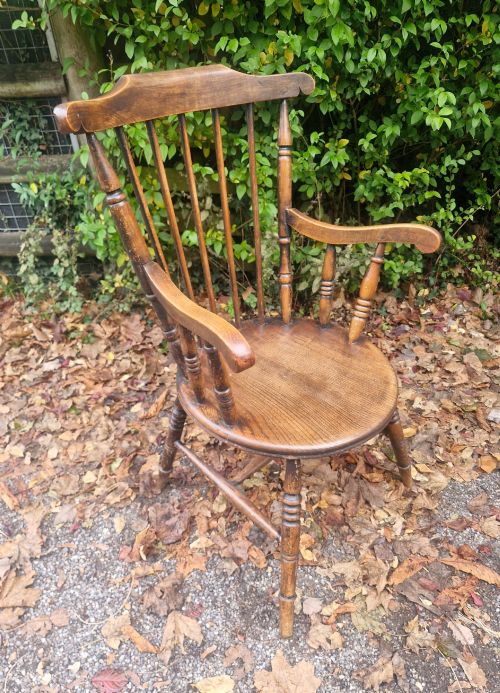
- A low-backed armchair featuring a continuous curved arm rail supported by turned spindles, often associated with nineteenth-century public houses and farmhouse kitchens.
- Harlequin set
- A collection of dining or kitchen chairs that share similar periods, materials, or general forms while differing slightly in individual detail. These groups were often assembled over time rather than purchased as a single factory batch.
- Comb back
- A Windsor chair variation where the top rail resembles the spine of a traditional hair comb, featuring exposed spindle tops extending upward.
- Crinoline stretcher
- An arched underframe connecting the legs of a Windsor chair to provide additional bracing and strength. This curved stretcher is typical of eighteenth-century West Country pieces.
- Vernacular furniture
- Domestic objects made by local joiners or country craftsmen using regional traditions and materials, distinct from urban high-style cabinet making.
Traditional Country Spindle Chairs: Frequently Asked Questions
What is a smoker's bow chair?
A smoker's bow is a sturdy vernacular armchair characterised by a low, curved back rail and short turned spindles above a deep wooden seat. These comfortable seats were common in nineteenth-century country kitchens and rural establishments.
They offer robust everyday seating and pair easily with various kitchen and dining table styles without dominating a room.
How do I care for antique elm chairs?
Maintain antique elm and ash timber by applying a microcrystalline wax or traditional beeswax sparingly to nourish the wood and protect the surface patina. Keep wooden seating away from direct heat sources and sudden temperature shifts to prevent timber shrinkage.
Regular dusting with a soft dry cloth is sufficient for daily upkeep, avoiding harsh liquid cleaners that strip the finish.
What makes a harlequin set?
A harlequin set is a gathering of individual chairs that share similar regional styles, periods, and materials like elm and beech, while showing slight variations in turning or size. These sets formed naturally as households replaced damaged pieces over generations.
They provide a relaxed, authentic dining arrangement that suits period country interiors and farmhouse kitchens.
How do I date a Windsor chair?
Dating a traditional Windsor chair involves examining the saddle seat thickness, the turning style of the legs, and the construction methods used for the joints. Earlier eighteenth-century examples often feature crisper hand-turned details and broader ash hoops, while nineteenth-century versions show more standardised production.
Checking for wedged through-tenons and tool marks underneath the seat helps confirm the period of manufacture.