



Antique Country Ladder
When you search for antique country ladder, you discover sturdy ladder-back seating and utilitarian steps rooted in centuries of vernacular tradition.
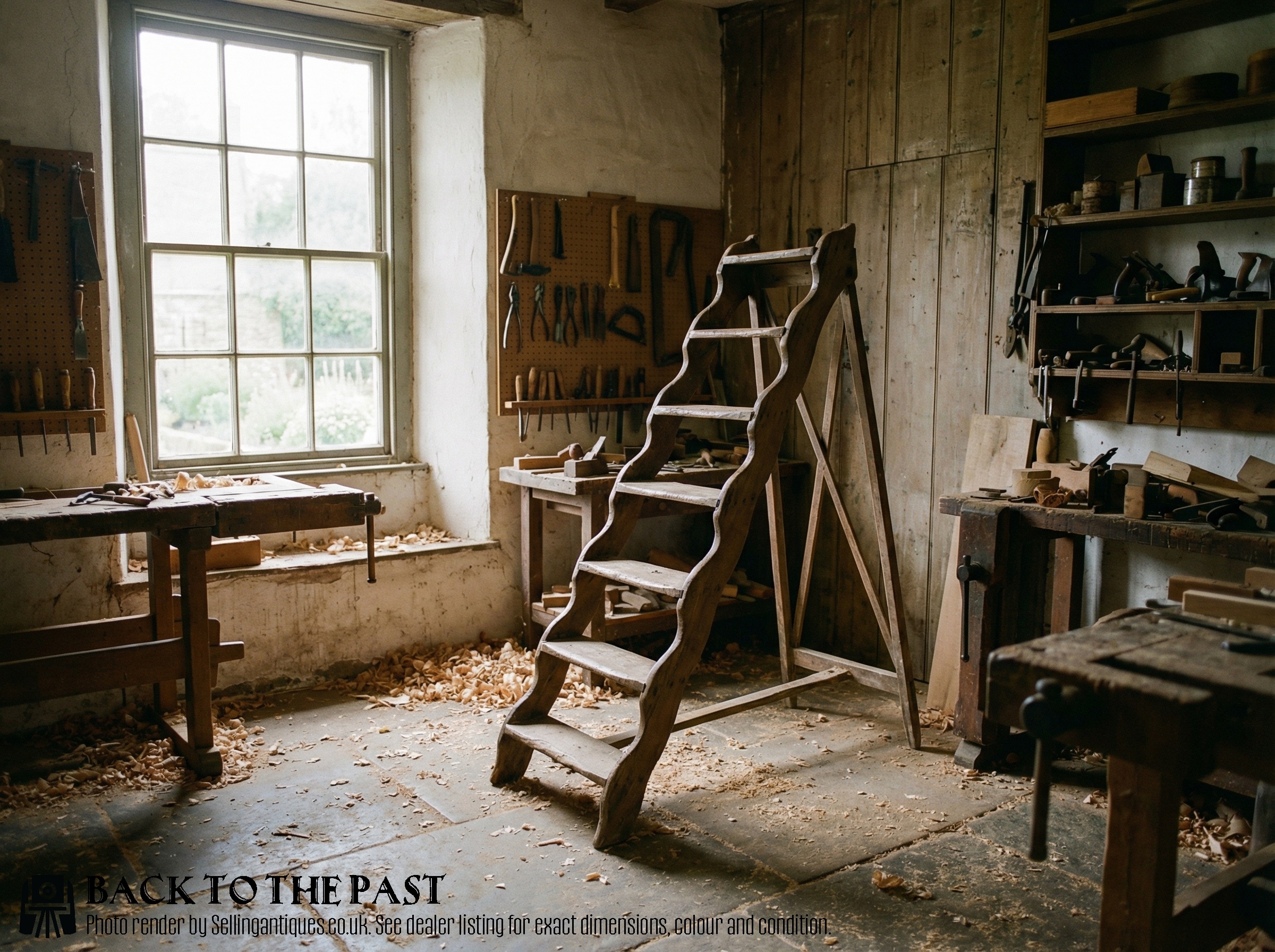
Antique Country Ladder
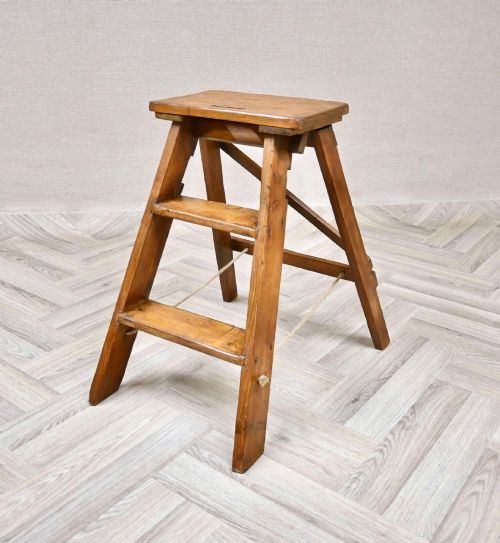
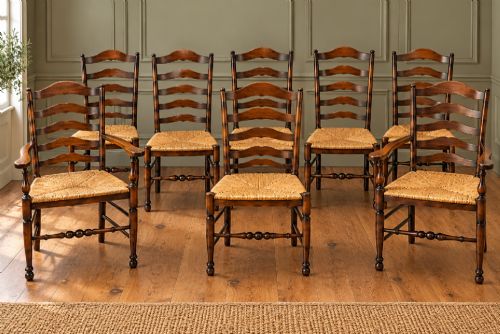
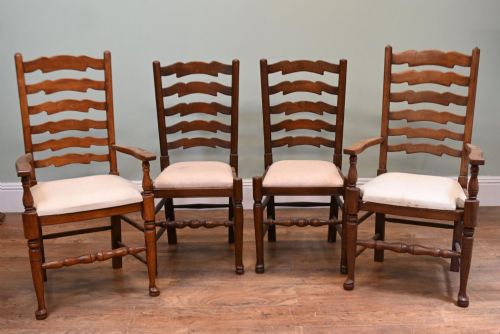
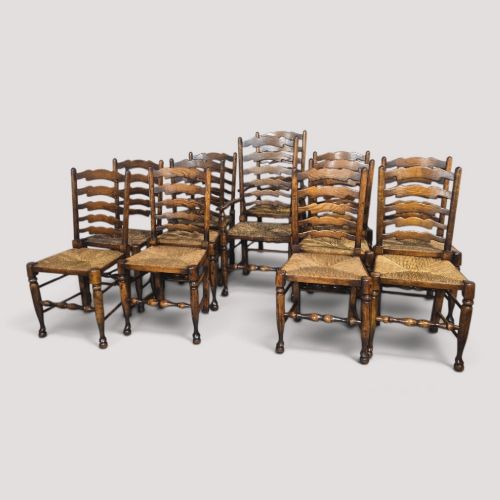
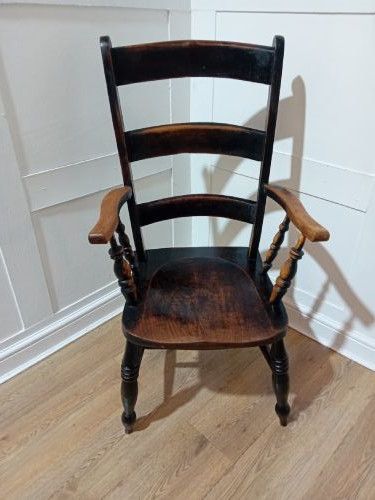
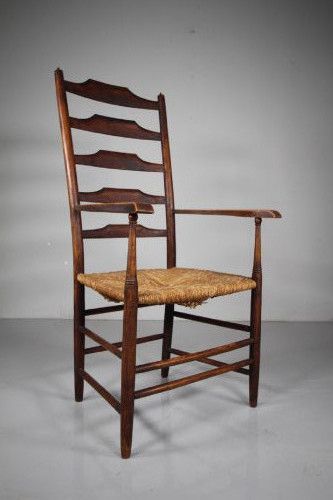
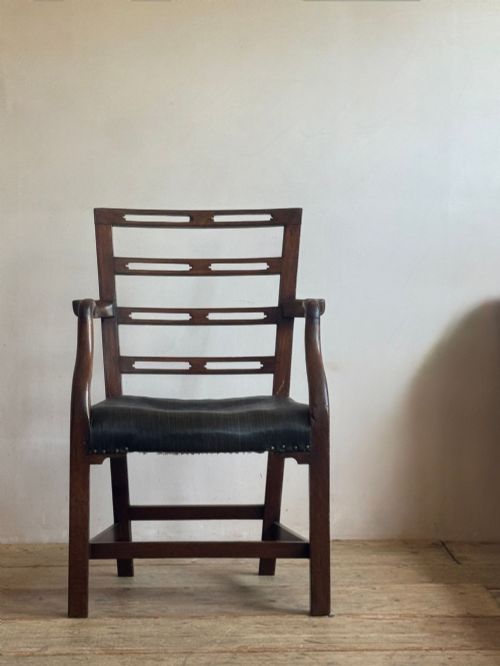
An antique country ladder search uncovers a diverse array of vernacular seating and domestic steps rather than a single standardised form. The listings are heavily populated by ladder-back dining chairs, armchairs, and rocking chairs, alongside functional library steps and step ladders.
Examples span several centuries, with pieces originating from Georgian, Victorian, and Edwardian eras, as well as the early twentieth century. Regional variations include English, Irish, French provincial, and American vernacular styles, ranging from robust oak dining sets to ash and elm armchairs with rush or rope seats.
How they were made
Country makers relied on local hardwoods such as oak, ash, elm, beech, and mahogany to construct frames that could withstand daily domestic use. Turned spindles, curved slats, and A-frame structures were shaped using traditional greenwood working techniques.
Seats were frequently woven from organic materials including rush and rope, providing a resilient surface that complemented the wooden framework. Painted finishes, original patinas, and leather-topped treads occasionally feature to protect and complete the utilitarian design.
Antique Country Ladder Retail Price Guide 2026
Typical asking prices for country ladder among the pieces listed under this phrase on Sellingantiques today, from the lower quarter to the upper quarter. They describe what is for sale here now, not the wider market.
Certain nineteenth-century chairs arrived fitted with wheels, ensuring tired nineteenth-century diners could roll themselves closer to the gravy without lifting a leg.
What varies in quality
The integrity of the timber framing and the tightness of the joinery dictate the baseline quality of these rustic furnishings. Pieces that retain their original surfaces and authentic rush or rope seating command greater appreciation than heavily altered examples.
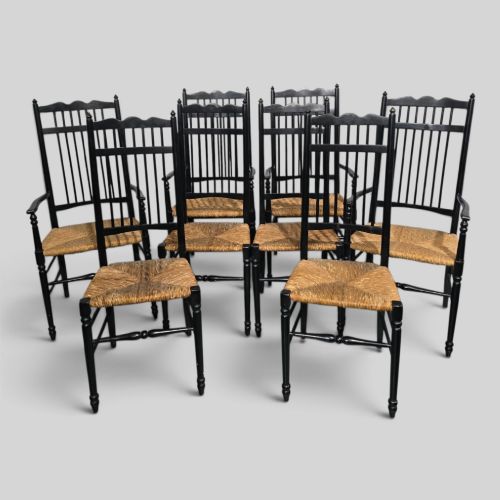
Cohesion within larger dining sets, where uniform slat graduation and matched timber grain enhance the visual harmony, separates standard utility seating from finer vernacular work.
Philip Clissett·Edward Gardener·Liberty & Co
The Antique Country Ladder Glossary
- Ladder-back
- A chair style featuring horizontal slats, or rungs, set between the upright posts of the backrest. This traditional construction provides sturdy lumbar support.
- Rush
- A marshland plant material twisted into cords and woven to create durable, textured chair seats. It has been utilised in vernacular seating for centuries.
- Vernacular
- Everyday furniture made by local regional craftsmen using regional materials, distinct from high-style metropolitan cabinet-making. It prioritises utility and local tradition.
- Carver
- A traditional term for an armchair, often found paired with side chairs in larger dining sets. These pieces typically feature supportive armrests alongside the standard ladder-back design.
Antique Country Ladder: Frequently Asked Questions
How do I identify a rush seat?
Rush seats are woven from natural marsh plants, creating a firm, patterned surface stretched tightly across the chair frame. Over time, genuine rush develops a smooth, polished texture through use.
This traditional seating method provides a natural contrast to the solid wooden rails and legs of the chair.
Where were these pieces made?
They originate from various rural regions across England, Ireland, France, and America, reflecting local timber supplies and regional woodworking styles. English and Irish country pieces frequently utilise ash, elm, and oak.
Provincial makers adapted standard ladder-back designs to suit the specific needs of domestic farmhouses and country estates.
How do I live with antique library steps?
Library steps and step ladders function well as practical access tools or as decorative display stands for books and plants in modern interiors. Their compact A-frame or spiral footprints allow them to fit easily into corners.
Placing them away from direct heat sources helps preserve the stability of the timber and any leather-topped treads.