








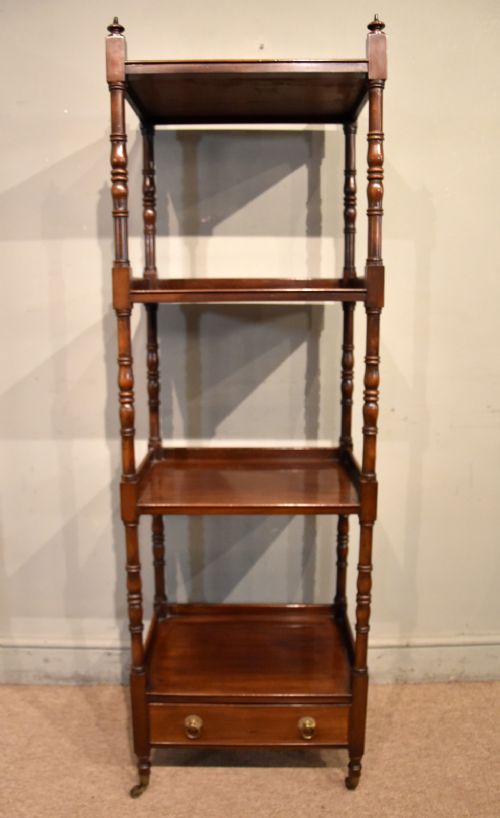
Antique Corner Shelf Stand
An antique corner shelf stand transforms an awkward room angle into a focal point for display.
Antique Corner Shelf Stand
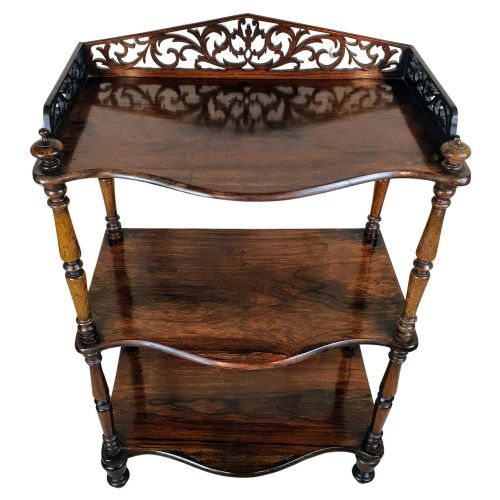
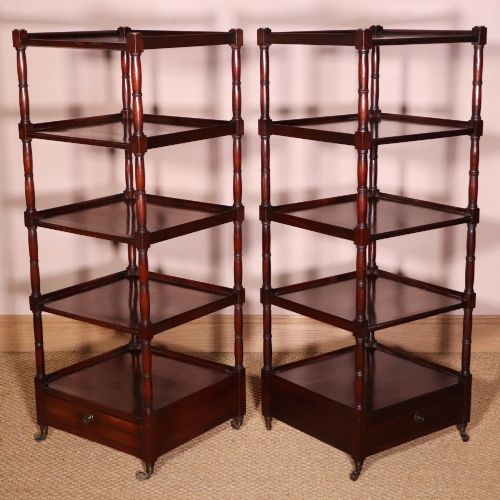
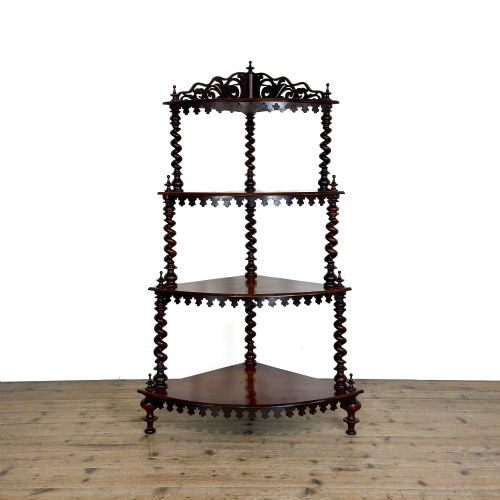
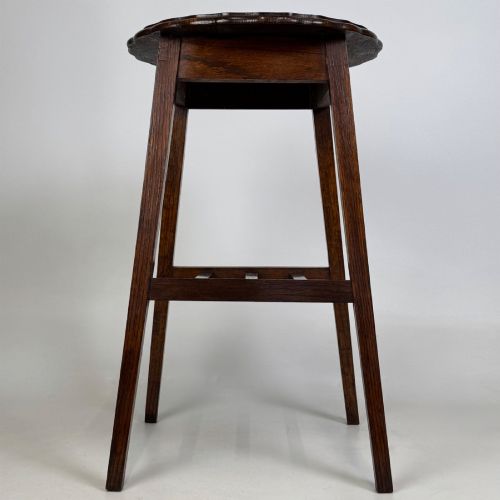
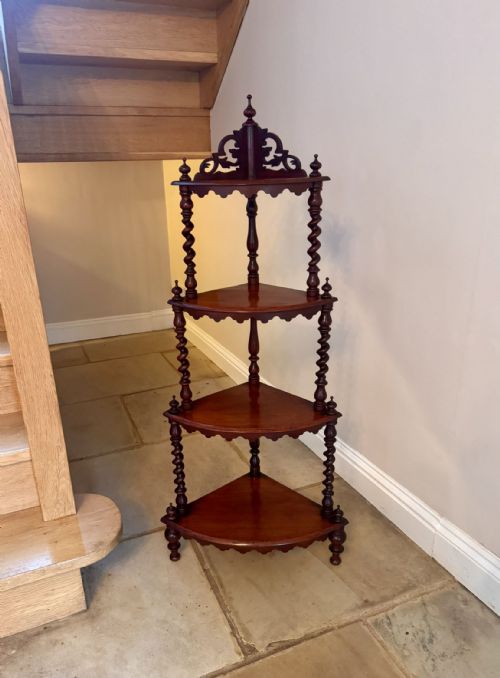
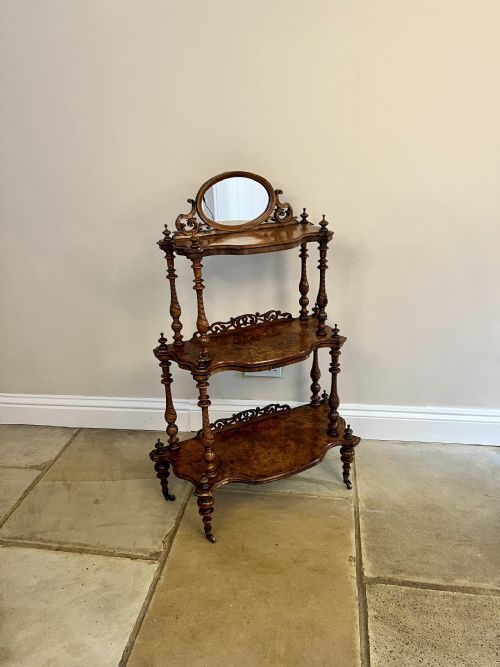
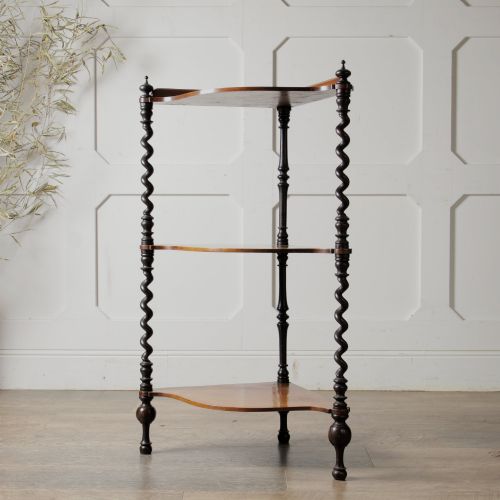
An antique corner shelf stand appears in various multi-tiered formats designed to utilise unused room angles, frequently catalogued as whatnots, etageres, or corner stands.
The selections span the Georgian, Regency, Victorian, and Edwardian eras, with nineteenth-century walnut and mahogany examples forming the majority of the current items.
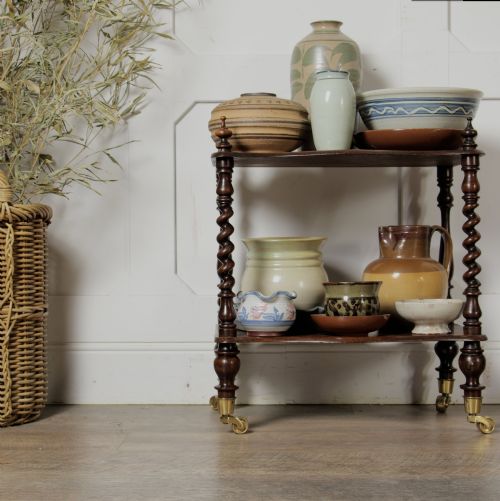
Makers utilised these tiered units for displaying ornaments or holding books, adapting the footprint to fit snugly into domestic corners.
Materials and construction
Cabinetmakers constructed these stands predominantly from dense timbers like mahogany, walnut, burr walnut, and rosewood, occasionally incorporating exotic materials such as bamboo or brass.
Construction techniques include turned barley twist columns, pierced fretwork galleries, inlaid satinwood details, and stacked tiers supported by slender uprights.
Antique Corner Shelf Stand Retail Price Guide 2026
Typical asking prices for corner shelf stand among the pieces listed under this phrase on Sellingantiques today, from the lower quarter to the upper quarter. They describe what is for sale here now, not the wider market.
Listings feature items from the Georgian, Regency, Victorian, and Edwardian periods, constructed in mahogany, walnut, rosewood, and bamboo.
Gradations of quality
Superior examples distinguish themselves through the choice of highly figured veneers, such as burr walnut, and delicate parquetry or satinwood inlay rather than plain secondary woods.
The refinement of turned elements, such as barley twist supports, and the crispness of pierced fretwork separate standard production pieces from finer workshop outputs.
Edwards and Roberts·Gillows
The Antique Corner Shelf Stand Glossary
- Whatnot
- A moveable piece of furniture with shelves for displaying small objects or books. These units typically feature three or more tiers supported by upright posts.
- Etagere
- A French term for a piece of furniture with open shelves for displaying ornaments. They often share similarities in tiered construction with whatnots.
- Parquetry
- Geometric mosaic woodwork used for decorative surface inlay. This technique creates patterned floors or tabletop designs using contrasting wood tints.
- Fretwork
- Ornamental design created by cutting patterns through solid wood. This delicate piercing appears frequently on nineteenth-century shelf galleries.
- Barley twist
- A type of turning shaped like a spiral or screw. Cabinetmakers utilised this decorative woodworking method extensively on upright columns.
Antique Corner Shelf Stand: Frequently Asked Questions
What is an antique corner shelf stand used for?
These tiered stands served primarily for displaying decorative ceramics, small ornaments, and books in domestic reception rooms.
Their angular footprint allowed households to utilise neglected room corners for storage and display without obstructing pathways.
How do I identify a Victorian corner whatnot?
Victorian examples frequently feature dark timbers such as walnut, rosewood, or mahogany, often enhanced by turned columns or pierced fretwork galleries.
They span periods from the mid nineteenth century into the Edwardian era, showing shifts from heavy rosewood tiers to lighter inlaid satinwood designs.
Where should I place a corner stand at home?
Position these units firmly against ninety-degree wall junctions in sitting rooms, hallways, or dining spaces where floor space remains limited.
Ensure the height of the shelves complements surrounding furniture proportions to maintain visual balance in the room.
What woods were used for these shelves?
Cabinetmakers relied heavily on mahogany and walnut, occasionally selecting burr walnut veneers for rich grain patterns on top surfaces.
Alternative materials include rosewood, bamboo, oak, and maple, paired sometimes with brass fittings or gilt metal mounts.