






Rosewood Tiered Shelves
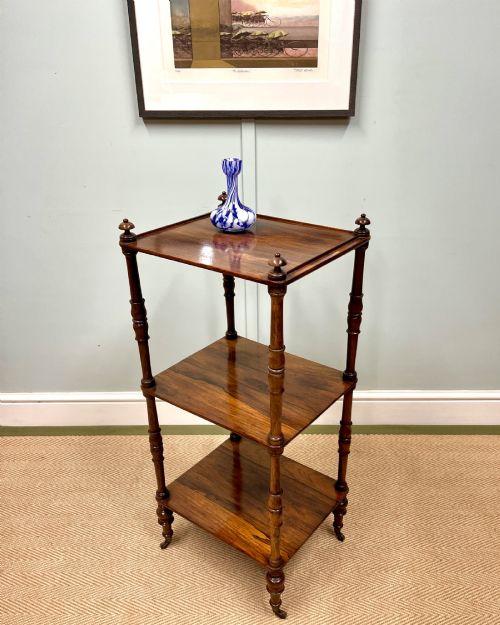
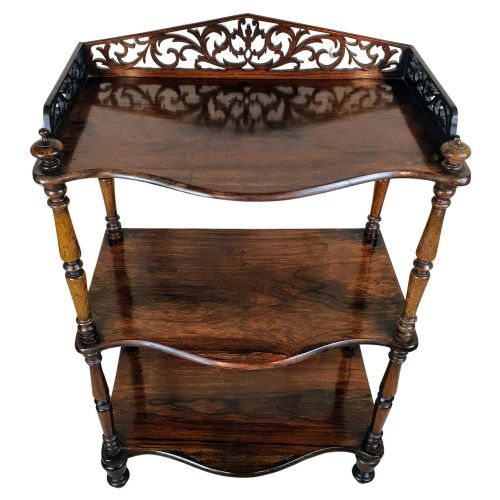
These rosewood tiered shelves combine display and storage, bringing rich grain and tiered tiers to a room.
Rosewood Tiered Shelves
When searching for rosewood tiered shelves, you find pieces designed to hold books, ornaments and papers across multiple open levels. These tier-based furnishings appear under various historical names including whatnots, etageres, and waterfall bookcases.
The pieces on this page span several periods from the eighteenth century through to the Edwardian era, with Victorian and Regency examples appearing most frequently. You will encounter freestanding multi-tier stands, corner units, and occasional display cabinets alongside wall-mounted shelves.
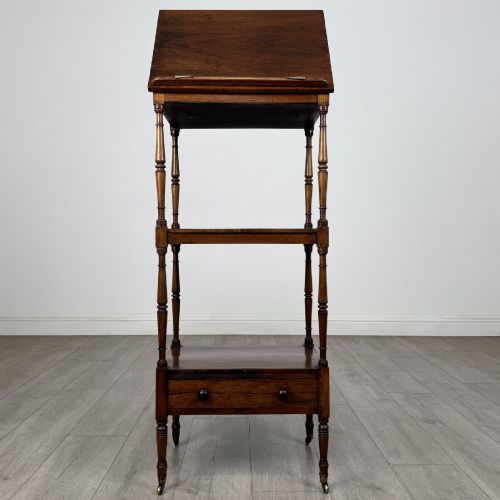
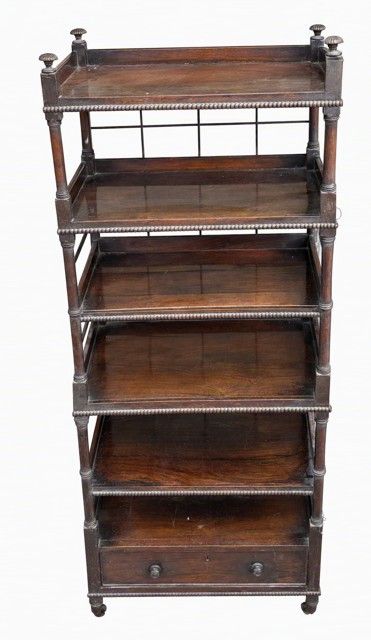
Makers often integrated functional additions into the design, such as adjustable reading slopes, lower drawers, or marble tops on chiffonier bases. The height and number of tiers range from compact three-tier tables up to tall six-tier display stands.
Materials and construction
Makers utilised solid rosewood and decorative rosewood veneers applied to secondary timbers, often accentuating the rich grain with satinwood, fruitwood inlay, or marquetry. Brass galleries frequently edge the shelves to keep displayed objects secure, while ormolu mounts appear on French nineteenth-century pieces.
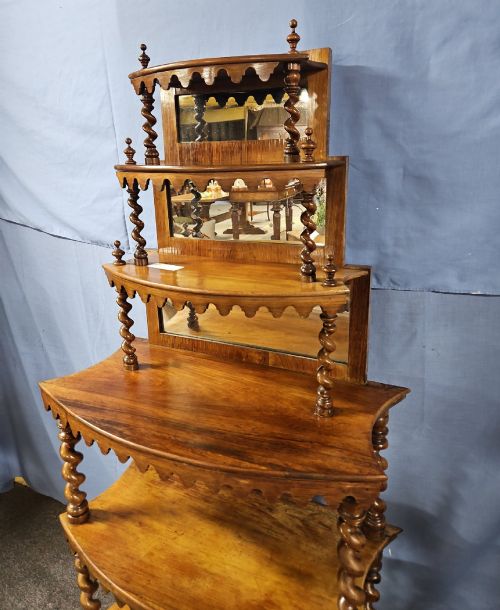
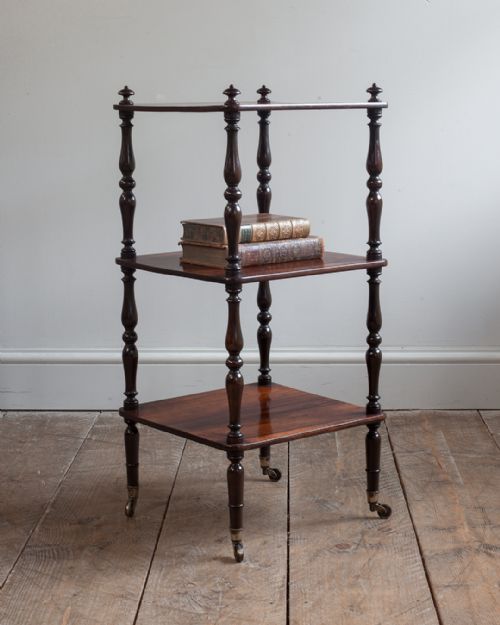
Structural support relies on turned or barley-twist uprights and columns that divide the horizontal tiers. Some variations feature glass panels, mirrored backs, or fabric linings within associated side cabinets and chiffoniers.
Rosewood Tiered Shelves Retail Price Guide 2026
Typical asking prices for rosewood tiered shelves among the pieces listed under this phrase on Sellingantiques today, from the lower quarter to the upper quarter. They describe what is for sale here now, not the wider market.
Listings span multiple eras, featuring Regency, William IV, Victorian, and Edwardian periods alongside French Napoleon III designs.
Assessing quality
Quality shows in the selection of the rosewood timber, where rich, figured grain and well-matched veneers elevate a piece far above plain surfaces. The crispness of turning on the upright supports and the weight and finish of brass galleries indicate the original workshop's standard.
Construction details differentiate standard items from superior examples, such as tight joints on multi-tiered uprights and the presence of maker attribution. The integration of secondary functions, like a smoothly operating adjustable reading slope, points to high-grade cabinet making.
Robert Strahan·Samson & Son London·Gillows
The Rosewood Tiered Shelves Glossary
- Whatnot
- A piece of furniture consisting of a set of open shelves for displaying small objects. They typically feature three to six tiers supported by slender columns.
- Etagere
- A French term for a piece of furniture with a series of open shelves for displaying ornaments. These often incorporate fine marquetry and ormolu mounts.
- Brass gallery
- A low decorative metal rail fitted around the edge of a shelf. It prevents items from sliding off the tier.
- Simulated rosewood
- A painted or stained finish applied to a more common timber to imitate the distinctive dark grain of true rosewood. Cabinet makers used this technique during the Regency and William IV periods.
- Waterfall bookcase
- A set of open shelves where each tier steps back progressively from the one below it, creating a cascading profile.
Rosewood Tiered Shelves: Frequently Asked Questions
What is a whatnot shelf?
A whatnot is a multi-tiered freestanding shelving unit designed to display ornaments, books, and decorative objects in a principal room.
First popularised in the eighteenth century, these pieces allowed polite society to exhibit collections of small ceramics, silver, and curiosities.
How do I style tiered shelves?
Tiered shelves suit corners, alcoves, or freestanding positions where open sides allow light to pass through the structure.
Balance heavier books on lower tiers while placing smaller decorative items and glass objects on the upper levels to maintain visual stability.
How do I tell Regency from Victorian pieces?
Regency pieces often display restrained classical lines, simpler brass galleries, and lighter proportions reflecting early nineteenth-century neoclassical taste.
Victorian examples frequently introduce heavier timber sections, more ornate turning on the columns, and greater height with up to six tiers.
What is simulated rosewood?
Simulated rosewood is a decorative paint or graining technique applied to an alternative timber, such as beech, to replicate the dark Figured grain of genuine rosewood.
This method was common in the nineteenth century when true rosewood imports involved high costs and complex supply chains.