






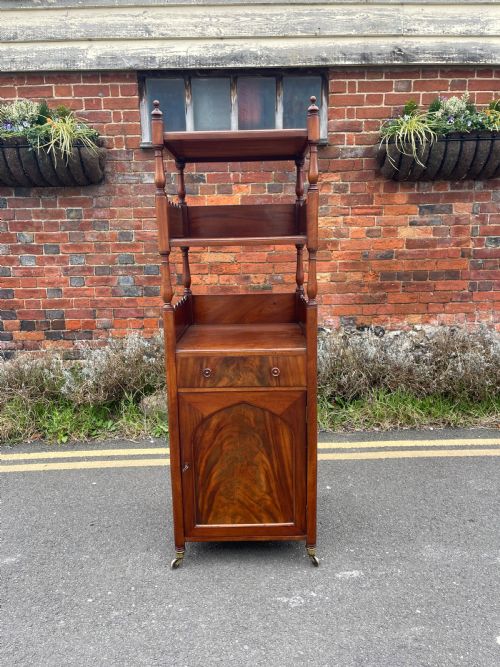
Turned Spindle Whatnot Stand
A turned spindle whatnot stand offers tiered display space for books and ornaments, bringing practical elegance and warm timber tones into a room.
Turned Spindle Whatnot Stand
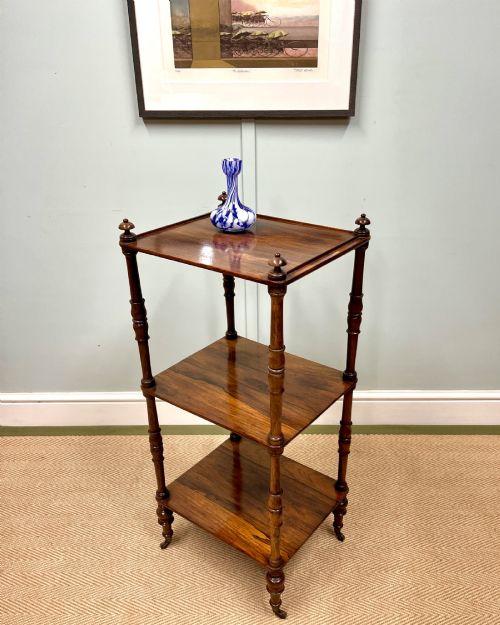
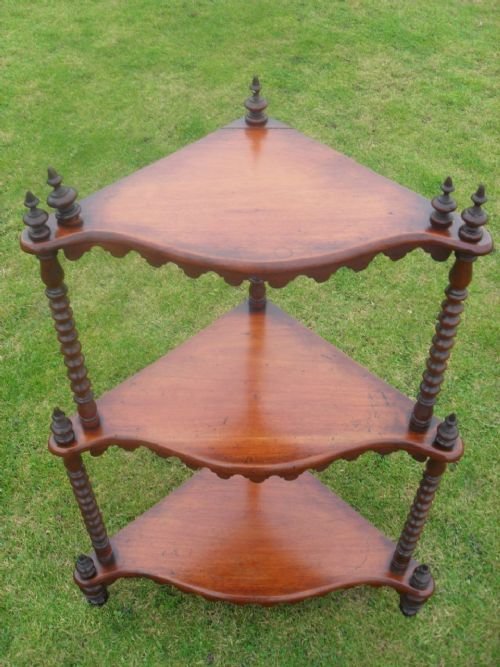
When you search for a turned spindle whatnot stand, you encounter multi-tiered display furniture designed for holding books, silver, and decorative objects. These pieces appear in forms such as etageres, display shelving units, and cupboard base whatnots.
The versions most commonly met on this page span the Georgian, Regency, William IV, and Victorian periods. They are constructed in rich timber varieties and frequently feature multiple tiers supported by slender uprights.
How they were made
Cabinet makers utilised dense, richly figured hardwoods such as mahogany and rosewood to build these tiered structures. These timbers were shaped into turned uprights and sturdy shelves, sometimes complemented by brass fittings or castors.
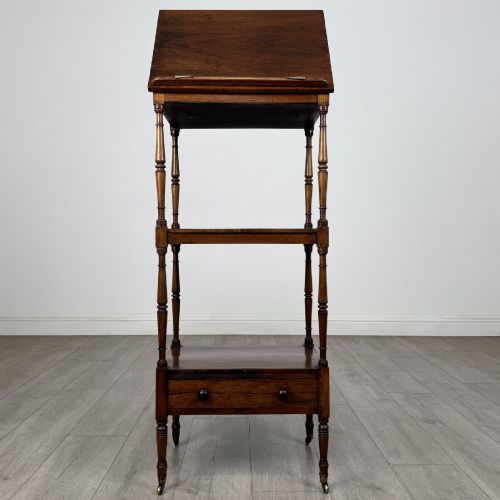
Construction techniques involved precise joinery to support multiple levels safely. Specialised additions like adjustable reading slopes, lower cellarettes, or enclosed cupboard bases were integrated into the framing during assembly.
Turned Spindle Whatnot Stand Retail Price Guide 2026
Typical asking prices for turned spindle whatnot stand among the pieces listed under this phrase on Sellingantiques today, from the lower quarter to the upper quarter. They describe what is for sale here now, not the wider market.
Some nineteenth-century examples hide a cellarette in the base, proving that earlier generations also kept their priorities firmly in order.
What varies in quality
The standard of a piece depends on the choice of timber and the crispness of the turning on the upright supports. Substantial hardwoods and balanced proportions distinguish finer examples from simpler utility furniture.
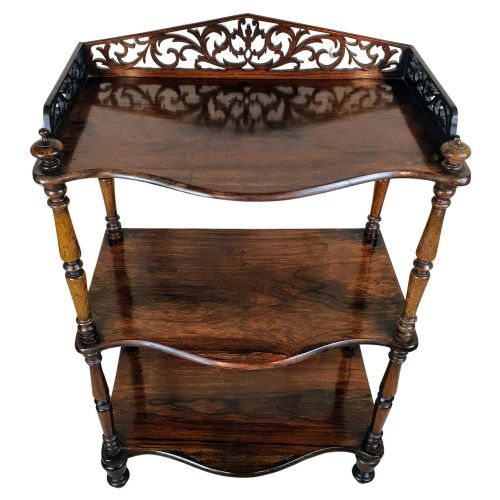
Complexity of form also dictates distinction within the range. Pieces featuring serpentine fronts, integrated reading slopes, or lower cupboards demonstrate greater joinery ambition than basic open shelving units.
The Turned Spindle Whatnot Stand Glossary
- Whatnot
- A piece of furniture consisting of a set of open shelves for displaying small objects. They typically feature three or four tiers.
- Etagere
- A piece of furniture with a set of open shelves for displaying ornaments. The term is often used interchangeably with whatnot.
- Cellarette
- A lockable container or compartment used for holding bottles of wine or spirits. Some larger floor stands incorporate this feature in the lower section.
- Serpentine
- A shelf or cabinet front curving outward in the centre and inward at the sides. This contour adds visual movement to the timber.
Turned Spindle Whatnot Stand: Frequently Asked Questions
What is a turned spindle whatnot stand?
It is a multi-tiered piece of open shelving designed to display decorative objects or store books within living spaces.
The vertical supports feature distinct turned woodwork, adding a decorative profile to the functional shelving structure.
How were these stands used historically?
Historically, these items served as versatile display and storage furniture in parlours and drawing rooms. Households placed them in corners or against walls to hold porcelain, silver, and reading materials.
Certain variations included specialised additions like integrated writing slopes or lower storage cupboards to suit specific domestic tasks.
How do I date a mahogany or rosewood whatnot?
Dating relies on observing the prevailing aesthetic characteristics of periods such as the Georgian, Regency, or Victorian eras. Structural details and timber choice offer clues to the decade of manufacture.
Earlier examples often display restrained lines, while mid-Victorian pieces frequently utilise rosewood and feature tiered open shelving or serpentine fronts.
Where should I place a whatnot stand at home?
These stands fit comfortably in corners, hallways, or beside seating areas where display space is useful. Their open profile prevents rooms from feeling crowded while offering multiple levels for small items.
Placing them away from direct heat sources helps protect the polished mahogany or rosewood surfaces from drying out.