





Antique Corner Brackets
These antique corner brackets offer structural support and display space, bringing architectural detail and rich timber tones to empty room corners.
Antique Corner Brackets
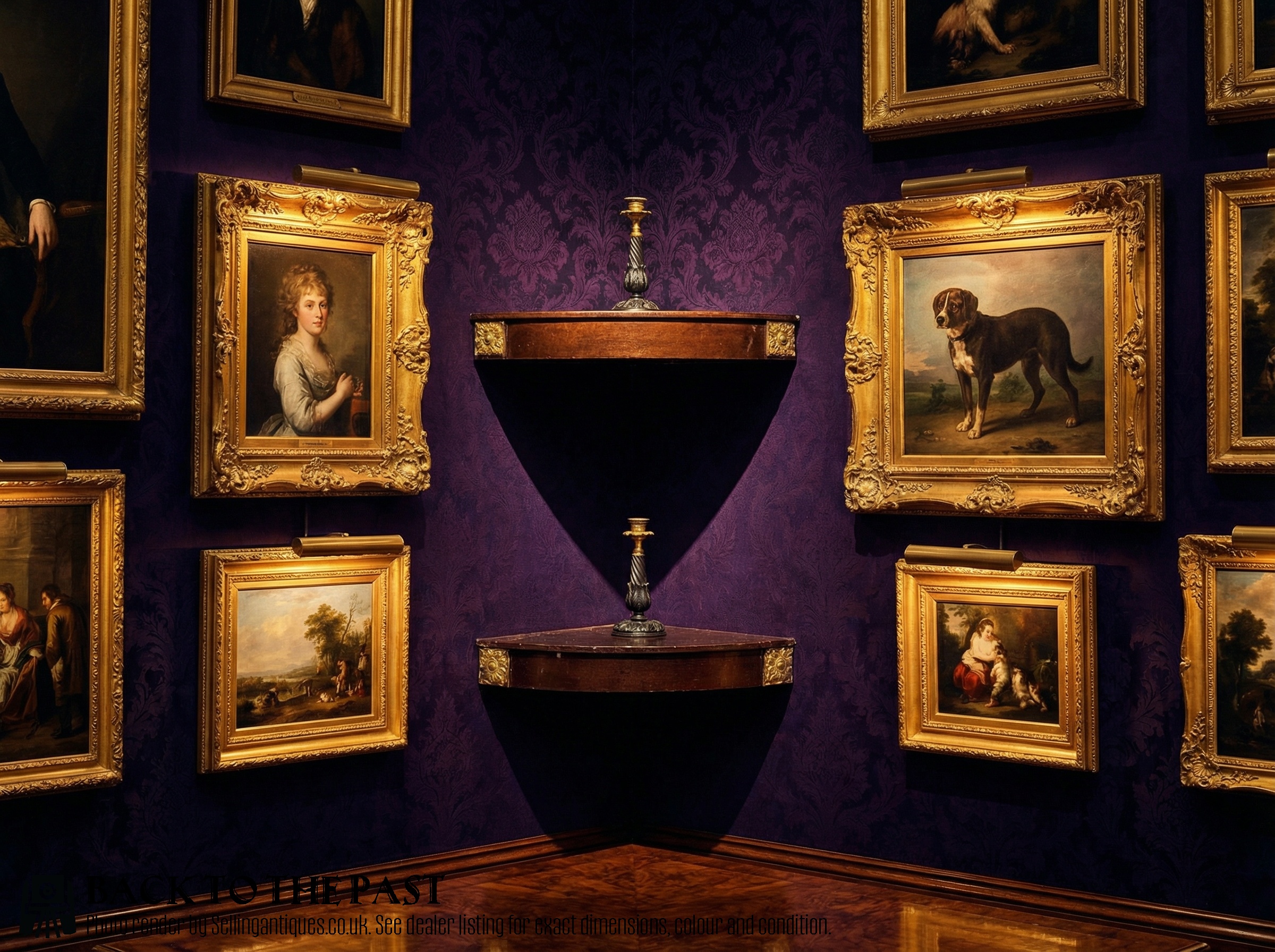
Antique corner brackets primarily take the form of corner shelves and wall brackets designed to mount securely into room angles. They turn overlooked wall junctions into functional display surfaces for small objects and decorative pieces.
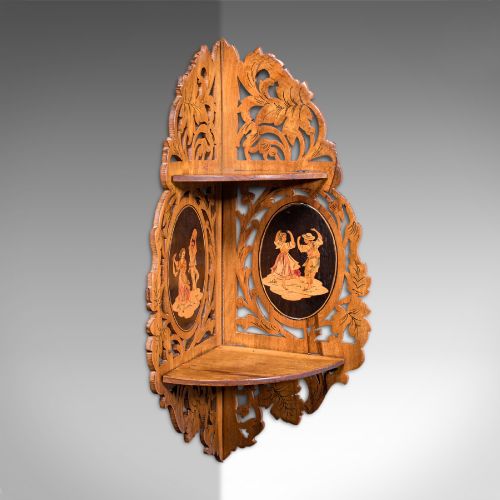
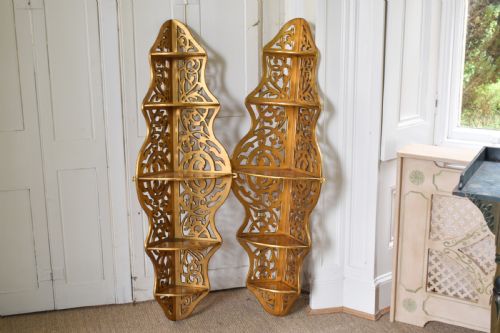
The selections available here lean heavily towards Victorian and Georgian periods, showcasing traditional British and continental furniture forms. Buyers frequently encounter timber constructions in mahogany, olive wood, and yew wood alongside gilded alternatives.
Beyond simple ledges, the broader category includes related corner furniture and mounted supports from the eighteenth and nineteenth centuries. These pieces reflect the historic domestic requirement to maximise floor space and utilise every corner of a room.
How they were made
Cabinetmakers utilised solid timbers such as mahogany and olive wood, applying marquetry and inlay work to create decorative surface patterns. These materials provided the structural rigidity necessary to support weight while mounted or standing in a corner.
Giltwood and gesso techniques appear on ornamental pieces, providing a brilliant metallic finish over carved wooden bases. Skilled artisans shaped the timber by hand to achieve the precise angles required for snug wall placement.
Antique Corner Brackets Retail Price Guide 2026
Typical asking prices for corner brackets among the pieces listed under this phrase on Sellingantiques today, from the lower quarter to the upper quarter. They describe what is for sale here now, not the wider market.
The documented styles span Georgian, Victorian, and Chippendale designs, highlighting traditional British woodworking techniques.
What varies in quality
The standard of timber selection and complexity of inlay work largely dictate the distinction between standard examples and superior pieces. Finer items exhibit intricate marquetry scenes, careful grain matching, and precise corner joinery that remains stable over centuries.
The depth of hand carving and the crispness of gilded gesso details show the level of craftsmanship invested by the original maker. Simple functional supports differ markedly from highly decorative display shelves designed as focal points within a formal interior.
The Antique Corner Brackets Glossary
- Bracket
- A structural or decorative support projecting from a wall to hold weight. In this context, it often refers to wall-mounted shelving units designed specifically for corners.
- Marquetry
- Decorative veneer applied to furniture in geometrical patterns or pictorial scenes. It requires considerable skill to cut and fit different coloured woods together.
- Giltwood
- Wood that has been coated with gold leaf or gold paint. This finish was popular in formal nineteenth-century interiors to reflect candlelight and daylight.
- Inlay
- Contrasting material inserted into a recessed matrix on a wooden surface. This technique highlights the natural grain of woods like mahogany and olive wood.
Antique Corner Brackets: Frequently Asked Questions
What rooms suit antique corner shelves?
These shelves fit naturally into awkward room corners, dead hallways, or empty spaces beside fireplaces. They provide useful display areas without protruding into the main walking path of the room.
Drawing rooms and libraries benefit particularly from the rich tones of mahogany and inlaid olive wood. They offer a practical spot for small lamps, clocks, or trailing plants.
How do I identify a Victorian bracket?
Victorian pieces often feature heavy gilding, elaborate gesso ornamentation, or dense walnut and mahogany structures. The decorative vocabulary borrows heavily from earlier historical revivals.
Examination of the timber fixings, backing boards, and screw slots helps determine the manufacturing era. Machine-cut screws generally point to a nineteenth-century origin rather than earlier periods.
How should I clean antique wood brackets?
Dust the surfaces regularly with a soft, dry lint-free cloth to prevent particle buildup. Avoid modern silicone sprays or abrasive chemical cleaners that strip the historic polish.
Applying a traditional beeswax occasionally helps nourish older timbers like mahogany and yew wood. Buff gently to maintain the natural satin sheen developed over generations.