


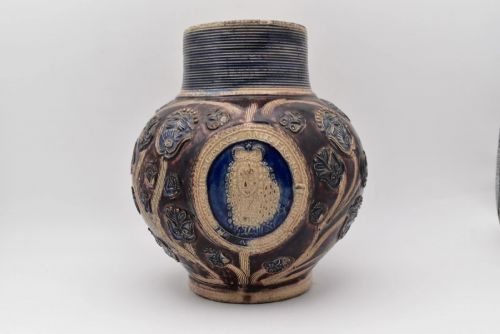


Antique Commemorative Pitcher
An antique commemorative pitcher marks a royal reign, a marriage, or a public event with transfer-printed scenes, portraits, and inscriptions.
Antique Commemorative Pitcher
When you search for an antique commemorative pitcher, you encounter earthenware and stoneware vessels produced to mark public events, royal jubilees, political factions, and personal milestones. These pieces record moments in British social history through named portraits, dates, and verse.
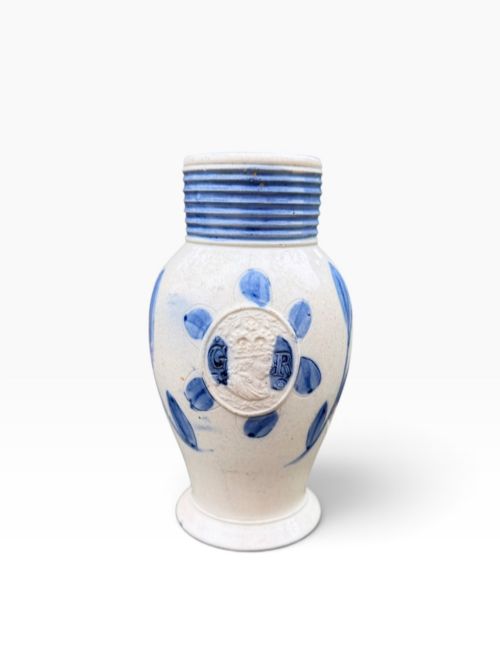
The versions most frequently met on this page span the nineteenth century, ranging from large Staffordshire marriage jugs to Sunderland lustre vessels celebrating local landmarks and military heroes. Examples extend back to seventeenth-century Westerwald stoneware featuring royal portraits.
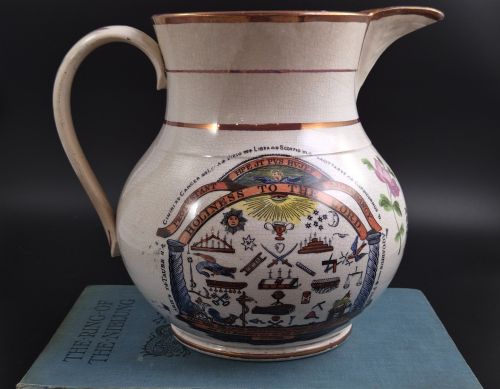
Makers recorded these subjects using transfer printing, hand-painting, and moulded relief decoration. Collectors look for clear inscriptions, named figures, and crisp transfer work that securely ties the vessel to its historical moment.
How they were made
Potters shaped these vessels using earthen clays, durable stonewares, and porcelain bodies, depending on the manufacturing centre and the period. Potters then applied glazes, including metallic lustre finishes that created pink splash effects.
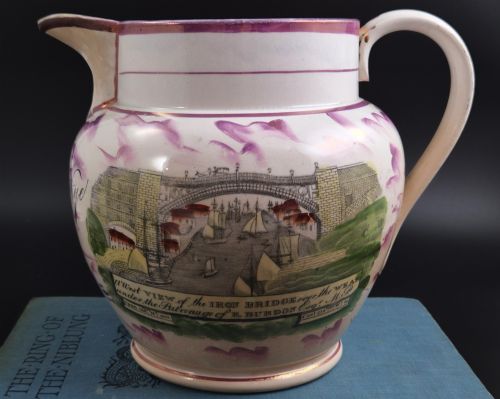
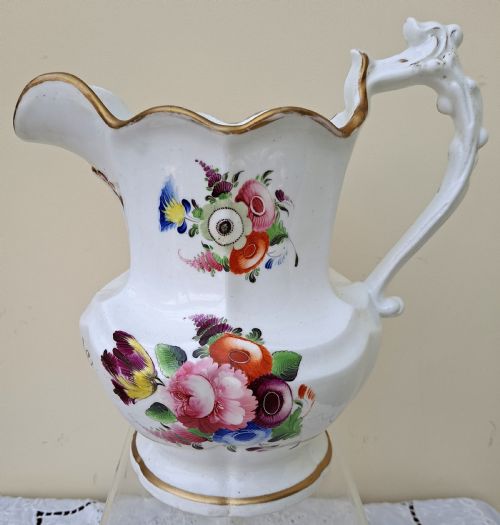
Decoration relied heavily on hand-painted polychrome pigments, gold leaf accents, and copperplate transfer printing to render detailed portraits, maps of bridges, and rhyming verses. Stoneware pieces often utilised incised detailing and applied relief moulding before salt glazing.
Antique Commemorative Pitcher Retail Price Guide 2026
Typical asking prices for commemorative pitcher among the pieces listed under this phrase on Sellingantiques today, from the lower quarter to the upper quarter. They describe what is for sale here now, not the wider market.
Listings feature nineteenth-century Staffordshire earthenwares, Sunderland lustre jugs, and seventeenth-century Westerwald stonewares.
What varies in quality
The distinction between ordinary production and finer work rests on the clarity of the transfer printing and the precision of the hand-painted enamels. Finer examples display sharp portraits and legible inscriptions without blurring or running glaze.
The weight and balance of the body, the evenness of lustre application, and the crispness of moulded relief work separate standard utilitarian pieces from workshop output intended to mark significant public commemorations.
Doulton Lambeth·Mountford Staffordshire
The Antique Commemorative Pitcher Glossary
- Lustre glaze
- A metallic finish applied to pottery to create a reflective, iridescent surface. Sunderland pink splash lustre is particularly characteristic of northern potteries.
- Transfer printing
- A technique where an engraved copper plate transfers a design onto paper and then onto the ceramic body. This allowed workshops to produce detailed portraits and verses efficiently.
- Stoneware
- A heavy, dense ceramic fired at high temperatures until vitrified. Westerwald stoneware provides a durable ground for salt-glazed royal portrait jugs.
- Polychrome
- Decoration employing multiple distinct enamel colours painted onto the ceramic body. These pigments bring vibrancy to nineteenth-century political and military jugs.
Antique Commemorative Pitcher: Frequently Asked Questions
What events do these pitchers commemorate?
These vessels record royal accessions, jubilees, marriages, military victories, political factions, and local engineering projects such as iron bridges.
Potters inscribed names, dates, and verses directly onto the ceramic body to fix the specific occasion in domestic use.
How do I identify the period of a jug?
Dating relies on named historical figures, specific regnal years, and stylistic markers such as nineteenth-century transfer printing or seventeenth-century Westerwald salt glazing.
Inscriptions often provide an exact year, connecting the piece to contemporary events like the Victorian jubilee or the reign of William III.
Were these jugs used daily or displayed?
Many large vessels, including marriage jugs and gallon-sized containers, served communal functions at celebrations before transitioning to display pieces.
Their substantial size and commemorative inscriptions made them family heirlooms rather than routine kitchenware.
What is Sunderland lustre?
Sunderland lustre refers to the pink, marbled metallic glaze developed by potteries in the North East of England during the nineteenth century.
This technique produced characteristic splash effects surrounding transfer-printed images of ships, bridges, and patriotic verses.