




Antique Coin Purse
An antique coin purse holds small currency securely, offering a pocket-sized piece of history crafted from precious metals, leather, and textiles.
Antique Coin Purse
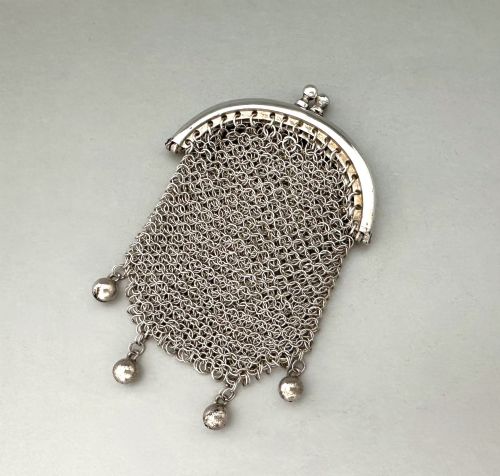
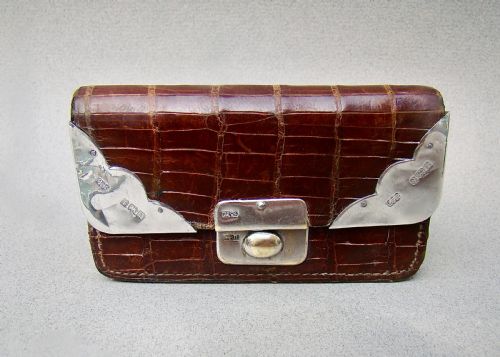
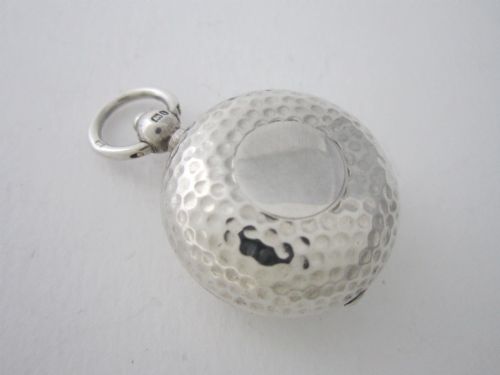
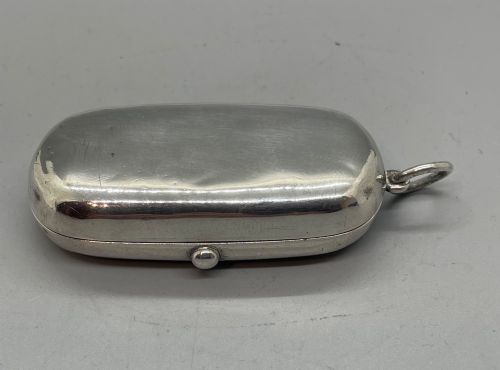
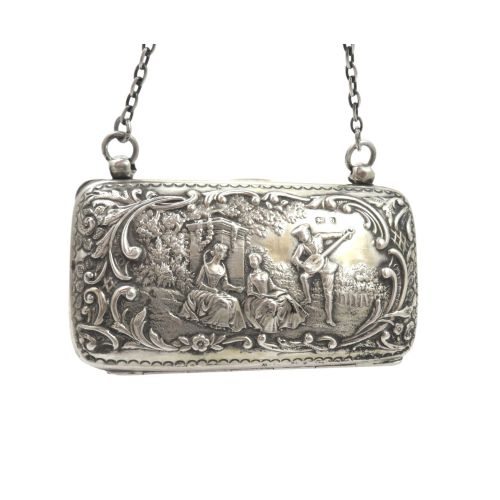
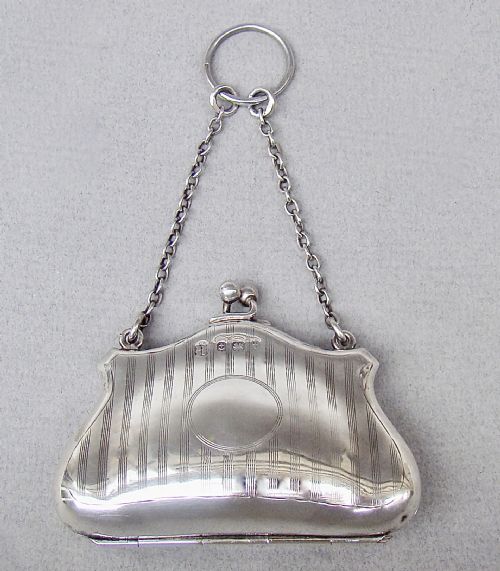
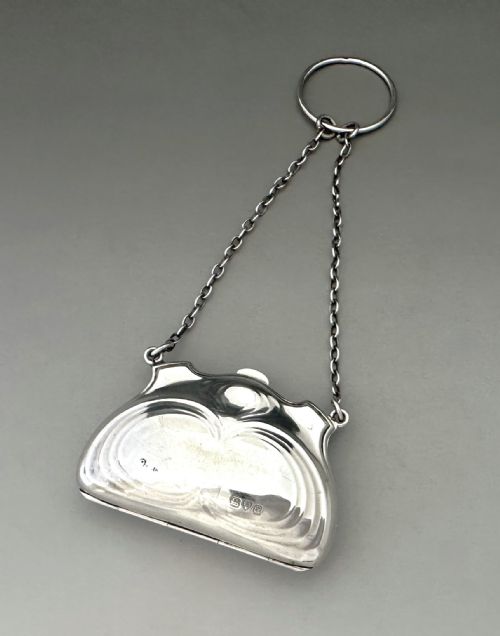
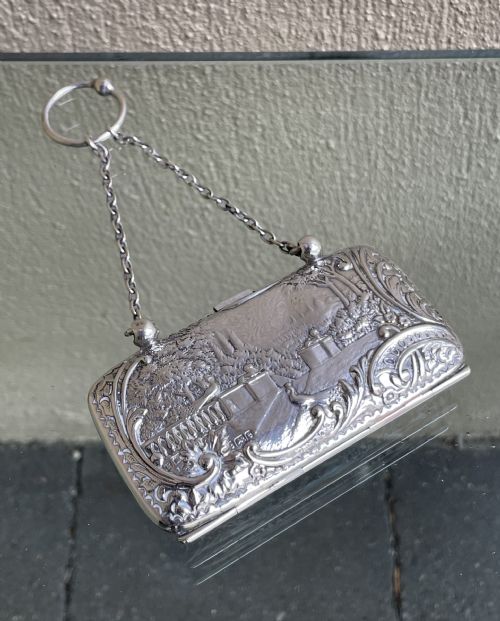
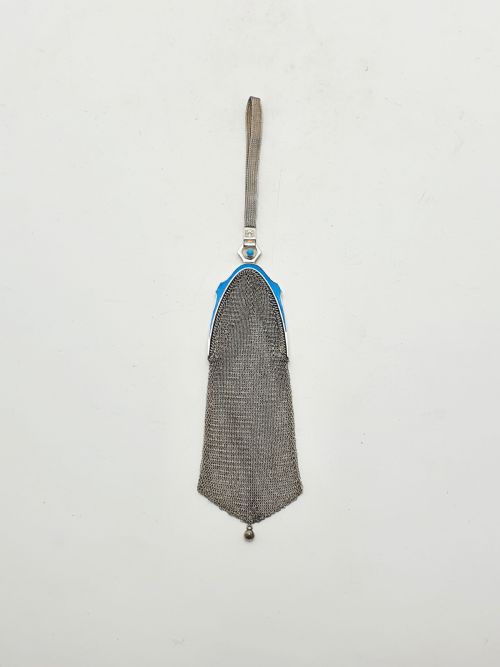
An antique coin purse spans a variety of compact forms designed for carrying small money or sovereign coins securely. The selection on this page ranges from Victorian silver chatelaine designs to Edwardian chain mail evening bags and George V cocktail purses.
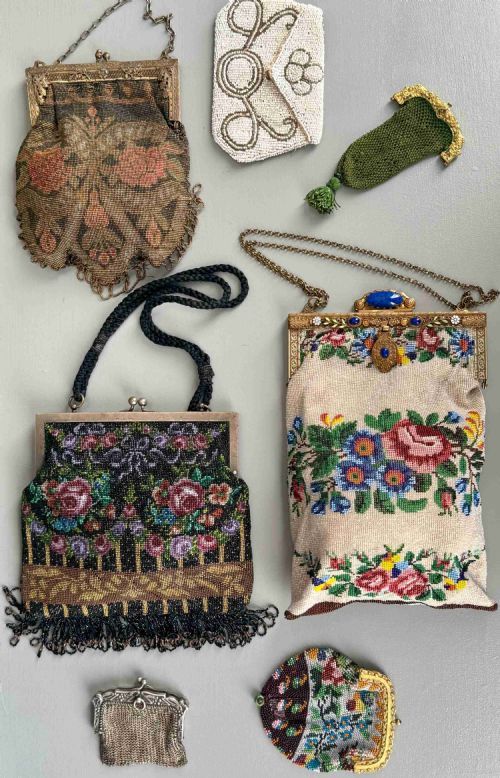
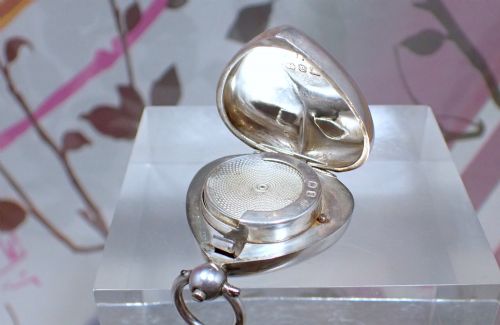
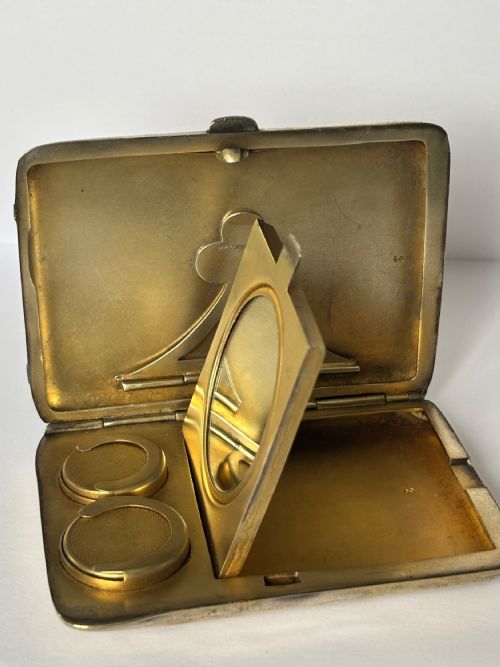
Buyers frequently encounter sterling silver and crocodile leather combinations, alongside delicate silk, glass beads, and French chain link items. Forms include single and double sovereign cases, heart-shaped holders, and shell-shaped carriers dating from the nineteenth and early twentieth centuries.
How they were made
Silversmiths constructed solid mounts, mesh bodies, and sovereign cases using sterling silver, silver gilt, and continental silver, often incorporating hallmark stamps from assay offices like Birmingham and Chester. Metalwork frequently met with organic materials including crocodile skin, tortoise shell, mother of pearl, and leather.
Textile and decorative elements required specialised handwork, from petit point needlework and silk ikat weaving to guilloché enamel and brass piqué inlay. Artisans joined small links into flexible chain mail or stitched glass beads onto fabric surfaces for evening wear.
Several small leather purses feature brass owls and cats fitted with tiny glass eyes peering out from the pocket.
What varies in quality
The standard of execution in engraving, chased repoussé decoration, and enamel work dictates the refinement of a piece. Crisp hallmarks, tight chain links, and securely hinged compartments demonstrate superior craftsmanship.
The integrity of organic materials such as tortoise shell, mother of pearl, and crocodile skin distinguishes finer examples. Original fitted boxes and intricate internal silk linings also elevate the standing of a survival.
Charles Penny Brown·Aaron Lufkin Dennison·The Boots Company·Robert Cawley·G. Norman·Henry Charles Freeman·Wright and Davies·Ludwig Krumm
The Antique Coin Purse Glossary
- Sovereign case
- A small, rigid container specifically engineered to hold British gold sovereign coins securely. These cases often feature spring-loaded internal clips.
- Guilloché enamel
- Decorative metalwork covered with a translucent enamel layer over a machine-engraved geometric pattern. This technique creates a radiant, shimmering surface depth.
- Chatelaine
- A decorative belt hook worn with suspended chains carrying household accessories like purses, keys, and watches. They gained popularity during the Victorian era.
- Piqué
- The decorative technique of inlaying tiny pins of gold or silver into organic materials like tortoise shell. Artisans formed intricate geometric or floral motifs.
- Petit point
- A style of needlepoint embroidery executed on fine canvas using tiny diagonal stitches. It permits highly detailed pictorial scenes on evening bags.
Antique Coin Purse: Frequently Asked Questions
How do I date an antique silver coin purse?
Examine the hallmarks stamped onto the metal mounts or frames. Assay office marks, date letters, and maker's stamps provide precise chronological indicators.
Style indicators such as Art Nouveau curves or Edwardian proportions help narrow the decade of production when hallmarks are absent.
What is the difference between a sovereign case and a coin purse?
A sovereign case is a rigid metal capsule sized precisely to hold circular gold coins individually. They often include internal spring mechanisms.
A coin purse is a flexible pouch or mesh bag designed to hold a loose quantity of mixed currency.
How were antique chatelaine purses worn?
Chatelaine purses hung from a decorated belt hook secured at the waist of a garment. Chains attached the purse directly to the waist fitting for easy daily access.
Ladies utilised this method to keep small valuables close at hand without needing pockets in their dresses.
How should I clean a silver mesh purse?
Dust the mesh gently with a soft, dry microfibre cloth to remove surface particles. Avoid liquid dips or harsh chemical polishes that damage delicate links.
Professional silver cleaning cloths used with light pressure preserve the original patina without straining fragile joins.