

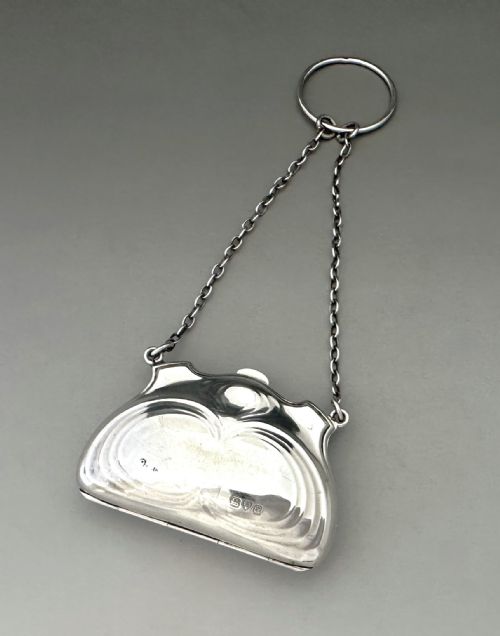


Hallmarked Silver Purse
A hallmarked silver purse is a pocket or carried accessory of precious metal bearing official assay stamps, offering enduring craftsmanship from the late nineteenth and early twentieth centuries.
Hallmarked Silver Purse
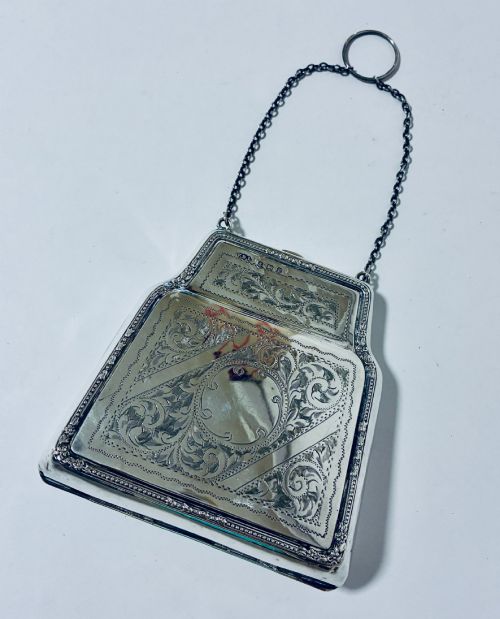
When you search for a hallmarked silver purse, you encounter practical accessories designed for coins, cards, and daily essentials during the Victorian, Edwardian, and George V eras. These pieces range from rigid metal containers to flexible leather or fabric pouches fitted with ornate silver mounts.
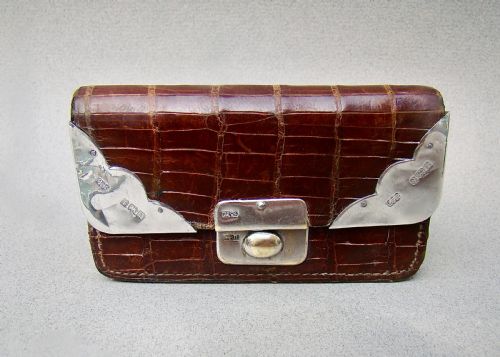
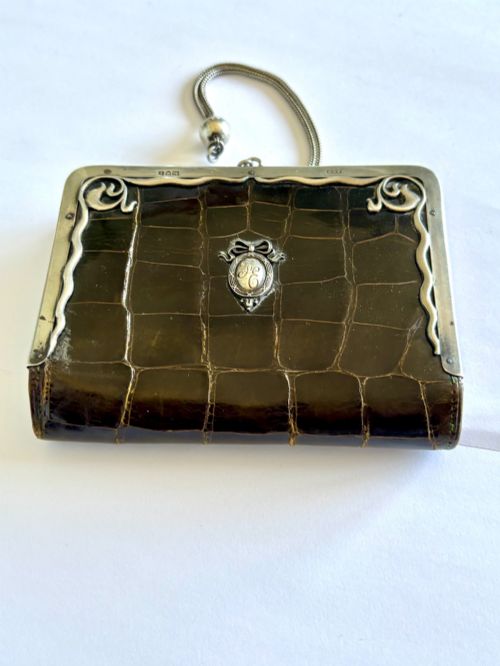
The version you are most likely to meet on this page is the Edwardian or Victorian mesh or framed coin purse, often stamped with hallmarks from Birmingham or London assay offices. Many surviving examples combine sterling silver framework with crocodile skin, leather bodies, or silk linings to create compact items for evening use.
Materials and Techniques
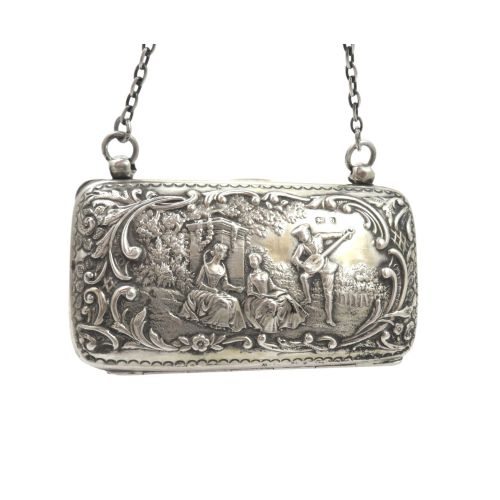
Silversmiths utilised sterling silver for frames, mounts, and rigid cases, shaping the metal through casting, engine turning, and delicate embossing. These metallic elements provide the structural integrity and decorative surface for each accessory.
Makers integrated organic and textile materials such as crocodile leather, crocodile skin, silk, and fabric to form the body or interior compartments of the purse. Hallmarks were then stamped directly onto the silver components to guarantee the standard of the metal.
Hallmarked Silver Purse Retail Price Guide 2026
Typical asking prices for hallmarked silver purse among the pieces listed under this phrase on Sellingantiques today, from the lower quarter to the upper quarter. They describe what is for sale here now, not the wider market.
A tiny hinged compartment once held a gentleman's sovereign coins securely while he danced.
Distinctions in Quality
The distinction between standard examples and superior pieces rests upon the crispness of the hallmarks, the complexity of the repoussé or engraved decoration, and the integrity of any engine-turned patterns. Finer items exhibit precise hand-chased motifs and robust hinges that secure the contents reliably.
Another measure of quality involves the preservation of integrated materials like leather, silk linings, or specialised internal fittings such as coin holders and dance card compartments. Original components and clear maker marks elevate the standing of an individual piece.
Charles Penny Brown·Aaron Lufkin Dennison·John Collard Vickery·G. Norman·Wright and Davies·Ludwig Krumm
The Hallmarked Silver Purse Glossary
- Hallmark
- Official marks stamped onto precious metal items to guarantee their purity and origin. These symbols typically include a maker's mark, a standard mark, an assay office mark, and a date letter.
- Sterling silver
- An alloy of silver containing ninety-two point five percent silver and seven point five percent other metals, usually copper. This composition provides the durability required for functional pocket accessories.
- Engine turning
- A mechanical technique used to engrave intricate geometric patterns onto metal surfaces. This method creates a precise, repetitive texture across the silver exterior.
- Repoussé
- A metalworking method where the artisan hammers the design from the reverse side to form a raised relief on the front. This technique gives depth to floral and scroll motifs on purse frames.
- Chatelaine
- A decorative belt hook worn with a series of suspended chains carrying useful items like purses, watches, or keys. Many purses include suspension rings specifically designed to attach to such chains.
Hallmarked Silver Purse: Frequently Asked Questions
What is a hallmarked silver purse?
A hallmarked silver purse is a small carrier made with sterling silver frames or panels, marked by an official assay office to certify the metal purity. These accessories date primarily from the Victorian and Edwardian periods.
They served as portable containers for coins, calling cards, or dance notes, combining practical utility with decorative metalwork.
How do I read the date hallmarks?
Assay offices stamped specific letter punches each year to indicate the exact date a silver item was tested and approved. By comparing the letter shape to official assay office charts, you can identify the year of manufacture.
Birmingham, London, and Chester offices each used distinct alphabetical sequences and shield outlines for their date letters.
How were these purses used?
Owners carried them during social calls, evening events, and daily outings to hold loose change, calling cards, or small personal items. Many designs included internal compartments or attached chains for secure handling.
Some specialised variations functioned as sovereign cases, vanity compacts, or chatelaine accessories suspended from a belt.
How do I care for antique silver?
Maintain silver surfaces by gentle dusting and occasional cleaning with a soft cloth formulated for precious metals. Avoid harsh chemical dips that strip away the desirable patination accumulated over decades.
Store pieces in dry environments away from direct sunlight to protect integrated materials like leather, fabric, and silk linings.