


Art Nouveau Silver Mounts
Art nouveau silver mounts combine flowing organic metalwork with glass, ceramic and leather objects to define the aesthetic of the turn of the twentieth century.
Art Nouveau Silver Mounts
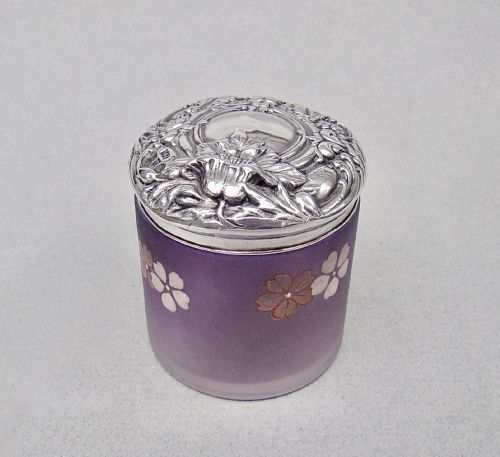
Art nouveau silver mounts encompass decorative collars, frames, overlays and lids applied to functional items like vases, decanters, dressing table jars and purses. These pieces merge fluid metallic forms with materials such as iridescent glass, frosted glass, cobalt blue glass and leather.
The objects appearing in this category span several periods including the Victorian and Edwardian eras, alongside specific years around 1900, 1890 and 1910. Forms range from mantel clocks and claret jugs to perfume bottles and wall sconces.
Buyers encounter distinct design influences such as the Vienna Secession and Arts and Crafts styles alongside classic Art Nouveau. European origins feature prominently, with items originating from English assay offices like Birmingham and Chester, as well as continental makers.
Materials and Construction
Makers utilised sterling silver, silver plate and pewter to create intricate metalwork overlays and mounts. These metallic elements were fastened around glass vessels, wood foundations and leather bodies using specialised soldering and framing techniques.
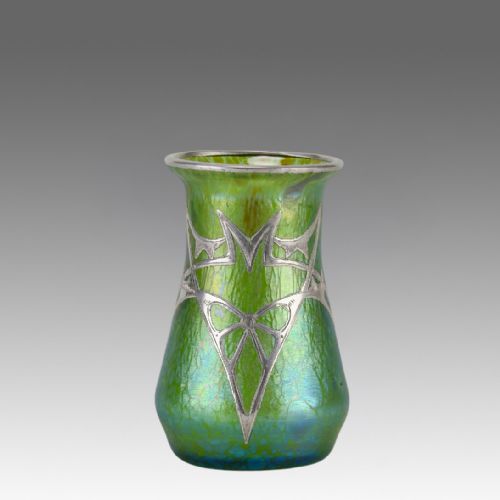
Glass components often display iridescent qualities, frost effects or deep cobalt coloration, blown or moulded into bulbous and tapering vessel shapes. Leather and wood carcases provide structured bases for silver-fronted clocks and purses.
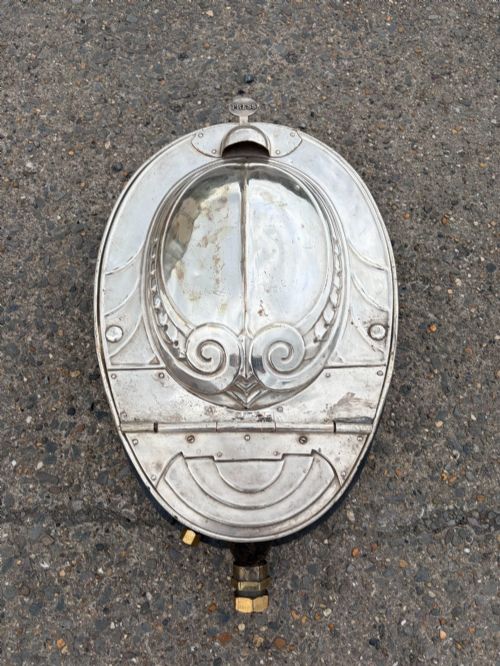
Railway carriages required bespoke metalwork too, proven by a first-class sleeping compartment sink.
Assessing Quality and Execution
Quality rests upon the crispness of the organic metal chasing and the integration of the silver mount with its underlying glass, leather or ceramic body. Heavier gauge metalwork and detailed whiplash motifs distinguish finer examples from simpler production pieces.
The reputation of the designer or manufacturer influences the standing of a piece, particularly when notable metalworkers or glasshouses collaborated on the production. Intricate glass treatments, such as applied pewter overlays and cabochons, elevate the overall execution of the work.
Johann Loetz·Ludwig Krumm·Archibald Knox·Liberty·Ferdinand von Poschinger·Royal Doulton·Gorham
The Art Nouveau Silver Mounts Glossary
- Silver Mount
- A fitted piece of decorative metal applied to a vessel, clock, or accessory to strengthen or ornament the item. These mounts often take the form of collars, rims, handles, or full surface overlays.
- Iridescent Glass
- Glass treated with metallic salts to produce a shimmering, rainbow-like sheen across the surface. This technique found widespread favour among period glassmakers working in organic styles.
- Claret Jug
- A pouring vessel designed for serving red wine, typically featuring a glass body fitted with a hinged metal lid, handle, and collar. Examples from this tradition combine crystal bodies with ornate metallic framing.
- Vienna Secession
- An artistic movement formed by Austrian artists who resigned from the Association of Austrian Artists, focusing on modern design approaches. This style appears alongside mainstream Art Nouveau in decorative metalwork and ceramics.
- Cabochon
- A polished, convex gem or glass stone cut without facets, frequently set into metal mounts as an accent. They add tactile colour points to the surrounding silver or pewter framework.
Art Nouveau Silver Mounts: Frequently Asked Questions
How do I clean silver mounts safely?
Use a soft cloth to polish the metal portions gently while avoiding harsh commercial dips that might damage adjacent glass, leather or fabric surfaces. Regular light dusting preserves the natural patina without stripping the finer details of the chased design.
Take care to keep moisture away from leather linings, wood bodies and paper clock faces during maintenance. Applying a specialist silver cloth helps maintain the shine on intricate whiplash lines.
What materials are paired with these mounts?
Silver and silver plate appear alongside iridescent glass, frosted glass, cobalt blue glass, leather, wood and brass. These combinations form decorative domestic objects ranging from desk clocks to dressing table accessories.
Craftsmen selected these varied substrates to contrast against the polished or patinated surfaces of the metalwork. The resulting items reflect the diverse manufacturing practices of the turn of the twentieth century.
Are these items marked with hallmarks?
Many British silver pieces carry official assay office marks, maker's initials and date letters that indicate where and when the metal was tested. Cities like Birmingham and Chester feature frequently on domestic wares from the period.
Continental items and plated wares may carry alternative stamps, registry numbers or maker signatures instead of traditional British assay hallmarks. Examining the base or rim usually reveals these stamps.
How do I distinguish Art Nouveau from Arts and Crafts?
Art Nouveau design relies on asymmetrical, flowing lines, whiplash curves and organic forms inspired by natural plant life. The focus remains on fluid movement and decorative grace across the metal and glass.
Arts and Crafts work emphasises visible construction methods, simpler geometric restraint and traditional handcrafting techniques. Makers associated with this latter movement often celebrated the integrity of the material itself.