

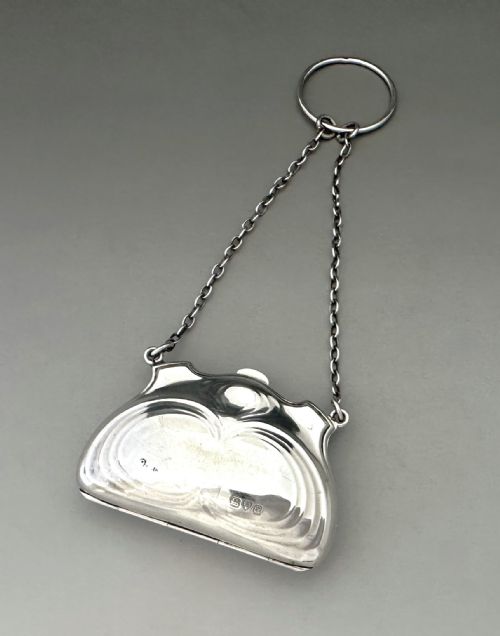

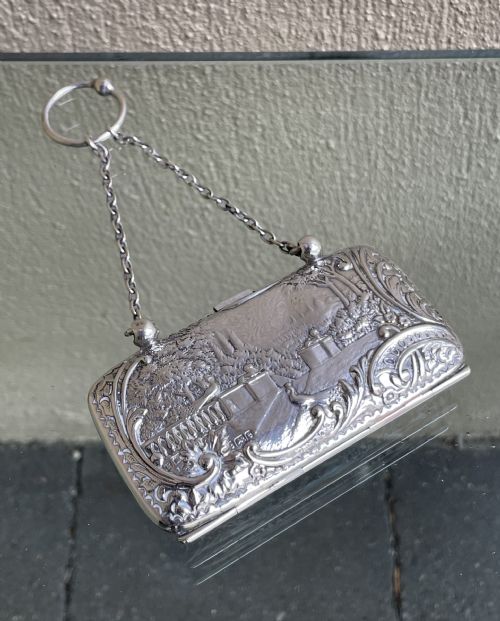


Solid Silver Purse
A solid silver purse brings pocket-sized elegance from the Victorian, Edwardian, and Art Deco eras straight to your palm.
Solid Silver Purse
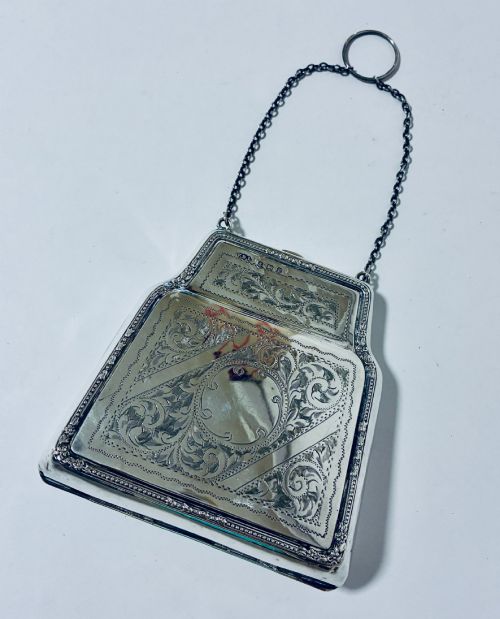
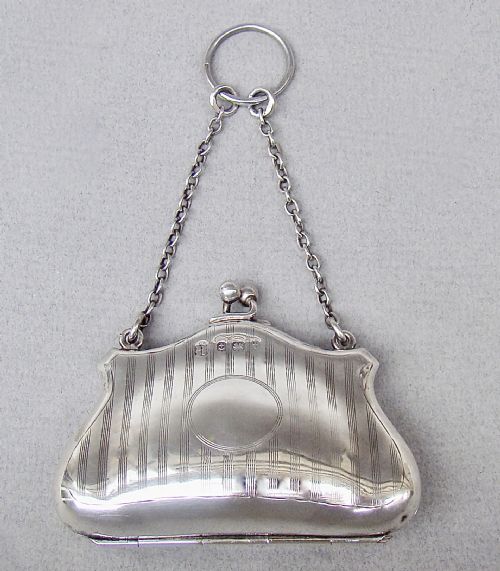
A solid silver purse is a compact accessory designed for coins, cards, or vanity items, frequently encountered in Edwardian and George V styles. These pieces range from engraved ladies purses and chain mail bags to fitted cocktail purses and sovereign cases.
Makers often fashioned these items for specific social uses, including holding dance cards, cigarettes, or loose currency during evening engagements. The forms span from rigid card cases shaped like purses to flexible chain mail designs and hinged compacts.
The selection on this page centres primarily on British hallmarks from Birmingham and Chester, alongside continental imports. Buyers will find that Edwardian and George V examples dominate the available forms, reflecting the peak era of such accessories.
Materials and construction
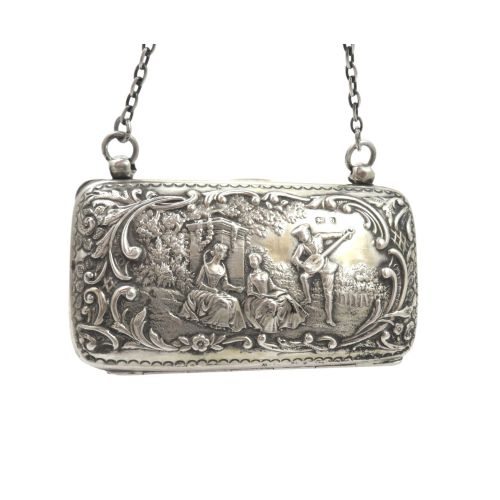
Silversmiths utilised sterling silver and standard silver as the primary body material, frequently employing engine turning, repoussé, and cloisonné enamel for surface decoration. Many pieces incorporate interior linings made from fabric, such as green shot silk, or house delicate glass perfume bottles.
Construction techniques involved hinged frames, cast metal components, and intricate interlocking metal rings for chain mail bag purses. Birmingham and Chester assay offices stamped these creations with hallmarks that recorded the metal purity, year, and maker.
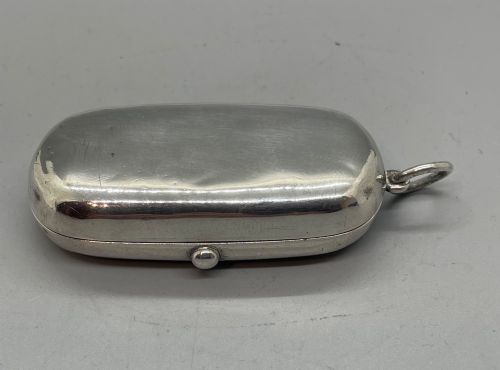
Object types include sovereign cases, scent flask perfume bottles, card cases, and chain mail miser's purses.
Factors determining quality
The distinction between standard items and superior pieces rests on the complexity of the surface ornamentation, such as detailed engraved figural scenes like The Music Lesson or multi-coloured cloisonné enamel work. Maker attribution to notable workshops like Sampson Mordan & Co or William Adams Ltd also elevates a piece.
Condition plays a vital role, specifically the structural integrity of hinged frames, the presence of original fabric linings, and crispness in engine-turned or cast patterns. Pieces retaining clear assay office hallmarks and complete internal fittings represent the upper tier of the range.
The Boots Company·G. Norman·William Adams Ltd·Sampson Mordan & Co·Zverev Nikolay Nikolayevich
The Solid Silver Purse Glossary
- Hallmark
- An official stamp applied by an assay office indicating metal purity, origin, and year of testing. These marks allow collectors to date British silver precisely.
- Sovereign case
- A small fitted container designed to hold gold sovereign coins securely. These pocket pieces often feature spring mechanisms or double compartments.
- Engine turned
- A geometric decorative pattern mechanically engraved into metal surfaces using a lathe. This technique creates repeating linear designs across the silver body.
- Repoussé
- A metalworking technique where the silversmith hammers the design from the reverse side to form raised motifs. It yields tactile, dimensional ornamentation on the exterior.
- Chain mail
- Interlinked metal rings forming a flexible fabric-like mesh used for bag bodies. This material drapes fluidly while maintaining metallic durability.
Solid Silver Purse: Frequently Asked Questions
What fits inside a solid silver purse?
These compact accessories were originally intended for coins, dance cards, calling cards, or cigarettes. Today, they accommodate modern cards, folded notes, or small trinkets.
Because internal dimensions vary by form, hinged cocktail styles offer more rigid space than flexible chain mail designs or compacts.
How do I clean tarnished silver?
Regular dusting with a soft microfibre cloth prevents heavy tarnish accumulation on engraved and repoussé surfaces. Avoid harsh dips that strip away patination or damage delicate fabric linings.
For stubborn areas, use a mild, specialised silver polish applied gently with a cotton swab, taking care around hinges and enamel.
How do I date a silver purse?
Dating relies on the assay office hallmarks stamped into the metal, which include a specific date letter corresponding to the active year. Stylistic clues like Art Nouveau curves or Art Deco geometric lines also indicate the decade of manufacture.
Comparing the maker's mark against historical records provides additional verification for Edwardian and George V pieces.
Were these used daily or for evening wear?
Wealthy Victorians and Edwardians utilised these accessories primarily for social outings, theatre visits, and formal evening events. Their small size made them ideal companions for holding essentials during dances or dinner parties.
Sturdier card cases and sovereign forms saw frequent daytime pocket use by gentlemen.